North Carolina Life & Health Insurance Guaranty Association
Not sure you’re ready?
Take the ~3-minute readiness diagnostic and see where you stand.
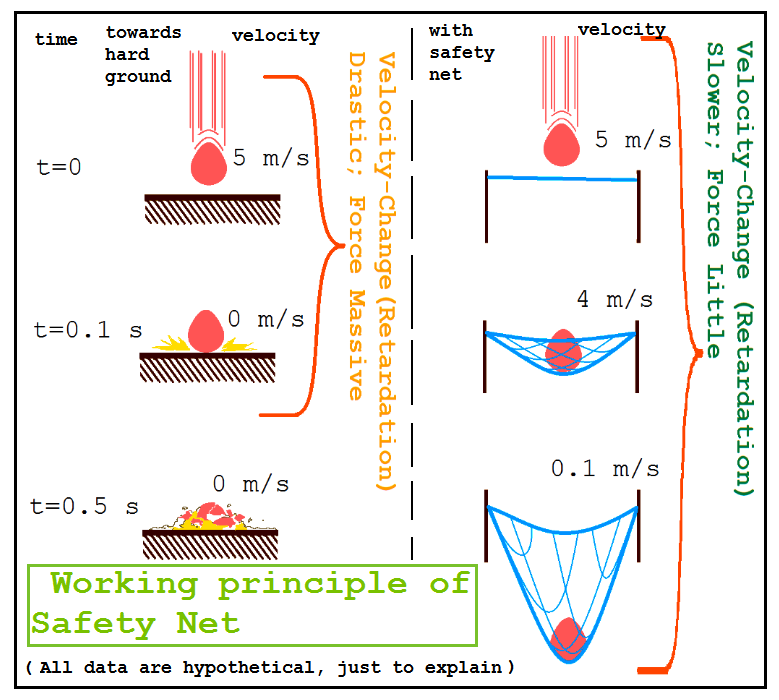
An insurance company is a promise-selling machine, and promises occasionally break. When a life or health insurer in North Carolina becomes insolvent, the state does not simply shrug and let policyholders absorb the loss. It activates a mechanism built for exactly this failure mode: the North Carolina Life and Health Insurance Guaranty Association. Understanding this mechanism is not a compliance footnote — it is the safety net you will describe, correctly and carefully, to clients who ask "what happens if my insurance company goes under?"
The NC Life and Health Insurance Guaranty Association was established in 1974, decades before most of today's licensees were born, in direct response to a national wave of insurer insolvencies that left policyholders holding worthless paper. It is created and governed by North Carolina General Statutes Chapter 58, Article 62, and every provision discussed below traces back to that Article.
The Association's core purpose is narrow but critical: it protects NC resident policyholders and beneficiaries against loss when a member life, health, or annuity insurer becomes insolvent. When a court declares a member insurer insolvent and orders it liquidated, the Association does not simply write checks and walk away — it assumes responsibility for servicing the insolvent insurer's policies, stepping into the shoes of the failed carrier to keep claims, premiums, and administration running as smoothly as possible for affected consumers.
Key definition: The Guaranty Association is a safety net of last resort, not an insurance policy. It exists to cushion the fall when a member insurer fails — it does not prevent the fall, and its protection is capped and conditional, as you'll see below.
Here is the elegant design choice that makes this system work: membership is mandatory for every insurer licensed to write life insurance, accident and health insurance, or annuities in North Carolina. There is no opt-out. If you sell life, health, or annuity products in the state, you are automatically part of the risk pool that backstops your competitors — and they backstop you.
Crucially, the Association funds claim payments by levying assessments on its member insurers rather than through state tax dollars. No taxpayer money is involved. When an insurer fails, the surviving member insurers collectively absorb the cost, spreading the burden across the healthy portion of the industry rather than concentrating it on the public purse.
These assessments come in two flavors:
- Class A assessments — cover the Association's own administrative and legal costs, the overhead of running the guaranty mechanism itself.
- Class B assessments — the money that actually pays policyholder benefits of a delinquent insurer, the direct restitution to consumers.
To prevent an insolvency from bankrupting otherwise-healthy insurers (which would defeat the entire purpose), G.S. 58-62-41 caps annual assessments on any one member insurer at 2 percent of that insurer's average annual premiums in North Carolina over the preceding three years. Think of this as a circuit breaker: no single insolvency can be so catastrophic that it drags down every other company in the market in the same year. Assessments for a given insolvency are also calculated separately for each line-of-business account — life, health, and annuity are kept in their own silos, so a life-insurance failure doesn't get funded by squeezing health insurers who had nothing to do with it.
Coverage attaches to direct, nongroup life insurance, health insurance, and annuity contracts issued by member insurers, and it extends further to certificate holders under direct group life, health, and annuity policies issued by those same member insurers. In practice, this means both the individual who bought a standalone whole life policy and the employee who holds a certificate under an employer's group life plan are protected — as long as the issuing company was a member insurer.
There is one non-negotiable threshold condition: coverage applies only to policies issued by an insurer that was licensed in North Carolina at the time the policy was issued. Buy from an unlicensed, non-admitted carrier, and the Association's protection was never in play — a detail worth remembering the next time a client is drawn to an unusually cheap offshore or surplus-lines quote.
This is the section the exam will test most precisely, so treat every figure as load-bearing. The Association's total liability to any one person is capped at the lesser of the contractual benefit owed under the policy or the applicable statutory dollar limit — whichever number is smaller wins. A $400,000 policy doesn't suddenly become worth $400,000 in guaranty protection just because the Association exists; it's capped at whichever ceiling below applies, or the policy's actual value, whichever is less.
G.S. 58-62-21(d) — memorize this table.
| Benefit type | Statutory cap | Basis |
|---|---|---|
| Life insurance death benefit and cash value, combined | $300,000 | Per insured life |
| Health benefit plan (e.g., comprehensive major medical) | $500,000 | Per individual |
| Health coverage not a health benefit plan | $300,000 | Per individual |
| Present value of annuity benefits under governmental retirement plans (incl. cash values) | $300,000 | Per individual |
| Structured settlement annuity, all benefits incl. cash values | $1,000,000 | Per payee |
| Unallocated annuity contracts (non-governmental) | $5,000,000 | Regardless of number of contracts |
| Aggregate, any one individual, all covered lines | $300,000 | — |
| Aggregate, when a health benefit plan is involved | $500,000 | — |
Notice something important about the very first row: North Carolina uses a single, combined $300,000 cap for life death benefit and cash value together — there is no separate, additional $100,000 sub-limit carved out just for cash value. Some other states structure their guaranty caps differently, and this is precisely the kind of state-specific wrinkle the exam is designed to catch. In North Carolina, $300,000 is the entire ceiling for a life policy's death benefit plus its cash value, combined, per insured life.
Also notice the special treatment of disability income insurance: under North Carolina law, it is treated as an excepted benefit and is therefore not defined as a health benefit plan for guaranty association purposes. That reclassification matters — it means disability income falls into the $300,000 "non-health-benefit-plan" bucket rather than the more generous $500,000 health-benefit-plan bucket.
Finally, watch the two aggregate figures. The overall aggregate limit the Association will pay for any one individual across all covered lines is $300,000 — but that ceiling rises to $500,000 specifically when benefits under a health benefit plan are involved. So a client with both a life policy and a comprehensive major medical plan from the same failed insurer isn't limited to $300,000 total; the health-benefit-plan involvement lifts their aggregate ceiling to $500,000.
Coverage has hard edges. The following are excluded outright, and reciting these accurately is often what separates a passing exam score from a failing one:
- Any portion of a policy or contract not guaranteed by the member insurer — for example, the non-guaranteed, market-exposed portion of a variable life or variable annuity contract. The Association backstops guarantees, not investment risk the policyholder voluntarily assumed.
- HMO subscriber contracts.
- Fraternal benefit society insurance certificates.
- Self-funded or uninsured employer or association benefit plans — if there was never an insurer standing behind the promise, there's nothing for the guaranty mechanism to step into.
- Medicare Part C plans.
- Medicare Part D plans.
- Medicaid plans.
- Dividends, experience credits, voting rights, and service fees owed under a policy — these are ownership perks, not core insurance benefits.
- Reinsurance ceded by a member insurer, unless the reinsurer issued an assumption certificate directly to the policyholder — reinsurance is a contract between insurers, not with the original policyholder, unless that direct link was explicitly created.
- Unallocated annuity contracts issued to plans protected by the federal Pension Benefit Guaranty Corporation — where a federal safety net already exists, the state guaranty association steps back.
- Extra-contractual claims — bad-faith damages, punitive damages, and attorney fees. The Association pays what the policy promised, not litigation-driven damages layered on top.
- Any portion of a contract where the credited interest rate exceeds the statutory reference rate specified in the Article — the Association won't underwrite an insolvent insurer's overly generous crediting promises.
- A nonresident certificate holder under a group policy issued by a member insurer, with limited exceptions — this Association exists primarily to protect North Carolina residents.
- Anyone eligible for protection under another state's life and health guaranty association for the same policy — this prevents double coverage and cross-state disputes over who pays.
Warning: These exclusions are exam-favorite traps. A client holding a variable annuity, an HMO contract, or a Medicare Advantage (Part C) plan may reasonably assume "insurance is insurance" — but guaranty protection simply does not reach these products the way it reaches a traditional life or health benefit plan policy.
This is where the exam tests your professional conduct, not just your recall of dollar figures. Under G.S. 58-62-86, North Carolina law prohibits any person — including a member insurer, agent, or affiliate — from using the existence of the NC Life and Health Insurance Guaranty Association to advertise, sell, or solicit the purchase of insurance.
Put plainly: you may never use the guaranty association as a selling point. Imagine a producer telling a hesitant prospect, "Don't worry about this company's financial strength — even if they fail, the state guaranty association has you covered up to $300,000." That single sentence is a violation. An agent violates NC guaranty association advertising restrictions by telling a prospective client that a policy purchase is safe because of guaranty association backing — full stop, regardless of how reassuring the intent behind it was.
Why does the law draw this line so sharply? Because the guaranty association is meant to be a quiet backstop, not a marketing feature. If insurers and agents could tout it, weak carriers with thin capital reserves could lean on the state's safety net to compete unfairly against financially sound companies — precisely the moral hazard the statute is designed to prevent.
That said, consumers are not left uninformed. Member insurers must deliver an approved disclosure document describing the guaranty association's general purposes and current limitations to policyholders at or before policy delivery. This document must prominently warn consumers that coverage is subject to substantial limitations and exclusions, and it must warn applicants that they should not rely on guaranty association coverage when selecting an insurer. The disclosure exists precisely so a consumer understands the safety net exists — while making sure no agent ever gets to use it as a sales pitch. The distinction is subtle but essential: informing is mandatory; marketing is forbidden.
Picture a North Carolina resident who holds a whole life policy and a comprehensive major medical plan, both issued by the same insurer, which is then declared insolvent and liquidated. The Association steps in to service both policies. Her life insurance death benefit and cash value together are capped at $300,000. Her health benefit plan is capped at $500,000. Because a health benefit plan is involved, her overall aggregate ceiling across both lines rises to $500,000 rather than the baseline $300,000. If her agent had told her, before the sale, "don't worry, the guaranty association will make you whole no matter what" — that agent violated G.S. 58-62-86. What the agent should have delivered instead, at or before policy delivery, was the approved disclosure document warning her that this protection is limited and should never be the reason she chose that insurer in the first place.
That is the whole architecture in miniature: mandatory membership, insurer-funded assessments, capped and carefully delineated benefits, a firm wall against using the safety net as a sales tool, and an affirmative duty to disclose the limitations honestly. Know the numbers, know the exclusions, and know that you may describe this protection to a client — but you may never sell against it.