New York Unfair Trade Practices & Claims Settlement
Not sure you’re ready?
Take the ~3-minute readiness diagnostic and see where you stand.
Insurance is an invisible product. When you sell a life or health insurance policy, you are not handing the client a tangible object they can inspect, test, or hold in their hands. You are selling a promise, printed on a piece of paper, contingent on future events. Because the entire industry rests on a foundation of absolute trust and precise mathematical probabilities, New York law strictly prohibits insurance producers from engaging in unfair trade practices. A single misstep by a producer does not just harm one consumer; it fractures the actuarial and ethical framework that makes the entire system of pooled risk possible.
To protect this invisible product, New York has engineered a comprehensive legal architecture governing how insurance is sold, how risks are classified, and how claims are paid. As a producer, mastering these rules is not merely about passing your exam—it is about understanding the boundaries of your profession.
The moment you sit down with a prospective client, your words carry legal weight. The state meticulously polices how policies are presented and how business is won.
Misrepresentation and Defamation
Information asymmetry is the primary danger in insurance sales; the producer understands the contract deeply, while the consumer often does not. Therefore, misrepresentation occurs when an insurance producer makes false or misleading statements regarding the terms of an insurance policy. This is not limited to lying about coverage limits. Crucially, misrepresentation includes making false statements regarding the dividends or share of surplus previously paid on any insurance policy. You cannot inflate the historical performance of a whole life policy to make a sale.

Similarly, false advertising is the publication of untrue or misleading statements about the business of insurance or any person conducting an insurance business. While false advertising generally builds up an entity using deception, its aggressive counterpart is defamation. Defamation involves making maliciously critical or derogatory statements about the financial condition of an insurance company. The core intent of defamation in the insurance industry is to injure a person or company engaged in the business of insurance. You cannot win a client by starting a false rumor that a competing carrier is going bankrupt.
The Mechanics of Replacement: Twisting and Churning
Insurance policies are meant to be long-term instruments. When a producer convinces a client to replace an existing policy, the state scrutinizes the producer's motives.
- Twisting is the act of making an incomplete or fraudulent comparison of insurance policies to induce a policy replacement. Through twisting, a producer induces a policyholder to lapse, forfeit, surrender, or terminate an existing insurance policy in favor of a new one, often to the client's financial detriment.
- Churning is a specific variation of this abuse. Churning occurs when an insurance producer replaces a policyholder's existing policy with a new policy from the same insurer. Why would a producer do this? Because churning is typically driven by the insurance producer's desire to generate additional commissions rather than benefiting the insured. It resets the commission schedule for the agent while resetting the contestability period and surrender charges for the client.
Rebating
To maintain a level playing field, the cost of an insurance policy must remain exactly as filed with the state. Rebating is the practice of offering anything of value not specified in the insurance contract as an inducement to purchase a policy.
If you offer to pay the client's first month's premium out of your own pocket, you are rebating. Under the law, rebating includes offering to return a portion of the insurance premium to the applicant, as well as offering special favors in dividends or other benefits to induce the purchase of an insurance policy. The penalty for this is severe: a producer's insurance license may be revoked for offering an illegal rebate to a prospective insurance client.
Force and Fear: Coercion, Boycotting, and Intimidation
The market must operate free of physical and economic threats. New York strictly prohibits:
- Coercion in insurance, which involves using physical force or threats to compel a consumer to purchase a specific insurance policy.
- Intimidation, an unfair trade practice where an insurance producer uses fear to manipulate a client's insurance purchasing decisions.
- Boycotting, an unfair trade practice involving an organized refusal to do business with a specific insurance company or producer to strangle their participation in the free market.
Insurance underwriting is, by definition, the act of discriminating between different levels of risk. However, the law demands that this discrimination be driven by rigorous math, not prejudice.
Actuarially justified differences in life insurance premiums based on age or gender are not considered unfair discrimination. A 60-year-old statistically faces a higher mortality risk than a 20-year-old, and pricing the policy accordingly is mathematically sound.
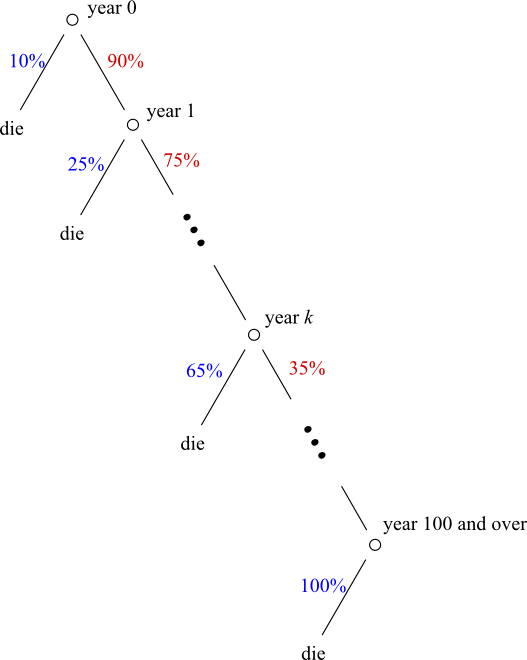
Conversely, unfair discrimination involves charging different life insurance rates for individuals belonging to the same actuarial risk class, or charging different health insurance rates for individuals with the same life expectancy. If the math is identical, the premium must be identical.
Beyond strict actuarial classes, social protections are codified in law:
- New York insurance law prohibits discrimination in underwriting based on race, color, creed, or national origin.
- New York insurers cannot refuse to issue a policy solely because an applicant has a physical or mental disability.
- New York law explicitly prohibits insurance companies from discriminating against individuals based on their status as victims of domestic violence.
When a client suffers a loss, the invisible promise you sold them suddenly materializes into a critical financial lifeline. New York Regulation 64 governs unfair claims settlement practices to ensure timely and fair handling of insurance claims.
Timelines for Claims Handling
Regulation 64 implements a strict numerical cadence to prevent insurers from dragging their feet. Notice the recurring reliance on the 15-day window:
| Action Required by Insurer | New York Timeframe |
|---|---|
| Acknowledge receipt of an insurance claim | Within fifteen business days |
| Provide necessary claim forms and instructions to the claimant | Within fifteen business days of receiving a notice of claim |
| Commence the investigation of a claim | Within fifteen business days of receiving notice |
| Make a decision to accept or deny a claim | Within fifteen business days of receiving all requested proof of loss documentation |
| Notify the claimant in writing if more time is needed to determine liability | Within fifteen business days of receiving complete proof of loss |
| Provide a written status update if additional time is required to investigate | Every ninety days |
| Pay an approved claim | Within five business days after a settlement agreement is reached |
Prohibited Bad Faith Practices
Beyond mere speed, Regulation 64 dictates ethical behavior during a claim. It is an unfair claims settlement practice for an insurer to knowingly misrepresent pertinent facts or policy provisions relating to coverages at issue.
Crucial Concept: Insurers cannot weaponize their leverage. It is an unfair practice for an insurer to refuse to pay claims without conducting a reasonable investigation based upon all available information.
Furthermore, insurers are strictly forbidden from the following tactics:
- Lowballing and Litigation: It is an unfair claims settlement practice to compel insureds to institute litigation by offering substantially less than the amounts ultimately recovered in actions.
- Stalling: Failing to promptly settle claims where liability has become reasonably clear constitutes an unfair claims settlement practice.
- Altered Documents: Attempting to settle a claim based on an application that was altered without the knowledge of the insured is an unfair claims settlement practice.
- Silent Denials: Failing to promptly provide a reasonable explanation of the basis in the insurance policy for the denial of a claim is a prohibited practice.
Rules without teeth are merely suggestions. The state enforces these boundaries rigorously. The New York Superintendent of Financial Services has the authority to investigate allegations of unfair trade practices.
If a producer is accused of crossing the line, due process must be observed. The Superintendent must provide an accused insurance producer with at least ten days of written notice prior to a disciplinary hearing. Following this notice, the Superintendent must hold a formal hearing before taking disciplinary action against an insurance producer for an unfair trade practice.
If the allegations are proven true, the consequences are multifaceted:
- Cease and Desist: The Superintendent can issue a cease and desist order requiring an insurance producer to stop engaging in an identified unfair trade practice.
- Fines: Violating a cease and desist order in New York can result in a civil penalty of up to $5,000 per violation.
- Loss of Livelihood: Ultimately, the Superintendent may suspend or revoke the license of an insurance producer found guilty of an unfair trade practice.
While producers can commit unfair trade practices, the broader ecosystem is frequently attacked by fraud from all sides. The New York Insurance Frauds Prevention Act was established to combat fraudulent insurance activities and protect consumers. Because fraud inflates the cost of insurance for honest policyholders, New York law requires insurance companies to establish a dedicated Special Investigations Unit (SIU) to detect and investigate insurance fraud.
Insurance fraud is a two-way street, committed by both applicants and claimants:
- At Application: Insurance fraud includes intentionally submitting false information on an insurance application to obtain a lower premium (e.g., a smoker claiming to be a non-smoker).
- At Claim: Insurance fraud includes knowingly filing a claim containing false or misleading information to receive an unwarranted financial payout.
The financial penalties for fraud are designed to mathematically annihilate the incentive to cheat. Committing insurance fraud in New York subjects an individual to a civil penalty of up to $5,000 per violation. However, the true deterrent lies in the multiplier: the civil penalty for insurance fraud can include an additional fine equal to the exact financial amount of the fraudulent claim. If someone commits a $100,000 fraud, they are liable for the $5,000 base penalty plus an additional $100,000 fine.
By understanding the gravity of these laws, you are not just memorizing facts for a state exam; you are learning the structural physics that keeps the insurance industry upright, solvent, and inherently trustworthy.