New York Insurance Code & Department of Insurance
Not sure you’re ready?
Take the ~3-minute readiness diagnostic and see where you stand.
Insurance is fundamentally a business of promises—pieces of paper traded for the assurance that when catastrophe strikes a home, a vehicle, or a business, a financial safety net will deploy exactly as designed. Because these promises are intangible, their value relies entirely on the solvency, integrity, and operational competence of the entities issuing them. In New York, the New York Department of Financial Services (DFS) serves as the state agency responsible for supervising and regulating all authorized insurers and licensed producers. It is the regulatory machine that ensures the math works, the promises are kept, and the public is protected.
To operate effectively as a licensed Property & Casualty producer in this ecosystem, you must understand the architecture of this regulatory oversight. Knowing how the DFS operates is not merely about passing an exam; it is about recognizing the boundaries of your own authority and understanding how state law dictates your daily professional conduct.
To understand New York insurance law, you must first separate the architects who design the rules from the overseers who enforce them.
The New York state legislature writes and enacts statutory insurance laws. They build the statutory framework. The head of the New York Department of Financial Services is the Superintendent of Financial Services, who is appointed by the Governor of New York.

The Superintendent of Financial Services promulgates rules and regulations to implement those enacted insurance laws. Think of the legislature as setting the destination and the boundaries of the highway, while the Superintendent decides the speed limits, drafts the reporting forms, and paints the lanes. Crucially, the Superintendent of Financial Services does not have the constitutional power to enact statutory insurance law. Their authority is strictly limited to interpreting and enforcing the laws passed by the legislature.
As a producer, the Superintendent is your direct regulator. To protect the public interest, the Superintendent of Financial Services has the authority to issue, refuse, revoke, or suspend insurance producer licenses in New York. You operate under a revocable privilege granted by the state.
Beyond licensing, the Superintendent of Financial Services has the power to examine the books and records of any authorized insurer or licensed producer. This is not a theoretical power; it is an active, scheduled process designed to ensure that the financial and ethical gears of the industry are turning smoothly.
Routine examinations are the primary mechanism the DFS uses to verify compliance and financial health. The state does not wait for a company to fail or for consumers to complain en masse; they inspect proactively.
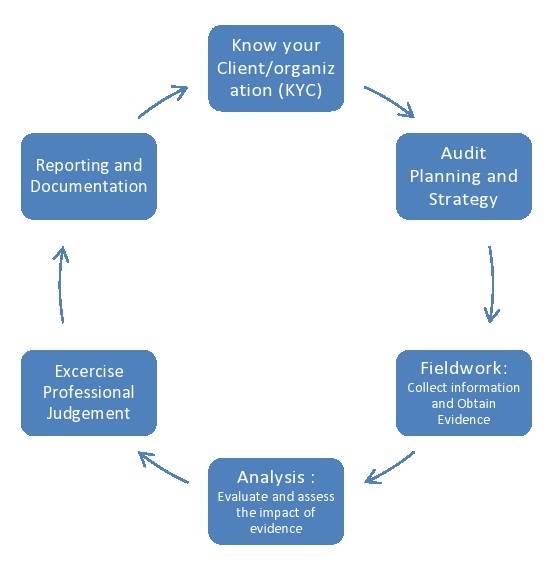
The frequency of these audits depends on the type of insurer:
- Property and Casualty: The Superintendent of Financial Services must examine every domestic property and casualty insurance company at least once every three years. However, if a company is highly stable, the Superintendent of Financial Services may extend the examination interval for a domestic property and casualty insurer from three years up to five years.
- Life Insurance: Because life insurance involves long-term, highly predictable actuarial liabilities, the Superintendent of Financial Services must examine every domestic life insurance company at least once every five years.
An interesting feature of this regulatory framework is how it is funded. An insurance entity or producer being examined by the Superintendent of Financial Services must pay the costs associated with the examination. This ensures that the cost of regulatory oversight is borne by the industry profiting from the market, rather than the general taxpayer.
Examination Reports and Due Process
When an examination concludes, the DFS compiles its findings into a formal report. Before this document is made public, the system builds in a mechanism for due process. The Superintendent of Financial Services must notify the examined party of the contents of an examination report before filing the report for public inspection.
If the examinee disputes the findings—perhaps an auditor misunderstood a unique accounting classification—an examinee has the right to request a hearing regarding the findings in an examination report before the examination report is officially adopted. However, the clock ticks quickly: an examinee must request a hearing within 10 days of receiving notice of an examination report to be guaranteed a hearing before the report is filed.
Once that report is officially adopted, its weight in the legal system is immense. An adopted examination report is considered presumptive evidence of the facts stated within the report in any legal proceeding against the examinee. It is assumed to be true unless the examinee can definitively prove otherwise.
An examination is only as effective as the records available to the examiner. Therefore, New York enforces strict, overlapping timelines for document retention. The logic behind these timelines is simple: records must survive long enough to bridge the gap between DFS examinations.
Insurer Recordkeeping (Regulation 152)
Under New York Regulation 152, the retention timelines for insurers hinge on the examination schedules mentioned above:
- Policy Records: Insurers must maintain a policy record for six calendar years after the policy expires or until the next examination report is filed, whichever is longer.
- Claim Files: Insurers must keep claim files for at least six calendar years after all elements of the claim are resolved and the claim file is closed, or until the next examination report is filed, whichever is longer.
Notice the overlap: if the longest examination interval is five years, a rigid six-year requirement ensures an examiner will never encounter a "gap" in the paperwork. Furthermore, all domestic insurers must keep and maintain their principal books of account within the state of New York, ensuring the DFS has immediate physical and jurisdictional access to the core financial data.
The Producer Connection: Producers do not escape these requirements just because they are not carriers. If an insurance producer maintains customer records on an insurer's behalf, the producer is subject to the six-year record retention requirement applicable to insurers.
Producer-Specific Recordkeeping
Producers also have distinct, specialized recordkeeping requirements tied to client compensation and disclosures to ensure transparency:
- Fee Memorandums: A New York insurance broker must retain a copy of any written fee memorandum signed by a client for at least three years.
- Compensation Disclosures (Regulation 194): Under New York Regulation 194, an insurance producer who provides an oral compensation disclosure to a purchaser must retain a record of that disclosure for at least three years.
| Record Type | Retention Period | Applicable Entity |
|---|---|---|
| Policy Records (Reg 152) | 6 years post-expiration or next exam (longer of two) | Insurers (and Producers acting on their behalf) |
| Claim Files (Reg 152) | 6 years post-closure or next exam (longer of two) | Insurers (and Producers acting on their behalf) |
| Signed Fee Memorandums | 3 years | Brokers |
| Oral Comp Disclosures (Reg 194) | 3 years | Producers |
When the DFS discovers a violation—whether through an examination, a consumer complaint, or a routine inquiry—it holds severe enforcement powers. However, administrative law requires strict adherence to due process.
Before stripping a producer of their livelihood, the Superintendent of Financial Services must provide written notice and an opportunity for a hearing before revoking or suspending an insurance license. If the specific accusation involves market conduct, notice of a hearing for an alleged unfair method of competition or deceptive act must be served at least 10 days before the scheduled hearing date in New York.
If, after that hearing, a person is found to be engaging in an unfair and deceptive act, the Superintendent of Financial Services has the authority to issue a cease and desist order, legally forcing them to halt the behavior immediately.
Fines and Criminality
Financial penalties serve as a powerful deterrent. Unless a specific penalty is otherwise provided in the code, the Superintendent of Financial Services may impose a civil penalty of up to $1,000 for each willful violation of the New York Insurance Law.
Do not ignore a penalty once levied. Failure to pay a Superintendent-imposed civil penalty within 30 days constitutes an additional violation of the New York Insurance Law. To ensure these fines are actually collected, the Superintendent of Financial Services can maintain a civil action in the name of the people of New York to recover a money penalty imposed for an Insurance Law violation.
Furthermore, violating the insurance code is not merely an administrative infraction. Any violation of the New York Insurance Law is automatically considered a misdemeanor if the specific violation is not explicitly classified as a felony. In other words, flouting the insurance code results in a criminal record.
Two specific areas trigger unique, elevated penalties in New York: insurance fraud and ignoring the Superintendent.
The Cost of Insurance Fraud
Insurance fraud acts as a tax on the entire system, driving up premiums for honest consumers. New York treats it aggressively. Committing a fraudulent insurance act in New York subjects the violator to a civil penalty of up to $5,000 plus the stated value of the fraudulent claim for each violation. If a fraudster submits a fake $20,000 auto claim, the civil penalty alone could reach $25,000 per violation.
To prevent fraud at the consumer level, New York requires an upfront deterrent: all insurance claim forms in New York must contain a specific fraud warning statement indicating that committing a fraudulent insurance act is a crime.
The 15-Day Inquiry Rule
Finally, as a licensed professional, you are legally obligated to communicate with your regulator. If the DFS contacts you, the clock starts ticking. A person who fails to provide a good faith response to an inquiry from the Superintendent of Financial Services within 15 business days may face a civil penalty of up to $500 per day.
Crucial Concept: The 15-day rule is a strict liability trap for disorganized producers. If the DFS requests information regarding a complaint and the letter sits on your desk for a month, you could accumulate thousands of dollars in fines simply for failing to respond, entirely independent of the underlying complaint's merit.
Understanding this regulatory structure transforms the New York Insurance Code from a list of disjointed rules into a cohesive operating manual. The legislature builds the machine, the DFS maintains its gears, and your license demands that you operate safely within it. Memorize these timelines and penalties not just to pass the exam, but to protect your future career.