New York Producer Licensing, Appointment & Continuing Education
Not sure you’re ready?
Take the ~3-minute readiness diagnostic and see where you stand.
The stability of any financial market depends fundamentally on the integrity of its intermediaries. In the realm of property and casualty insurance, this intermediary is the producer—the critical junction where a consumer’s risk meets an insurance company’s capital. New York State regulates this junction with extreme precision. The New York Superintendent of Financial Services does not merely view insurance licensing as a gatekeeping exercise, but as the ongoing calibration of a vast, complex machine designed to protect the public. To operate within this system, you must understand not just the rules, but the underlying mechanics of how authority is granted, maintained, and occasionally revoked.
Before you can bind a single policy, you must prove you possess the maturity, presence, and knowledge to handle the financial well-being of others. The baseline criteria are straightforward but absolute. In New York, an individual must be at least 18 years old to obtain a property and casualty insurance producer license.
Geography and accessibility are equally vital. A New York insurance producer must maintain a principal place of residence or business within New York to qualify for a resident license. Furthermore, every resident insurance producer authorized to conduct business in New York must maintain a place of business with public access within the state. The rationale is simple accountability: if a client suffers a catastrophic loss, they must be able to locate their representative in the physical world.
The Educational Thresholds
New York structures its pre-licensing education requirements around the complexity of the products you intend to sell. Commercial and generalized property and casualty risks require a deeper reservoir of knowledge than standard personal lines (like a basic auto or homeowner's policy).
| License Type | Pre-Licensing Education Required |
|---|---|
| Property and Casualty Agent | 90 hours of approved instruction |
| Property and Casualty Broker | 90 hours of approved instruction |
| Personal Lines Agent | 40 hours of approved instruction |
| Personal Lines Broker | 40 hours of approved instruction |
There is a notable exception to this rule. The state recognizes rigorous, nationally standardized professional achievement. Consequently, an applicant for a New York property and casualty producer license is exempt from pre-licensing education if the applicant holds a Chartered Property Casualty Underwriter (CPCU) designation. The CPCU is functionally equivalent to a master's degree in property and casualty insurance; if you have conquered it, New York accepts your technical competence as proven.
Once your education is complete, the clock begins ticking. Candidates must pass the New York state insurance licensing exam within two years of applying for the producer license. If you let this window expire, the kinetic energy of your application dissipates, and you must begin again.
To the average consumer, the person selling them insurance is simply "their insurance person." But legally, there is a massive chasm between an Agent and a Broker. Understanding this difference is perhaps the most crucial conceptual leap you will make.
The Agent's Loyalty: A New York property and casualty insurance agent represents the authorized insurance companies for which the agent has been officially appointed. The agent is an extension of the insurer.
The Broker's Loyalty: A New York property and casualty insurance broker represents the insured. The broker acts as a specialized buyer, shopping the market on behalf of the client. Consequently, a broker can place business with any authorized insurance company that will accept the business.
The Mechanics of Appointments
Because an agent acts as the legal proxy for an insurance company, a formal linkage—called an appointment—must exist. However, a company appointment is not required for an individual to initially obtain a New York insurance agent license. You can hold the credential, inert and ready, before you ever sign a contract with a carrier.
When an insurer does grant you the authority to represent them, the state must be informed so it can update the public record. An insurer must file a notice of appointment with the New York Superintendent within 15 days of executing an agency contract or receiving the first insurance application from the producer.
Terminations and the Autonomy of Your License
Business relationships end. When an insurer decides to sever ties with an agent, they are dismantling a line of legal authority, and the timeline for reporting this is strictly enforced:
- Notice to the State: An insurer must notify the New York Superintendent within 30 days of terminating a producer's appointment.
- Notice to the Producer: The insurer must then mail a copy of the appointment termination notice to the terminated producer within 15 days after notifying the New York Superintendent.
Why does the state care why you were terminated? If an insurer is dropping you because you simply didn't meet sales quotas, that is a private business matter. However, an insurer terminating a producer's appointment for cause (such as suspicion of theft or fraud) must disclose the specific reason for the termination to the New York Superintendent. The state relies on insurers to act as an early warning system for market hazards.
Crucially, terminating a producer's appointment does not automatically revoke the producer's underlying New York insurance license. If Carrier A terminates your appointment, you are merely an agent without Carrier A's authority. Your license remains intact, and you are free to seek appointments with Carrier B.
A license is not a permanent grant; it is a temporary lease on professional authority. New York insurance producer licenses expire every two years based on the licensee's birth month and birth year.
Because the insurance landscape—its laws, risks, and social expectations—is constantly shifting, the state requires you to prove that your knowledge is actively evolving. To renew, New York insurance producers must complete 15 credit hours of approved continuing education (CE) during every two-year licensing period.
If you view CE as merely a box to check, you will run afoul of the Superintendent's specific curriculum mandates. The 15 hours cannot be entirely spent on sales techniques. They must include exact minimums dedicated to the structural integrity of the profession:
- At least one hour of Insurance Law instruction.
- At least one hour of Ethics and Professionalism instruction.
- At least one hour of Diversity, Inclusion, and Elimination of Bias instruction.
The Flood Insurance Requirement
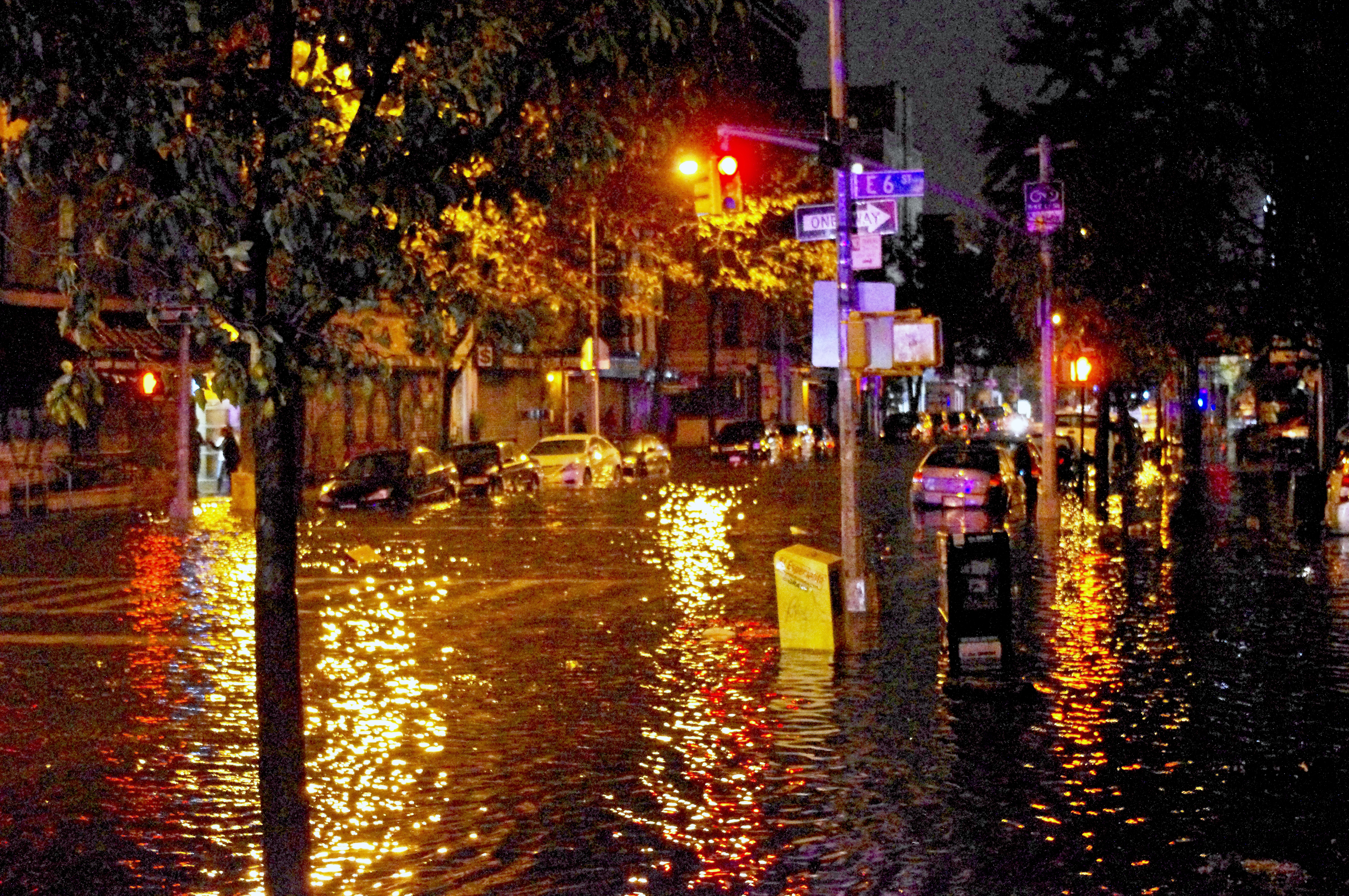
Property and casualty risks are inherently tied to geography and climate. Therefore, New York property and casualty producers must complete at least one hour of Flood Insurance instruction as part of the 15 required continuing education hours.
For those who actively participate in the federal flood market, the requirement scales up. New York producers who sell flood insurance through the National Flood Insurance Program (NFIP) must complete at least three hours of enhanced flood insurance instruction during the two-year licensing period.
Strict Limitations on CE: You cannot find a single, easy three-hour course and take it five times. New York insurance producers may not receive continuing education credit for taking the same approved course more than once. Furthermore, a New York insurance producer who fails to complete the required continuing education by the license expiration date will have the license lapse. There is no grace period for negligence.
Location Tracking
The Superintendent's ability to regulate depends entirely on knowing where you are. A New York insurance producer must notify the Superintendent of any change in business address within 30 days of the relocation. The exact same rule applies to your personal life: you must notify the Superintendent of any change in residential address within 30 days of the relocation. Move your agency across town, or move your family to a new apartment—you have roughly a month to update the state database.
The power to grant a license inherently contains the power to destroy it. The New York Superintendent has the authority to deny, suspend, or revoke a producer's license for violating insurance laws, or for committing fraudulent acts.
However, the state cannot strip you of your livelihood without due process. If the Department of Financial Services intends to take disciplinary action, the New York Superintendent must provide a producer with at least 10 days of written notice prior to holding a disciplinary hearing for license revocation or suspension. This gives you time to secure legal counsel and prepare a defense.
The Blast Radius of Revocation
If the Superintendent determines that you are a hazard to the public, the consequences are total. A producer whose New York insurance license has been revoked is prohibited from transacting any insurance business in the state. You cannot sell, you cannot advise, you cannot earn commissions.
Furthermore, revocation has a cascading effect on those beneath you. Revoking a New York insurance producer's license automatically terminates the authority of all sub-licensees acting under that specific license. If you operate an agency and lose your primary license, the legal authority of the producers operating under your agency umbrella collapses instantly.
Mandatory Self-Reporting
The Superintendent does not have the resources to actively monitor the police blotters and court dockets of all fifty states. Therefore, the law offloads the burden of reporting onto you. If you run into legal trouble outside of your day-to-day business, you must bring that information to the state's attention.
Administrative Actions: New York insurance producers must report any administrative action taken against the producer by another jurisdiction or governmental agency to the Superintendent. (For example, if the state of New Jersey fines you for an infraction). You must report these administrative actions within 30 days of the final disposition of the matter.
Criminal Prosecutions: Criminal matters are treated with far more urgency. New York insurance producers must report any criminal prosecution taken against the producer in any jurisdiction to the Superintendent. Unlike administrative actions, you do not wait for the judge to bang the gavel at the end of a trial. New York producers must report criminal prosecutions to the Superintendent within 30 days of the initial pretrial hearing date.
Why the difference in timing? An administrative fine from another state is a completed event; the Superintendent needs to know the final outcome to assess reciprocal discipline. A criminal prosecution, however, represents an immediate, severe potential threat to the public trust. The Superintendent demands to know the moment formal proceedings begin, so they can monitor the situation and determine if emergency suspension is warranted while the trial plays out.

Understanding these mechanisms is not just about passing an exam. It is about understanding the professional ecosystem you are asking to join. You are being granted the authority to handle premiums, bind complex risks, and guide consumers through their most vulnerable moments. The rigorous licensing, education, and disciplinary frameworks of New York exist to ensure you are worthy of that profound responsibility.