New York P&C Guaranty Association & Workers Compensation
Not sure you’re ready?
Take the ~3-minute readiness diagnostic and see where you stand.
An insurance policy is ultimately a piece of paper containing a conditional promise: in exchange for capital today, the insurer pledges to make the policyholder whole following a catastrophic tomorrow. But the reliability of that piece of paper is intrinsically tied to the solvency of the institution that issued it. When a property and casualty insurer fails, the promise fractures, threatening to ruin businesses and families who did everything right. To prevent systemic economic collapse from insurer insolvency, New York State engineered a specialized financial backstop, alongside a heavily regulated framework for workplace injuries that completely reshapes employer liability. As an insurance producer, you are the architect of your client's financial resilience; understanding the precise mechanics of state guaranty funds and statutory workers' compensation is the foundation of that architecture.
When an authorized property and casualty insurer becomes insolvent, it leaves behind a wake of unpaid claims. To protect the public, the state relies on the New York Property/Casualty Insurance Security Fund. This fund acts as an institutional shock absorber, stepping into the shoes of the bankrupt insurer to pay valid claims of policyholders.
The mechanism behind this fund is a closed economic loop. It is administered by the Superintendent of Financial Services, who oversees its operations. The capital pool is funded by mandatory assessments levied on all authorized property and casualty insurers operating in the state. If an insurer wishes to access the lucrative New York market, all authorized property and casualty insurers must participate in the New York Property/Casualty Insurance Security Fund as a strict condition of doing business in New York. There are no opt-outs for admitted carriers.
The Boundaries of Protection
The Security Fund is a safety net, not a blank check. It is governed by strict statutory rules that dictate exactly what is covered and up to what limit.
- Geographic Requirement: To qualify for coverage, the New York Property/Casualty Insurance Security Fund requires the insured risk or property to be located within New York State. If a New York-based business suffers a loss at a warehouse located in New Jersey under an insolvent carrier's policy, the New York fund will not respond.
- Payout Limits: The statutory maximum payout from the New York Property/Casualty Insurance Security Fund is $1,000,000 per claim. However, this is not a flat payout. The fund caps claim payments at either $1,000,000 or the original insurance policy limit by selecting the lesser amount.
- Full Value Provision: Beneath that ceiling, the New York Property/Casualty Insurance Security Fund pays claimholders one hundred percent of the valid claim's value up to the applicable statutory cap or policy limit.
- Excluded Damages: The fund exists to restore actual economic loss, not to discipline bad actors. Consequently, the New York Property/Casualty Insurance Security Fund does not pay claims for punitive or exemplary damages awarded against an insured.

The Excess and Surplus Exception
As a producer, you will inevitably encounter risks—like a dilapidated coastal property or a niche manufacturing facility—that standard admitted carriers refuse to write. You will secure coverage for these clients through the non-admitted market.
You must understand the inherent trade-off in this transaction. Excess and surplus lines carriers do not participate in the New York Property/Casualty Insurance Security Fund; they pay no mandatory assessments into the pool. Therefore, policyholders of non-admitted excess and surplus lines carriers receive no protection from the New York Property/Casualty Insurance Security Fund if the carrier becomes insolvent. When you present an E&S policy to a client, explaining this lack of a state guaranty backstop is a critical professional duty.
The Great Exception: Workers' Compensation
There is one major deviation from the $1,000,000 cap. Workers' compensation claims are exempt from the $1,000,000 statutory cap under the New York Property/Casualty Insurance Security Fund. Because an injured worker's medical care and wage replacement are matters of fundamental human survival and state mandate, the New York Property/Casualty Insurance Security Fund pays valid workers' compensation claims in full without applying a maximum statutory dollar limit.
Before the modern era, an employee whose hand was crushed in a factory loom had to sue their employer in civil court. This required proving employer negligence—a slow, hostile, and highly uncertain process that left injured workers destitute and employers terrified of ruinous jury verdicts.
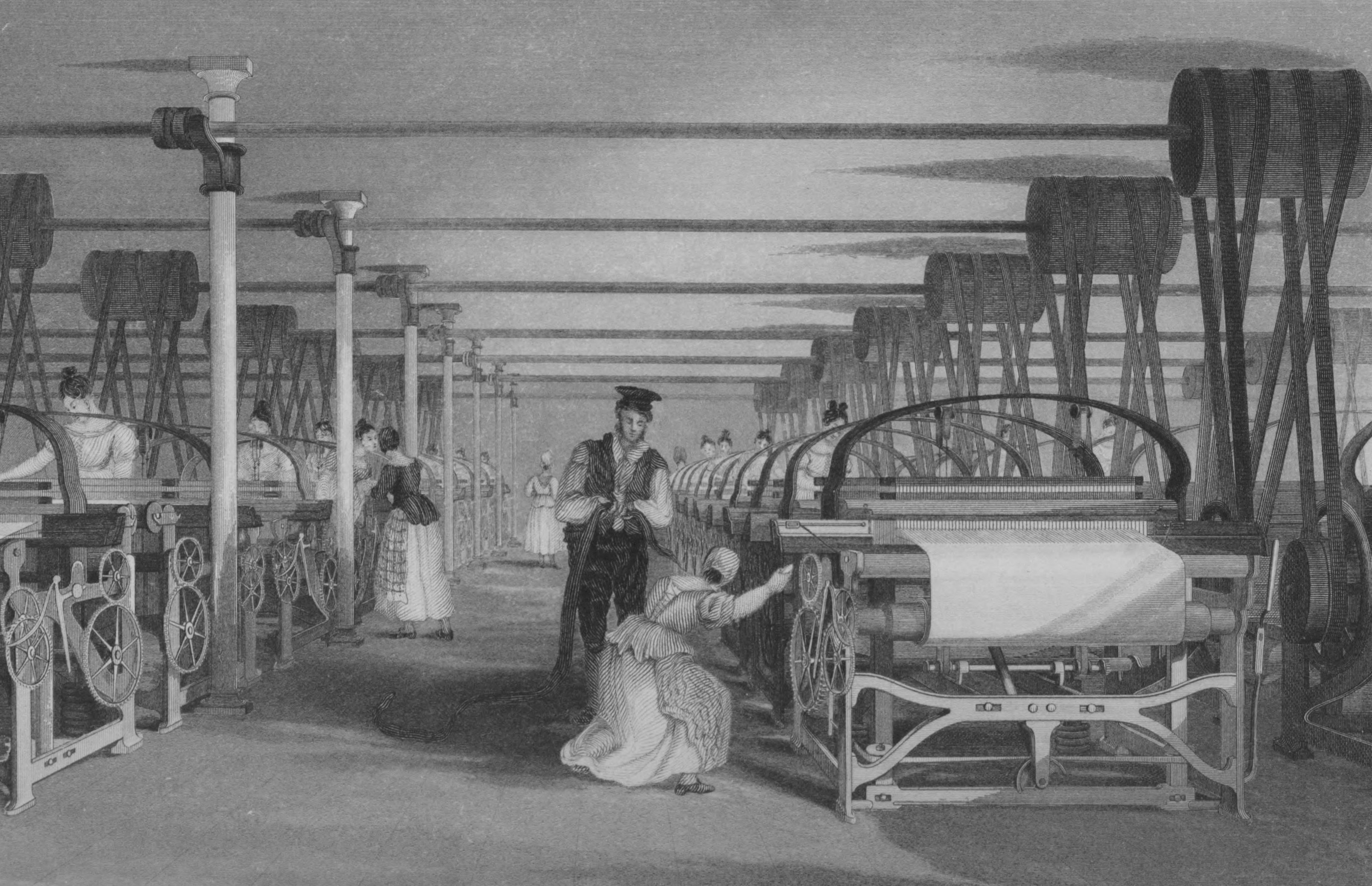
To solve this, society struck a "Grand Bargain." The New York workers' compensation system operates on a strict no-fault basis. Injured employees receive New York workers' compensation benefits regardless of who caused the workplace accident. The worker could have been clumsy, or the employer could have been negligent; it does not matter.
In exchange for guaranteed, immediate benefits, workers gave up their right to sue.
The Exclusive Remedy Doctrine: Workers' compensation serves as the exclusive remedy for employees injured on the job in New York. The exclusive remedy provision generally prohibits an injured employee from filing a personal injury lawsuit against the employer for a workplace injury.
Who Must Participate?
The mandate in New York is sweeping. New York State law requires virtually all employers with one or more employees to maintain continuous workers' compensation insurance.
As a producer, you will frequently hear small business owners argue that certain workers "don't count." The law disagrees:
- New York employers must provide workers' compensation coverage for part-time employees.
- New York employers must provide workers' compensation coverage for family members who are employed by the business.
There are narrow exceptions. Independent contractors and duly ordained religious ministers are generally exempt from mandatory New York workers' compensation coverage requirements. However, simply labeling a worker an "independent contractor" on a tax form does not make them one under New York labor law; the state applies strict behavioral and financial control tests to classify workers.
Avenues for Coverage
An employer cannot simply promise to pay injured workers out of pocket. They must secure their obligation through one of three highly regulated avenues:
- Private Market: New York employers can fulfill mandatory workers' compensation requirements by purchasing a policy through a private insurance carrier licensed in the state.
- State Fund: If the private market declines the risk (perhaps due to high claim frequency), New York employers can fulfill mandatory workers' compensation requirements by purchasing coverage through the New York State Insurance Fund (NYSIF), a competitive state fund that acts as the insurer of last resort.
- Self-Insurance: Massive corporations may choose to retain their own risk. However, qualifying as a self-insurer for New York workers' compensation requires the employer to meet strict financial requirements and requires the employer to obtain formal approval from the state.
Enforcement and the Cost of Noncompliance
The state enforces these mandates relentlessly. Businesses must show proof of active workers' compensation insurance when obtaining state or local business permits in New York. Furthermore, New York employers must physically post a formal notice of workers' compensation coverage in a highly visible location at their place of business, so employees know precisely who to contact if they are injured.
For employers who attempt to evade the mandate, the state's response is swift and draconian. A New York employer can face immediate stop-work orders for noncompliance with mandatory workers' compensation coverage requirements. Beyond halting operations, a New York employer can face financial penalties of up to $2,000 for every ten-day period of noncompliance with workers' compensation insurance mandates. A few months of attempting to save money on premiums can result in fines that permanently shutter a business.
When an employee is injured on the job, or contracts an occupational illness (like lung disease from factory dust), the policy activates several distinct benefit streams.
Medical and Wage Replacement
First, New York workers' compensation policies pay for all necessary medical care directly related to a job-related injury or occupational illness. There are no deductibles or copayments for the injured worker.
Second, the system recognizes that a healing worker cannot earn a living. New York workers' compensation provides cash benefits to replace a portion of lost wages for an employee disabled by a workplace injury.
To prevent perverse incentives (where a worker earns more by staying home than by working), these benefits are capped. New York workers' compensation cash benefits are calculated as two-thirds (66.67%) of the injured employee's average weekly wage. Furthermore, these cash benefits are subject to a state-defined maximum weekly limit, which is adjusted annually by the state based on average wage indices.
The Waiting Period Matrix
The system filters out minor scrapes and brief absences through a built-in time deductible. New York workers' compensation imposes a mandatory seven-day waiting period before an injured employee can begin receiving lost wage benefits.
However, severe injuries trigger a clawback provision. New York workers' compensation retroactively pays lost wage benefits for the initial seven-day waiting period if the disability extends beyond fourteen days.
| Days Out of Work | Wage Replacement Payable? | Logic |
|---|---|---|
| Days 1 to 7 | No benefits paid initially. | Under the 7-day waiting period. |
| Days 8 to 14 | Benefits paid for days 8–14 only. | Waiting period applies, but current days paid. |
| Day 15+ | Benefits paid for current days plus retroactive payment for Days 1–7. | Disability exceeded 14 days; waiting period retroactively funded. |
Death Benefits
When the worst occurs, the policy responds to the surviving family. New York workers' compensation provides regular cash death benefits to the surviving dependents of an employee killed in a work-related accident. Additionally, New York workers' compensation provides a specific reimbursement allowance for funeral expenses when an employee dies from a work-related injury, ensuring the family is not financially burdened by the immediate costs of burial.
A standard Workers' Compensation policy is divided into two main parts: Part One (Workers' Compensation, which pays the statutory benefits) and Part Two (Employers Liability). Employers Liability covers the employer if they are sued in capacities outside the exclusive remedy doctrine (such as third-party over-action claims).
Nationally, Part Two usually carries a fixed dollar limit. However, New York operates under a unique standard. The Employers Liability portion of a workers' compensation policy has no limit of liability for employees subject to the New York Workers' Compensation Law. To enforce this, every workers' compensation policy providing New York coverage must attach an endorsement providing unlimited employers liability coverage for statutorily subject employees.
Workers' compensation only applies if an injury arises out of and in the course of employment. But what happens if an employee breaks their leg skiing on a Sunday, or needs to take leave to care for a dying parent? New York addresses these societal risks through two additional employer mandates that you must seamlessly weave into your client's coverage portfolio.
- Disability Benefits Law (DBL): New York requires most employers to carry separate Disability Benefits Law insurance to provide partial wage replacement for off-the-job injuries or illnesses.
- Paid Family Leave (PFL): Introduced as a modern expansion of worker protection, New York requires covered employers to provide Paid Family Leave insurance to employees for bonding with a child or caring for a seriously ill family member.

When you advise a New York business owner, you are not merely transacting a policy; you are navigating a dense, interconnected web of statutory obligations and safety nets. From the total protection of the Security Fund for admitted carriers to the strict, no-fault mechanics of workers' compensation, these systems are precisely engineered to keep the economic machinery of the state moving forward when disaster strikes.