New York Unfair Trade Practices & Claims Settlement
Not sure you’re ready?
Take the ~3-minute readiness diagnostic and see where you stand.
An insurance policy is a profoundly unusual product. You are asking a client to trade tangible currency for an invisible, conditional promise: if disaster strikes, we will make you whole. Because the product is invisible until the very moment of a crisis, its entire value rests on the integrity of the people selling it and the companies backing it. New York insurance law exists to maintain this fragile architecture of trust. As a property and casualty producer, you are the vanguard of that trust. If producers lie to win business, or if insurers drag their feet when a client's roof collapses, the entire system collapses with it. We will examine the precise legal boundaries New York enforces to prevent this failure, focusing on how claims must be settled, the strict rules governing how policies are marketed, and the severe consequences of violating these standards.
When a client suffers a loss—a warehouse fire, a multi-car collision—they do not care about the administrative burdens of an insurance company. They are bleeding capital and need immediate intervention. New York law mandates speed and fairness.

The moment a client reports a loss to you, the legal machinery begins. Why? Because notice of a claim given to a licensed agent of an insurer is legally considered notice to the insurer in New York. The moment you know, the company knows.
The Rhythm of Resolution: The 15-Day Rules
To prevent insurers from leaving claimants in a state of suspended animation, New York enforces strict deadlines based on the "15 Business Day" rule.
| Trigger Event | Insurer Action Required Within 15 Business Days |
|---|---|
| Notice of Claim | • Acknowledge the receipt of the claim.<br>• Commence the investigation of the claim.<br>• Furnish the claimant with all necessary claim forms and instructions. |
| Receipt of Proof of Loss | • Advise the claimant in writing of the acceptance or rejection of the claim.<br>• If more time is needed, notify the claimant of the delay in writing. |
Professor's Note on Practicalities: Not every acknowledgment requires a certified letter. A claim acknowledgment by a New York insurer may be made by phone or email, provided an appropriate notation is made in the claim file.
If a claim is complex and remains unsettled after the initial delay notice, the insurer cannot simply go dark. A New York insurer must send a delay update letter to the claimant every 90 days setting forth the exact reasons additional time is needed.
Crossing the Line into "Unfair" Practices
When an insurer repeatedly fails at these basics, they cross into illegal territory. New York insurance law prohibits unfair claim settlement practices if committed without just cause. Furthermore, an act elevates to a prohibited unfair claim settlement practice when it is committed with such frequency as to indicate a general business practice. Occasional human error is a mistake; systematic delay is a violation.
The state explicitly defines several behaviors as Unfair Claim Settlement Practices:
- The Silent Treatment: Failing to promptly acknowledge pertinent claim communications.
- The Blind Eye: Failing to adopt reasonable standards for prompt claim investigations.
- The Lowball Trap: Compelling policyholders to institute lawsuits by offering substantially less than the claim value. (Imagine offering a client $5,000 for a totaled $40,000 truck, hoping they are too exhausted to hire a lawyer).
- The Shell Game: Misrepresenting pertinent coverage facts or policy provisions to claimants.
- The Unjustified Holdout: Failing to attempt a prompt and fair settlement when liability is reasonably clear.
Before a claim can be settled, a policy must be sold. The marketplace must be driven by accurate information, not deception or bribery. The New York Unfair Trade Practices act establishes the boundary between fierce competition and illegal manipulation.
Deception: Misrepresentation and Twisting
Misrepresentation involves a producer making false or misleading statements about a policy's terms, benefits, or dividends. If you tell a client a basic liability policy covers flood damage when it explicitly excludes it, you have committed misrepresentation.
Twisting is a highly specific, toxic form of misrepresentation. It is an unfair trade practice involving an incomplete comparison of insurance policies. Twisting is used by producers to unlawfully induce a policyholder to lapse, forfeit, surrender, or convert an existing policy. Why does this matter? Because you are blinding the client to the downsides of leaving their current policy just so you can harvest a new commission.
The Bribery Boundary: Rebating
Insurance rates are heavily regulated to ensure companies remain solvent. Therefore, you cannot discount a premium out of your own pocket to win a deal. Rebating involves offering a prospective client any valuable consideration or inducement not specified in the insurance policy. You cannot offer a client cash, stock, or free vacations to buy a policy.
However, New York property and casualty insurance laws recognize the realities of standard marketing. Producers are permitted to give promotional merchandise to clients without violating rebating rules, subject to two strict constraints:
- The promotional merchandise must not exceed $25 in value.
- The merchandise must conspicuously bear the name of the insurer or the producer.
A $15 coffee mug with your agency's logo? Perfectly legal marketing. A plain $50 gift card? Illegal rebating.

Market Manipulation and Malice
- Defamation: Competition should be based on your strengths, not malicious lies about your rivals. Defamation occurs when a person makes false or maliciously critical statements designed to injure an insurer's business or financial condition. If you willfully and knowingly circulate derogatory false statements about a New York insurer's financial condition, it is not just an unfair practice—it is classified as a misdemeanor.
- Boycott, Coercion, or Intimidation: Entering into an agreement resulting in an unreasonable restraint of trade in the insurance business. You cannot collude with other agencies to freeze out a competitor or force a client's hand.
- Unfair Discrimination: Actuarial math requires classifying risk, but it must be mathematically justified. Unfair discrimination involves treating individuals of the same class and risk profile differently in insurance rates, dividends, or benefits.
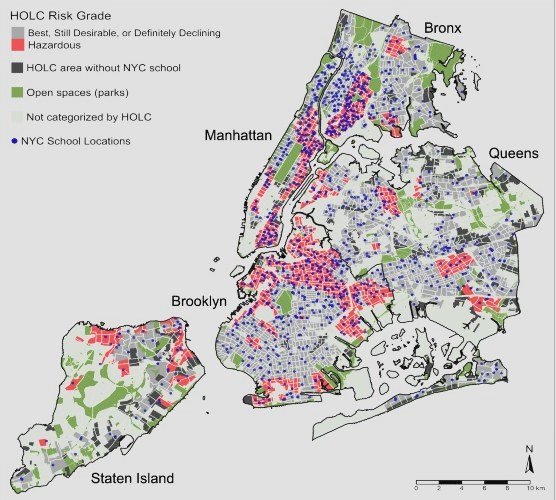
- Redlining: This is an unfair trade practice involving the refusal to issue a property and casualty policy solely based on the geographic location of the risk. You cannot draw a red line around a specific neighborhood on a map and automatically deny coverage without an individual risk assessment.
Laws are mere suggestions without an enforcement mechanism. The New York Superintendent of Financial Services acts as the supreme referee of the insurance marketplace. The Superintendent has the authority to investigate any person engaged in the insurance business for unfair trade practices.
Due Process and Superintendent Orders
The Superintendent cannot simply seize your license on a whim. The law requires due process: the Superintendent must provide notice and hold a hearing before taking disciplinary action for an unfair trade practice.

If the investigation proves you are breaking the rules, the Superintendent may issue a cease and desist order, formally instructing a producer to stop engaging in the confirmed unfair trade practice.
If you ignore this order, the math turns fiercely against you:
- A person violating a final cease and desist order is liable for a civil penalty of up to $5,000 for each violation.
Penalties in Lieu of Revocation
Sometimes a producer commits an infraction that warrants punishment, but not the outright destruction of their livelihood (license suspension or revocation). In these cases, the Superintendent may impose a monetary penalty in lieu of suspending or revoking a producer's license.
- This monetary penalty is up to $500 for each offense.
- The maximum aggregate penalty imposed in lieu of license revocation is $2,500 for all offenses combined.
Specific Violation Penalty: Violating the New York property and casualty rebating statute carries its own explicitly mandated penalty of $500 per violation.
The Ultimate Breach: Fraudulent Insurance Acts
While unfair trade practices are generally marketing and operational failures, fraud is outright theft. Committing a fraudulent insurance act happens in one of two ways:
- Commission: Knowingly presenting materially false information on an insurance application or claim form.
- Omission: Knowingly concealing material information on an insurance application or claim form to mislead the insurer.
Fraud destroys the statistical pool that allows insurance to function. Because it is so destructive, committing an intentional insurance fraud in New York can result in a civil penalty of up to $5,000 per offense (in addition to the amount of the fraudulent claim itself, and distinct from any criminal charges).
The Catch-All Rule of Law
To understand just how seriously New York takes its insurance code, you must understand the baseline severity of breaking any rule within it. As a sweeping standard: Every violation of a provision of the New York Insurance Law is legally considered a misdemeanor unless specifically defined as a felony.
When you study these limits, deadlines, and boundaries, you are not memorizing trivia. You are mastering the structural engineering of the New York financial system. Obey the 15-day timelines, market with integrity, and protect the promise you sell.