Pennsylvania Unfair Trade Practices & Claims Settlement
Not sure you’re ready?
Take the ~3-minute readiness diagnostic and see where you stand.
An insurance policy is, fundamentally, an invisible product. You cannot test-drive a life insurance policy, nor can you physically inspect the structural integrity of a health insurance benefit. When you sit across from a client, you are asking them to exchange hard, liquid currency today for a highly conditional promise that might not mature for decades. Because this transaction is built entirely on trust and the precise language of a contract, the state of Pennsylvania heavily regulates the space where the sale is made and the moment when the promise is called due. The rules governing unfair trade practices and claims settlement are not arbitrary administrative hurdles; they are the structural supports that prevent the entire mechanism of insurance from collapsing into chaos and fraud.
If you wish to hold a Pennsylvania Life & Health license, you must understand exactly where the lines are drawn. We are going to examine the mechanics of consumer protection, dissecting what happens when producers manipulate the truth, when insurers stall on their promises, and the severe mathematical consequences of violating the law.
As a producer, you control the flow of information. An imbalance of information naturally exists between you and the client. Unfair trade practices occur when a producer or an insurer weaponizes that imbalance to manipulate a consumer's decisions.

Misrepresentation and Market Integrity
At the foundation of consumer protection is the prohibition of false advertising, which is an unfair trade practice that involves publishing untrue, deceptive, or misleading statements about the business of insurance itself. You cannot put a billboard on the highway or run a digital ad that distorts the reality of how insurance products function.
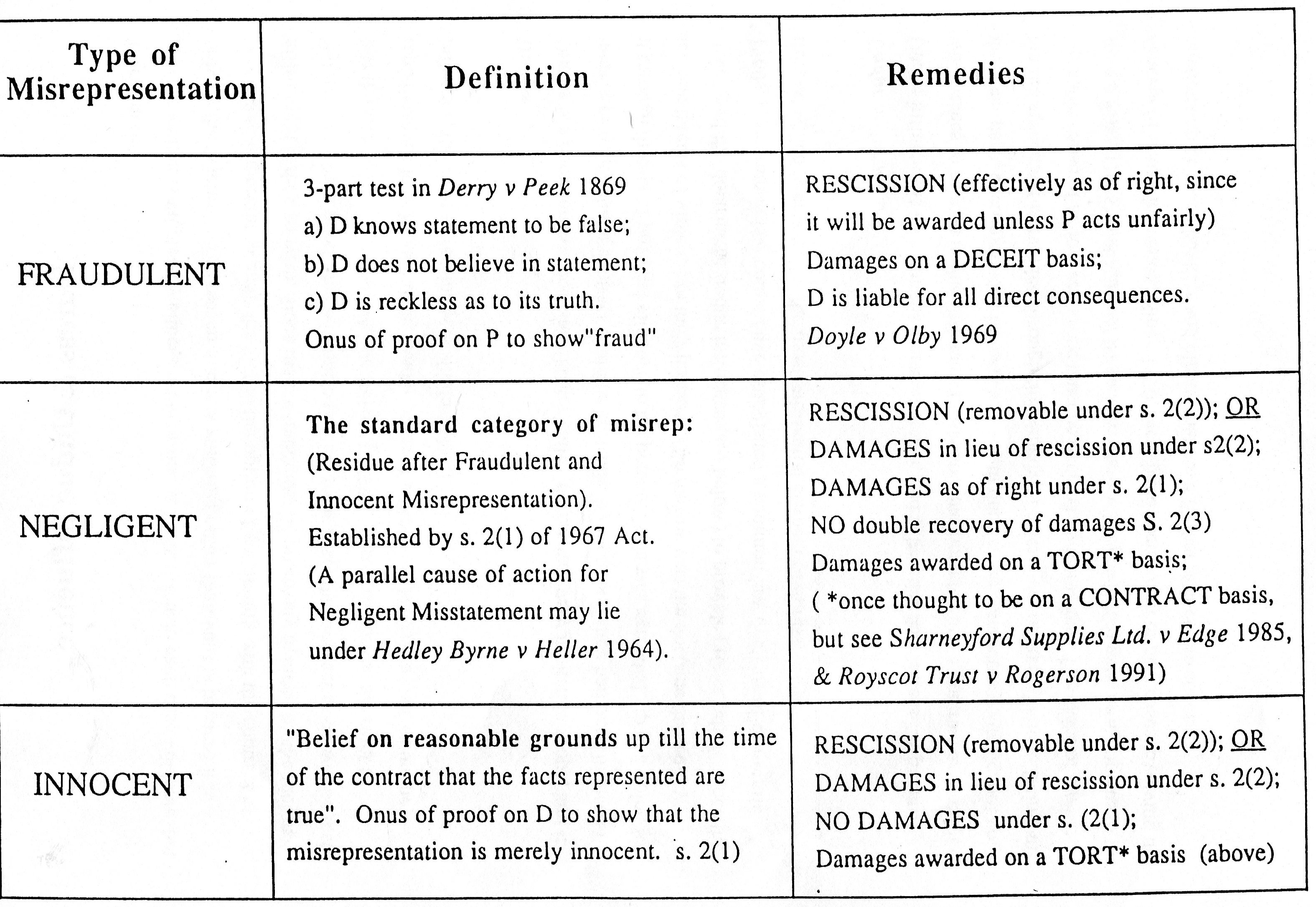
At the individual level, this manifests as misrepresentation. Misrepresentation is the act of making false, misleading, or deceptive statements about the terms, benefits, or dividends of an insurance policy. If you tell a client that a universal life policy’s non-guaranteed dividend is "an absolute certainty," you have misrepresented the contract.
Furthermore, consumers evaluate not just the policy, but the stability of the company backing it. Therefore, misrepresenting the financial condition of an insurance company to induce a sale is a prohibited unfair trade practice. You cannot inflate an insurer’s financial ratings to make your product look safer.
Conversely, you cannot attack competitors to artificially elevate your own standing. Defamation is an unfair trade practice that occurs when an individual makes false or maliciously critical statements regarding the financial condition of an insurer. Claiming a competing carrier is "on the verge of bankruptcy" just to scare a client away from their product poisons the integrity of the market.
The Velocity of Greed: Twisting and Churning
Life insurance policies carry high front-end costs. Because of this, unnecessarily replacing an existing policy with a new one almost always harms the consumer financially—costing them new surrender charges, resetting their contestability periods, and forcing them to be underwritten at an older age. When a producer induces this for their own financial gain, it falls into two distinctly illegal categories:
| Practice | Mechanism | The Illegal Act |
|---|---|---|
| Twisting | External Replacement | An unfair trade practice involving misrepresentations to induce a policyholder to lapse, forfeit, or surrender an existing policy for a new one, usually with a different company. |
| Churning | Internal Replacement | The illegal practice of persuading a policyholder to replace an existing policy with a new one within the same company solely to generate a commission. |
In both scenarios, the producer manufactures a transaction where the only real beneficiary is the producer. Because of the profound financial damage these practices inflict on the public, the Pennsylvania Insurance Commissioner can suspend or revoke the license of a producer who engages in twisting, churning, or rebating.
Inducements and Market Force
A rational insurance purchase is based on assessing risk and price. When a producer introduces external bribes or threats into that equation, the market breaks down.
Rebating is the illegal practice of offering an applicant anything of value that is not specified in the insurance contract as an inducement to purchase a policy. If the contract does not explicitly state that the client receives a $500 kickback, a set of golf clubs, or a discount on their first premium, offering it is illegal. The policy must stand on its own contractual merits.
On the darker side of market manipulation are boycott, coercion, and intimidation. These are unfair trade practices when the actions result in an unreasonable restraint of trade in the insurance business. Forcing a borrower to buy life insurance exclusively from your specific agency as a condition of approving their mortgage is coercion. It removes the client's freedom to choose and chokes the free market.
The Mathematics of Risk: Unfair Discrimination
Insurance underwriting is, by definition, the science of discrimination. Actuaries must discriminate between a healthy 20-year-old and a heavy-smoking 60-year-old; charging them different premiums is actuarially necessary and perfectly legal.
However, the law draws a hard line at unfair discrimination, which involves applying different rates or benefits to individuals of the same class and equal expectation of life. If two applicants share identical health profiles, ages, and risk characteristics, they must be treated identically. Specifically, using race, religion, nationality, or ethnic group as a basis for insurance underwriting decisions is considered illegal unfair discrimination. The mathematics of risk must remain blind to protected demographic characteristics.
If the producer’s duty is to sell the contract honestly, the insurer’s duty is to honor the contract promptly. When a client files a claim, they are often in a state of crisis—facing a hospitalization or mourning a death. The Pennsylvania code establishes rigid stopwatches to ensure insurers do not use bureaucratic delay tactics to avoid paying legitimate claims.
The Imperative of Investigation
Before any timeline begins, the state mandates a baseline of operational competence: Insurers are required to adopt and implement reasonable standards for the prompt investigation of claims arising under insurance policies.
If a claim is submitted, an insurer cannot simply throw it in a drawer or summarily reject it. Refusing to pay claims without conducting a reasonable investigation based upon all available information is an unfair claims settlement practice.

The Clockwork of a Claim: Pennsylvania Timelines
When a claim is triggered, the law dictates a highly specific sequence of events that the insurer must follow. Pay close attention to these deadlines:
- The Initial Contact: Under Pennsylvania law, an insurer must acknowledge receipt of a claim within 10 working days of receiving notification.
- Ongoing Dialogue: An insurer cannot go silent. Pennsylvania insurers must respond to pertinent communications from a claimant within 10 working days.
- The Investigation Window: An insurer in Pennsylvania must complete the investigation of an insurance claim within 30 days of receiving the claim notification.
- The Delay Notice: Real life is messy. Sometimes, gathering medical records or autopsy reports takes longer than a month. If an insurance claim investigation in Pennsylvania takes longer than 30 days, the insurer must provide the claimant with a written explanation for the delay.
- Continuous Updates: The insurer cannot send one delay notice and disappear. After the initial 30-day delay notice, a Pennsylvania insurer must send the claimant updated written explanations for the continuing claim investigation delay every 45 days.
- The Final Decision: Once all the required paperwork is submitted, the insurer must act decisively. A Pennsylvania insurer must advise a first-party claimant of the acceptance or denial of a claim within 15 working days after receiving a properly executed proof of loss.
Crucial Warning: Failing to affirm or deny coverage within a reasonable time after proof of loss statements have been completed is a direct violation of fair claims settlement laws.
Exploiting the Client's Vulnerability
Even if an insurer follows the timelines, they can still violate the law through predatory settlement tactics.
Consider a scenario where an insurer knows a widow is rightfully owed a $100,000 life insurance death benefit. The insurer, knowing the widow is desperate to pay for funeral expenses and lacks the funds for a prolonged legal battle, offers her $25,000 on a "take it or leave it" basis. This is illegal. Compelling insureds to institute litigation to recover amounts due by offering substantially less than the amounts ultimately recovered is an unfair claims settlement practice. The insurer cannot use the threat of exhausting court battles to discount their contractual liabilities.
Laws are merely suggestions without mathematical consequences. Pennsylvania enforces its statutes through a tiered system of civil and criminal penalties designed to make non-compliance financially ruinous.
Pennsylvania Unfair Insurance Practices Act (UIPA) Penalties
When an agent or insurer violates trade or claims practices, the Insurance Commissioner scales the punishment based on intent and frequency.
- Unintentional Violations: If you make a genuine error, it still carries a cost. The penalty for an unintentional violation of the Pennsylvania Unfair Insurance Practices Act is a fine of up to $1,000 per violation. However, the aggregate penalty for unintentional violations cannot exceed $10,000 in any six-month period.
- Intentional Violations: If the Commissioner determines you willfully broke the rules, the stakes rise sharply. The penalty for an intentional violation of the Act is a fine of up to $5,000 per violation. In this case, the aggregate penalty for intentional violations cannot exceed $50,000 in any six-month period.
- Defying the Commissioner: If you are caught and ordered to stop, but you continue anyway, the hammer falls. Violating a cease and desist order issued by the Pennsylvania Insurance Commissioner carries a penalty of up to $10,000 per violation.
The Severe Reality of Insurance Fraud
Up to this point, we have discussed trade and claims practices. But what happens when an individual outright lies to steal money?
Insurance fraud involves knowingly providing false or misleading information to an insurer with the intent to defraud. It is not an accident; it is a calculated theft. And it is not a solitary crime—assisting, abetting, or conspiring with another person to prepare a false statement in support of an insurance claim constitutes insurance fraud. If an applicant lies about their medical history on a life insurance application, and you, the producer, know about the lie but help them submit it anyway, you are guilty of fraud.
Because fraud actively drains the financial reserves that protect honest policyholders, the Pennsylvania judicial system treats it with maximum severity.
Criminal Penalties for Fraud:
- Under Title 18 Section 4117 of the Pennsylvania Crimes Code, felony insurance fraud offenses are graded as third-degree felonies.
- The loss of your freedom is a real variable in this equation: A third-degree felony insurance fraud conviction in Pennsylvania carries a maximum criminal penalty of up to 7 years in prison.
- Accompanying the prison sentence, a third-degree felony insurance fraud conviction carries a maximum fine of up to $15,000.
Civil Penalties for Fraud: Even outside of criminal court, the civil system will aggressively pursue the financial assets of the fraudster. The civil fines escalate rapidly to ensure repeat offenders are priced out of the industry:
- A civil penalty for insurance fraud in Pennsylvania can include fines of up to $5,000 for the first violation.
- A civil penalty can include fines up to $10,000 for a second violation.
- A civil penalty can include fines up to $15,000 for each subsequent violation after the second offense.
To ensure that the state is not financially burdened by having to pursue these bad actors, the law provides a final mechanism of restitution: A Pennsylvania court may award court costs and reasonable attorney fees to the prosecuting authority in cases involving insurance fraud.
When you pass your exam and enter the field, you become a fiduciary of the public trust. The rules of unfair trade practices, the strict stopwatches of claims settlement, and the crushing penalties for fraud all exist to ensure that when a client trades their present dollars for an invisible promise, that promise remains unbreakable.