Texas Insurance Code & Department of Insurance
Not sure you’re ready?
Take the ~3-minute readiness diagnostic and see where you stand.
Insurance is not a tangible product; it is a mathematical promise. When a Texan purchases a life or health policy, they are buying a future guarantee that a pool of capital will be there to catch them when biology or sheer bad luck intervenes. But a promise is entirely worthless if the entity making it lacks either the capital or the legal compulsion to fulfill it. That legal compulsion—the machinery that keeps the mathematics honest and the promises intact—is the Texas Insurance Code, governed by the Texas Department of Insurance (TDI).
To understand how you are regulated as a producer, you must first understand the division of power in Texas insurance law. It operates much like an architect and a master builder.
The Texas Legislature is the architect. The Texas Legislature creates the insurance laws for the state.
The Commissioner of Insurance is the master builder and chief enforcer. The Commissioner of Insurance does not enact insurance laws. Instead, the Commissioner of Insurance administers the provisions of the Texas Insurance Code and enforces the provisions of the Texas Insurance Code. To bridge the gap between broad laws and daily operations, the Commissioner of Insurance adopts rules to execute Texas insurance laws.
Because this role wields immense economic power, it is not an elected position left to popular whims. The Governor of Texas appoints the Commissioner of Insurance, and the appointment of the Commissioner of Insurance must be confirmed by the Texas Senate. The Commissioner of Insurance serves a two-year term, ensuring strict accountability to the state's executive branch.
Core Duties of the Department
Beyond simply writing rules, the TDI is an active, investigative body. Think of it as both a financial auditor and a consumer protection agency.
- Financial Solvency: To ensure companies have the money to pay out future life insurance payouts, the Commissioner of Insurance calculates insurance reserves for life insurance companies.
- Consumer Protection: When the public is wronged, the TDI acts as the detective. The Texas Department of Insurance investigates consumer complaints against insurance companies, and equally, the Texas Department of Insurance investigates consumer complaints against insurance producers.
Trust in the insurance market is verified through rigorous, continuous audits. The Texas Department of Insurance may examine the affairs of any person engaged in the insurance business.
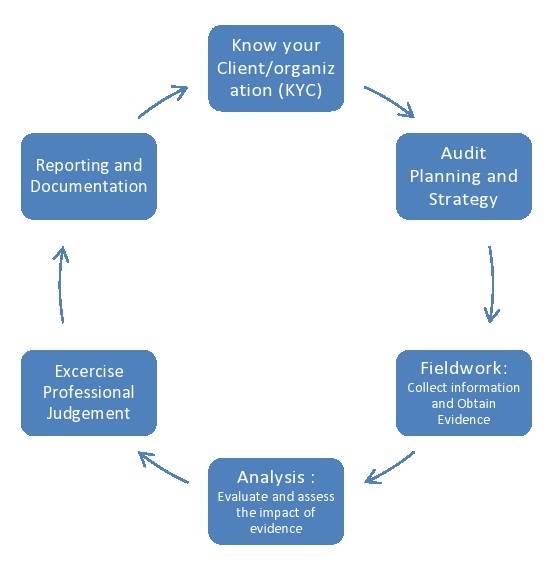
Why do they conduct these exams? An examination determines whether an insurance professional has violated the Texas Insurance Code, and an examination determines whether an insurance professional has engaged in an unfair method of competition.
Examining the Companies
Insurance companies are subjected to deep scrutiny. During a market conduct examination, the examiner has free access to all books of the insurer and free access to all records of the insurer. If the TDI finds an anomaly and requests data, an insurance company must respond to a Texas Department of Insurance request for information within 15 days.
The frequency of these financial check-ups depends on where the insurer is legally headquartered:
- Domestic Insurers: The Commissioner of Insurance must examine the financial condition of each domestic insurer at least once every five years.
- Foreign Insurers: The Commissioner of Insurance may examine a foreign insurer as often as the Commissioner deems necessary.
- The Cost: Investigations are not subsidized by the taxpayer. The examined insurance company must pay the cost of the financial examination.
Examining You: Producer Recordkeeping
As a licensed producer, you are the frontline representative of the insurance industry. Your files are the first place the state looks when a dispute arises.
Texas insurance producers must maintain complete records of insurance transactions, and they must maintain accurate records of insurance transactions. These are not files you can purge at the end of the year. Texas insurance producers must retain transaction records for a minimum of five years.
The Accessibility Rule: It doesn't matter how you store your files, so long as they are immediately available. Producer transaction records must be accessible to the Commissioner of Insurance upon request. Texas insurance producers may maintain required records in paper formats, or Texas insurance producers may maintain required records in electronic formats. Alternatively, an insurer is permitted to maintain transaction documentation on behalf of an appointed producer.
When a client suffers a loss—a medical emergency or the death of a spouse—they do not have the luxury of time. Texas law imposes a strict, mathematical timeline on insurers to process claims. This prevents companies from quietly starving out claimants through bureaucratic delays.
If a weather-related catastrophe declaration is issued (such as a massive Gulf hurricane), the sheer volume of claims alters the math: a weather-related catastrophe declaration extends Texas claim-handling deadlines by an additional 15 days.

Otherwise, insurers must follow this precise countdown:
| The Action | The Deadline |
|---|---|
| Acknowledge & Begin: A Texas insurer must acknowledge receipt of a filed claim, commence an investigation of a claim, and request all necessary forms from a claimant. | Within 15 days of receiving notice. |
| Decide: A Texas insurer must accept or reject a claim. | Within 15 business days after receiving all requested items. |
| Delay: If a Texas insurer requiring more time to process a claim cannot decide yet, they must notify the claimant. | Within 15 business days. |
| Pay: A Texas insurer must send claim payment. | Within 5 business days after agreeing to pay the claim. |
What happens when the rules are broken? When the TDI suspects foul play, the gears of administrative justice begin to turn. The Commissioner of Insurance can issue a statement of charges to a person suspected of violating the Texas Insurance Code.
Due Process and Hearings
You are entirely entitled to defend your livelihood. An insurance professional facing disciplinary action may request a hearing before an Administrative Law Judge.
To ensure fairness, the Commissioner of Insurance must provide written notice of a disciplinary hearing at least 10 days before the hearing date. This is not a vague summons; by law, a disciplinary hearing notice must state the time of the scheduled hearing, the place of the scheduled hearing, and the legal authority under which the hearing will be held.
The Hammer: Fines and License Actions
If a violation is proven, the Commissioner wields severe disciplinary tools designed to immediately protect the public and punish the offender.
- Cease and Desist: If active harm is occurring, the Commissioner of Insurance has the authority to issue a cease and desist order. A cease and desist order requires an individual to immediately stop a specified illegal insurance activity.
- Financial Penalties: The Commissioner of Insurance may assess an administrative penalty of up to $25,000 per violation of the Texas Insurance Code. Crucially, this acts like a ticking meter: each day an insurance law violation continues is considered a separate violation for penalty assessment purposes. If you ignore an order for four days, that is potentially $100,000 in fines. An assessed administrative penalty must be paid within 30 days after the Commissioner of Insurance's order becomes final.
Your License is a Privilege, Not a Right For serious offenses, the Commissioner can dismantle your career. The Commissioner of Insurance can suspend a producer's license, revoke a producer's license, or refuse to renew a producer's license for violating the Texas Insurance Code.
The Commissioner does possess leniency for lesser infractions or mitigating circumstances. The Commissioner of Insurance may place a violating licensee on probation instead of revoking the license, or the Commissioner of Insurance may issue a formal reprimand to a violating licensee instead of revoking the license.
However, if your actions warrant the ultimate penalty, the exile is long. An individual whose Texas insurance license is revoked must wait five years before applying for a new license. Similarly, an individual whose Texas insurance license application is denied must wait five years before reapplying.
Why This Matters to You: Every application you take, every file you save, and every claim you facilitate is governed by these exact rules. You are stepping into a heavily fortified regulatory environment designed to protect the public. Master these timelines and boundaries not just to pass your exam, but to build an unassailable, lifelong career in the Texas insurance market.