Texas Marketing, Replacement & Suitability Rules
Not sure you’re ready?
Take the ~3-minute readiness diagnostic and see where you stand.
Insurance is, at its core, a contract of abstraction. When a consumer purchases a life insurance policy or an annuity, they are not walking out of a store with a tangible machine they can test or inspect; they are exchanging current capital for a heavily conditional future promise. Because the underlying mathematics and legal architecture of these products are profoundly complex, a massive asymmetry of information exists between the actuary who designed the policy and the consumer who buys it.

To bridge this gap and prevent the exploitation of the consumer, the state of Texas has constructed a rigorous framework of marketing, replacement, and suitability laws. These regulations dictate exactly how you, as a licensed professional, can communicate, what you must disclose, and how you must evaluate the appropriateness of the products you recommend. Your license grants you the authority to guide people through some of the most consequential financial decisions of their lives. The rules we are about to examine ensure that this authority is exercised with precision, transparency, and unimpeachable integrity.
When you solicit business, you are the face of the insurance industry. Consequently, the primary purpose of insurance advertising regulations is to ensure full and fair disclosure to the public.
To achieve this, Texas law mandates that all insurance advertisements must be absolutely truthful. It goes further than just prohibiting outright lies; Texas law prohibits insurance advertisements from being misleading in fact or by implication. If an advertisement relies on a technical loophole to suggest a false reality, it violates the law.
Texas prohibits false advertising in the insurance industry altogether, which specifically includes publishing untrue or misleading information about the insurance business.
Naming Conventions and Identity
Transparency starts with identity. An insurance advertisement must clearly state the full name of the insurer issuing the policy. Furthermore, an agent cannot use terms like "investment," "savings plan," or "profit" to imply a life insurance policy is not insurance. If you are selling a life insurance policy, it must be presented exactly as what it is—insurance—not disguised as a high-yield savings vehicle. Additionally, insurance advertisements cannot imply that a policy is endorsed by a government agency.
Prohibited Sales Practices: Defamation and Twisting
Competition in the market must be won on the merits of the product, not through sabotage or deceit.
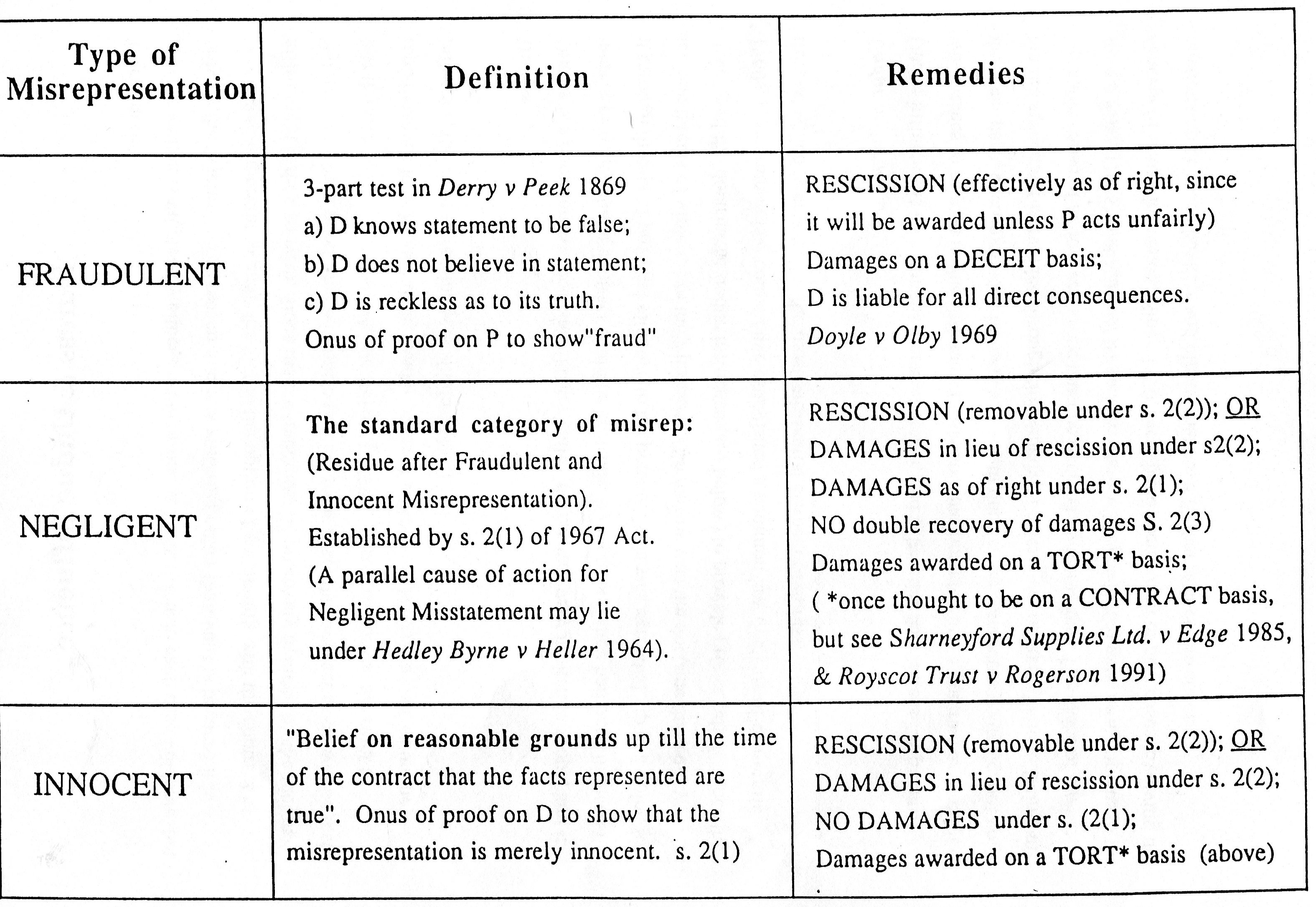
- Defamation: Texas heavily prohibits defamation in the insurance industry. Defamation occurs when an agent maliciously spreads false or derogatory information about an insurer or a competitor. You cannot whisper that a rival carrier is "going insolvent" just to win an account.
- Twisting: This is a predatory form of misrepresentation. Twisting involves using false information to induce a policyholder to lapse, surrender, or exchange a policy.
- Guaranty Association: While the Texas Life and Health Insurance Guaranty Association exists as a safety net if a carrier goes bankrupt, agents are explicitly prohibited from using the existence of the Association to induce a sale. It is a backstop, not a marketing feature.
Record Retention
Regulatory oversight requires a paper trail. Because of this, Texas insurers must maintain complete files of all published advertisements. More broadly, Texas insurers must maintain general business records of insurance transactions for a minimum of three years.
Before a client signs a contract, they must understand both the mechanics of life insurance generally and the mathematics of their specific policy. Texas mandates the delivery of two foundational documents to achieve this:
| Document | Purpose & Characteristics | Delivery Requirement |
|---|---|---|
| Buyer's Guide | Provides basic, generic information about life insurance policy types to help consumers make informed decisions. | Must be provided to all prospective life insurance purchasers. |
| Policy Summary | Provides specific details about the guaranteed elements of the exact life insurance policy being considered. | Must be delivered before or at the time the policy is delivered. |
Life Insurance Illustrations
When dealing with policies that accrue cash value (like Whole Life or Universal Life), you will often use an illustration to show how the policy might perform over decades.
- These documents must be clearly labeled as a "Life Insurance Illustration."
- They must clearly distinguish between guaranteed elements (what the company mathematically promises to pay) and non-guaranteed elements (projected dividends or interest rates).
- Most importantly, an agent cannot present non-guaranteed elements of a life insurance policy as guaranteed.
The Escape Hatch: Free-Look Periods
Consumers occasionally succumb to buyer's remorse, or realize upon reading the physical contract that the policy does not fit their needs. The free-look period allows a policyholder to review the contract and cancel the policy for any reason.
If utilized, the policyholder who cancels during the free-look period is entitled to a full, unconditional refund of all premiums paid.
The length of this period depends on the product:
- Texas requires a minimum free-look period of 10 to 20 days for new life insurance policies.
- Texas requires a 20-day free-look period for the purchase of a new annuity.
- Texas provides a 30-day free-look period for replaced annuity contracts.
- Similarly, Texas requires replacing insurers to provide an extended free-look period for replacement life insurance policies.
A massive portion of regulatory scrutiny is dedicated to Replacement. Why? Because older policies often have accumulated cash value, lower premiums based on a younger issue age, and expired contestability periods. Convincing a client to scrap an old policy for a new one generates a commission for the agent, but can sometimes result in profound financial harm to the client.
What constitutes a replacement? Replacement occurs when a consumer buys a new life insurance policy and causes an existing life insurance policy to be lapsed. It also includes transactions where an existing policy is converted to reduced paid-up insurance, or if a transaction involves an existing policy being reissued with a reduction in cash value. Similarly, replacement occurs when a consumer buys a new annuity and causes an existing annuity to be surrendered.
Ultimately, replacement regulations protect consumers from making uninformed decisions about exchanging insurance coverage.
The Producer’s Duties in a Replacement
If your recommendation will trigger a replacement, Texas law demands strict procedural compliance:
- The Notice: An agent initiating a replacement transaction must present a "Notice Regarding Replacement" to the applicant.
- Signatures: This "Notice Regarding Replacement" must be signed by both the agent and the applicant.
- Client Copy: The agent must leave a copy of the "Notice Regarding Replacement" with the applicant, and the agent must provide the applicant with a copy of all sales proposals used in the presentation.
- Insurer Notification: The agent must submit a copy of the "Notice Regarding Replacement" to the replacing insurance company, along with a list of all existing life insurance policies to be replaced.
The Insurers’ Duties in a Replacement
The companies themselves must also communicate to ensure the client is protected.
- The Replacing Insurer must notify the existing insurer of the replacement transaction. Critically, the replacing insurer must notify the existing insurer within five business days of receiving the replacement application. The replacing insurer must also maintain copies of the replacement notice and related records for five years.
- The Existing Insurer must retain these replacement notifications for five years.
Annuities are powerful, complex financial instruments designed to prevent individuals from outliving their income. Because they often require locking up large sums of a client’s life savings, they are subject to the highest standard of care.
Before you can even begin, Texas requires agents to complete a four-hour annuity training course before selling annuities. This four-hour annuity training course must be approved by the Texas Department of Insurance (TDI).
The Best Interest Standard
Texas requires insurance agents to act in the best interest of the consumer when recommending an annuity. The best interest standard explicitly prohibits an agent from placing the agent's financial interest ahead of the consumer's interest.
The Texas best interest standard involves four distinct conduct obligations:
1. The Care Obligation
You cannot prescribe a solution without diagnosing the patient. The care obligation requires an agent to gather suitability information before recommending an annuity.
What constitutes this information? Annuity suitability information includes:
- The consumer's age and annual income.
- The consumer's financial situation, financial experience, and existing assets.
- The consumer's financial objectives and time horizon.
- The consumer's liquidity needs, risk tolerance, and tax status.
Once gathered, the care obligation requires the agent's recommendation to reflect the consumer's specific financial situation and needs.
2. The Disclosure Obligation
The disclosure obligation requires the agent to reveal all material facts about the annuity product upfront. The client must understand the surrender charges, the fees, and exactly how the product generates returns.
3. The Conflict of Interest Obligation
The conflict of interest obligation requires the agent to identify and mitigate material conflicts of interest. If you are receiving a massive, unusual incentive from a carrier to push a specific product, you must manage that conflict so it does not override your client's needs.
4. The Documentation Obligation
If your reasoning is sound, it should be on paper. The documentation obligation requires the agent to record a written rationale for the annuity recommendation.
Annuity Recordkeeping and Exemptions
To prove compliance with the Best Interest standard, agents must maintain records of the information collected for an annuity recommendation. Furthermore, annuity suitability and recommendation records must be kept for five years after the transaction is completed.
Legal Limitations of the Rule: While these rules are stringent, they have specific boundaries.
- No Private Lawsuits: The Texas best interest standard does not create a private cause of action for consumers to sue agents. (Enforcement is handled by the TDI).
- ERISA Exemption: The annuity suitability rules do not apply to employer-sponsored ERISA retirement plans (as these are governed by federal Department of Labor laws).
- No Recommendation: The annuity suitability rules do not apply to direct-response solicitations where no recommendation is made (e.g., a consumer independently buying an annuity directly through a website without an agent's advice).
Mastering these rules is not merely an exercise in passing your licensing exam; it is the foundation of a durable, ethical career. By adhering strictly to marketing truths, rigorously documenting your rationale, and prioritizing the economic reality of the client above your own commission, you uphold the profound trust placed in the Texas insurance profession.