Texas Automobile Insurance Laws
Not sure you’re ready?
Take the ~3-minute readiness diagnostic and see where you stand.
Every time a driver starts an engine in Texas, they assume a profound financial liability. A two-ton machine traveling at sixty miles per hour possesses enough kinetic energy to level a building or permanently alter a human life. Because the potential for catastrophic damage is so high, the state treats auto insurance not as a luxury, but as a non-negotiable societal contract. The Texas Motor Vehicle Safety Responsibility Act requires all operators of motor vehicles to maintain the financial ability to pay for damages caused by the operator. For an insurance producer, understanding the mechanics of this law is not just about passing a licensing exam—it is about keeping drivers legally on the road and ensuring victims are financially whole when the inevitable forces of physics result in a collision.
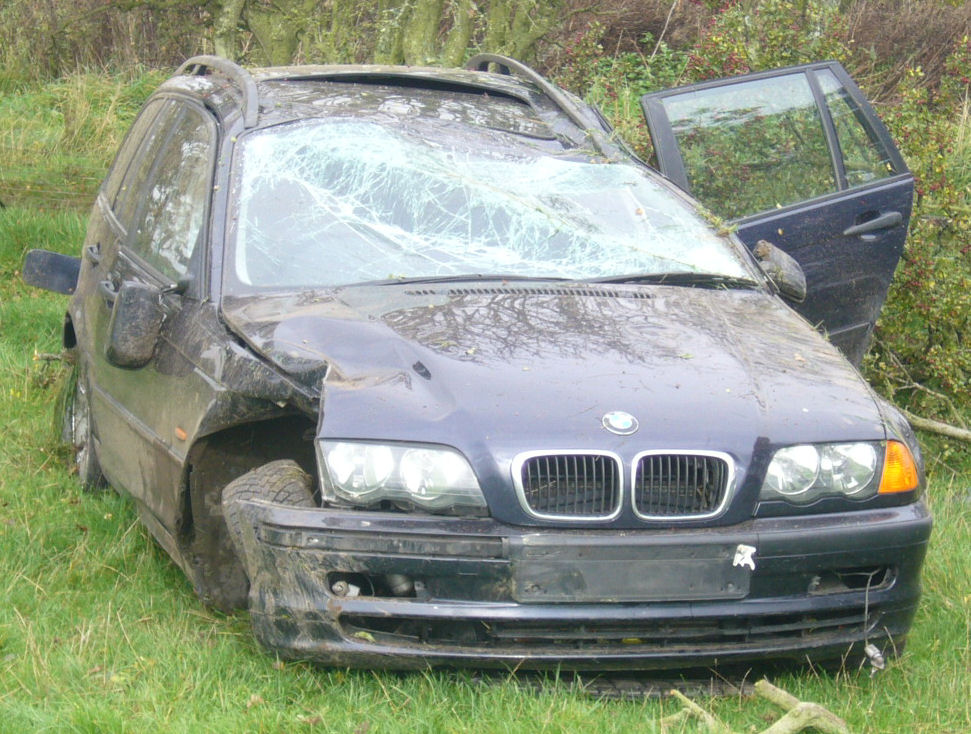
When a driver causes an accident, the fundamental rule of insurance is that auto liability insurance pays for injuries the insured driver causes to other people, and it pays for property damage the insured driver causes to the property of others.
Crucially, you must remember what liability does not do: Auto liability insurance does not pay for the at-fault insured driver's own injuries or personal vehicle damage. Think of liability coverage purely as an outward-facing shield. It protects the insured's bank account from lawsuits, but it only pays the other guy.
To ensure there is enough money in the pool to compensate victims, the state sets strict minimum limits. The minimum auto liability insurance required in Texas is commonly abbreviated as 30/60/25 coverage.
| Coverage Type | Minimum Limit Requirement in Texas | What it Means in a Claim |
|---|---|---|
| Bodily Injury (Per Person) | $30,000 | Texas law requires drivers to carry minimum bodily injury liability limits of $30,000 per person. This is the maximum the policy will pay for a single injured victim's medical bills and suffering. |
| Bodily Injury (Per Accident) | $60,000 | Texas law requires drivers to carry minimum bodily injury liability limits of $60,000 per accident. If multiple people are hurt, this is the absolute cap the insurer will pay out for all injuries combined in that one crash. |
| Property Damage | $25,000 | Texas law requires drivers to carry minimum property damage liability limits of $25,000 per accident. This covers the other driver's totaled vehicle, or a fence, or a storefront the insured happens to drive through. |
Producer's Note: If an applicant asks why these numbers matter, remind them of the cost of a modern pickup truck or a single trip to the emergency room. A $25,000 property damage limit gets exhausted very quickly if your client rear-ends a brand new vehicle.
The state does not just take a driver's word that they have coverage. Drivers in Texas must carry proof of financial responsibility and present the proof to law enforcement officers upon request.
When your client gets pulled over, the piece of paper (or screen) they hand to the officer must contain specific data. By law, proof of auto insurance in Texas must include the policy number, effective dates, vehicle information, and the insurer name. Modern statutes recognize modern technology, so Texas law allows drivers to present digital or electronic proof of auto insurance on a mobile device.
Behind the scenes, the state maintains a massive digital checkpoint. TexasSure is the state electronic insurance verification program used by law enforcement and the Department of Motor Vehicles to confirm active auto policies. To keep this database accurate, every licensed auto insurer in Texas must regularly report active liability policies to the TexasSure database. If a client cancels their policy on Tuesday, TexasSure will know, and so will the highway patrol officer running their plates on Wednesday.
The penalties for ignoring this system are severe. Driving without valid auto insurance in Texas can result in a fine ranging from $175 to $350 for a first offense. If the driver fails to learn their lesson, subsequent offenses for driving without insurance in Texas can result in fines up to $1,000 and vehicle impoundment.
Alternatives to Auto Insurance
While 99% of your clients will buy an insurance policy to satisfy the law, Texas does allow affluent or corporate drivers to prove financial responsibility using their own capital. Notice how these alternative amounts relate to the 30/60/25 limits (specifically, $30,000 for one injury + $25,000 for property damage = $55,000):
- A person can establish financial responsibility in Texas by depositing $55,000 in cash or securities with the state comptroller.
- Alternatively, a person can establish financial responsibility in Texas by making a $55,000 cash or cashier's check deposit with the county judge where the vehicle is registered.
- Finally, a surety bond filed with the Texas Department of Public Safety can satisfy the state financial responsibility requirement.
What happens when your client, obeying the law, is broadsided by a driver who ignored the law? Here, the state pivots from protecting the public to protecting the insured.
Uninsured and Underinsured Motorist Coverage (UM/UIM)
Uninsured motorist coverage protects the insured driver against injuries caused by an at-fault driver who has no liability insurance. Furthermore, sometimes the at-fault driver has insurance, but they only bought the state minimums. If they cause $100,000 in injuries but only have a $30,000 limit, they are underinsured. Underinsured motorist coverage pays when an at-fault driver has liability limits that are too low to fully cover the innocent victim's damages.
Because Texas has a high rate of uninsured drivers, the law forcefully nudges citizens to buy this protection. Texas auto insurers are legally required to offer uninsured and underinsured motorist coverage to every auto insurance applicant.
You cannot simply uncheck a box on an application to remove it. A Texas auto policyholder can only reject uninsured and underinsured motorist coverage by submitting a refusal in writing. If you fail to secure that signature, the law intervenes: If a Texas auto policyholder does not explicitly reject uninsured and underinsured motorist coverage in writing, the coverage is automatically included in the auto policy.
UM/UIM is highly versatile. Uninsured and underinsured motorist coverage applies to hit-and-run accidents if the at-fault driver cannot be identified. It also covers the hardware. Uninsured motorist property damage coverage pays for repairs to the insured driver's vehicle caused by an uninsured driver. However, to prevent microscopic nuisance claims, uninsured motorist property damage coverage in Texas requires the policyholder to pay a mandatory $250 deductible.
Personal Injury Protection (PIP)
While UM/UIM requires proving someone else was at fault, Personal Injury Protection (PIP) is a "no-fault" safety net. Personal Injury Protection coverage in Texas pays for medical expenses for the insured driver and passengers, regardless of fault.
Like UM/UIM, Texas auto insurers must offer Personal Injury Protection coverage to every auto insurance applicant, and the minimum required Personal Injury Protection offer in Texas is $2,500 per person. Again, the state insists on a paper trail: A Texas auto policyholder can only reject Personal Injury Protection coverage by submitting a refusal in writing.
PIP is uniquely powerful because it goes beyond medical bills to stabilize the victim's life.
- Personal Injury Protection coverage in Texas pays for eighty percent of lost income for the insured driver, regardless of fault.
- Personal Injury Protection coverage in Texas pays for essential services normally performed by the injured person, such as child care.
Scenario: A single mother gets distracted, hits a tree, and breaks her leg. She was at fault, so UM/UIM does not apply. However, her PIP coverage will pay her immediate medical bills, 80% of her lost wages while she misses work, and even the cost to hire a nanny to watch her children while she recovers.
Insurance companies are businesses; they run on risk assessment. If an applicant has four DUIs and a habit of rear-ending school buses, no standard carrier will voluntarily write their policy. But remember the Texas Motor Vehicle Safety Responsibility Act: drivers must have insurance to drive legally.
To solve this paradox, the state created a residual market. TAIPA stands for the Texas Automobile Insurance Plan Association.
TAIPA is an assigned-risk residual market pool for Texas drivers who cannot obtain auto liability insurance in the voluntary market.
You cannot walk into TAIPA simply because you want a cheaper rate. To be eligible for TAIPA, an applicant must certify rejection for auto insurance by at least two licensed insurers within the past 60 days.
How does TAIPA find companies to take these high-risk drivers? It drafts them. All insurance companies licensed to write auto insurance in Texas must participate in the Texas Automobile Insurance Plan Association. The distribution is strictly mathematical: TAIPA assigns high-risk drivers to member insurance companies based on each member company's share of the Texas auto insurance market. If an insurer writes 10% of the standard auto policies in Texas, they must accept 10% of the high-risk drivers TAIPA assigns them.
Because TAIPA is a penalty box for bad driving, the coverage is strictly limited to bare survival. TAIPA policies only provide the state-minimum liability coverages, uninsured motorist coverage, and Personal Injury Protection. If the driver wants to protect their shiny new sports car from hail or a collision with a telephone pole, they are out of luck: TAIPA policies do not offer collision or comprehensive coverage for damage to the insured driver's own vehicle.