Allocation and Case Management
Every criminal charge in England and Wales carries, buried inside it, a jurisdictional puzzle: which court gets to try this case? Get the answer wrong and the conviction itself can unravel. Get it right and you've made one of the most consequential tactical calls a criminal solicitor ever makes for a client — because the choice of venue shapes sentencing exposure, the standard of proof in practice, the cost of the case, and even the odds of acquittal.
Start with the architecture. Every offence in England and Wales sits in one of three boxes:
- Summary-only offences can only be tried in the magistrates' court.
- Indictable-only offences can only be tried in the Crown Court.
- Either-way offences may be tried in either forum.

The first two categories are jurisdictionally fixed — there is no decision to make, no hearing to hold. A summary-only offence never sees the Crown Court; an indictable-only offence never sees a magistrates' trial. It is the third category, either-way offences, that generates the entire body of procedure this topic is built around. Theft, most assaults occasioning actual bodily harm, and burglary of a dwelling are classic either-way offences — serious enough that a jury trial might be warranted, but not so serious that summary trial is automatically inappropriate. The plea before venue and allocation procedure applies only to either-way offences; it is the machinery that resolves the ambiguity the either-way category creates.
Section 17A of the Magistrates' Courts Act 1980 governs the first stage for an adult charged with an either-way offence, and its procedure is deceptively simple but strictly formal. The charge must be written down and read to the accused in open court. The court then asks a single question: if this case proceeded to trial, would you plead guilty or not guilty?
This is not yet a plea in the conventional sense — it is an indication. But the consequences of each answer diverge sharply, and this is where the strategic thinking begins.
If the accused indicates a guilty plea, the proceedings continue as if they constituted the summary trial of the information from the beginning. In other words, an indication of guilt at this early stage functions as a guilty plea, and the case proceeds straight to sentencing in the magistrates' court — subject to one important safety valve: the magistrates retain the power to commit the case to the Crown Court for sentence if their own sentencing powers turn out to be inadequate for the offence.
If the accused indicates a not guilty plea, the case moves to the allocation procedure under section 18 of the Magistrates' Courts Act 1980 — the venue question must now actually be decided.
And what if the accused says nothing at all? The Act closes that loophole deliberately: a failure to indicate any plea is treated as an indication of a not guilty plea. Silence cannot be used to dodge the allocation decision.
Why does the drafting insist on this rigid script — written charge, read aloud, single question, treated silence? Because the courts have made clear that failure to follow the mandatory section 17A procedure can render the subsequent proceedings a nullity. This is not a mere procedural nicety a defence solicitor can wave away; if the magistrates skip a step, everything built on top of it — plea, trial, sentence — can collapse. For the trainee solicitor, this is the first lesson in why criminal procedure reads like a checklist: because appellate courts treat it as one.
Once a not guilty indication triggers section 18, the court must resolve the substantive question under section 19 of the Magistrates' Courts Act 1980: is this either-way offence more suitable for summary trial or trial on indictment?
The court cannot make this call in a vacuum. Before deciding, it must:
- give the prosecution the opportunity to disclose the accused's previous convictions, and
- give both the prosecution and the accused the opportunity to make representations on the appropriate venue.
The court then weighs two things in particular. First, whether its own sentencing powers would be adequate for the offence — a magistrates' court's sentencing ceiling is far lower than the Crown Court's, so if the facts suggest the case could merit a sentence beyond that ceiling, summary trial is the wrong forum. Second, the court must have regard to any allocation guidelines issued as definitive guidelines under section 170 of the Criminal Justice Act 2003 — which brings in the single most important practical document for this topic.
The Allocation Guideline: the real decision-making tool
The Sentencing Council's definitive Allocation Guideline took effect on 1 March 2016, and in practice it is what magistrates actually apply when deciding venue, more than the bare statutory language of section 19. Its central principle is a presumption in favour of summary trial:
Either-way offences should generally be tried summarily unless the likely sentence would clearly exceed the magistrates' court's sentencing powers.
The Guideline also carves out a second, narrower route to the Crown Court: where the case involves unusual legal, procedural, or factual complexity — think multi-handed fraud, cases needing extensive expert evidence, or novel points of law — summary trial may be unsuitable even if the sentence itself would fit within magistrates' powers.
One trap the Guideline explicitly closes: magistrates must not send a case to the Crown Court based only on an aggregate sentence for multiple either-way offences exceeding their powers. Sentencing several individually-modest either-way offences concurrently, or even consecutively, does not automatically justify treating the total as too much for the magistrates to handle — each offence's individual gravity still has to warrant Crown Court treatment on its own terms, or the "unusual complexity" limb has to be engaged. This distinction matters because it stops the aggregation of minor charges from being used as a backdoor route to a harsher forum.
What happens once the court decides
The outcome of the section 19 assessment branches the case in one of two directions, and understanding this branching is essential to advising a client on their real choices.
If the court decides summary trial is more suitable, section 20 of the Magistrates' Courts Act 1980 requires the court to explain this to the accused — and, critically, to tell the accused they have a choice: consent to summary trial, or instead elect trial on indictment in the Crown Court. This is the client's own veto over the court's venue decision, and it exists only in this direction. If the accused elects Crown Court trial instead of consenting to summary trial, the magistrates' court must send the case to the Crown Court — no further gatekeeping, no discretion.
If the court decides trial on indictment is more suitable, there is no equivalent choice for the accused: the case is sent to the Crown Court without the accused having any say in the matter. The asymmetry here is deliberate — the accused's election right only ever operates as a route up to the Crown Court, never as a route to insist on staying in the magistrates' court against the court's own assessment.
There is one more layer of subtlety even after the accused consents to summary trial. If the accused consents to summary trial and is later convicted, the magistrates' court still retains the power to commit the case to the Crown Court for sentence if its own sentencing powers prove inadequate once all the facts of the offending are known. This power sits in section 14 of the Sentencing Act 2020 — note that this is a different statutory home from the equivalent power following a guilty indication at plea before venue, but the underlying logic is identical: venue for trial and adequacy of sentencing powers are judged separately, and a magistrates' court is never trapped into imposing an inadequate sentence merely because it retained the trial.
Advising the client: the sentence indication
Before any of these choices are locked in, a defendant weighing whether to plead guilty is often desperate for one piece of information: how much time am I actually looking at? The section 20A procedure — commonly known as a sentence indication or Goodyear indication — lets the court give an indication of the maximum sentence it would impose if the accused pleaded guilty at that stage. This is a genuinely important tool for a solicitor advising a client at the allocation stage: it converts an abstract risk calculation into a concrete number the client can weigh against the uncertainty (and potential severity) of a Crown Court trial and sentence.
Indictable-only offences skip all of this. They are sent directly to the Crown Court without a plea before venue or allocation hearing — there is nothing to allocate, because the classification has already answered the venue question.

Section 51 of the Crime and Disorder Act 1998 requires a magistrates' court to send an adult charged with an indictable-only offence to the Crown Court forthwith. But real cases are rarely tidy single-charge affairs, so section 51 also handles the linked-offence problem:
- A related either-way offence may be sent to the Crown Court together with the indictable-only offence.
- A related summary offence may only travel alongside the indictable-only offence if it is punishable with imprisonment or involves disqualification from driving.
"Related" has a specific test here: a summary offence is related to an indictable-only offence if it arises out of circumstances that are the same as, or connected with, those giving rise to the indictable-only offence — for example, a linked driving offence arising from the same incident as a serious assault charge. This lets the Crown Court deal with the whole factual picture in one place rather than splitting connected conduct across two courts.
Two summary offences deserve special attention because they show how Parliament has engineered venue outcomes through value thresholds rather than leaving them to judicial discretion.
| Offence | Classification | Threshold / Trigger | Key provision |
|---|---|---|---|
| Low-value shoplifting | Triable only summarily, unless adult elects Crown Court | Goods value does not exceed £200 | s.22A, Magistrates' Courts Act 1980 |
| Simple criminal damage (not by fire) | Triable only summarily | Value does not exceed £5,000 | s.22 and Sch. 2, Magistrates' Courts Act 1980 |
| Criminal damage by fire | Either-way regardless of value | No value ceiling | — |

Low-value shoplifting is defined in section 22A of the Magistrates' Courts Act 1980 as theft from a shop where the value of the goods does not exceed £200. It is triable only summarily unless the adult defendant elects trial in the Crown Court — and critically, the accused must be given the opportunity to make that election before the summary trial begins. This is a rare case where a nominally "summary-only" offence still carries an election right, because Parliament wanted to preserve the defendant's Crown Court option for what is, after all, still a theft charge, while keeping routine low-value shoplifting out of the Crown Court's lists by default.

Simple criminal damage, other than by fire, is triable only summarily under section 22 and Schedule 2 of the Magistrates' Courts Act 1980 where the value involved does not exceed £5,000. The moment fire enters the picture, this value ceiling disappears entirely: criminal damage caused by fire remains an either-way offence regardless of value, reflecting the far greater danger and complexity fire-related damage typically involves.

Neither of these value-capped offences is permanently locked out of the Crown Court, though: a low-value criminal damage charge may still be heard in the Crown Court if it is properly linked to other indictable-only or either-way offences being sent there — the same joinder logic that governs section 51 sendings.
A defendant under 18 is generally tried in the youth court regardless of how the offence would otherwise be classified for an adult — the adult three-tier classification does not simply transplant onto children. But "generally" is doing real work in that sentence, because two escape routes exist.
First, a youth may be sent to the Crown Court for a grave crime where there is a real prospect that a custodial sentence exceeding the youth court's maximum sentencing power will be required. That ceiling is well worth memorising: the maximum custodial sentence a youth court can impose is a two-year detention and training order. Where the youth court cannot yet tell whether a sentence beyond that ceiling will ultimately be needed, the correct approach is not to guess and send the case up prematurely — it should retain jurisdiction, and can later commit the case for sentence once more facts are known (for instance, after a pre-sentence report or after conviction reveals the true gravity of the conduct).
Second, a youth charged jointly with an adult for a related indictable offence may be sent to the Crown Court if that is necessary in the interests of justice — recognising that splitting a jointly-charged case across two courts can undermine a fair and coherent trial of the whole incident, even though the youth's individual culpability might otherwise have kept them in the youth court.
Allocation decides where a case is tried; disclosure decides what each side knows about the other's case before it gets there — and for FLK2 purposes, this is just as heavily tested. The governing statute is the Criminal Procedure and Investigations Act 1996 (CPIA 1996).
The prosecution's obligations
Section 3 CPIA 1996 requires the prosecutor to give initial disclosure of unused prosecution material — material gathered during the investigation but not being relied on as evidence — that might reasonably be considered capable of undermining the prosecution case or assisting the defence case. Notice the phrasing: this is an objective test applied by the prosecutor, not a subjective judgment call about what the prosecutor personally thinks is fair. The prosecutor must ask what a reasonable assessment of the material would show, not merely what they themselves believe helps or hurts their case.

To make this workable in practice, the prosecution must prepare schedules of non-sensitive and sensitive unused material. Sensitive material is unused material the prosecution believes it is not in the public interest to disclose — the paradigm example being material that would reveal an informant's identity. Where the prosecution wants to withhold sensitive material altogether, it can apply to the court for a public interest immunity (PII) ruling, a hearing that is often conducted without the defence present — an unusual but necessary departure from adversarial norms, because the whole point of the application is to protect material the defence should not see if the court agrees it must stay hidden.
Underpinning all of this is a Code of Practice made under the CPIA 1996, which governs how investigators must record, retain, and reveal material gathered during an investigation, and the disclosure officer — the person responsible for examining unused material and preparing the schedules handed to the prosecutor. Get the schedules wrong at the investigation stage and the prosecutor's section 3 duty is compromised before it even begins.
One further protection sits outside the statutory disclosure machinery entirely: legal professional privilege generally shields communications between a defendant and their legal advisers from the prosecution's disclosure obligations. Privilege is not a CPIA creation — it predates and sits above the statutory scheme.
The defence statement
Once the prosecution has discharged initial disclosure, the burden shifts. Section 5 CPIA 1996 requires a defendant in the Crown Court to serve a compulsory defence statement. In the magistrates' court, by contrast, service of a defence statement is voluntary rather than compulsory — a distinction worth holding firmly in mind, because it means the compulsion (and the adverse-inference risk that follows from non-compliance) is a Crown Court feature.
A defence statement is not a bare denial. It must:
- set out the nature of the accused's defence, including any particular defences relied upon;
- indicate the matters of fact on which the accused takes issue with the prosecution; and
- set out, for each matter of fact in issue, why the accused takes issue with it.
Where the defence relies on an alibi, the statement must give particulars of that alibi, and where an alibi witness is known to the accused, the statement must give that witness's name and address if known at the time of the statement.
The clock on all this matters: the time limit for serving a defence statement in the Crown Court is 28 days after the prosecution complies, or purports to comply, with initial disclosure. A defendant can apply for an extension, but — and this is a classic exam trap — the application must be made before the original time limit expires. Miss the deadline without having applied in time, and there is no retrospective fix.
Beyond the defence statement itself, section 6C CPIA 1996 requires the defence to give notice of any defence witnesses it intends to call, other than the accused personally — the prosecution should not be ambushed at trial by a previously unmentioned witness any more than the defence should be ambushed by undisclosed prosecution material.
Keeping disclosure alive throughout the case
Disclosure is not a one-off event that happens and is then forgotten. Section 7A CPIA 1996 imposes a continuing duty on the prosecutor to keep disclosure under review throughout the proceedings. This duty has real teeth once the defence statement lands: the disclosed defence case tells the police and prosecution what to look for, and the continuing duty requires the police to reconsider the unused material in light of that disclosed defence case — material that seemed irrelevant before the defence statement was served might suddenly look exculpatory once the defence's actual position is known.
If the defence believes relevant material still has not been handed over despite all this, section 8 CPIA 1996 allows it to apply to the court for an order for further prosecution disclosure.
The consequence of getting the defence statement wrong
The compulsory Crown Court regime is backed by a sanction. Under section 11 CPIA 1996, a court may draw adverse inferences against a defendant who fails to serve a defence statement, serves it late, or departs from it at trial — for instance, running a defence at trial that contradicts what was pleaded in the statement. But this sanction is not automatic or silent: section 6E(2) CPIA 1996 requires the Crown Court to warn the defendant (or invite their representative to do so) before an adverse inference under section 11 may be applied. The warning requirement matters practically — a solicitor advising a client on what to put in a defence statement should treat the section 11 risk as a live, foreseeable consequence, not an obscure technicality, precisely because the court is obliged to flag it before using it against the client.
Sitting alongside the statutory scheme, the Attorney General's Guidelines on Disclosure supplement the CPIA regime with practical guidance for investigators and prosecutors on how the objective test and continuing duty should actually be applied on the ground — useful context for understanding why disclosure decisions get made the way they do, even though the Guidelines themselves are not binding law in the way the statute is.
Once a case has been sent or committed to the Crown Court, the procedural focus shifts from venue to managing the case toward trial. The principal vehicle for this is the Plea and Trial Preparation Hearing (PTPH) — the case management conducted at this hearing is where the defendant enters a plea and the court sets a timetable for trial preparation, including disclosure deadlines. This is where the section 5 defence statement clock, evidential directions, and trial readiness all get scheduled in one coordinated hearing rather than trickling out piecemeal.
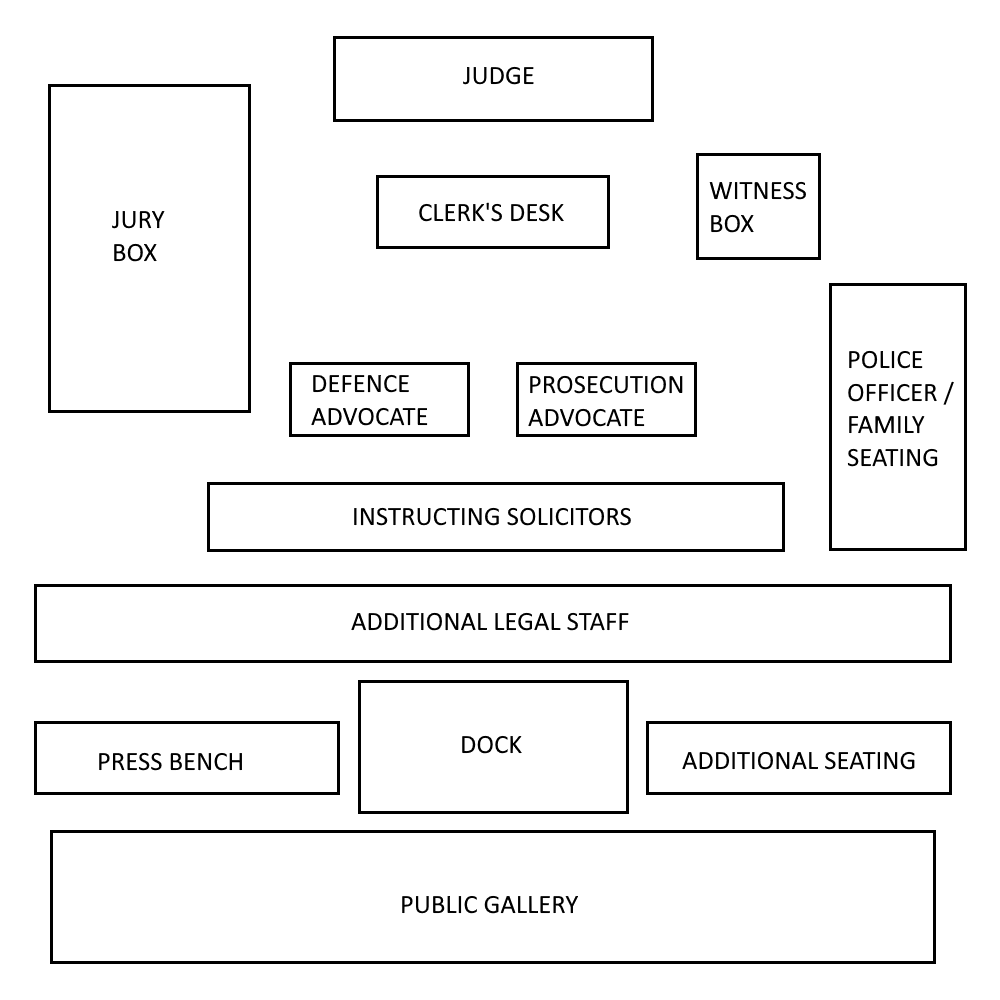
The philosophy behind all of this active scheduling is codified in the Criminal Procedure Rules, which impose an overriding objective requiring criminal cases to be dealt with justly — and that overriding objective explicitly includes dealing with the case efficiently and expeditiously. In practice, this translates into active case management: courts are expected to achieve early identification of the real issues in the case and to set a realistic timetable, rather than letting a case drift through repeated, unfocused hearings.
This same philosophy underpins Better Case Management (BCM), a national initiative aimed at reducing unnecessary hearings and delay in the criminal courts. For a trainee solicitor, BCM is the practical reason the PTPH exists in its current, front-loaded form: the system has been deliberately redesigned so that the issues, the plea, and the timetable are nailed down as early and as comprehensively as possible, rather than being spread across a string of avoidable further hearings.
Trace the whole journey and a single thread runs through it: every procedural step exists to answer one of two questions as early and as fairly as possible — which court should try this case, and what does each side actually know. Plea before venue answers the first question for the accused's own intentions; allocation under sections 18–20 answers it for contested either-way cases using the Allocation Guideline's sentencing-adequacy and complexity tests; section 51 answers it instantly for indictable-only offences; and the youth court provisions answer it with an entirely separate ceiling built around the two-year DTO. Disclosure under the CPIA then ensures that, whichever court ends up trying the case, both sides go into it with a fair, tested picture of the unused material and the real issues in dispute — reinforced, at the Crown Court stage, by active case management under the PTPH and the overriding objective. Master this sequencing, and the seemingly dry statutory cross-references start to read as what they actually are: a coherent system for getting the right case to the right court, on a fair footing, without wasting the court's time or the client's liberty.