Criminal Evidence: Admissibility and Character
A client accused of robbery is identified by a single stranger who glimpsed him for three seconds under a flickering streetlamp. Another client's ex-partner wants to tell the jury about a conviction from a decade ago that has nothing to do with the current charge. A third case rests on a witness statement from someone who has since died. None of this evidence gets anywhere near a jury automatically — it has to survive a gauntlet of admissibility rules first, and knowing that gauntlet cold is what separates a solicitor who can actually run a criminal case from one who can only describe it in the abstract.
Every criminal trial starts from a single, non-negotiable allocation of risk: the prosecution carries the legal (persuasive) burden of proving every element of the offence charged. This is not a technicality — it is the constitutional bedrock of the adversarial criminal trial, and it comes from one of the most quoted sentences in English law. In Woolmington v DPP [1935] AC 462, the House of Lords held that it is the prosecution's job to prove the defendant's guilt beyond reasonable doubt, not the defendant's job to prove innocence. Lord Sankey called this "the golden thread" running through English criminal law, and the label has stuck for a reason: it captures that this is the default rule from which any departure needs justifying.

The prosecution must meet that burden to the criminal standard of proof: beyond reasonable doubt, meaning the jury or magistrates must be sure of guilt before convicting. Anything less — a probability, a strong suspicion, even a conviction that the defendant "probably did it" — is legally insufficient.
Golden thread rule: the prosecution proves guilt beyond reasonable doubt. Departures from this default must be traced to a specific legal source — they are never assumed.
Defences complicate the picture, and SQE1 loves to test exactly how. Where a defendant raises a defence such as self-defence, duress, or alibi, they carry only an evidential burden — enough evidence to make the defence a live issue at trial, not to prove it. Once that evidential burden is discharged, the burden of disproof snaps back onto the prosecution: the Crown must then disprove the defence beyond reasonable doubt. The defendant is never required to convince the tribunal the defence is true; they only have to put it in play.
A small number of defences work differently and reverse the legal burden onto the defendant, who must then prove the defence — not merely raise it — on the lower civil standard, the balance of probabilities. Two statutory/common law examples are tested repeatedly:
| Defence | Burden on defendant | Standard | Source |
|---|---|---|---|
| Insanity | Legal (persuasive) burden | Balance of probabilities | M'Naghten Rules |
| Diminished responsibility | Legal (persuasive) burden | Balance of probabilities | Homicide Act 1957, s 2 |
Notice the structural asymmetry: for insanity and diminished responsibility the defendant must genuinely prove the defence, whereas for self-defence, duress, or alibi the defendant only has to raise it before the prosecution's disproof burden kicks back in. Client advice on a mixed-defence case turns on knowing which bucket a given defence falls into — get it backwards and you'll misjudge the evidential strategy the client actually needs to run.
Eyewitness identification feels like the most intuitive evidence in the world — a person looked at another person and recognised them — and that is exactly why it is so dangerous. Confident, sincere witnesses get identifications wrong with disturbing regularity, and wrongful convictions built on honest-but-mistaken identification are a recurring feature of miscarriage-of-justice cases. The courts responded with a dedicated safeguard.
R v Turnbull [1977] QB 224 established guidelines that apply whenever the case against the defendant depends wholly or substantially on the correctness of one or more disputed identifications that the defence disputes. Where that threshold is crossed, a Turnbull direction is mandatory, and it does two specific things:
- It warns the jury of the special need for caution before convicting in reliance on identification evidence.
- It directs the jury that an honest and convincing witness can nevertheless be a mistaken witness — sincerity is not accuracy.
The judge doesn't stop at the warning; they must also walk the jury through the quality of the identification actually made, and this is where the memorable mnemonic ADVOKATE earns its keep as an exam and practice checklist:
ADVOKATE — assessing identification quality
- Amount of time the witness observed the suspect
- Distance between witness and suspect
- Visibility conditions (lighting, weather, obstruction of the light source)
- Obstructions interfering with the witness's view
- Known or seen before — had the witness seen the suspect previously, how often, in what circumstances
- Any reason to remember the suspect (distinctive feature, personal connection)
- Time lapse between the original observation and reporting it to police
- Errors or discrepancies between the witness's description and the suspect's actual appearance
Run ADVOKATE against the facts and you get a rough clinical reading of identification reliability. If, having done that, the judge concludes the identification evidence is of poor quality and there is no other evidence supporting its correctness, the correct course is to withdraw the case from the jury entirely — a case built on a bad identification and nothing else should never reach a verdict. Conversely, supporting evidence independent of the identifying witness — forensic evidence, a confession, CCTV, a suspicious lie by the defendant — can justify leaving even a shaky identification case to the jury, because the identification is no longer standing alone.
This is not a discretionary nicety. A trial judge's failure to give an adequate Turnbull direction where one was required can, on its own, render a resulting conviction unsafe on appeal. For a solicitor, that means a Turnbull deficiency is one of the first things to check when reviewing a summing-up for grounds of appeal.
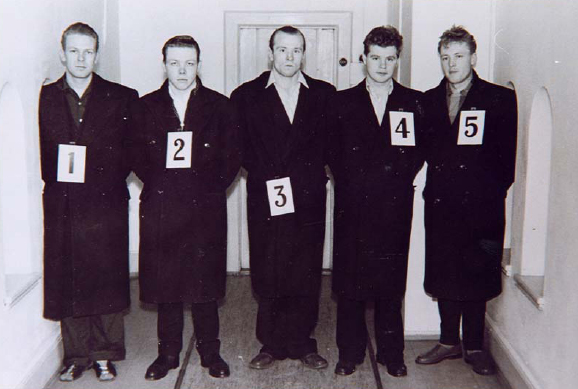
Identification evidence doesn't only face scrutiny at trial — the procedure by which it was obtained is regulated before the case ever reaches court. Code D of the PACE 1984 Codes of Practice governs how identification procedures (video identification, identification parades, and similar methods) must be conducted. A significant breach of Code D — an unfair procedure, a suggestive line-up, a failure to offer a formal procedure where one should have been offered — can lead to the resulting identification evidence being excluded under section 78 PACE 1984, the general fairness-based exclusionary discretion discussed further below.
Hearsay rules exist because a jury cannot cross-examine a statement — only the person who made it. Section 114(1) of the Criminal Justice Act 2003 defines hearsay as a statement not made in oral evidence in the proceedings that is relied on as evidence of a matter stated in it. In plain terms: if a witness in the box is repeating what someone else said, and the point of repeating it is to prove that what was said is true, that is hearsay.
Hearsay is inadmissible unless it falls within one of the gateways in section 114(1). There are four:
The four hearsay gateways (s 114(1) CJA 2003)
- A statutory provision makes it admissible.
- A preserved common law rule (via s 118) makes it admissible.
- All parties agree to its admissibility.
- The court is satisfied it is in the interests of justice to admit it, having regard to the factors listed in section 114(2).
Gateway one — the statutory-provision gateway — is where the two most heavily tested hearsay sections live:
- Section 116 allows a first-hand hearsay statement to be admitted where the witness who made it is unavailable for one of five specified reasons: death, unfitness (through bodily or mental condition), being outside the UK, being untraceable, or fear.
- Section 117 provides a gateway for business and other documents created or received in the course of a trade, business, profession, or office — the classic example being records compiled by someone with personal knowledge as part of their job, where direct oral evidence would be impractical.
Gateway two draws on section 118, which preserves a short, closed list of specific common law hearsay exceptions — most notably res gestae statements (spontaneous statements so closely connected to an event that fabrication is effectively impossible) — while abolishing every other common law hearsay rule outright. One preserved exception with particular practical weight: confessions are admissible as a hearsay exception under section 118, but that admissibility is not unconditional — it sits alongside the separate safeguards in section 76 of PACE 1984, which polices oppression and unreliability in how the confession was obtained. Passing the hearsay gateway does not mean a confession automatically survives; it still has to clear the section 76 hurdle.
Two further provisions refine what the hearsay gateways actually let in. Sections 119 and 120 govern previous inconsistent and previous consistent statements respectively, allowing them (in defined circumstances) to be treated as evidence of the matters stated, not merely as evidence going to credibility. And because hearsay chains can compound — a statement about a statement about a statement — section 121 restricts multiple hearsay, permitting it only where specific conditions are met, such as agreement of the parties or where the court is satisfied the individual statements are so reliable that the interests of justice are served by admitting the chain.
Finally, clearing a hearsay gateway is not the end of the story. Section 126 gives the court a general discretion to exclude an otherwise-admissible hearsay statement — a discretion distinct from, and additional to, the fairness-based exclusionary discretion in section 78 of PACE 1984. Section 78 is broader still: it lets a court exclude any prosecution evidence — hearsay, identification evidence, anything — where admitting it would have such an adverse effect on the fairness of the proceedings that it ought not to be admitted. Think of sections 126 and 78 as two overlapping safety valves sitting on top of the gateway analysis, each capable of shutting evidence out even after it has technically qualified for admission.
Bad character evidence is dangerous for the opposite reason hearsay is dangerous: it's not that the jury can't test it, it's that they might give it far more weight than it deserves, reasoning "he's done this before, so he probably did it again." The statutory scheme exists to ration when that risk is worth taking.
Section 98 of the Criminal Justice Act 2003 defines bad character as evidence of, or a disposition towards, misconduct — carving out, importantly, evidence of the offence charged itself and evidence of misconduct connected with the investigation or prosecution of that offence (so, for instance, evidence explaining why the police started investigating is not automatically "bad character" evidence under this scheme). Section 112 then defines misconduct itself as the commission of an offence or other reprehensible behaviour — deliberately broader than "previous convictions," capturing conduct that was never prosecuted at all.
A defendant's bad character is admissible only if it passes through one of seven gateways in section 101(1):
| Gateway | What it admits |
|---|---|
| 101(1)(a) | All parties agree to its admissibility |
| 101(1)(b) | Adduced by the defendant, or given in answer to the defendant's own cross-examination question |
| 101(1)(c) | Important explanatory evidence needed for the jury to understand other evidence in the case |
| 101(1)(d) | Relevant to an important matter in issue between defendant and prosecution |
| 101(1)(e) | Substantial probative value on an important matter in issue between defendant and co-defendant |
| 101(1)(f) | Needed to correct a false impression given by the defendant |
| 101(1)(g) | The defendant has attacked another person's character |
Gateway (d) is the workhorse of the scheme, and the exam will expect you to know what "important matter in issue" typically means in practice: chiefly, the defendant's propensity to commit offences of the kind charged, and the defendant's propensity to be untruthful. A defendant with a string of prior dishonesty offences facing a fraud charge, or prior violence facing an assault charge, is the paradigm gateway (d) scenario.

Gateways (d) and (g) carry their own built-in safety valve: under section 101(3), the court must exclude evidence admitted under gateway (d) or (g) if admitting it would have such an adverse effect on the fairness of proceedings that it ought not to be admitted. Note the asymmetry — this mandatory exclusionary check attaches specifically to (d) and (g), not to all seven gateways alike, which is a distinction examiners like to probe.
Non-defendants have their own, separate regime. Section 100 governs the admissibility of a non-defendant's bad character (a witness, a complainant, anyone other than the accused), requiring it to be either important explanatory evidence, of substantial probative value on a matter of substantial importance, or agreed by all parties. Critically, except where the parties have agreed to it, non-defendant bad character evidence under section 100 requires the leave of the court before it can be admitted — a permission step with no direct equivalent in the defendant's own section 101 gateways.
These three doctrines — burden and standard of proof, Turnbull identification safeguards, and the hearsay/bad character gateways — are really one continuous story about who has to justify what before the jury hears it. The prosecution starts with the golden thread burden; identification evidence needs an extra judicial warning and quality check before it can carry a case; and both hearsay and bad character evidence are presumptively excluded until a specific statutory gateway, and often a residual fairness discretion, lets them through. For SQE1, the applied skill is spotting which regime a given fact pattern engages and then working the correct gateway or test methodically — examiners reward precision about which section or case governs, not just a general sense that "the evidence sounds dodgy."