Beneficial Entitlement and Purpose Trusts
A trust splits ownership into two halves that never touch: the trustee holds the legal title, and the beneficiary holds something else entirely — a right in equity that can be as solid as a freehold or as thin as a hope. Learning to tell those halves apart, and to know when equity will let a beneficiary collapse the whole arrangement and simply take the property, is the spine of this topic.
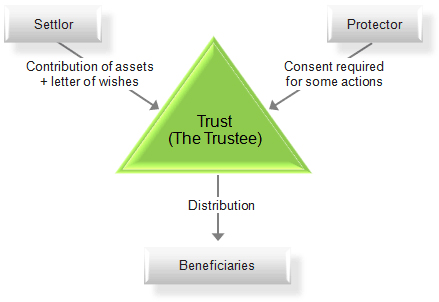
Start with the most basic question you can ask about any beneficiary's interest: is it theirs yet, or might it never be?
A vested interest is one where the beneficiary is ascertained and their entitlement is not subject to any condition precedent still to be satisfied.
Notice what that definition does not require: it does not require that the beneficiary currently has the property in their hands. A trustee holding a fund "for Anna for life, remainder to Ben" has created two vested interests, not one. Anna's interest is vested in possession — she can walk up and demand the income today. Ben's interest is vested in interest — it is just as secure and just as much "his," but it will only mature into possession once Anna's life interest ends. The distinction matters practically: a vested-in-interest beneficiary can usually assign, mortgage, or leave that interest in their will, because the law treats it as property now, merely deferred in enjoyment.
Contrast that with a contingent interest:
A contingent interest is one where the beneficiary's entitlement depends on a future uncertain event or condition that has not yet occurred.
"To Chloe if she reaches 21" or "to David if he survives his mother" are the classic templates — a specified age, or survivorship of another person. Until the contingency bites, the beneficiary has nothing you could call ownership; they have a mere expectancy, a hope dressed in legal language. The practical sting of this classification appears at death: if Chloe dies at 19, her contingent interest simply evaporates. It does not pass under her will or intestacy, because there was never a vested right of property for her estate to inherit — only a condition she failed to live long enough to satisfy. Spotting whether a client's interest is vested or contingent, and explaining what happens to it if the beneficiary dies early, is exactly the kind of applied question SQE1 rewards.
A second, cross-cutting distinction concerns how much say the trustees have over who gets what.
Under a fixed trust, the settlor has already done the allocating. The trustees must distribute the trust property strictly in the shares or proportions the settlor specified, with no discretion over allocation — their job is administrative, not evaluative. "£100,000 to my three children in equal shares" is fixed: the trustees calculate, they do not choose.
Under a discretionary trust, the settlor hands the decision itself to the trustees. They have a power to decide which members of a defined class of beneficiaries will benefit, and in what proportions — the settlor names the pool of candidates, but the trustees select the winners and the amounts.
This produces one of the most conceptually important propositional truths in the whole law of trusts: no individual object of a discretionary trust has a proprietary interest in any specific trust asset unless and until the trustees exercise their discretion in that object's favour. Before that moment of exercise, what does an object actually hold? Not a claim on the fund, but two narrower, procedural rights — a right to be considered when the trustees turn their minds to the class, and a right to compel the trustees to consider exercising the discretion properly (rather than simply ignoring the trust). Those rights let a disappointed object go to court if the trustees never turn their minds to the question at all, but they give no leverage to demand a particular outcome, and no interest that survives if the trustees choose someone else entirely.
| Feature | Fixed trust | Discretionary trust |
|---|---|---|
| Who allocates shares | The settlor, in advance | The trustees, as and when |
| Beneficiary's position before distribution | Vested proprietary interest in their fixed share | No proprietary interest — only a right to be considered |
| Trustees' role | Administrative (calculate and pay) | Evaluative (choose and pay) |
| Court's remedy for a disgruntled beneficiary | Compel payment of the fixed share | Compel consideration, not a particular outcome |
Here is where the theory becomes powerfully practical. However carefully a settlor has structured a trust — fixed or discretionary, with elaborate administrative machinery — equity has always insisted that beneficiaries who together own the entire beneficial interest cannot be kept waiting against their combined will. That is the rule in Saunders v Vautier: it allows a beneficiary, or beneficiaries acting together, to bring a trust to an end and demand the transfer of the trust property to themselves.
Three conditions gate access to this powerful self-help remedy, and SQE1 problem questions live or die on whether you can check each one against the facts:
- Ascertainment — every beneficiary entitled to the equitable interest must be identified and ascertained (no unborn or unidentifiable class members left out).
- Capacity — every beneficiary must be of full age and have full legal capacity; no beneficiary can be a minor or otherwise under a disability.
- Absolute entitlement — the beneficiaries together must be absolutely entitled to the whole beneficial interest in the trust property (nothing left outstanding for anyone else).
Meet all three, and the beneficiaries do not need to go anywhere near a courtroom. No application to court is required, and the trustees must comply with a unanimous direction to transfer the property outright, or, if the beneficiaries prefer, to resettle it on entirely new trusts of their choosing. The rule is not confined to simple, single-beneficiary fixed trusts either: it can apply to a discretionary trust where every object is ascertained, of full age and capacity, and collectively entitled to the whole beneficial interest — the class, acting unanimously as a body, effectively steps into the settlor's shoes and rewrites or ends the arrangement. And it does not require plurality at all: a single beneficiary who is absolutely, indefeasibly, and solely entitled to the entire equitable interest can invoke the rule alone, terminating the trust unilaterally.
There is one limit worth memorising precisely, because it is a favourite examiner trap. Saunders v Vautier is an all-or-nothing power over the trust's continued existence — it does not let beneficiaries reach inside a live discretionary trust and compel the trustees to exercise their discretion in a particular way. While the trust continues, the trustees' evaluative discretion remains theirs alone; the beneficiaries' power is only to end the trust altogether, not to steer it from within.
Trusts, so far, have all had human beneficiaries standing behind them, ready to enforce the trustees' duties in court. What happens if a settlor tries to create a trust for a purpose instead — no beneficiary, just an aim to be pursued?
A trust is void unless it has either identifiable human beneficiaries who can enforce it, or falls within a recognised exception — a rule known as the beneficiary principle.
The logic is structural, not moralistic: equity enforces trusts through the beneficiary's standing to sue, so a trust with nobody able to sue is, in a real sense, unenforceable and therefore hollow. This was applied with some rigour in Re Astor's Settlement Trusts, where a trust for abstract, impersonal, non-charitable purposes (maintaining "good understanding" between nations and the press, among other aims) failed for want of a beneficiary able to enforce it — noble goals, but nobody with legal standing to hold the trustees to them.
Charitable trusts are the great exception, and they are valid precisely because the beneficiary principle's underlying concern is answered differently: the Attorney General has standing to enforce a charitable trust on behalf of the public. Day-to-day supervision has, in practice, been delegated to the Charity Commission for England and Wales, which carries out the ongoing regulatory and enforcement functions that keep charitable trusts honest between the rare occasions the Attorney General intervenes directly.
To qualify for this exception, a charitable trust must clear three cumulative hurdles:

- Recognised charitable purpose — the purpose must fall within a recognised description of charitable purposes (section 3, Charities Act 2011: relief of poverty, advancement of education, advancement of religion, and a list of further specified heads).
- Public benefit — under section 2(1) of the Charities Act 2011, the purpose must be for the public benefit. This has two components: an identifiable-benefit element (the purpose must actually do some good, not merely be well-intentioned) and a sufficient-section-of-the-public element (the benefit must reach the public, or a sufficiently large slice of it, rather than a small private class). A trust that benefits only, say, the employees of one small private company and their families would typically fail this second limb.
- Exclusivity — the trust must be exclusively charitable, meaning trust property cannot be applied to any non-charitable purpose at all. Where a trust instrument permits funds to be applied to both charitable and non-charitable purposes without any mechanism for apportioning between them, the trust will generally fail for uncertainty of exclusivity — the court cannot know how much of the fund was ever meant for the charitable side.
One further wrinkle rewards careful reading rather than instinct: a trust for the relief of poverty can satisfy the public benefit requirement even where the class of beneficiaries is defined by a personal relationship to the settlor — "poor relations of mine," for instance. Poverty trusts are treated as an anomalous, historically entrenched carve-out from the ordinary section-of-the-public analysis, precisely because the courts have long accepted that relieving poverty carries an inherent public element even in a narrowly defined group.

Charity's exceptional status pays two further dividends once a trust clears these hurdles. First, charitable trusts benefit from the cy-près doctrine: if the original charitable purpose becomes impossible or impracticable to carry out, the court can redirect the trust property to a purpose as close as possible to the original one, rather than letting the gift fail entirely. Second, charitable trusts are not subject to the rule against inalienability of trust capital in the way non-charitable purpose trusts are — they can validly continue in perpetuity, tying up capital for a charitable purpose indefinitely, something the law simply will not tolerate for private or non-charitable purposes.
Strip away the charitable exception, and the default rule reasserts itself with force: a trust for a purpose rather than for ascertainable individuals is generally void as a non-charitable purpose trust, unless it falls within one of a small number of recognised escape routes. There are two such routes worth knowing precisely, plus a set of practical drafting alternatives.
The Re Endacott anomalous exceptions
Re Endacott confirmed a closed, historically fixed list of anomalous exceptions to the beneficiary principle — trusts the courts will tolerate despite there being no beneficiary who could sue to enforce them. The list comprises:
- trusts for the maintenance of specific animals;
- trusts for the erection or maintenance of monuments and graves; and
- trusts for the saying of private masses.
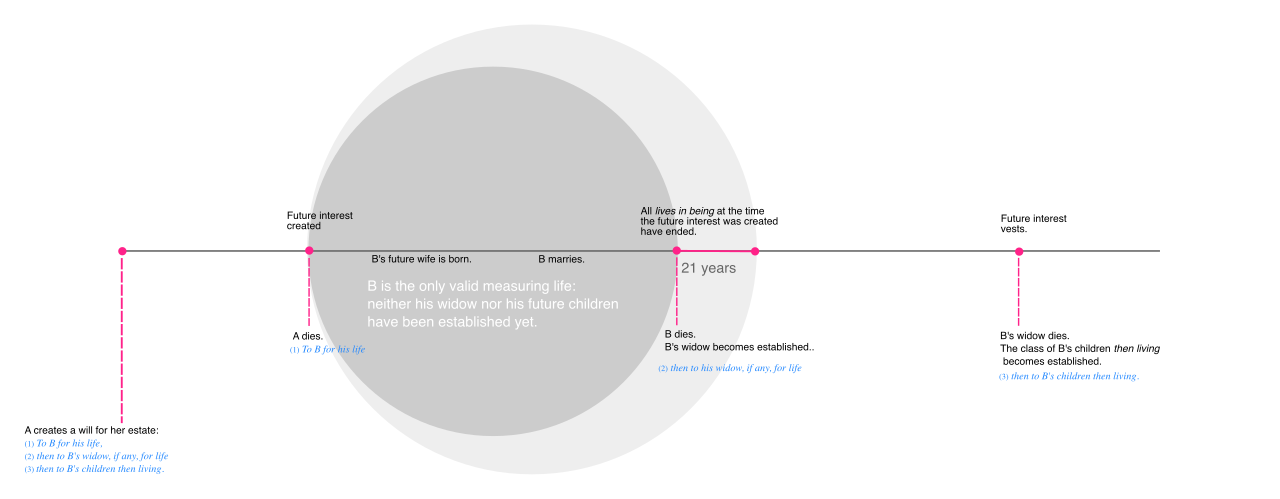
These are called trusts of imperfect obligation: the courts will not strike them down for lack of a beneficiary, but correspondingly there is no one who can compel the trustees to carry them out — if the trustees choose not to bother, nobody has standing to make them. The category is explicitly closed and will not be extended by analogy to new fact patterns, however sympathetic; the courts have described the exceptions themselves as historical "concessions to human weakness or sentiment" rather than a coherent principle to be expanded. Even within the Endacott exceptions, a trust must still comply with the rule against inalienability, commonly capped at a perpetuity period of 21 years, or it will fail regardless of subject matter — you cannot tie up funds for a beloved cat or a family grave forever, only for a fixed, bounded period.
The Re Denley route
Re Denley's Trust Deed offers a second, more modern and more generally useful escape route. It recognised that a trust expressed in terms of a purpose can nonetheless be valid where it directly or indirectly benefits ascertainable individuals who have standing to enforce it — the trust in that case maintained land as a sports ground primarily for a company's employees, a purpose on its face, but one that gave identifiable people (the employees) a sufficiently direct and tangible interest to sue if the trustees failed to maintain it properly.
For a Re Denley-type trust to succeed, the individuals who benefit from the purpose must be ascertained or ascertainable — the trust escapes the beneficiary principle precisely because real people stand behind the abstract-sounding purpose language, ready to enforce it. As with the Endacott exceptions, a Re Denley trust must still comply with the rule against excessive duration (commonly a perpetuity period), or it fails for tying up capital indefinitely. Commentators continue to debate the theoretical character of a valid Re Denley trust: is it a genuine purpose trust in which the individuals merely happen to have standing to enforce it, or is it, properly analysed, a discretionary trust for those individuals that has simply been dressed up in purpose language? For SQE1 purposes, know both readings exist, but focus on the operative test — ascertainable individuals with a direct, tangible interest.
Practical drafting alternatives
A settlor who wants to achieve a non-charitable purpose outside the beneficiary principle is not limited to hoping a court will squeeze the arrangement into Endacott or Denley. In practice, they can instead consider:
- an unincorporated association structure (property held by or for members subject to their contract inter se, rather than on trust for a purpose);
- a company limited by guarantee (a distinct legal person can own property and pursue a purpose directly — no beneficiary principle problem at all, because there is no trust); or
- a conditional gift with a gift over (property given outright to a recipient on condition they apply it to the stated purpose, failing which it passes to someone else) — this sidesteps the beneficiary principle by not creating a trust for the purpose in the first place.
Finally, tie this back to the vocabulary you already carry from the three certainties, because the test for certainty of objects changes depending on which structure you are looking at:
- Fixed trusts demand the strictest standard: a complete list of every beneficiary must be capable of being drawn up. If you cannot compile an exhaustive list, a fixed trust for that class fails.
- Discretionary trusts apply the more forgiving "is or is not" (given postulant) test: it must be possible to say with certainty whether any given individual is or is not a member of the class — you do not need to list every member, only to be able to test any candidate against the class definition.
- Conditions precedent (a gift to beneficiaries who satisfy a stated qualifying criterion) apply the most forgiving standard of all: it is enough that at least one person can be shown to satisfy the condition. This is a materially lower threshold than the discretionary trust test, because a conditional gift does not require the same administrative certainty about the whole class — only that the criterion is capable of being satisfied by somebody.
Recognising which of these three certainty tests applies to a given clause — and matching it to whether the arrangement is a fixed trust, a discretionary trust, or a conditional gift — is precisely the kind of structural, applied reasoning SQE1's single-best-answer format is built to test.