Finance and Distribution
Every company faces the same underlying question the moment it needs money: borrow it, or sell a slice of itself for it? That choice—debt versus equity—shapes everything downstream, from who controls the boardroom to who gets paid first when the company collapses. A solicitor advising a corporate client on a funding round or a loan facility is really advising on the consequences of that single fork in the road, and SQE1 tests whether you can trace those consequences precisely.
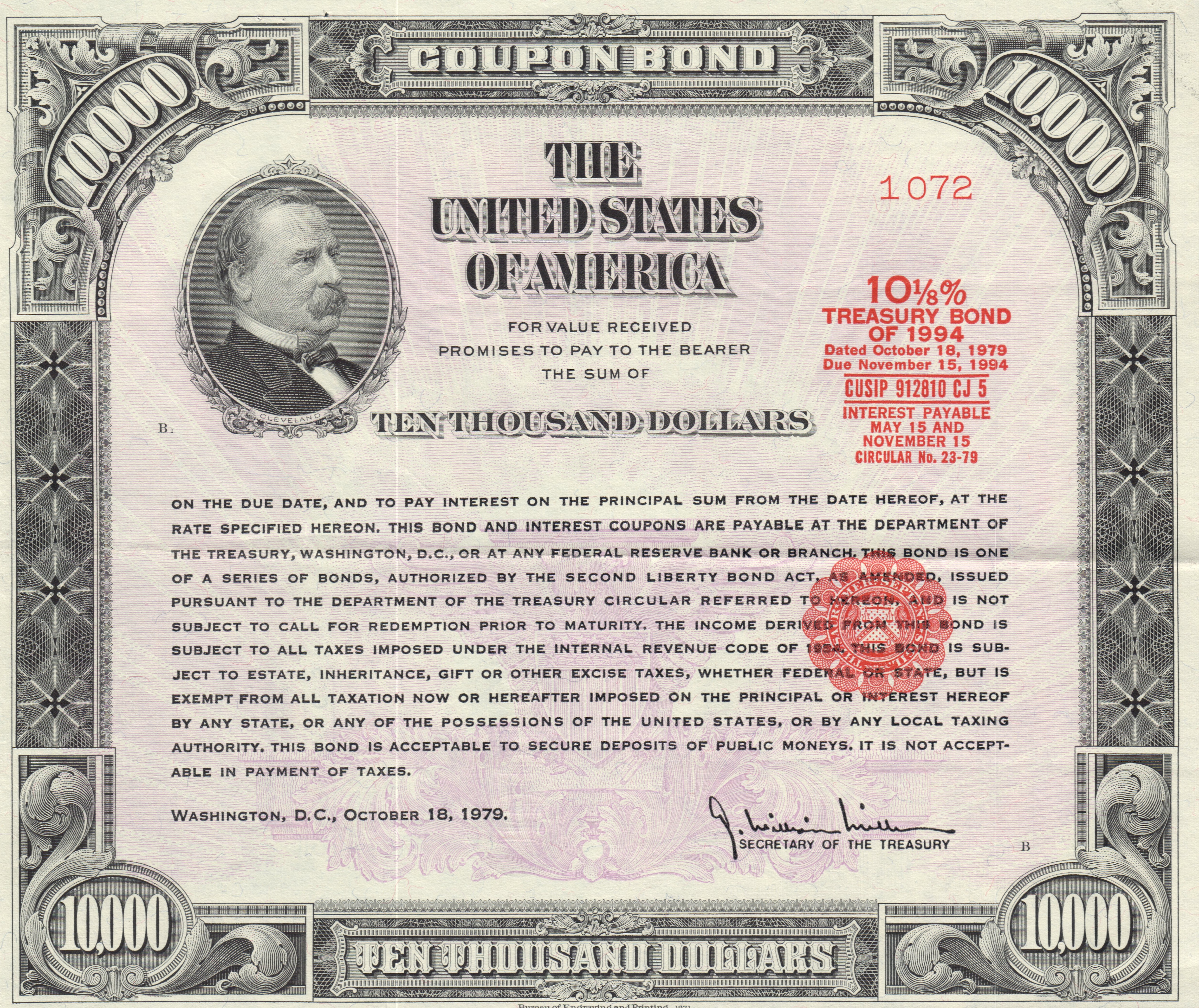
Debt finance creates a legal obligation for a company to repay borrowed capital plus interest, regardless of the company's profitability. The lender is owed money whether the company has a spectacular year or a catastrophic one—the obligation does not bend to fortune. Equity finance, by contrast, involves a company issuing shares in exchange for capital contributed by shareholders. There is no repayment obligation in the debt sense; instead, the shareholder becomes a part-owner who shares in the company's fortunes (and misfortunes) through dividends and capital growth.
This structural difference cascades into three practical consequences a client will always ask about:
Control. Debt finance does not dilute the percentage ownership or voting control of a company's existing shareholders—a lender has no vote at the AGM. Equity finance dilutes the percentage ownership of existing shareholders unless they exercise statutory pre-emption rights on the new allotment. Existing shareholders generally have statutory pre-emption rights when a company allots new shares for cash, giving them the first opportunity to subscribe and preserve their proportional stake.

Tax treatment. Interest paid on debt finance is generally treated as a tax-deductible expense for the paying company, reducing its taxable profits. Dividends paid to shareholders are a distribution of profit rather than a business expense and are not tax-deductible for the paying company. This asymmetry is a major reason companies often prefer debt at the margin—the tax system effectively subsidises borrowing relative to raising equity.
Balance sheet presentation. Debt finance appears as a liability in a company's accounts, while equity finance appears within shareholders' funds. A company's balance sheet shows share capital and reserves separately from its liabilities to creditors, and this separation is not cosmetic—it drives the statutory tests for whether a distribution can lawfully be made (see below).
Common Forms of Debt Finance
Debt is not monolithic. Two forms recur constantly in practice and in the exam:
| Feature | Overdraft | Term Loan |
|---|---|---|
| Nature | Flexible short-term facility | Fixed-period facility |
| Repayment | Technically repayable on demand by the bank | Repaid per a scheduled repayment plan |
| Typical use | Working capital, day-to-day cash flow gaps | Capital expenditure, acquisitions |
An overdraft is a flexible form of short-term debt finance that is technically repayable on demand by the bank—useful for smoothing cash flow but precarious if the bank ever calls it in unexpectedly. A term loan is debt finance that is repaid over an agreed fixed period according to a scheduled repayment plan, giving both parties more predictability.

Whatever form debt takes, the lender almost always wants more than a bare promise to repay. A loan agreement typically includes covenants restricting the borrower's future conduct, such as further borrowing or disposal of assets—these are the lender's early-warning system, designed to flag deterioration before default actually occurs. A particularly important covenant is the negative pledge clause, by which a borrower agrees not to create security over its assets in favour of another creditor. Without this, a borrower could quietly grant a competing lender a superior claim over the very assets the first lender was relying on.
A debenture is the document that formalises much of this: it creates or acknowledges a debt and commonly contains security in the form of a charge over company assets. Think of a debenture less as a single legal category and more as the umbrella document—it is where the loan terms, the covenants, and the security package all live together.
Why does a lender want security at all? Because secured debt is generally cheaper for a borrower to obtain than unsecured debt—security reduces the lender's credit risk by giving them a specific claim over assets if things go wrong, so the lender charges a lower premium for that reduced risk. Understanding which assets are tied down, and how, is the heart of this half of the topic.
Fixed Charges and Mortgages
A mortgage over company property is a form of fixed security under which rights in a specific, identified asset are transferred to the lender as security. The paradigm example is a legal mortgage over a company's freehold premises. More generally, a fixed charge attaches to a specific, identifiable asset at the time the charge is created—the lender's claim locks onto that particular item and does not move. The practical bite of this is severe for the company: it cannot deal with an asset subject to a fixed charge, such as by selling it, without the chargeholder's consent. Fixed charges typically cover assets the company intends to keep and use long-term—land, buildings, machinery, intellectual property—precisely because those assets are not meant to be traded away day to day.
Floating Charges and Crystallisation
Contrast that with assets a trading company must be free to buy, sell, and replace constantly: stock, raw materials, trade debts. Tying those down with a fixed charge would strangle the business. The solution is the floating charge, which attaches to a class of present and future assets, such as stock, that fluctuate in the ordinary course of the company's business. Crucially, a floating charge allows the company to continue trading with and disposing of the charged assets in the ordinary course of business until the charge crystallises—the charge floats above the shifting pool of assets without pinning any particular item down.
That freedom ends at crystallisation, which converts a floating charge into a fixed charge over the assets comprised in the relevant class at the moment of crystallisation. Once crystallised, the company loses its licence to deal freely with those assets, just as if a fixed charge had always applied to them. Common crystallisation events for a floating charge include the appointment of an administrator or receiver, the company entering liquidation, and cessation of the company's business—in each case, the moment ordinary trading stops is the moment the charge snaps into a fixed claim over whatever assets happen to be caught within the class at that instant.
Other Security Devices
Beyond charges and mortgages, several older common-law and equitable devices remain important:
- A lien is a form of security that entitles a creditor to retain possession of another party's property until a debt owed to the creditor is discharged—think of a repairer holding onto a car until the repair bill is paid.
- A pledge is a form of security in which possession of goods or documents of title is transferred to the creditor as security for a debt—the pawnbroker's arrangement, formalised.
- A guarantee is a promise by a third party to answer for the debt or default of a principal debtor if that debtor fails to pay—personal security from someone other than the borrower, rather than security over an asset at all.
- A retention of title clause allows a seller of goods to retain ownership of the goods until the buyer pays for them in full, notwithstanding delivery to the buyer—a supplier's self-help security, built into the sale contract itself rather than granted separately.

Priority and Registration
When multiple creditors hold competing claims over the same assets, two rules matter enormously.
First, priority between multiple charges over the same company asset is generally determined by the order in which the charges were created or registered, subject to any priority or subordination agreement—first in time is generally first in right, unless the parties have contracted around that.
Second, and critically, registration. Registrable charges created by a company must be registered at Companies House to be effective against a liquidator, administrator, or the company's other creditors. Section 859A of the Companies Act 2006 (inserted by the Companies Act 2006 (Amendment of Part 25) Regulations 2013, in force from 6 April 2013) requires a statement of particulars of a registrable charge to be delivered to the registrar within the period allowed for delivery—that period is 21 days beginning with the day after the date of creation of the charge.

Failure to register a registrable charge within the period allowed for delivery renders the charge void against a liquidator, administrator, and any creditor of the company. If a charge becomes void for non-registration, the debt secured by it becomes immediately payable by the company—an alarming double blow: the lender loses its security and triggers an accelerated repayment obligation the company may not be able to meet.
There is a safety valve: a company may apply to the court for an order extending the period allowed to register a charge where the failure to register was accidental or due to inadvertence. This is a genuine lifeline in practice, but it depends entirely on the court's discretion and is never guaranteed.
Insolvency Priority Waterfall
When a company becomes insolvent, all of this security architecture determines who gets paid, in what order. On a company's insolvency, a fixed charge holder ranks ahead of preferential creditors and floating charge holders for repayment out of the specific charged asset—the fixed charge holder's claim is the most protected of all. Under the Insolvency Act 1986, certain debts, such as unpaid employee wages up to a statutory limit, rank as preferential debts in an insolvency, sitting ahead of the floating charge holder for the assets caught by that floating charge.
Below the floating charge holder sit unsecured creditors, who rank below secured and preferential creditors in an insolvency and are paid pro rata from any remaining assets—but Parliament has carved out a specific slice of protection for them. Under section 176A of the Insolvency Act 1986, a prescribed part of floating charge realisations must be set aside for unsecured creditors before the floating charge holder can claim the remainder. The prescribed part is calculated as 50% of the first £10,000 of a company's net property plus 20% of the remainder, subject to a statutory cap. The Insolvency Act 1986 (Prescribed Part) (Amendment) Order 2020 raised that cap from £600,000 to £800,000, with effect from 6 April 2020—but the higher cap applies only to floating charges created on or after that date; floating charges created before 6 April 2020 remain subject to the previous £600,000 cap. Watch for this date-sensitivity in problem questions: the cap that applies depends on when the charge was created, not when the insolvency occurred.
Insolvency priority order (simplified, for a company with a floating charge):
- Fixed charge holders (out of the specific charged asset)
- Costs of the insolvency process
- Preferential creditors (e.g., certain employee wages)
- Prescribed part (ring-fenced for unsecured creditors)
- Floating charge holders (remainder of floating charge realisations)
- Unsecured creditors (pro rata from what is left)
Having raised money and secured it appropriately, a company eventually wants to pay some of its success back to shareholders. This is not a matter of commercial discretion alone—it is tightly constrained by statute, because a distribution effectively transfers value out of the company and away from creditors, and Parliament will not let directors and shareholders empty the company at creditors' expense.
Distributions to shareholders, such as dividends, may only be made out of profits available for the purpose under the Companies Act 2006. Profits available for distribution are a company's accumulated, realised profits not previously distributed or capitalised, less its accumulated, realised losses not previously written off. The word "realised" is doing serious work here: only realised profits, determined in accordance with generally accepted accounting principles, may be treated as distributable profits. A company cannot declare a dividend out of a paper gain—say, an unrealised revaluation of property—no matter how healthy that gain makes the balance sheet look.
Public companies face an additional, stricter test. A public company may only make a distribution if, immediately after the distribution, its net assets are not less than the aggregate of its called-up share capital and undistributable reserves. This is a net-assets test layered on top of the realised-profits test, reflecting the greater protection the law affords creditors of public companies, which can raise capital from the public and often carry larger, more diffuse creditor bases.
Evidencing the Distribution
The relevant accounts used to justify a distribution are normally a company's last properly prepared annual accounts. Sometimes a company wants to distribute more recently than its annual accounts would support—perhaps profits have grown substantially since the last year-end. It may then use interim accounts, but where a public company uses interim accounts to justify a distribution, those interim accounts must be filed with the registrar before the distribution is made, so that creditors and the public can see the evidential basis being relied upon.
Consequences of an Unlawful Distribution
A distribution made in contravention of the statutory rules on distributable profits is unlawful even if it was made in good faith—there is no defence of honest mistake for the company itself. However, the shareholder's own liability does turn on their state of mind: a shareholder who receives an unlawful distribution knowing, or having reasonable grounds to believe, that it was unlawful must repay it to the company. An innocent shareholder with no such knowledge or grounds for belief is not personally liable to repay, though the directors who authorised the unlawful distribution typically remain exposed.
Declaring and Paying Dividends
Once a dividend is validly declared and becomes due for payment, it becomes a debt owed by the company to the shareholder—at that point it is enforceable like any other debt, not merely a discretionary payment. But the process for getting there differs by type:

- An interim dividend may be paid by the directors without shareholder approval, where the articles permit this and sufficient distributable profits exist. Directors act alone here, which is why interim dividends can be withdrawn or reduced before payment if circumstances change.
- A final dividend must be declared by the shareholders in general meeting—and critically, a final dividend cannot exceed the amount recommended by the directors. Shareholders can approve less than the directors recommend, or approve the full amount, but they cannot vote themselves a larger dividend than directors put forward. Correspondingly, shareholders cannot compel a company to pay a dividend where the directors have not recommended one at all—the initiating power always sits with the board.

Dividends are the most common way value leaves a company for shareholders, but not the only way. A company limited by shares may only reduce its share capital in accordance with the statutory procedures set out in the Companies Act 2006—capital cannot simply be returned informally, because share capital exists partly as a protective buffer for creditors.
The procedure differs sharply by company type. A private company may reduce its share capital by special resolution supported by a solvency statement made by the directors—a comparatively fast, director-led route reflecting the lighter creditor-protection regime for private companies. A public company, however, must obtain court approval to reduce its share capital, reflecting the same heightened protection seen in the net-assets distribution test above.
Share Buybacks
A company may purchase its own shares out of distributable profits, the proceeds of a fresh issue of shares made for that purpose, or, for a private company, out of capital. That third route—buying back shares out of capital—is the most exceptional, because it genuinely reduces the company's capital base rather than merely distributing profit, so it comes with the strictest safeguards: a private company purchasing its own shares out of capital must provide a directors' statement of solvency and an auditor's report confirming the statement is reasonable.
Even the ordinary route (buying back shares out of distributable profits) has a structural consequence worth noting: where a company purchases its own shares out of distributable profits, an amount equal to the nominal value of the shares purchased must be transferred to a capital redemption reserve. This preserves the company's overall capital maintenance—profit that would otherwise have been distributable is locked up in a non-distributable reserve instead, mirroring the capital that has just been returned to the departing shareholder.
A related capital-maintenance point concerns the share premium account: amounts standing to the credit of a company's share premium account are treated as part of its capital and are not normally available for distribution as a dividend, even though share premium arises from an ordinary share issue rather than from trading profit.
Financial Assistance
Finally, one of the oldest capital-maintenance rules in company law: it is unlawful for a public company to give financial assistance for the acquisition of its own shares, subject to limited statutory exceptions. The concern is a company effectively funding its own takeover, weakening itself for the benefit of an incoming shareholder at existing creditors' expense. Private companies are generally exempt from this prohibition, reflecting the lighter-touch regime applied to private companies throughout this topic—no public market, no dispersed public shareholders, correspondingly less need for the statutory safeguard.
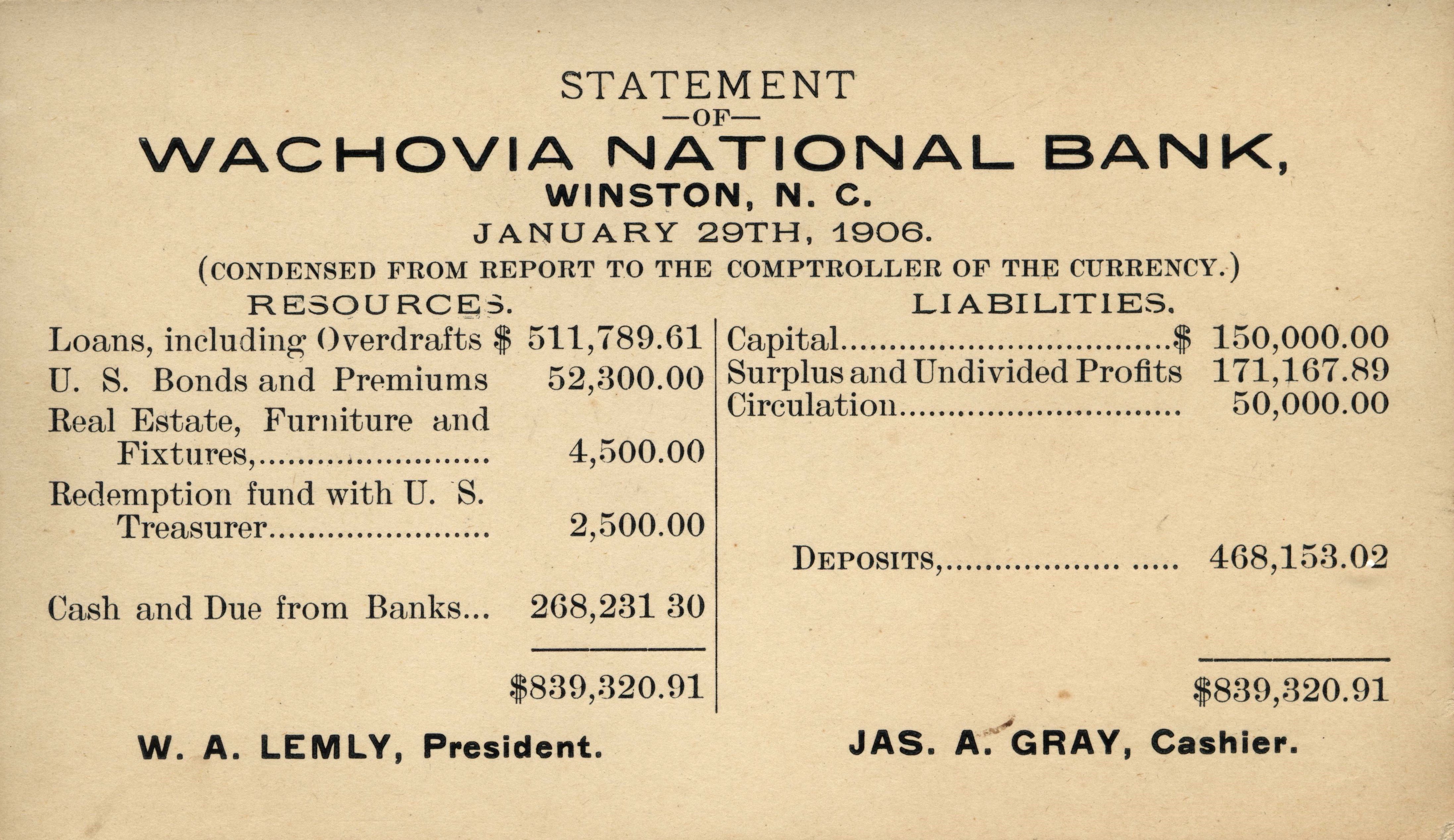
All of these rules ultimately trace back to how a company's finances are presented. Retained earnings, being accumulated realised profits not yet distributed, form part of a company's equity in its financial statements—this is the pool the distribution rules are protecting and regulating. Every concept in this topic—debt versus equity, fixed versus floating security, the priority waterfall on insolvency, the distributable-profits test, capital reduction, and buybacks—is an expression of the same underlying tension: creditors need assurance that value will not silently leak out of the company to its owners, while shareholders and directors need workable routes to fund the business and eventually share in its success. A solicitor who can move fluently between these rules, and spot which one a client's scenario actually engages, is doing the core work of SQE1 Business Law and Practice.