Business Taxation: Capital Gains Tax
A client sells a business. The purchase price is agreed, the SPA is drafted, completion happens — and only then does the real question arrive: who owes tax on the profit, and how much? Capital Gains Tax is the answer to that question, and it is a deceptively mechanical-looking area of law that hides real strategic stakes. Get the structure wrong — advise a client to sell shares when an asset sale was available, miss a relief claim window, or fail to spot a connected-party rule — and you can cost a client hundreds of thousands of pounds in tax that competent advice would have avoided.
Every CGT question in practice reduces to four gateways, all of which must be open before a tax charge can arise. Capital Gains Tax is charged under the Taxation of Chargeable Gains Act 1992 (TCGA 1992) on a chargeable gain arising from a chargeable disposal of a chargeable asset by a chargeable person. Miss any one of the four — the disposal is exempt, the asset is exempt, the person isn't chargeable — and there is no CGT at all. This is the diagnostic checklist a solicitor runs on every transaction before reaching for a calculator.
Who is a chargeable person?
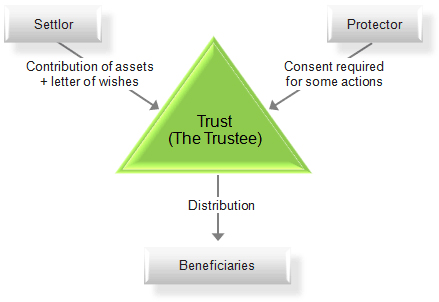
Chargeable persons for CGT include individuals, personal representatives of a deceased person, and trustees. Notably absent from that list: companies. Companies do not pay CGT on their gains; instead, a company's chargeable gains are added to its income and charged to corporation tax alongside its trading profits. This single distinction drives a huge amount of transactional advice, because it means the tax treatment of a business sale depends entirely on the legal vehicle carrying it on.
- A sole trader is charged to CGT personally on gains arising from the disposal of assets used in the business — there is no separate legal person to absorb the liability.
- Each partner in a partnership is charged to CGT individually on their own fractional share of any gain arising on disposal of a partnership asset. A four-partner firm selling its premises produces four separate CGT computations, one per partner, each potentially eligible for different reliefs depending on their personal circumstances.
- A company's gains simply disappear into its corporation tax computation.
When advising on a business sale or restructuring, a solicitor's first task is to identify which chargeable person actually bears the CGT liability, because the answer — and therefore the relief strategy — differs completely depending on whether the business is run as a sole tradership, a partnership, or a company.
What counts as a chargeable disposal?
The word "disposal" is broader than most students initially assume. A chargeable disposal includes a sale of the whole or part of an asset, but it also includes a gift of the whole or part of an asset — no money needs to change hands. A part disposal, such as selling a strip of land off the edge of a larger plot, is a chargeable disposal in its own right, requiring an apportionment of the original cost between the part sold and the part retained.
There is one crucial carve-out. The transfer of an asset on the death of its owner to the personal representatives is an exempt disposal, not a chargeable one. This matters enormously in estate planning: personal representatives acquire the deceased's assets at their market value at the date of death, which uplifts the base cost and effectively wipes out any gain that accrued during the deceased's lifetime. Death, in CGT terms, is a tax-free reset button — the single most powerful (and most overlooked by lay clients) planning fact in the whole topic.
Two further deeming rules distort the "price" used in a computation:
Connected persons and gifts are both taxed on deemed market value. Where a disposal is made to a connected person — a close relative, or a company the taxpayer controls — the disposal proceeds are deemed to be the asset's market value, regardless of any lower price actually paid. Equally, a gift of an asset is treated as a disposal at market value, even though the donor receives no consideration at all. Both rules exist for the same reason: to stop taxpayers dodging CGT by transferring assets at an artificially low price to someone they trust.
All forms of property are chargeable assets for CGT purposes unless a specific statutory exemption applies. The default is inclusion; exemption is the exception that must be found in the statute. The recurring exempt assets a solicitor should have on instant recall:
| Exempt asset | Why it matters in practice |
|---|---|
| Private motor car | A taxpayer's own car is exempt — irrelevant to most business advice, but a classic exam distractor. |
| UK government securities (gilts) | Common in trustee and estate portfolios. |
| Qualifying corporate bonds (QCBs) | Relevant when structuring loan notes as sale consideration. |
| ISA investments | Full CGT shelter for personal investment holdings. |
The most commercially significant exemption, though, is Principal Private Residence Relief, which exempts from CGT the gain on disposal of an individual's only or main home, provided it has been occupied as such throughout the period of ownership. For a solicitor, PPR relief is the reason most residential conveyancing generates no CGT conversation at all — while a buy-to-let or a business owner's second property very much does.
Once the four gateways are open, the computation itself is formulaic:
Disposal proceeds − incidental costs of disposal − allowable acquisition cost − incidental costs of acquisition − allowable enhancement expenditure = chargeable gain.
Two categories of deduction deserve close attention because they are frequently tested against each other:

- Incidental costs of disposal that are deductible include things like estate agents' fees and legal fees on sale — costs genuinely incurred in bringing about the disposal.
- Enhancement expenditure — spending that improves the asset's value and is still reflected in its state at disposal (an extension, a new roof structure that adds capacity) — is an allowable deduction.
- By contrast, revenue expenditure, such as routine repairs and maintenance, is not deductible in a CGT computation at all. Repainting a wall you already had is not the same, tax-wise, as building a wall that wasn't there before.
Losses
Not every disposal produces a gain. Where an asset is disposed of at a loss, that allowable capital loss can be set against chargeable gains arising in the same tax year, reducing the net gain pound for pound. Any loss that cannot be used in the year it arises isn't wasted — it may be carried forward and set against chargeable gains of future tax years, indefinitely, until relieved.
After losses are offset, every individual gets one more slice of protection before any tax is calculated. Every individual is entitled to an annual exempt amount of £3,000 for the 2026/27 tax year, meaning net chargeable gains up to that amount in the tax year are entirely free of CGT. Note the ordering carefully: the annual exempt amount is deducted from total net chargeable gains after losses have already been offset — losses first, exemption second.
Whatever survives that two-stage filter is taxed by reference to the taxpayer's income tax position, because chargeable gains are treated as the top slice of an individual's income for the tax year. That single rule is what makes the rate calculation genuinely dependent on the client's broader tax position, not a flat percentage:
| Where the gain falls | 2026/27 CGT rate |
|---|---|
| Within the individual's unused basic rate band | 18% |
| Above the unused basic rate band | 24% |
A higher-rate taxpayer with no basic rate band left simply pays 24% on the whole gain; a client with modest income might see part of a large gain taxed at 18% before the rate steps up. Advising accurately therefore requires knowing the client's income position, not just the size of the gain.
Two reliefs exist specifically to reward entrepreneurial risk-taking by cutting the rate (not the base) on qualifying gains — and they are where SQE1 scenario questions concentrate, because eligibility turns on precise, checkable conditions.
Business Asset Disposal Relief (BADR) reduces the CGT rate charged on qualifying gains made on disposal of the whole or part of a trading business. For disposals made on or after 6 April 2026, qualifying BADR gains are charged at 18% — a rate that has itself been on an upward path (10% historically, rising through an intermediate step to 18% by 2026/27), so always confirm the disposal date before applying it. The relief is capped by a cumulative lifetime limit of £1 million of qualifying gains per individual; once that lifetime allowance is used up, gains in excess of it are charged at the normal CGT rates, not the reduced rate — BADR does not get "topped up" or renewed.
Qualification differs by what is being sold:
- Sole trader or partnership business: the individual must have owned the business (or been a partner in it) throughout a two-year qualifying period ending with the disposal.
- Company shares: the company must be the individual's "personal company" — at least 5% of ordinary share capital and voting rights, and entitlement to at least 5% of distributable profits and assets on a winding up. The individual must also have been an officer or employee of the company throughout the qualifying period, and the company must be a trading company (or the holding company of a trading group) throughout that period.
Investors' Relief serves a different client: not the working owner-manager, but the external, passive investor who is not an officer or employee of the company. It reduces the CGT rate on qualifying gains from disposing of ordinary shares in an unlisted trading company, and — usefully for cross-referencing — applies the same 18% reduced rate as BADR. To qualify, the shares must be newly issued and subscribed for by the investor (not bought second-hand) and held for a minimum of three years, running from 6 April 2016.
| Business Asset Disposal Relief | Investors' Relief | |
|---|---|---|
| Who it's for | Owner-managers (sole trader, partner, or working shareholder) | Passive external investors |
| Rate (2026/27) | 18% | 18% |
| Qualifying period | 2 years | 3 years (from 6 April 2016) |
| Officer/employee required? | Yes | No — must not be |
A separate family of reliefs doesn't cut the rate — it defers the charge entirely by rolling the gain into the base cost of something else, so the tax bill resurfaces later rather than disappearing.
Rollover relief (s.152 TCGA 1992) lets a business defer a chargeable gain on disposing of a qualifying business asset by rolling the gain into the base cost of a replacement qualifying asset. The replacement must be acquired in a window running from twelve months before to three years after the original disposal. Qualifying assets are the classic fixed-capital trio: land and buildings, fixed plant and machinery, and goodwill used in the trade. Crucially, this is only a deferral, not a permanent exemption — because the rolled-over gain reduces the base cost of the replacement asset, it simply resurfaces (and is taxed) as a larger gain whenever that replacement is eventually sold.
Incorporation relief (s.162 TCGA 1992) addresses the moment a sole trader or partnership incorporates: it defers CGT when the whole business, together with all its assets, is transferred to a company as a going concern, wholly or partly in exchange for shares. Unusually among reliefs, it applies automatically wherever the statutory conditions are met — no claim is required — though it can be disapplied by election if a client actually prefers to crystallise the gain now (for example, to use up a CGT loss or the annual exempt amount). The gain on the transferred business assets is rolled into the base cost of the shares issued to the transferor, so the deferred tax resurfaces only when those shares are later disposed of.
Gift holdover relief (s.165 TCGA 1992) covers the gift scenario specifically: the donor and donee of a gift of business assets can jointly elect to defer the CGT that would otherwise arise on the deemed market-value disposal. The mechanism mirrors rollover relief in spirit — the donee takes over the asset at a base cost reduced by the held-over gain, so the gain becomes chargeable on the donee on a future disposal rather than on the donor immediately. Section 165 relief is available specifically for gifts of assets used in the donor's trade, or of shares in a trading company that is the donor's personal company — the same "personal company" test that appears in BADR.
Finally, share reorganisations and exchanges that meet the conditions in ss.127 and 135 TCGA 1992 are treated as not involving a disposal at all — no CGT event is triggered, and the new shareholding simply inherits the base cost of the original shares. This is what allows takeovers structured as share-for-share exchanges to proceed without an immediate tax charge for the target company's shareholders.
For most assets, CGT is collected through the self-assessment system, with the liability for a tax year due on 31 January following the end of that tax year — the same payment date as the rest of the self-assessment bill. UK residential property is the sharp exception: a UK resident disposing of UK residential property must report the disposal to HMRC and pay an estimated amount of CGT within 60 days of completion. That 60-day clock is easy to get wrong under pressure — it runs from the completion date, not the date contracts are exchanged, so a long gap between exchange and completion doesn't buy extra time once completion happens.

Underpinning all of the above, anti-avoidance provisions allow HMRC to disregard steps in an arrangement that were inserted mainly to avoid or reduce a CGT liability — a general backstop against contrived, artificial structuring that technically satisfies a relief's wording while defeating its purpose.

Every one of these rules resolves into a single practical sequence a solicitor runs through on a real instruction: identify the chargeable person (sole trader, partners, or a company outside the CGT regime altogether); confirm a chargeable disposal has actually occurred and check for connected-party or gift deeming rules; confirm the asset isn't statutorily exempt; compute the gain with the correct deductions; apply losses and then the annual exempt amount; and only then ask whether BADR, Investors' Relief, or one of the deferral reliefs can improve the outcome — each with its own qualifying period, its own conditions, and its own effect on timing. Getting the sequence right, and getting the qualifying conditions right within it, is what turns a mechanical tax topic into genuinely valuable transactional advice.