Client Money and Client Accounts
A client hands your firm £50,000 to complete on a house purchase. The moment that money lands, it stops being an ordinary bank deposit and becomes something the SRA treats almost as sacred: money the firm holds but does not own, cannot spend as its own, and must account for to the penny. Get the classification of that money wrong, or move it for the wrong reason, and you are not looking at a clumsy bookkeeping error — you are looking at a potential referral to the Solicitors Disciplinary Tribunal. This is why the SRA Accounts Rules exist, and why SQE1 tests them so relentlessly: they are the machinery that keeps client trust in the profession intact.
Every pound that arrives at a firm must be sorted into one of two buckets, and the sorting duty arises the instant the firm receives or becomes entitled to hold the money — not at some later, more convenient point.
Client money is money held or received by a firm for or on behalf of a client that relates to the delivery of regulated services and does not belong to the firm itself.
Business money (also called office money) is money that belongs to the firm itself — including, crucially, money received in payment of a bill of costs already delivered to the client.
The dividing line is billing. Money received for professional fees or disbursements that remain unpaid before a bill has been issued is client money — the firm has not yet earned the right to call it its own. But once a firm delivers a bill of costs, money held to cover that bill flips from client money to business money on the spot. The same logic works in reverse: money received in reimbursement of a disbursement the firm has already paid out of its own pocket is business money, not client money, because the firm is simply being repaid, not holding funds on someone else's behalf.

Advance payments — money sent to cover costs that have not yet been billed — must always be treated as client money and paid into a client account, no matter how confident the firm is that it will earn the fee. And the definition reaches further than everyday conveyancing: money held by a solicitor acting as a trustee, personal representative, or under a power of attorney is treated as client money under the Accounts Rules, as is money held for a controlled trust where a manager of the firm is a trustee.
Where a single payment mixes client money and business money — say, a payment covering both an unbilled disbursement and an already-delivered invoice — the whole payment must go into the client account first, with the business money portion transferred out promptly afterward. Firms do not get to guess and bank the "probably ours" portion straight into the office account.

A client account is a bank or building society account held at a branch or head office in England and Wales, used specifically to keep client money separate from the firm's own money. Separation is not a best practice here — it is a standing obligation: a firm must keep client money separate from business money at all times.

Firms have flexibility in how they pool client money. A general client account holds money for multiple clients together, while a separate designated client account is ring-fenced for one individual client. That choice has a financial consequence for the client: interest earned on a separate designated account belongs entirely to the client for whom the money is held, whereas for a general client account, the firm must account to the client for a fair sum in lieu of interest, calculated in accordance with the firm's own written interest policy.
Client money must be paid promptly into a client account, subject only to limited, defined exceptions — one of which is money representing a payment from the Legal Aid Agency for the firm's own costs. Notice the word "promptly." This is a deliberate and important shift: the 2019 SRA Accounts Rules replaced the older, prescriptive standard of paying client money in "without delay" with the outcomes-focused standard of paying it in "promptly." The change removed a hard clock and replaced it with judgement — a firm must now exercise professional judgement to determine what counts as "promptly" in the circumstances of the specific transaction, rather than ticking a box against a fixed number of days.
A firm may also agree an alternative arrangement in writing with a client or third party for handling money that would otherwise have to be treated as client money — a deliberate escape valve the rules build in for unusual circumstances, provided it is documented rather than assumed.
If paying in is a duty of promptness, paying out is a duty of justification. Client money may be withdrawn from a client account only for the purpose for which it is being held, or on the specific instruction of the client or third party for whom it is held. There is no discretion to use it for anything else, however sensible it might seem in the moment.
Two further guardrails sit alongside this purpose test:
- A firm must not withdraw client money from a client account for a particular client unless sufficient funds are held on behalf of that specific client to cover the withdrawal. Client ledgers are individual, not communal — a firm must never use money held for one client to fund a withdrawal or shortfall relating to a different client, even temporarily and even if the firm intends to "fix it" later.
- A firm may transfer money from client account to cover its own costs only after giving the client a bill of costs or other written notification of costs. Billing is the trigger; a firm cannot help itself to fees in advance of that formal step.
Retention has an expiry point. A firm must return client money to the client or third party promptly once there is no longer any proper reason to retain it. Client money must never be left sitting in a client account without a proper reason connected to the delivery of regulated services — retention is not a passive default, it must be actively justified.
Every payment into, and every transfer or withdrawal from, a client account must relate to the delivery of regulated services by the firm. That single sentence is the thread that ties classification, payment-in, and payment-out together — and it leads directly into the rule that generates the most disciplinary scrutiny of all.
Here is the trap that catches out firms who think of the client account as a convenient, trusted place to move money through: the prohibition on providing banking facilities. A firm must not use its client account to provide clients or third parties with a banking service that is unconnected to the delivery of regulated services. Using a client account merely to receive and pay out money, with no underlying regulated service attached, breaches this prohibition outright.
The subtlety SQE1 loves to test is this: the mere existence of a retainer or a legal transaction does not, by itself, justify a payment into or out of a client account. It is not enough that the firm is "acting" for the client in some general sense — any specific payment into or out of the account must have a proper connection to the underlying legal transaction for which the firm is providing regulated services. A solicitor cannot let a client route unrelated personal funds through the client account just because that solicitor happens to be handling the client's conveyancing.

A cheque made out to a third party rather than to the firm should not be paid into the firm's own client account — accepting it risks turning the account into exactly the kind of banking-facility conduit the rule prohibits.
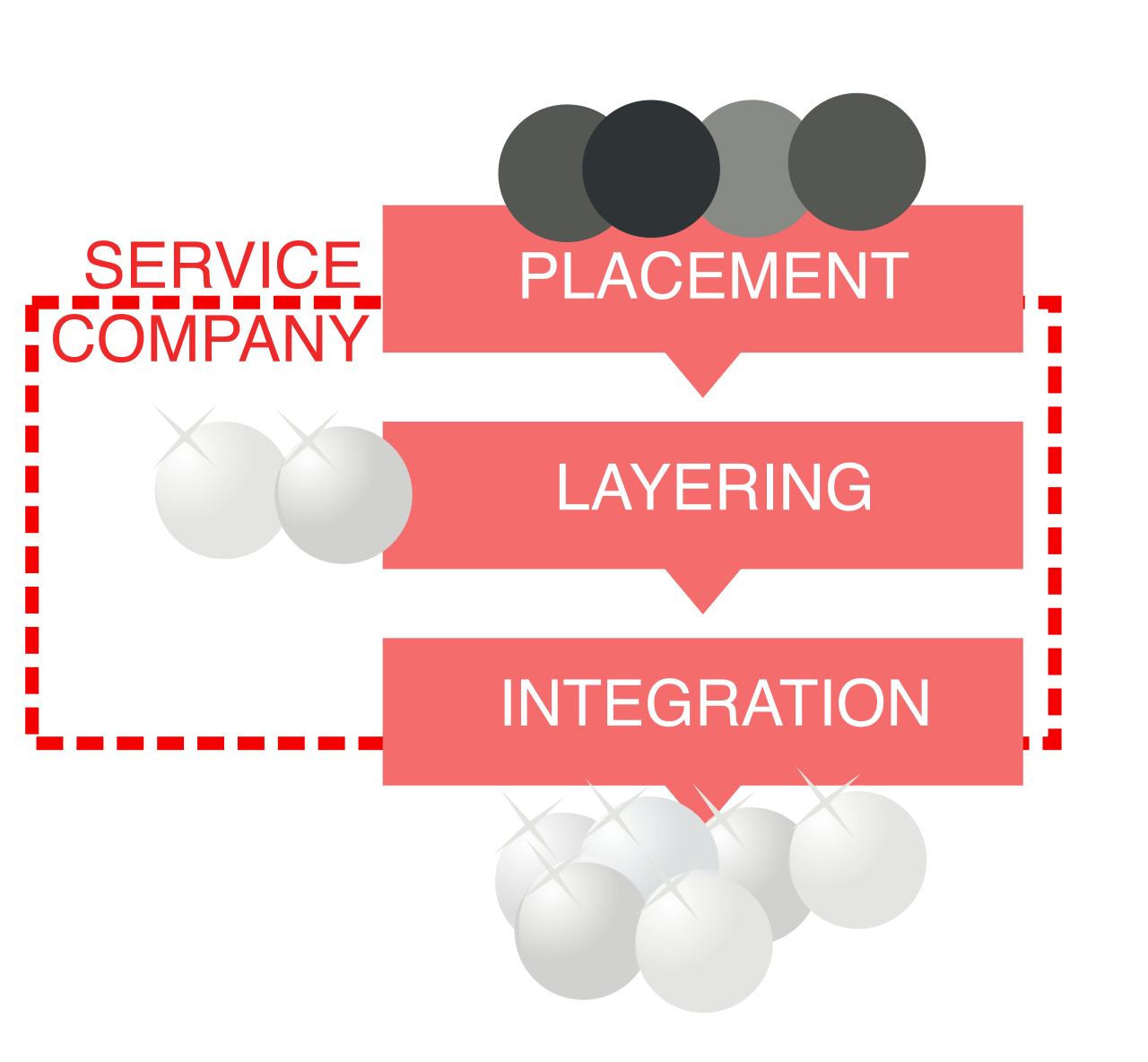
Why does the SRA treat this so severely? Because the regulator treats improper use of a client account as a banking facility as a possible warning sign of money laundering — client accounts, with the protective glow of professional legitimacy around them, are attractive to anyone wanting to launder funds through a trusted intermediary. A breach of this prohibition is therefore not merely a technical accounting slip; it can also amount to a breach of the SRA Principles relating to acting with integrity and upholding public trust in the profession — engaging the firm's and the individual solicitor's most fundamental regulatory obligations, not just the Accounts Rules.

None of the above means anything without disciplined record-keeping. A firm must keep accurate, contemporaneous records of all dealings with client money, including a separate ledger for each client — so that at any moment, the firm can show exactly how much it holds for that individual and why.

Records are checked, not just kept. A firm must reconcile its client account records against bank statements at least every five weeks, comparing the bank statement balance, the firm's own cash book, and the client ledger totals. This three-way check is designed to surface discrepancies — a shortfall, a misapplied payment, an unauthorised withdrawal — before they can compound or be concealed.
Where something has gone wrong — an unauthorised withdrawal, for instance — the rules do not permit a wait-and-see approach. Any breach of the SRA Accounts Rules must be corrected promptly, including replacing any money improperly withheld or withdrawn. The firm's obligation to make the client account whole again is immediate and unconditional; it does not depend on establishing fault or waiting for a formal complaint.
The consequences of getting this wrong reach well beyond an internal audit note. A solicitor who breaches the SRA Accounts Rules risks regulatory sanctions from the SRA, including a fine or referral to the Solicitors Disciplinary Tribunal — the same body that can suspend or strike a solicitor off the roll entirely.
Not every firm has to operate its own client account at all. A firm may instead use a third party managed account (TPMA) — a facility run by an independent provider — provided the firm itself never receives or holds the client's money at any point. The client's money sits with the third party, not with the firm, which sidesteps the client-account machinery altogether for that transaction.
This flexibility comes with a transparency condition: where a firm uses a third party managed account, the client must be informed in advance of the account's terms and of the client's right to terminate the arrangement. The client is trading the protections of the Accounts Rules regime for a different structure, and the SRA requires that trade to be made with informed consent, not buried in the small print.

Taken together, these rules form a single coherent philosophy: money that isn't the firm's must be visibly, provably kept apart, moved only for genuine reasons connected to real legal work, and accounted for on demand. Master that philosophy, and the individual rules — classification, promptness, purpose-based withdrawal, the banking-facilities ban, five-week reconciliations — stop looking like a checklist and start looking like the logical consequences of one simple idea: client money is a trust, not a balance.