Estate Taxation
A solicitor drafting a will for a client with a £3 million estate is not just choosing words — they are choosing a tax outcome. Move a gift from "to my spouse" to "to my children," and the bill changes by hundreds of thousands of pounds. Estate taxation is where private client work stops being about sentiment and starts being about arithmetic, and SQE1 tests whether you can run that arithmetic correctly under exam pressure.
Inheritance Tax (IHT) taxes the transfer of wealth, not its mere existence, so the first question for any lifetime gift is: what kind of transfer is this? The system sorts gifts into two boxes.
A potentially exempt transfer (PET) is a lifetime gift from one individual to another individual. It is "potentially" exempt because its fate is undetermined at the moment it is made — it becomes fully exempt from IHT only if the donor survives seven years from the date of the gift. Die within that window, and the gift is pulled back into charge.
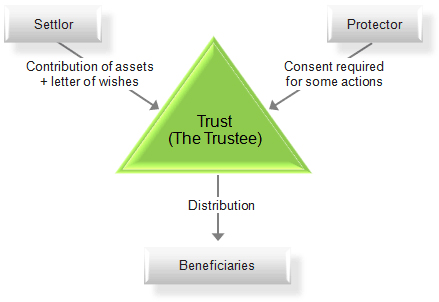
A lifetime chargeable transfer (LCT) is typically a gift into a discretionary trust, and unlike a PET it is immediately chargeable to IHT when made — there is no waiting to see what happens. The logic is straightforward: gifts to another person carry an inherent uncertainty (will they still have it, will the relationship endure?) that Parliament tolerates with a grace period, while gifts into the more controlled environment of a trust do not receive that benefit of the doubt.
The nil-rate bands
Every estate gets tax-free thresholds before IHT bites at all.
The nil-rate band (NRB) is £325,000, frozen at this level until 5 April 2031.
The residence nil-rate band (RNRB) is an additional £175,000, available where a qualifying residence is left to direct descendants (children, grandchildren, and similar lineal descendants).
The RNRB is not unconditional largesse for large estates. It tapers away by £1 for every £2 that the net value of the death estate exceeds £2 million — so once an estate reaches £2.35 million (using the current £175,000 RNRB), the residence band is extinguished entirely. This is the exam's favourite arithmetic trap: always check the taper before assuming the full RNRB applies.
Both bands are also transferable between spouses and civil partners. Whatever fraction of the NRB the first spouse to die does not use can be transferred to the survivor as the transferable nil-rate band, and the same logic applies to any unused RNRB as the transferable residence nil-rate band. A couple who plan their wills sensibly can therefore shelter up to £1 million (2 × £325,000 + 2 × £175,000) from IHT before any other relief is even considered.
The rates
Above the available nil-rate bands, a death estate is taxed at the standard rate of 40%. That rate drops to a reduced rate of 36% where at least 10% of the deceased's net estate — the "baseline amount" — is left to charity. This is a genuine incentive, not a rounding effect: giving away a tenth of the estate can reduce the effective rate on everything else, which is why charitable legacy planning is a recurring SQE1 scenario.
Exemptions: transfers that never enter the reckoning
Some transfers are simply outside the IHT net altogether, lifetime or death.
Spouse and civil partner transfers are exempt without limit, provided the transferee is UK domiciled or a long-term UK resident. This unlimited exemption reflects the policy view that wealth moving between partners has not really left the family unit. But the 2025 reform to the domicile system introduced a new limit: since 6 April 2025, the spouse exemption is capped at £325,000 where a long-term UK resident leaves assets to a spouse or civil partner who is not a long-term UK resident. The unlimited exemption survives only where both partners share long-term UK resident status (or the transfer flows the other way, from a non-resident spouse to a resident one).
Gifts to UK-registered charities are exempt without limit — no cap, no conditions beyond the charity's UK registration.

Then there is a family of smaller, lifetime-only exemptions that reward the ordinary rhythms of giving:
| Exemption | Amount | Key condition |
|---|---|---|
| Annual exemption | £3,000 per tax year | Can be carried forward one year only (max £6,000 in a single year) |
| Small gifts | £250 per recipient per tax year | Cannot be combined with another lifetime exemption for the same recipient |
| Normal expenditure out of income | Unlimited | Must be habitual, paid from income, and not reduce the donor's standard of living |
| Wedding gift — parent to child | £5,000 | — |
| Wedding gift — grandparent to grandchild | £2,500 | — |
| Wedding gift — anyone else | £1,000 | — |

The normal expenditure out of income exemption rewards precisely the kind of giving that never feels like "estate planning" at all — a grandparent who pays a grandchild's school fees every term out of pension income is quietly moving wealth outside the IHT net, provided the payments are habitual, funded from income rather than capital, and do not force the donor to dip into savings to maintain their lifestyle.
Taper relief: softening the failed PET
If a PET fails — the donor dies within seven years — the gift becomes chargeable. But taper relief softens the blow by reducing the rate of tax according to how many complete years elapsed between the gift and death:
- Death within 3 years: no reduction — full 40% rate
- 3–4 years: 20% reduction
- 4–5 years: 40% reduction
- 5–6 years: 60% reduction
- 6–7 years: 80% reduction
The critical exam nuance is what taper relief does not do. It reduces only the rate, never the value of the gift being taxed. And if the failed PET's value falls entirely within the available nil-rate band, taper relief is worthless — there was no tax to reduce in the first place. A gift of £200,000 with no other transfers, made five years before death, still pays nothing, because £200,000 never breached the £325,000 NRB regardless of any taper percentage.
The seven-year cumulation principle
IHT is not assessed gift-by-gift in isolation. Chargeable transfers made within the seven years before a further chargeable transfer are cumulated to work out how much nil-rate band remains for that later transfer. A donor who made a £250,000 LCT four years ago has already used most of their NRB when they make a second chargeable transfer today — the earlier gift eats into the band available now. This cumulation is what makes sequencing gifts a genuine tax-planning skill rather than an afterthought.
Taxing the LCT itself: lifetime rates and grossing up
An LCT into a discretionary trust is taxed immediately at a lifetime rate of 20% on the value exceeding the available NRB — but only where the trustees pay the tax. If instead the settlor pays the tax, the gift must be grossed up: since the settlor is paying tax out of their own remaining estate (effectively giving away more than the trust receives), the calculation treats the gift as if it were larger, producing an effective lifetime rate of 25%.
If the settlor then dies within seven years of the LCT, the transfer is not left at its lifetime rate — it is recalculated using death rates and the nil-rate band available at death, subject to taper relief exactly as a failed PET would be. Fairness requires a credit: any lifetime IHT already paid is set against the tax now due as a result of death, so the settlor's estate is never taxed twice on the same transfer.
Gifts with reservation of benefit
A donor cannot have their cake and eat it too. A gift with reservation of benefit (GROB) — where the donor continues to enjoy some benefit from the gifted asset (the classic example: giving away the family home but continuing to live in it rent-free) — remains part of the donor's death estate for IHT purposes, regardless of how many years have passed since the "gift." The seven-year clock never starts running on a gift the donor never truly let go of.
Where exemptions remove a transfer from charge entirely, reliefs reduce the value on which tax is calculated.
Fall in value relief addresses the unfairness of taxing a gift at a value the donor no longer represents. If a failed PET or LCT has fallen in value by the time of the transferor's death, and the transferee still holds the asset, the IHT is based on the lower value at death rather than the higher value at the date of the gift.
Business property relief (BPR) and agricultural property relief (APR) are the two reliefs that make family businesses and farms survivable across generations, each capable of reducing the taxable value by 100% or 50% depending on what is held:
- BPR at 100% applies to an unquoted trading business, an interest in one, or unquoted shares in a qualifying trading company.
- BPR at 50% applies to a controlling shareholding in a quoted trading company, and to land, buildings, or plant used by a business the transferor controlled.
- APR mirrors this 100%/50% structure depending on the occupation and letting history of the agricultural land.
A major structural change lands on these reliefs from 6 April 2026:
From 6 April 2026, 100% relief under APR and BPR combined is capped at the first £2.5 million of qualifying property per individual. Value above that combined allowance receives relief at only 50%, producing an effective IHT rate of 20% on the excess. Critically, any unused part of the £2.5 million allowance can be transferred to a surviving spouse or civil partner — mirroring the transferable nil-rate band mechanism, so couples who plan jointly can shelter up to £5 million of qualifying business and agricultural property between them.
This reform is precisely the sort of "why this matters" moment SQE1 loves to test through a client scenario: a farming family or a family business owner asking whether their succession plan still works now that unlimited 100% relief is gone.
Quick succession relief (QSR) solves a different problem — an estate taxed twice in quick succession, once on each of two deaths close together. It reduces the IHT payable on a death estate where the deceased received a chargeable transfer within the five years before their own death, on a sliding scale:
| Years between receipt and death | QSR reduction |
|---|---|
| Within 1 year | 100% |
| 1–2 years | 80% |
| 2–3 years | 60% |
| 3–4 years | 40% |
| 4–5 years | 20% |
Apportioning tax across a mixed estate
Where a death estate includes both exempt gifts (say, to a spouse) and non-exempt gifts (say, to children), the general estate rate is used to work out how much of the total IHT bill is attributable to the non-exempt gifts specifically — the exempt beneficiaries should not bear a share of tax that only arises because of the taxable gifts.
The single biggest structural change in modern IHT is the abandonment of domicile as the test for taxing worldwide assets. Since 6 April 2025, liability to IHT on non-UK situated assets depends on whether an individual is a long-term UK resident, not on their domicile. An individual becomes a long-term UK resident once they have been resident in the UK for at least 10 of the previous 20 tax years — a bright-line residence test replacing the older, more subjective domicile inquiry. This is why the spouse exemption cap discussed above turns on "long-term UK resident" status rather than domicile: the entire framework has been rebuilt around residence.
Personal representatives (PRs) are personally liable for paying the IHT due on the death estate, though they pay it out of estate assets rather than their own pockets. The general rule is that IHT on a death estate must be paid by the end of the sixth month after the month of death — die in March, and the tax is due by 30 September. Miss that deadline and HMRC charges interest on the unpaid balance, running from the due date regardless of when the grant of representation is actually obtained.

Some assets do not lend themselves to a lump-sum payment — you cannot sell 10% of a house to pay a tax bill. The instalment option allows IHT attributable to qualifying assets (land, controlling shareholdings, business interests) to be paid over ten equal annual instalments. Where the underlying property qualified for 100% BPR or APR relief and instalments are paid on time, no interest is charged at all — a further sign of how heavily the system favours the smooth generational transfer of businesses and farms.
Not every estate needs the full machinery of an IHT account. A low-value or exempt excepted estate can apply for the grant of representation without first delivering a full IHT account to HMRC, streamlining probate for smaller or entirely exempt estates.
Death does not pause taxation — it creates a new taxable entity. The administration period runs from the date of death until the estate's residue has been fully ascertained (all assets identified, debts paid, and the net residue known), and everything that happens financially during that window has its own tax consequences.
Income Tax on estate income
PRs are treated as a distinct taxable person for Income Tax purposes, separate from both the deceased and the eventual beneficiaries. This has a sharp consequence: PRs cannot claim a personal allowance against income arising during administration — every pound of estate income is taxed from the first pound.
The rates are flat and comparatively simple:
- 20% on non-savings and savings income (rent, interest) received during administration.
- 8.75% on dividend income received during administration (the dividend ordinary rate).
- PRs are never liable at higher or additional rates — administration income is always taxed at these basic-rate equivalents, however large the underlying estate.
A beneficiary's tax position depends on the nature of their interest, but the exam's key insight is that this distinction matters less than students expect for income taxation:
- A beneficiary with an absolute interest in residue is taxed on estate income as it is treated as arising to them during administration.
- A beneficiary with a limited interest in residue (a life interest, for instance) is taxed on estate income arising during administration in the same way as an absolutely entitled beneficiary — the income tax treatment does not diverge based on the type of interest, even though the underlying trust and capital entitlements differ sharply.
The mechanism that reconciles PR-level tax already paid with the beneficiary's own tax position is the R185 Estate Income certificate. It records the estate income paid to a beneficiary and the Income Tax the PRs have already suffered on it. A beneficiary who is a non-taxpayer or lower-rate taxpayer can use their R185 to reclaim the tax the PRs paid at 20% (or 8.75%) but which exceeds what that beneficiary should actually owe on their own income tax position — the certificate is the receipt that makes reclaiming possible.
Capital Gains Tax during administration
Death itself triggers no CGT: no Capital Gains Tax charge arises on the death of an individual, so death is not a disposal. Instead, PRs acquire the deceased's assets at their market value at the date of death — an uplifted base cost that can eliminate decades of accrued but untaxed gain in a single stroke. A house bought for £50,000 in 1990 and worth £500,000 at death passes to the PRs with a £500,000 acquisition cost; if they sell it for £510,000 during administration, only £10,000 of gain is chargeable, not £460,000.
PRs get their own annual exempt amount — £3,000 for the 2026/27 tax year — available for the tax year of death and the following two tax years of the administration period (three tax years of allowance in total, however short the actual gap between them).
PRs pay CGT at the standard rate of 24% on chargeable gains realised during administration, or a reduced rate of 18% on gains qualifying for Business Asset Disposal Relief or Investors' Relief.
Capital losses realised by PRs during administration are set against chargeable gains before the annual exempt amount is applied — the ordering matters for exam calculations: net off losses first, then deduct the £3,000 exemption from what remains.
Finally, the vesting or assent of an estate asset to a beneficiary — the formal transfer that completes the beneficiary's entitlement — is not itself a disposal for CGT purposes, so no gain crystallises simply because the PRs hand the asset over. When the beneficiary later sells that asset, they use the PRs' probate-date value (the death-date market value) as their own acquisition cost, carrying forward the same uplifted base that the PRs themselves held. The uplift on death, in other words, benefits the ultimate beneficiary just as much as it benefits the PRs during administration — it happens once, at death, and then rides through the entire chain of ownership that follows.
Estate taxation rewards students who can hold three timelines in their head simultaneously: the seven years before death that determine which lifetime gifts are pulled back into charge, the sixth-month deadline after death that governs payment, and the multi-year administration period during which income and gains keep arising and being taxed. A well-drafted SQE1 answer on this topic is rarely about reciting a single rule — it is about tracing a gift or an asset through all three timelines and calculating the tax due at each stage.