Contract Formation
A contract, at its core, is nothing more than a promise the law has agreed to enforce. Not every promise qualifies. English law has built a filter — five gates a bargain must pass through before a court will lift a finger to enforce it: agreement, consideration, intention to create legal relations, certainty, and capacity. Miss any one gate, and what feels like a binding deal to the parties is, in the eyes of the law, nothing at all. For a solicitor advising a client who says "but we shook hands on it," this filter is the whole ballgame — the difference between a claim worth pursuing and a waste of the client's money.

Agreement is usually analysed as the meeting of an offer and a matching acceptance — though in truth this is a legal fiction imposed after the fact to make sense of a negotiation, not always a literal description of what happened. Still, it is the analytical tool SQE1 expects you to apply mechanically to any transactional fact pattern.
An offer is a clear and unequivocal statement of the terms on which the offeror is willing to be bound, made with the intention that it becomes binding as soon as it is accepted. Crucially, whether a statement counts as an offer is judged objectively — not by what the offeror subjectively meant, but by what a reasonable person in the offeree's position would have understood from the offeror's words or conduct. This objective test is the engine that drives almost every case in this area, because it means a party can find themselves bound by an offer they never intended to make, simply because a reasonable observer would have read their conduct that way.
Offer v Invitation to Treat
The hardest line to draw — and the one SQE1 tests relentlessly through scenario questions — is between a genuine offer and an invitation to treat: an invitation for the other party to make an offer, which is not itself capable of acceptance.
Why the line matters: If a display or advertisement is an offer, a customer's acceptance makes an instant contract. If it is merely an invitation to treat, the customer's response is the offer, and the shop is free to say no.
The classic illustrations:
- Shop displays are invitations to treat, not offers. In Pharmaceutical Society of Great Britain v Boots Cash Chemists (1953), medicines displayed on self-service shelves were held to be an invitation to treat; the customer makes the offer to buy when presenting the goods at the till, and the pharmacist (legally required to supervise the sale) accepts at that point, not when the item is picked off the shelf. The same logic explains Fisher v Bell (1961): a flick knife displayed in a shop window with a price tag was an invitation to treat, not an offer for sale — so no criminal offence of "offering" the knife for sale had been committed, however troubling that outcome felt to the court.
- General advertisements of goods are invitations to treat, because they invite offers from an indefinite number of people chasing limited stock — the advertiser cannot possibly intend to be bound to sell to everyone who responds.
- But an advertisement can be a genuine unilateral offer if it is capable of acceptance by anyone who performs the stipulated conditions, rather than a mere puff. The definitive case is Carlill v Carbolic Smoke Ball Co (1893): a newspaper advertisement promised £100 to anyone who used the smoke ball as directed and still caught influenza. The court held this was a serious, binding unilateral offer to the whole world — reinforced by the company's deposit of £1,000 with the Alliance Bank, which the court treated as clear evidence the advertisement was meant seriously and not as an empty sales puff.
- Auctions: the auctioneer's request for bids is an invitation to treat; each bid is an offer, which the auctioneer accepts by the fall of the hammer. An auction advertised "without reserve", however, obliges the auctioneer to accept the highest genuine bid — refusal gives the highest bidder a claim under a separate collateral contract (the promise to sell without reserve), even though no contract of sale itself has yet formed.
- Tenders: a request for tenders is generally an invitation to treat, with each tender submitted being an offer the inviting party may accept or reject freely. But where the invitation expressly promises to consider every conforming tender submitted by the deadline, courts may imply a collateral contract to do exactly that — so failing even to open a compliant tender can be a breach, quite apart from any decision on which tender to accept.
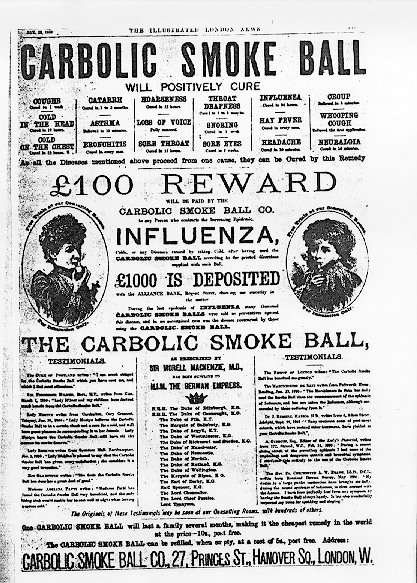
An offer can be addressed to one specific person, to a defined group, or — as Carlill shows — to the whole world.
Termination of an Offer
An offer does not sit there indefinitely awaiting acceptance. It dies in one of six ways: revocation, rejection, counter-offer, lapse of time, failure of a condition, or death.
- Revocation must be communicated to the offeree before acceptance — an offeror's private decision to withdraw achieves nothing until the offeree learns of it. That communication need not come from the offeror personally: in Dickinson v Dodds (1876), the offeree's discovery, via a reliable third party, that the offeror had already sold the property to someone else was held to be effective revocation, even without a word from the offeror himself.
- A promise to "keep the offer open" for a fixed period is not itself binding unless the offeree has given separate consideration for that promise — so, absent payment for the option, the offeror remains free to revoke early.
- In a unilateral contract, once the offeree has started performing the requested act, the offeror can no longer revoke, provided the offeree finishes within a reasonable time — otherwise an offeror could watch someone runs most of the way to Manchester and slam the door just before they arrive.
- Rejection ends an offer the moment the offeree clearly communicates non-acceptance, and a counter-offer does the same job by implication: it destroys the original offer entirely. Hyde v Wrench (1840) is the leading illustration — proposing to buy a farm at a lower price than offered was held to be a counter-offer, so the original offer was no longer available for the offeree to accept afterwards, even though he tried. Contrast this with a mere request for information ("would you take less?"), which is not a counter-offer and leaves the original offer alive.
- Lapse of time: an offer with a stated deadline dies automatically when the deadline passes; an offer with no stated deadline lapses after a "reasonable time" — a question of fact depending on the subject matter (perishable goods lapse fast; land deals slower) and the speed of the communication method used.
- Failure of a condition attached to the offer (express or implied) kills it automatically.
- Death: an offer made to a specific person lapses on the offeror's death if the offeree knew, or ought reasonably to have known, of the death before purporting to accept.
Acceptance
Acceptance is the offeree's final and unqualified expression of assent to all the terms of the offer. This is the mirror image rule: acceptance must match the offer exactly, or it is not acceptance at all — it is a counter-offer, reopening negotiations rather than closing the deal.
Acceptance must generally be communicated to the offeror. Silence is not enough, however tempting it might be to assume that no response means agreement. In Felthouse v Bindley (1862), an uncle told his nephew that silence would be taken as acceptance of his offer to buy a horse — the court held this was insufficient; you cannot impose a contract on someone by telling them their silence will bind them.
The Postal Rule: where post is an authorised method of acceptance, acceptance is complete the moment the letter is properly posted — even if it is delayed in the post or never arrives at all. This traces to Adams v Lindsell (1818), where acceptance sent by post took effect from the moment of posting, ahead of a rival sale the offeror had since made in the mistaken belief that no acceptance was coming.
The postal rule is narrower than it first appears. It applies only where post is an expressly or impliedly authorised method of acceptance, and the offeror can exclude it entirely by requiring actual receipt. More importantly for modern practice: the postal rule does not extend to instantaneous communications — telephone, telex, fax, or email — where acceptance takes effect only when, and where, it is actually received by the offeror. If an instantaneous acceptance arrives outside normal business hours, it generally takes effect at the start of the next business day, not at the moment of transmission.
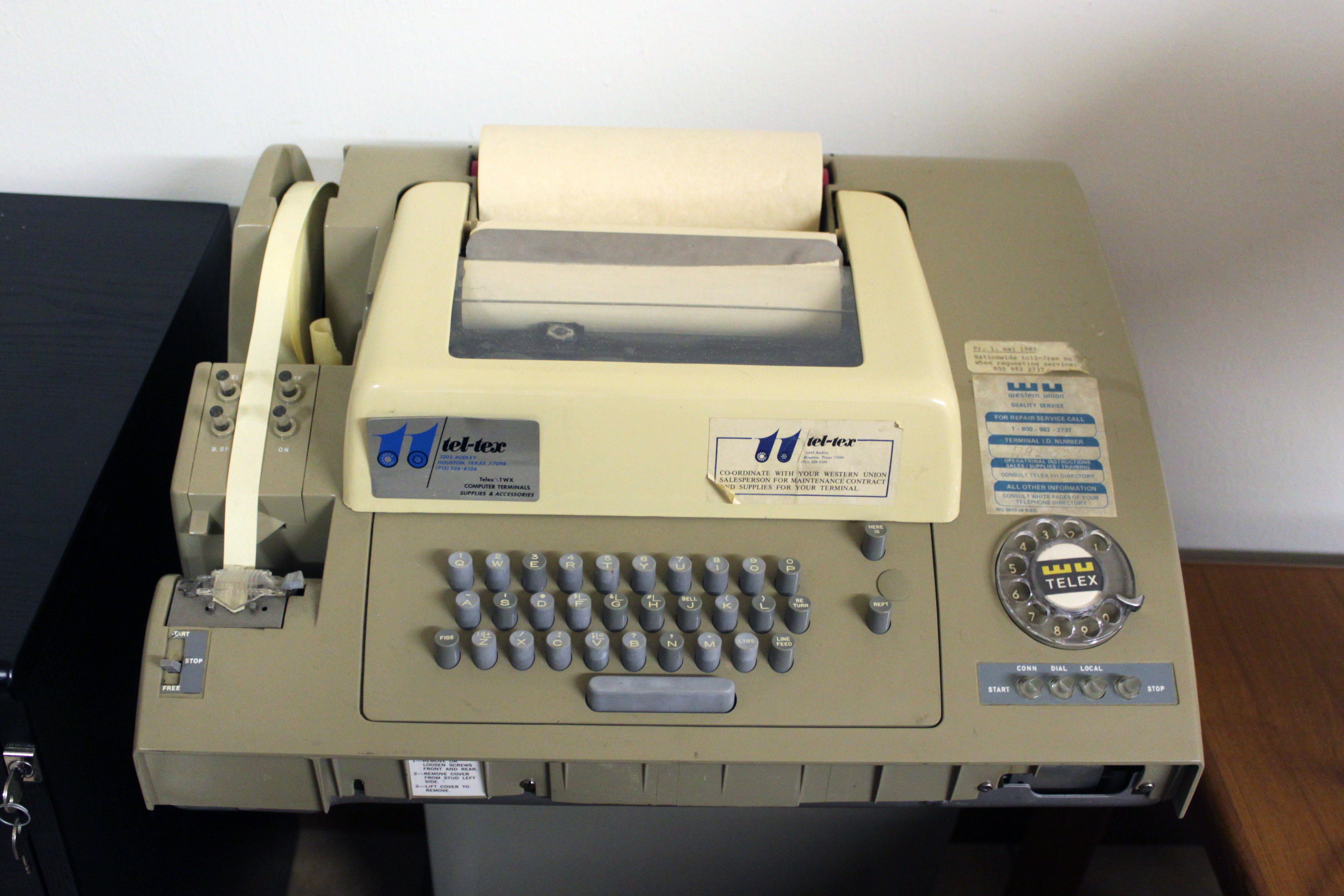
For a unilateral contract, none of this communication machinery is needed: acceptance generally does not need to be communicated to the offeror at all, because performing the stipulated act is the acceptance.
Where the offeror stipulates a method of acceptance, that method is binding only if the offeror makes clear no other method will do; otherwise an equally effective alternative method will suffice.
The Battle of the Forms
Commercial deals rarely proceed by a single offer and a clean "yes." Each party typically fires its own standard terms at the other — a supplier's terms on the quote, the buyer's terms on the purchase order — and this is the battle of the forms. Applying ordinary offer-and-acceptance analysis, each new set of terms sent in response to the other is a counter-offer that destroys what came before. Under the traditional "last shot" doctrine, the contract is formed on the terms of whoever sent the last set of terms before performance began, provided those terms were then acted upon. Butler Machine Tool Co v Ex-Cell-O Corporation (1979) is the leading Court of Appeal authority applying this traditional analysis, resolving the battle in the seller's favour because the seller's terms were the last document exchanged before performance — a result that hands victory to whoever manages to get the final word in before the goods are delivered.

Even a perfectly matched offer and acceptance is not enough on its own — English law (unlike many civil law systems) insists on a bargain, not a bare promise. Consideration is something of value in the eyes of the law given by the promisee in exchange for the promise, so that each side gives and gets something.

Consideration must be sufficient but need not be adequate. "Sufficient" means it must have some identifiable value the law recognises; "adequate" would mean the exchange is of roughly equal economic worth — and the courts flatly refuse to police that. If two parties strike a lopsided bargain with their eyes open, that is their business.
Chappell & Co v Nestle Co (1960) is the case that makes this vivid: the return of used chocolate-bar wrappers, of essentially no resale value to Nestle, was held to be sufficient consideration, because the wrappers had some value to the promisor in driving sales — the court will not weigh how much.

Several doctrines refine what counts:
- Past consideration is no consideration. An act performed before the promise was made was not given in exchange for it, so it cannot support the promise. The narrow exception: where the act was done at the promisor's request, both parties understood at the time that payment would follow, and that payment would have been legally enforceable if promised in advance — in which case the "past" act retroactively counts.
- Consideration must move from the promisee — only someone who has themselves given consideration can enforce the promise.
- Existing public duty imposed by law is not good consideration for a fresh promise, unless the promisee does something more than the duty already requires.
- Existing contractual duty owed to the same promisor is likewise not automatically good consideration for extra payment — the classic risk being one party using the threat of non-performance to extract more money for work already promised. But Williams v Roffey Bros & Nicholls (Contractors) Ltd (1991) softened this considerably: a promise of extra payment for finishing existing work was held enforceable because the promisor obtained a practical benefit — here, avoiding a penalty clause under the main contract and the cost and disruption of finding a replacement contractor. Practical benefit, short of a formal new obligation, can now be enough.
- Existing contractual duty owed to a third party, by contrast, has always been good consideration for a new promise from a different party — there is no double-counting problem, because the promisor here is not the one who already had the benefit of that duty.
- Part payment of a debt is not good consideration for a promise to discharge the whole debt — the ancient rule in Pinnel's Case — unless the debtor gives something extra: paying early, paying at a different place, or paying in a different form (e.g., goods instead of cash).
Promissory Estoppel
Where a creditor promises to accept less and the debtor relies on that promise, the strict Pinnel's Case rule can produce unjust results — so equity intervenes through promissory estoppel: it prevents a promisor from going back on a promise not to enforce their full contractual rights where the promisee has relied on it and it would be inequitable to resile. Two limits matter for exam purposes: estoppel operates only as a shield, not a sword — it can be used defensively to resist a claim, never to found a fresh cause of action — and it generally only suspends, rather than permanently extinguishes, the promisor's strict legal rights, which can be revived on giving reasonable notice.
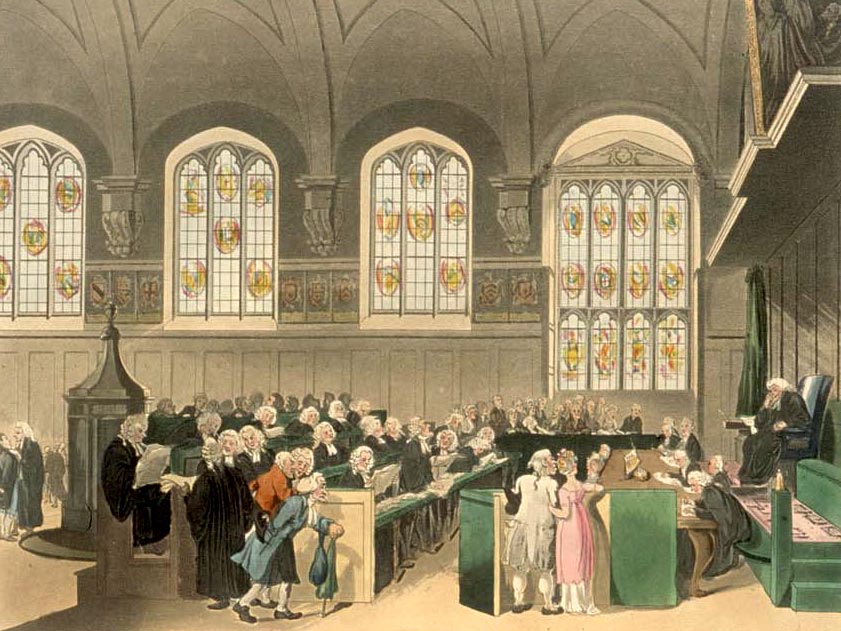
Even a bargain struck for consideration is not a contract unless both parties intended it to be legally binding and enforceable in court — not merely a social nicety.
The law applies presumptions based on context:
| Context | Presumption | Rebuttable by |
|---|---|---|
| Social/domestic (family, friends) | No intention to create legal relations | Evidence of separation, or clear commercial features to the arrangement |
| Commercial/business | Yes, intention presumed | Clear express words (e.g. an "honour clause") stating the deal is binding in honour only |

Balfour v Balfour (1919) is the anchor domestic case: a husband's promise of a monthly maintenance payment to his wife was held not intended to create legal relations, being a purely domestic arrangement made while the couple were living together amicably. That presumption weakens or flips once the parties have separated, or where money and formality start to look distinctly commercial.
In the commercial sphere, statements that are mere sales puffs or vague expressions of opinion are not treated as legally binding promises — advertising bluster ("the best coffee in London") does not create contractual obligations, however confidently stated.
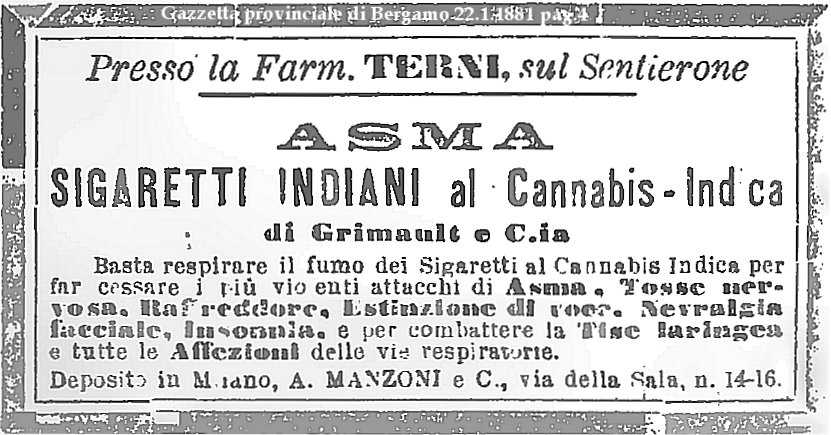
A court cannot enforce what it cannot understand. Certainty requires the essential terms — subject matter, price, and so on — to be sufficiently clear and complete for enforcement.
- A bare "agreement to agree" on an essential term at some future date is generally too uncertain to enforce — the court cannot write the parties' bargain for them.
- A vague or meaningless term can void the whole agreement for uncertainty if that term is central to the bargain, rather than a peripheral detail the court can safely ignore.
- Courts nonetheless try to give business efficacy to commercial agreements, filling gaps with an implied reasonable price or reasonable time where that is what the parties evidently intended.
- Where the agreement itself supplies a machinery for resolving the gap — a third-party valuer, for instance — courts will usually uphold the agreement and give effect to that machinery rather than strike the whole deal down.
Finally, both parties must have the legal capacity to contract. A defect in capacity can render a contract void, voidable, or unenforceable, depending on the category of person involved.

- Minors (under 18) generally lack full contractual capacity. Two exceptions bind a minor regardless: contracts for necessaries — goods or services suitable to the minor's actual condition in life and genuine requirements at the time of the contract — and beneficial contracts of service, such as an apprenticeship that is, on balance, for the minor's benefit.
- Contracts of a continuing nature — a lease, or a partnership — entered into by a minor generally bind the minor unless and until the minor repudiates during minority or within a reasonable time of reaching majority; the minor gets an escape hatch, not an automatic void.
- Mental incapacity: a person may avoid a contract if, at the time of contracting, they did not understand the nature of the transaction and the other party knew, or ought to have known, of that incapacity.
- Intoxication: similarly, a contract entered into while intoxicated to the point of not understanding the transaction may be voidable if the other party knew of the intoxication and effectively took advantage of it.
- Corporations formed under the Companies Act 2006 have full contractual capacity to contract within the objects permitted by their constitution and general company law — the old doctrine of corporate incapacity for ultra vires acts has been almost entirely legislated away for third parties dealing with the company in good faith.
Every SQE1 client scenario involving a disputed deal reduces to the same checklist: was there a genuine offer (not a mere invitation to treat) matched by an unqualified acceptance, properly communicated (or exempted from communication, as in a unilateral contract)? Did each side give consideration, whether that is money, an act, or forbearance? Did both intend legal consequences to follow — bearing in mind the domestic-versus-commercial presumption? Are the terms certain enough for a court to enforce? And did both parties have the capacity to be bound? Answer all five, and you have a contract. Fail even one, and the client's "deal" is, in law, nothing more than a conversation.