Trial Procedure, Costs and Appeals
A trial is the one moment in civil litigation where all the paper finally has to speak. Every witness statement, every disclosed document, every skeleton argument drafted in the weeks before has a single purpose: to be assembled into a coherent story that a judge can follow without having to ask "where is that in the bundle?" Solicitors who understand the mechanics of that moment — who prepares what, who speaks when, what happens if you lose, and what happens if you win but the other side still won't pay — are the ones who protect their clients from a second, quieter form of defeat: winning the case but losing the money.
The trial bundle is the physical (or electronic) spine of the hearing, and its construction is not left to instinct. Practice Direction 32 governs the form: every bundle must be paginated and indexed, so that a judge who says "turn to page 214" is understood by everyone in the room at the same moment. Responsibility for compiling it normally falls to the claimant — the party who brought the claim carries the administrative burden of organising the evidence for it. Crucially, the bundles are not bespoke to their recipient: identical bundles must go to the court, to every other party, and to the witnesses who will be examined on them. If a witness is looking at a different page 214 than the judge, cross-examination collapses into confusion.
One refinement worth remembering: witness statements are often placed in a separate bundle from the documentary exhibits. This isn't mere tidiness — a witness statement frequently exhibits the very documents already sitting in the main bundle, so duplicating them wastes paper and, more importantly, wastes the court's patience.
Before oral evidence even begins, the parties will usually have lodged skeleton arguments — concise written summaries of each side's case and the law relied on, filed shortly before trial. Think of a skeleton argument as the judge's advance map of the terrain: it lets the bench arrive already oriented, so oral advocacy can focus on persuasion rather than orientation.
The Choreography of Witness Evidence
Civil trials follow a strict sequence, and each stage has a distinct evidential purpose:
Examination in chief: the party who called the witness questions them first. Because this witness statement already stands as the witness's evidence in chief unless the court orders otherwise, examination in chief is often brief — confirming the statement, updating anything that has changed, and little else.
The rule that gives this stage its character is the ban on leading questions — questions that suggest their own answer ("You saw the defendant run the red light, didn't you?"). The concern is obvious: a party should not be permitted to put words in the mouth of its own witness.
Cross-examination flips that restriction. Once the calling party has finished, the opposing party cross-examines, and here leading questions are permitted — indeed, they are the advocate's primary tool for testing a witness's account, because a hostile witness is far less likely to simply adopt a suggestion that damages their own side.
Finally, re-examination allows the original party to clarify anything that cross-examination disturbed. But re-examination has a tight leash: it may only address matters that arose in cross-examination, and new matters cannot be raised for the first time without the court's permission. Re-examination is repair work, not a second opening.
At trial, the claimant's case is presented first, witness by witness, followed by the defendant's case. Once all oral evidence has concluded, the parties make their closing submissions — the final, structured argument for why the evidence points to victory. The judge may then deliver judgment orally at the end of the hearing, or reserve it, handing it down in writing at a later date once the reasoning has been fully worked through. Complex or high-value cases are more often reserved; a straightforward small claim is usually decided on the spot.

Costs are usually dealt with immediately after judgment is handed down — the winning party does not have to bring separate proceedings to claim the money spent winning the case. How those costs are quantified depends on the scale of the litigation:
| Assessment type | Typical trigger | Mechanism |
|---|---|---|
| Summary assessment | Trials lasting one day or less | Judge assesses costs there and then, usually from a costs schedule (Form N260) |
| Detailed assessment | Multi-track trials lasting more than one day | A costs officer conducts a separate, line-by-line assessment after judgment |
The starting point for who pays is the general rule: the unsuccessful party pays the costs of the successful party. But this is a starting point, not a straitjacket — CPR 44.2 gives the court discretion to depart from the general rule, taking into account conduct, partial success, and the reasonableness of positions taken during the litigation.
When costs are assessed, the basis of assessment matters as much as the amount:
Standard basis: costs must be proportionate to the matters in issue, and the court resolves any doubt about reasonableness or proportionality in favour of the paying party.
Indemnity basis: proportionality is disregarded, and doubt is resolved in favour of the receiving party — a materially more generous regime, typically ordered as a sanction for unreasonable conduct.
For substantial cases, costs are managed prospectively rather than assessed only at the end. Costs budgeting, using Precedent H, typically applies to multi-track claims — each party files a budget of anticipated costs, which the court can approve or amend, capping what can later be recovered without good reason to depart from it.
CPR Part 36 is the procedural mechanism that governs offers to settle in English civil litigation, and it is arguably the single most powerful costs-shifting tool either side possesses. A valid Part 36 offer has formal requirements that cannot be skipped: it must be made in writing, and it must state that it is intended to have the consequences of CPR Part 36 — without those magic words, the offer is just an ordinary "without prejudice save as to costs" offer, with none of Part 36's automatic teeth.
The offer must specify a relevant period — the acceptance window — of not less than 21 days. The one exception: an offer made less than 21 days before trial may specify a shorter relevant period, since the full 21 days would otherwise run past the trial date itself. Either side can play this card: a Part 36 offer can be made by a claimant or a defendant.
The consequences turn entirely on when it is accepted and what happens at trial:
| Scenario | Costs consequence |
|---|---|
| Offer accepted within the relevant period | Accepting claimant recovers costs up to the date of acceptance, on the standard basis |
| Offer accepted after the relevant period expires | The accepting party usually pays the offeror's costs from expiry of the relevant period |
| Claimant fails to beat a defendant's offer at trial | Claimant usually pays the defendant's costs from the date the relevant period expired |
| Defendant fails to beat a claimant's offer at trial | Court may order indemnity costs from expiry, plus enhanced interest and an additional amount |
That last row rewards claimants who make a realistic offer the defendant should have accepted. A claimant who beats their own Part 36 offer at trial may be awarded enhanced interest on damages (up to 10% above base rate) and an additional amount — calculated, under CPR 36.17, as 10% of damages up to £500,000 plus 5% of any damages above that figure, subject to an overall cap of £75,000. This "additional amount" exists purely to punish a defendant who could have settled sensibly and chose not to.
None of these consequences are truly automatic, though: the court must consider all the circumstances of the case before applying — or departing from — the usual Part 36 costs consequences, so a claimant with an unassailable-looking win can still find the usual sanctions softened if fairness demands it.
Litigation is only worth winning if the winner can actually collect. A defendant who fears a hollow victory — a costs order it can never enforce — may apply for security for costs, requiring the claimant to pay money into court (or provide equivalent security) to cover the defendant's costs if the claim fails.
The grounds are not open-ended; two recur constantly in practice:
- The claimant is resident outside the jurisdiction in a state with no reciprocal enforcement arrangements — meaning a UK costs order would be unenforceable abroad.
- The claimant is a company with reason to believe it will be unable to pay the defendant's costs if ordered to do so.
One trap for the unwary: impecuniosity of an individual claimant, on its own, is not a recognised ground. A defendant cannot simply point to a poor claimant and demand security — the rules target specific enforcement risks (foreign residence, corporate insolvency risk), not poverty as such. Even where a ground is made out, the court must still be satisfied that ordering security is just in all the circumstances — access to justice concerns can outweigh a technically available ground.
Losing at trial is not the end of the road, but the road onward is narrower than most clients expect. Permission to appeal is generally required before a civil appeal can proceed — appeals are a controlled resource, not an automatic second bite.
The test: does the appeal have a real prospect of success, or is there some other compelling reason for it to be heard? A real prospect of success means more than a fanciful prospect of succeeding — a low bar, but not a nonexistent one.
Permission is typically sought first from the lower court that made the decision being appealed — often at the end of the very hearing where the decision was given. If the lower court refuses, the appellant may renew the application to the appeal court itself, giving a fresh judge a second look at the same threshold question.
Once permission is secured (or sought), the clock matters: an appellant's notice must generally be filed within 21 days of the decision appealed, and it must set out the grounds of appeal — the specific errors alleged, not a general complaint of unfairness. A respondent is not limited to defending passively: a respondent's notice lets them argue the decision below should be upheld for different or additional reasons, without needing to cross-appeal.
Where Does an Appeal Go? The Destination Table
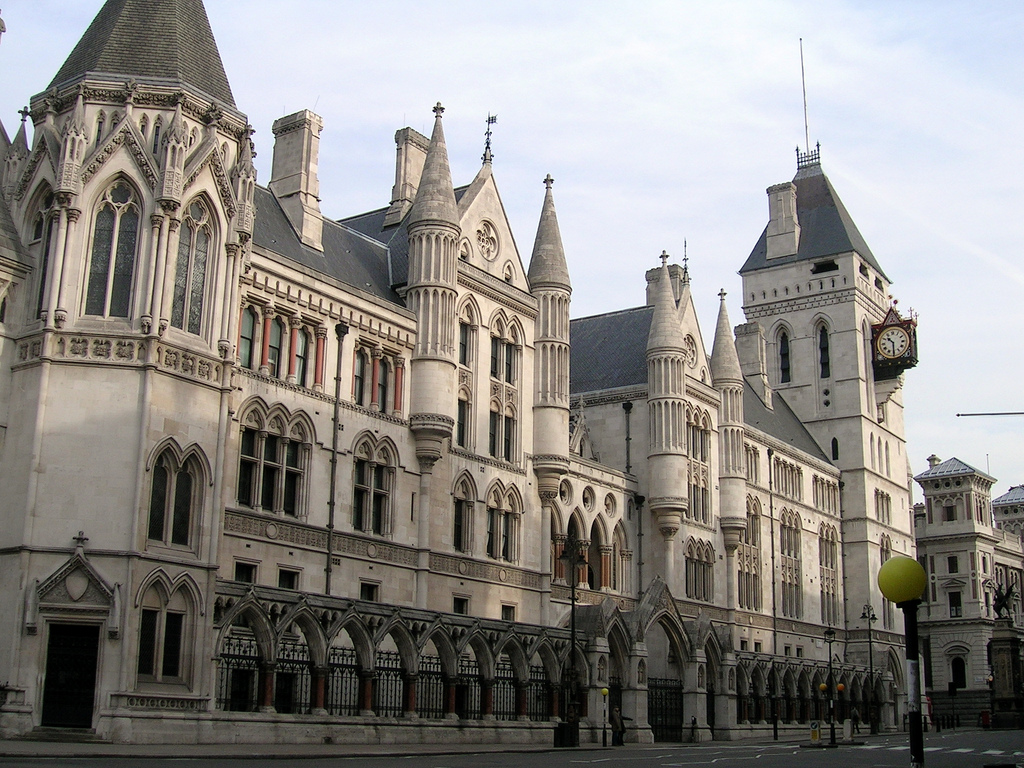
Practice Direction 52A sets out the destination table for civil appeals, and the hierarchy tracks the seniority of the judge who made the original decision:
| Decision made by | Appeal lies to |
|---|---|
| District Judge, County Court | Circuit Judge |
| Circuit Judge, County Court | High Court Judge |
| High Court Judge | Court of Appeal |
A second appeal — an appeal against a decision that was itself made on appeal — breaks this ladder logic. Second appeals are generally heard only by the Court of Appeal, regardless of which court made the first-appeal decision, and permission is deliberately harder to obtain: the appellant must show an important point of principle or practice, or some other compelling reason, for the Court of Appeal to hear it. The policy is plain — litigation must end somewhere, and a second bite at appeal is reserved for cases that matter beyond the parties themselves.
Substantively, an appeal court will allow an appeal in one of two situations: the lower court's decision was wrong, or the decision was unjust because of a serious procedural or other irregularity. Note what this is not: a licence to retry the case from scratch. Appeals are usually limited to a review of the lower court's decision rather than a rehearing — the appeal court asks whether the trial judge went wrong on the material before them, not what a different judge might have decided afresh.
Even a successful trial verdict does not guarantee immediate payment while an appeal is pending. The court may order a stay of execution — pausing enforcement of the judgment until the appeal is resolved — but this is not automatic; the losing party (or the party at risk of enforcement) must apply for it, and show why enforcement should wait.
A judgment is a piece of paper until it is enforced. CPR Parts 70 to 73 (and related parts) govern how a judgment creditor converts that paper into payment, and the toolkit differs depending on which court gave judgment and what the debtor actually has.
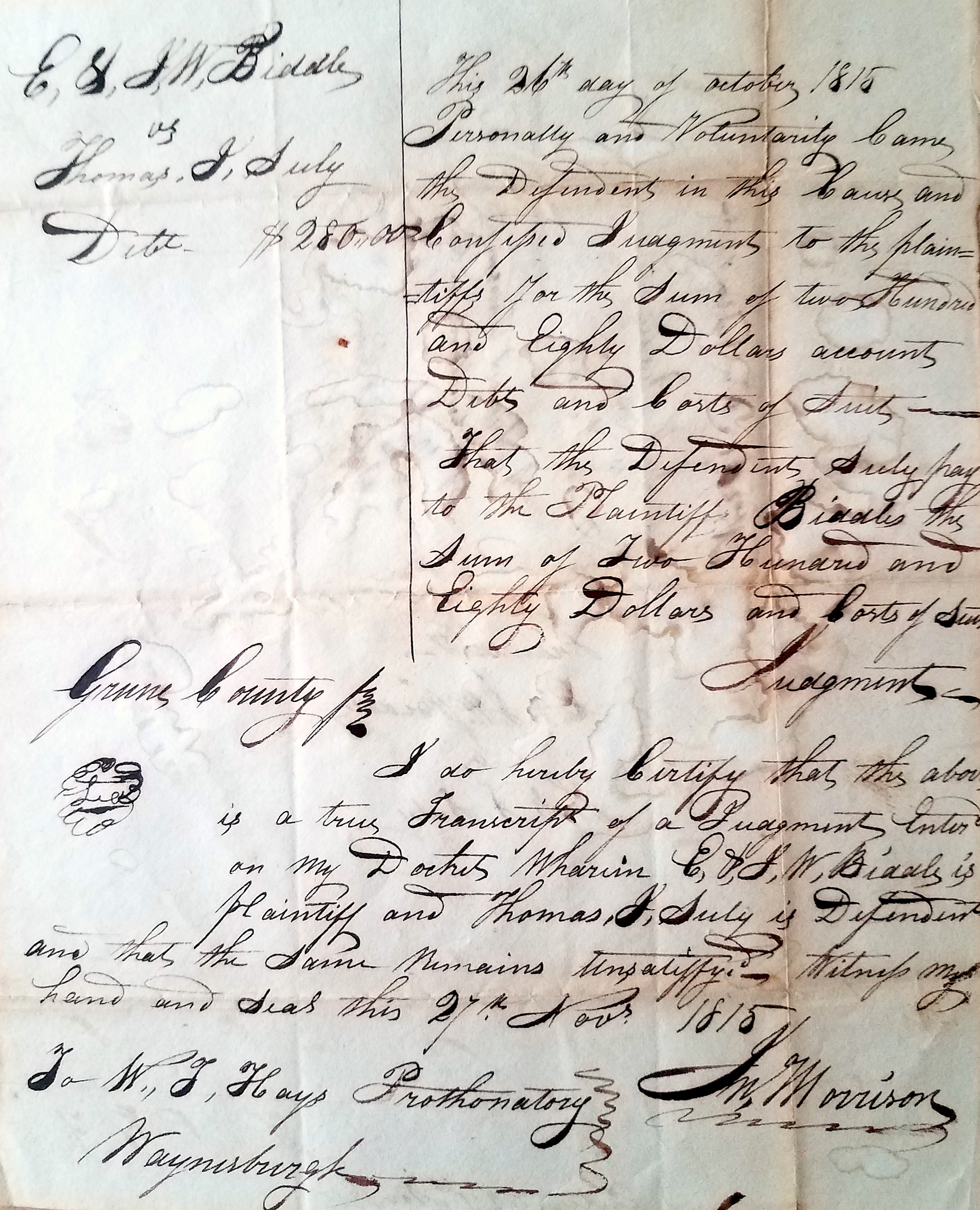
For straightforward seizure of goods, the mechanism depends on the originating court: a County Court money judgment is enforced via a warrant of control, while a High Court money judgment is enforced via a writ of control. Functionally these do the same job — they authorise enforcement agents (bailiffs, in everyday language) to take control of the debtor's goods to satisfy the debt — the different names simply reflect which court issued the underlying process.

Where the debtor's assets are held by someone else, a third party debt order redirects the money at source: it requires a third party who owes money to the debtor to pay the judgment creditor directly instead. The textbook example is a debtor's bank account — the bank, which owes the debtor whatever is in the account, is ordered to pay the creditor instead.
Where the debtor owns property, a charging order secures the debt against it, imposing a charge over the debtor's land or other assets. This is a strategic rather than an immediate remedy: a charging order does not itself compel a sale. It simply ensures the creditor is paid out of the proceeds if and when the property is eventually sold — though the creditor is not required to wait indefinitely, since a judgment creditor may apply for an order for sale of property already subject to a charging order, forcing the issue.
If the debtor is in steady employment, an attachment of earnings order requires the debtor's employer to deduct sums directly from wages and pay them to the court, which then forwards them to the creditor. This remedy has an obvious structural limit: it is only available against a debtor who is employed — it has no purchase against the self-employed or unemployed.
Before choosing between these routes (or in parallel with them), a creditor who does not know what the debtor actually owns can apply for an order requiring the debtor to attend court and provide information about their means — compelled financial disclosure aimed squarely at debtors who are evasive rather than penniless.
Crucially, none of these routes are mutually exclusive: a judgment creditor may use more than one method of enforcement simultaneously or sequentially — nothing stops a creditor pursuing a third party debt order against a bank account while also seeking a charging order over a house. And where the debtor is a company rather than an individual, enforcement can escalate beyond CPR mechanisms entirely: insolvency proceedings, such as a statutory demand or a winding-up petition, can be used as a means of enforcing an unpaid judgment debt, applying commercial pressure a company often cannot survive ignoring.
Put together, trial procedure, costs, and enforcement form a single continuum: how the evidence is organised and tested at trial shapes who wins; Part 36 and the costs rules shape what winning actually costs; and the enforcement toolkit determines whether a paper victory becomes a real one. A solicitor who treats these as separate silos will miss the strategic reality that clients feel most acutely — that a judgment is only as good as the mechanism behind it.