Criminal Appeals and Youth Court
A defendant convicted in the magistrates' court sits at the bottom of a forked decision tree, and which fork he takes depends entirely on what he is complaining about and why. Get the fork wrong — pick an appeal route when the real complaint is a point of law, or pursue judicial review when a perfectly good statutory appeal was sitting there unused — and the case collapses on a technicality before anyone even reaches the merits. This is why criminal appeals is less a topic about persuading a court you were right, and more a topic about routing: choosing the one door, among several superficially similar doors, that the law actually allows you to walk through.


Start with the most-used route. A defendant who pleaded not guilty in the magistrates' court has an absolute right of appeal to the Crown Court against conviction — no permission, no filtering, no gatekeeper. That absolute right makes sense once you notice what it is compensating for: a summary trial is quick, often without a jury, and the defendant may have felt outgunned first time round. The law's answer is not "prove you deserve a second go" but "you get a second go as of right."
Sentence appeals are broader still. A defendant convicted in the magistrates' court — regardless of plea, including a defendant who pleaded guilty — may appeal to the Crown Court against sentence. Guilty plea or not guilty plea, conviction stands or was never in dispute; the sentence itself can always be tested.
Key mechanism: an appeal from the magistrates' court to the Crown Court is a complete rehearing — fresh evidence, witnesses recalled, the whole case run again from scratch. It is not a review of the magistrates' reasoning; it is a new trial in a different room.
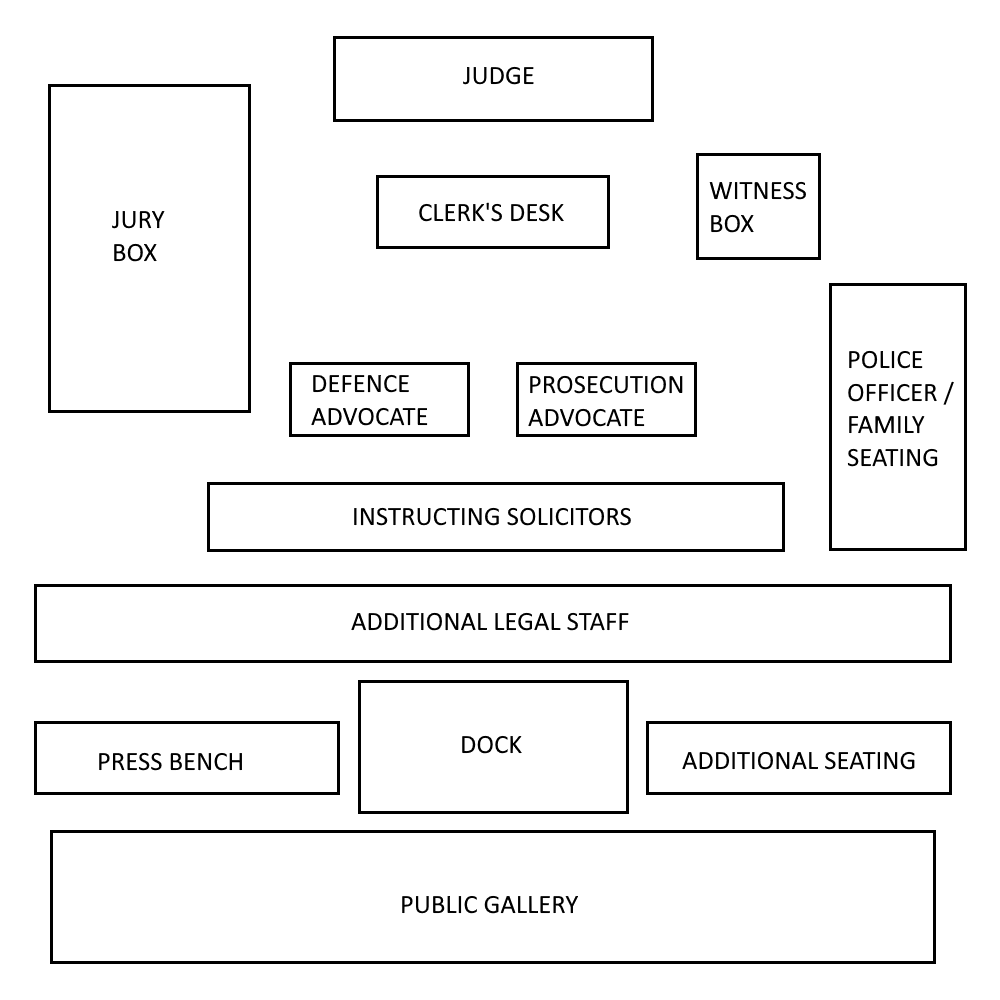
That "different room" has a distinctive bench: a Crown Court judge sitting with two lay magistrates. The professional judge supplies legal rigour; the two magistrates supply the lay perspective the system deliberately keeps in the process even at appellate level.
Timing is unforgiving. Notice of appeal must be served within 15 business days of the sentence or order being appealed. Miss it, and the appeal needs an extension of time before it can proceed at all — the clock does not pause for reflection.
What can the Crown Court actually do with the case once it has reheard it? It may confirm, reverse, or vary the original decision — and, critically, it may increase the sentence, up to the magistrates' court's own sentencing maximum. This is the sting in the tail that keeps the "absolute right" from being risk-free: appeal a conviction and lose, and the sentence itself can climb (within the magistrates' ceiling) even though only the conviction was under challenge.

One route is permanently closed, however: the prosecution has no right of appeal to the Crown Court against an acquittal in the magistrates' court. The rehearing mechanism exists to protect a convicted defendant's access to a second look, not to give the state a second bite at a defendant the court has cleared.
Where the complaint is not "the magistrates got the facts wrong" but "the magistrates got the law wrong," rehearing the evidence again is pointless — you need a court to rule on the legal question, not re-hear witnesses. That is exactly what case stated appeals are for: either the defence or the prosecution may challenge a magistrates' court decision alleged to be wrong in law or made in excess of jurisdiction.
A case stated appeal proceeds on the facts as found by the magistrates. There is no rehearing of witness evidence — the reviewing court simply asks whether, on those established facts, the magistrates applied the law correctly.
The mechanics: a written application to state a case must be made within 21 days of the magistrates' court decision. The appeal itself is then heard by the King's Bench Divisional Court of the High Court — typically two or three judges, reflecting the seriousness of resolving a disputed point of law rather than re-trying facts.

Because Crown Court appeal and case stated serve different purposes (fact-rehearing versus law-clarifying), the system forces an election rather than letting a defendant run both: a defendant cannot both appeal to the Crown Court and pursue a case stated appeal on the same decision. Choose your fork.
A third avenue sits alongside — sometimes overlapping — appeal and case stated: judicial review of a magistrates' court decision in the High Court. This is available where the decision is alleged to be unlawful, irrational, or reached through an unfair procedure — the classic public-law grounds, applied here to a criminal court's process rather than its factual or legal conclusions on the merits.
But judicial review is deliberately a remedy of last resort in this context. It is generally refused where an adequate alternative remedy — most obviously, an appeal to the Crown Court — was available and was not used. If you had a straightforward route to fix the problem by appealing and chose not to take it, the High Court will not let you sidestep that choice by dressing the same complaint up as a public-law challenge.
| Route | What it challenges | Who can bring it | Rehearing? | Time limit | Forum |
|---|---|---|---|---|---|
| Appeal to Crown Court | Conviction and/or sentence | Defendant only | Yes — full rehearing | 15 business days | Crown Court judge + 2 lay magistrates |
| Case stated | Wrong in law / excess of jurisdiction | Defence or prosecution | No — facts as found | 21 days | King's Bench Divisional Court |
| Judicial review | Unlawful, irrational, or unfair procedure | Defence or prosecution | No | N/A (residual remedy) | High Court |

Move up a tier. A defendant convicted after trial on indictment in the Crown Court may appeal against conviction to the Court of Appeal, Criminal Division (the CACD) — but this time the absolute right seen at magistrates' level disappears. An appeal against conviction requires leave of the Court of Appeal, unless the trial judge has already certified the case as fit for appeal. An appeal against sentence always requires leave — there is no certification shortcut for sentence appeals at all.
Why the filter here but not from the magistrates' court? Because a Crown Court trial is already the full jury trial the system regards as its most rigorous fact-finding process; the law does not hand out automatic re-litigation of that outcome, it hands out a screened opportunity to show the conviction is actually unsafe.
The screening mechanism itself is layered. An application for leave is first considered on the papers by a single judge. Refused? The defendant may renew the application before the full Court of Appeal — a second chance to persuade, this time with oral argument in open court rather than a single judge's paper review.
Timing again matters, and matters precisely:
Notice and grounds of appeal must generally be served within 28 days of conviction or sentence. For a conviction appeal, that 28 days runs from the jury's verdict or finding of guilt. For a sentence appeal, it runs from the date sentence was passed. The Court of Appeal has discretion to extend this time limit where justified.
What is the actual test the Court of Appeal applies once an appeal against conviction is before it? A single, deliberately compressed question: the sole ground for allowing an appeal against conviction is that the conviction is unsafe. Everything else — procedural irregularity, fresh evidence, misdirection — is only relevant insofar as it bears on that one question of safety.
There is a deterrent built into the custody-time rules too: the Court of Appeal may direct that some or all time spent in custody pending an unsuccessful appeal does not count towards sentence. This exists precisely to discourage defendants from throwing in hopeless appeals purely to delay matters or gamble on a lenient bench, since losing can cost time as well as the appeal itself.
Remedies on a successful conviction appeal: the Court may quash the conviction outright, or order a retrial where the interests of justice call for the case to be heard again rather than simply dropped.
Sentence appeals run on a different standard: the Court of Appeal may allow the appeal where the sentence was wrong in principle or manifestly excessive — a noticeably lower bar of scrutiny than "unsafe," reflecting that sentencing is a more evaluative, less binary judgment than guilt. And there is a hard protective rule for the defendant here too: the Court of Appeal cannot increase a sentence when hearing the defendant's own appeal against it. Unlike the Crown Court's power on a magistrates' appeal, there is no sting in the tail at this level — appealing your sentence to the CACD carries no risk of it going up.
The prosecution is not entirely without teeth at Crown Court level, even though it cannot appeal a magistrates' acquittal. Two distinct mechanisms exist:
First, the Attorney General may refer an unduly lenient sentence for a specified serious offence to the Court of Appeal, under section 36 of the Criminal Justice Act 1988. This reference must be made within 28 days of the sentence being passed — a strict, non-extendable window, reflecting that finality in sentencing should not be disturbed except promptly and for genuinely serious cases.
Second, the prosecution may appeal to the Court of Appeal against certain terminating rulings made by a Crown Court judge before the jury returns its verdict — for example, a ruling that effectively ends the prosecution's case. This exists because some judicial rulings, if wrong, kill a prosecution stone dead before a jury even gets the chance to decide guilt, and without this route such an error would be entirely unreviewable.
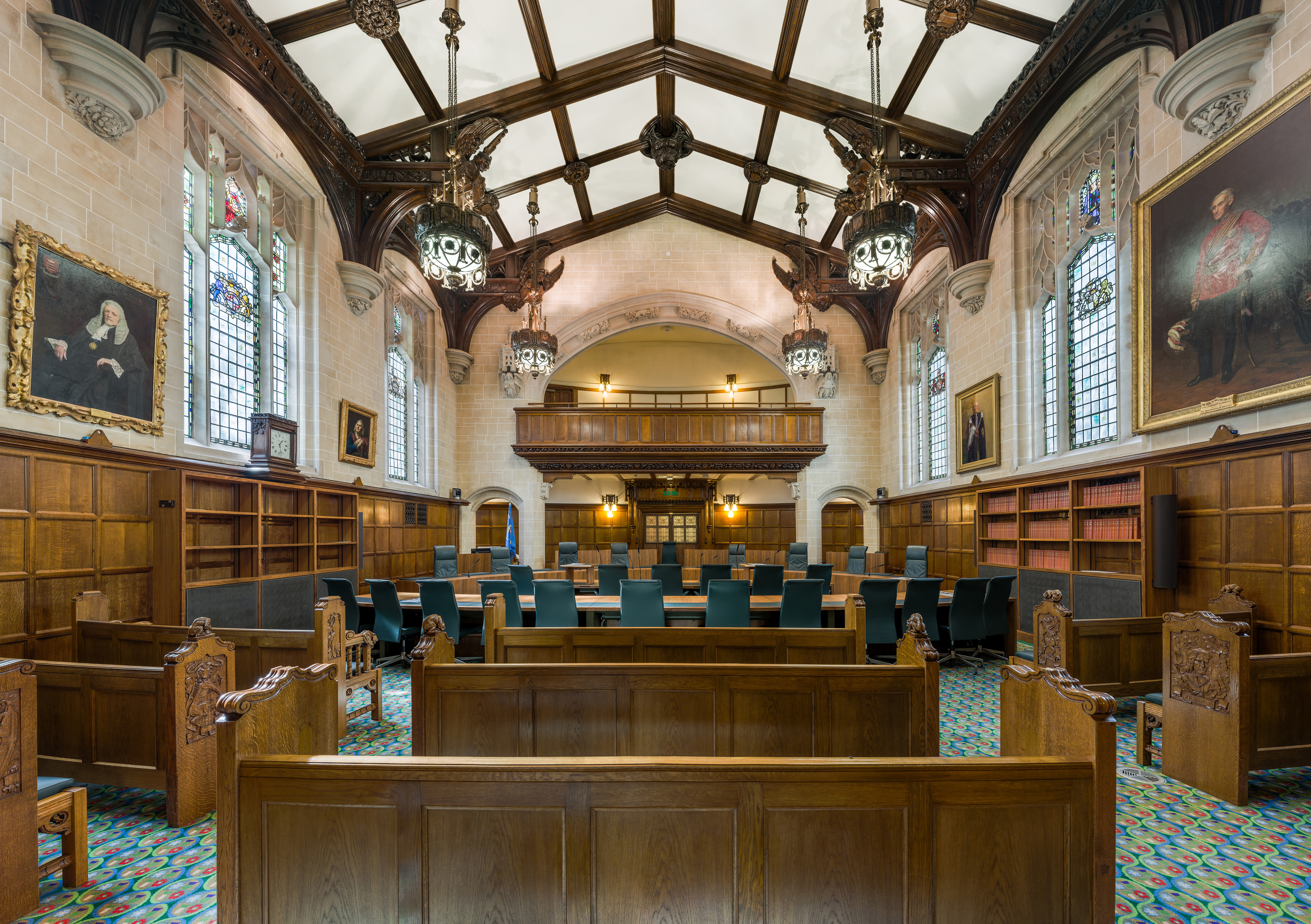
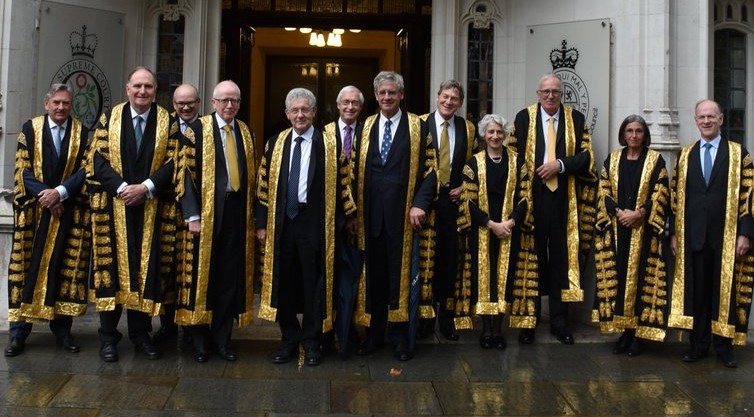
Beyond the Court of Appeal lies only the Supreme Court, and the door there is narrow by design. A further appeal from the CACD lies to the Supreme Court only where the Court of Appeal certifies that a point of law of general public importance is involved — this is not a venue for re-arguing the facts or even ordinary points of law, only for genuinely significant legal questions with implications reaching beyond the individual case. Even with certification, the appellant additionally needs leave from either the Court of Appeal or the Supreme Court itself — a double lock reflecting how sparingly this final tier is meant to be used.
Shift now from the appeals architecture to a parallel track that runs alongside it: the youth court. As a starting proposition, appeals from a youth court decision generally follow the same routes available from the adult magistrates' court — the appeal architecture above transplants across largely unchanged. What differs is the forum of first instance and everything that surrounds it.
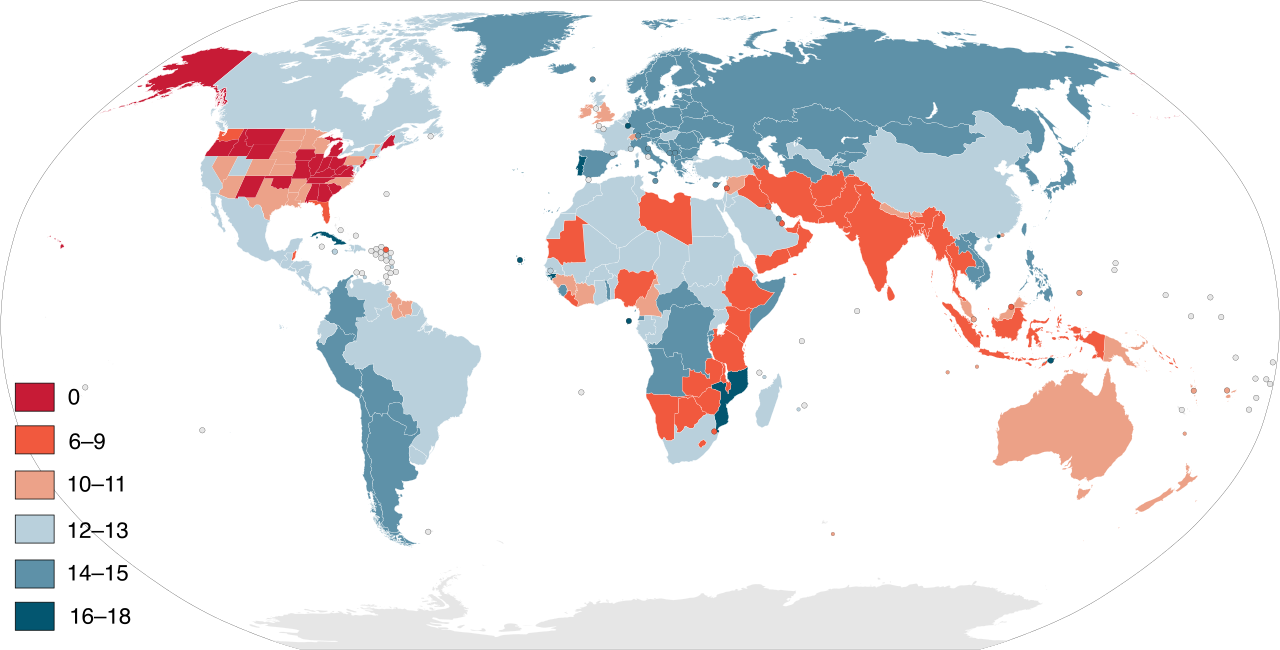
The age of criminal responsibility in England and Wales is 10 years old — the baseline below which no criminal liability attaches at all. Above that threshold, the youth court is a specialist branch of the magistrates' court dealing with defendants aged 10 to 17 at the time of charge or first court appearance. Age is fixed at that trigger point, not re-assessed as the case proceeds.
Several features mark the youth court out as deliberately different in character from its adult counterpart:
- It sits without a jury — consistent with its magistrates'-court lineage.
- Cases are heard by a district judge, or by magistrates with specialist youth panel training — expertise in dealing with children and young people is a prerequisite, not incidental.
- Members of the public are generally not permitted to attend — the openness that characterises adult criminal justice is deliberately curtailed here.
- Section 49 of the Children and Young Persons Act 1933 automatically prohibits publication of information likely to identify a youth defendant, victim, or witness in youth court proceedings — this operates without any court order being needed; it is a standing statutory prohibition.
- Those reporting restrictions generally expire once the youth turns 18 — protection is tied to the vulnerability of youth itself, not extended indefinitely once that status ends.
Underpinning all of this is a welfare-first statutory instruction: section 44 of the Children and Young Persons Act 1933 requires every court dealing with a child or young person to have regard to that person's welfare. This is not a soft aspiration — it is a binding duty that shapes procedure and sentencing alike throughout the youth justice system.
That welfare focus also explains two practical, almost logistical, safeguards worth remembering as scenario-fodder: a parent or guardian of a youth defendant is generally required to attend that youth's hearings, and an appropriate adult must be present whenever police interview a suspect under 18 — both designed to ensure a young person is never navigating the criminal process entirely alone.
The default is strongly in favour of keeping youths in their own specialist forum: a youth is normally tried summarily in the youth court rather than on indictment in the Crown Court, even for offences that would be triable either way, or only on indictment, for an adult.
Three situations pull a youth out of that default and into the Crown Court:
- Homicide — a youth charged with homicide must be sent to the Crown Court. There is no discretion here; the gravity of the charge removes any question of summary trial.
- Grave crimes — a youth may be sent to the Crown Court where the offence carries a maximum sentence of 14 years or more for an adult, and the youth court's own sentencing powers are considered insufficient for the case at hand. This is a discretionary, case-specific assessment, not an automatic transfer merely because the maximum happens to be high.
- Joint charge with an adult — a youth jointly charged with an adult may be sent to the Crown Court together with that adult where the interests of justice require it. Splitting co-defendants across two different courts creates real practical and evidential difficulties (duplicated evidence, inconsistent verdicts), so joining them in one trial is sometimes the fairer, more coherent course even though it removes the youth from the youth court.
Youth court sentencing runs on its own menu, distinct from the adult magistrates' court, and every option on that menu is shaped by the welfare duty already introduced.
Custody as last resort. Before reaching for any custodial disposal, a youth court must treat custody as a sentence of last resort, weighing the welfare of the young offender alongside the seriousness of the offence. This is not decorative language — it is the operative framework a court must actually apply before a custodial sentence becomes available at all.
The referral order is the volume sentence for first-time guilty youths. It requires the young offender to attend meetings of a youth offender panel and agree a contract addressing the offending behaviour — reparation and behavioural change sit at its centre rather than punishment for its own sake. It is generally the mandatory sentence for a youth who pleads guilty to an imprisonable offence and has no relevant previous convictions — mandatory, not discretionary, precisely because the system wants first offenders routed toward this rehabilitative model rather than left to a judge's individual preference. A referral order must last between 3 and 12 months.
The youth rehabilitation order (YRO) is the community-sentence workhorse for youths who do not fit the referral-order profile (repeat offenders, or those who do not meet its mandatory criteria). It allows the court to attach one or more requirements — supervision, curfew, unpaid work, among others — tailored to address the specific offending behaviour in the community.
The detention and training order (DTO) is the custodial sentence of last resort for youths, and its mechanics are tightly fixed by statute:
A DTO can only be imposed for the fixed periods of 4, 6, 8, 10, 12, 18, or 24 months — no other length is available, however finely a court might otherwise wish to calibrate the term.
The maximum custodial sentence the youth court can impose is a DTO of 24 months — the ceiling of youth court sentencing power in a single case.
A DTO cannot be imposed on a youth under 12, and for a youth aged 12 to 14, the court must additionally be satisfied that the youth is a persistent offender before imposing one at all.
Structurally, a DTO is served half in detention and half under supervision in the community — punishment and rehabilitative reintegration built into the same single order.
Put the three main disposals side by side and the underlying policy logic becomes clear — each is aimed at a different point on the seriousness/recidivism spectrum, from first-time low-level offending up to genuinely serious or persistent offending:
| Disposal | Typical use | Duration | Key restriction |
|---|---|---|---|
| Referral order | First-time guilty plea, imprisonable offence, no relevant priors | 3–12 months | Mandatory where criteria met |
| Youth rehabilitation order | Community sentence outside referral-order criteria | Set by court, tailored requirements | Requirements chosen to fit offending behaviour |
| Detention and training order | Custody of last resort | 4, 6, 8, 10, 12, 18, or 24 months | Not under 12; persistent offender test for ages 12–14 |
Read together, the appeals architecture and the youth court's parallel structure both trace the same underlying value: match the level of scrutiny, formality, and protection to what is actually at stake in the case — a rehearing where facts are truly disputed, a legal ruling where they are not, welfare-led disposals for children, and a genuinely last-resort custodial power reserved for when nothing less restrictive will do.