Easements and Freehold Covenants
A right to park a car, run a pipe, or walk across a neighbour's yard: none of these are things you own, yet all of them can bind land forever, survive a sale, and defeat a buyer who never agreed to them. That is the puzzle easements and freehold covenants exist to solve — how a private promise or a private privilege can attach itself to a piece of land rather than to a person, so that it travels with the title through every future sale. Solve that puzzle and the rest of the topic is just working out the mechanics of attachment.
Before asking how an easement is created, you must ask whether the claimed right is even capable of being an easement at all. Re Ellenborough Park [1956] Ch 131 is the case that supplies the test, and it does so by defining an easement as a right enjoyed by the owner of one piece of land — the dominant tenement — over land owned by someone else, the servient tenement. From that definition the court extracted four essential characteristics, and a claimed right that fails any one of them cannot be an easement, however useful or long-standing it is.
The four Re Ellenborough Park characteristics
- There must be a dominant tenement and a servient tenement.
- The right must accommodate the dominant tenement.
- The dominant and servient tenements must be owned or occupied by different persons.
- The right must be capable of forming the subject matter of a grant.
The first characteristic is structural: an easement cannot float free of land: it is always a right attached to one plot for the benefit of another. The third follows naturally: you cannot have an easement over your own land, because an easement is by definition a right against someone else.
The second characteristic — accommodating the dominant tenement — is where students most often go wrong. The right must benefit the land itself, not merely the personal comfort or business convenience of whoever happens to own it at the time. A right to use a neighbour's swimming pool benefits the landowner as a person unless it is genuinely tied to the character of the dominant land (for example, because the dominant land is itself a leisure property whose value depends on access to those facilities) — which is exactly why the recreational-easement cases had to work so hard to fit within this characteristic.
The fourth characteristic — capable of forming the subject matter of a grant — is a portmanteau requirement that catches several distinct problems. First, a right expressed too vaguely to be enforced fails, because a court cannot police a right whose boundaries nobody can state. Second, and more importantly for exam purposes, a right cannot be an easement if it would give the dominant owner exclusive possession of the servient land, since that would strip the servient owner of all reasonable use of their own property — at that point the right has become something closer to ownership than a mere privilege over someone else's land.
This exclusivity problem is best understood through three contrasting cases on parking rights, because parking sits right on the boundary between a legitimate easement and disguised joint ownership.
| Case | Facts | Outcome | Why |
|---|---|---|---|
| Copeland v Greenhalf [1952] Ch 488 | Claimed right to store an unlimited number of vehicles on a strip of land | Not an easement | Amounted to joint ownership of the servient land — too extensive a claim |
| Moncrieff v Jamieson [2007] UKHL 42 | Right to park a car on a defined area | Capable of being an easement | Did not amount to exclusive possession of the servient land |
| Regency Villas Title Ltd v Diamond Resorts (Europe) Ltd [2018] UKSC 57 | Right to use recreational and sporting facilities (golf course, pool, gardens) on neighbouring land | Capable of being an easement | Recreational use of neighbouring land can accommodate a dominant tenement whose own value depends on such facilities, and did not amount to exclusive possession |

Two further limits refine the "subject matter of a grant" characteristic. An easement generally must not require the servient owner to spend money — an easement is a right to use the servient owner's land, not a right to make them do something — subject to the long-recognised exception of an easement of fencing. And the law is generally hostile to new negative easements: rights that restrict what the servient owner may do on their own land, because the numerus clausus of property rights should not expand indefinitely by private agreement. The one long-established exception is the right to light, which does restrict a neighbour's ability to build on their own land but has been recognised as an easement for centuries.
An easement can be created in three broad ways: expressly, impliedly, or by prescription. Each has its own formality requirements, and getting the formalities wrong typically demotes a legal easement into a merely equitable one — a distinction with real consequences for third parties, covered below.
Express creation
An express grant of an easement takes effect as a legal easement if two things are true: the duration matches one of the two legal estates (a fee simple absolute in possession or a term of years absolute), and it is made by deed — this is the effect of section 1(2)(a) Law of Property Act 1925. Miss either requirement — say the parties use a simple written document rather than a deed, or grant the right for an unclear or indefinite duration — and the easement can only ever take effect in equity.
Equity can also independently generate an easement through the doctrine of anticipation: a contract to grant an easement in the future creates an equitable easement, provided the contract satisfies the formalities in section 2 Law of Property (Miscellaneous Provisions) Act 1989 (essentially, a single document, signed by both parties, containing all agreed terms).
Implied creation
Implied easements arise where the parties never expressly granted a right but the transaction cannot sensibly work without one. There are four distinct routes, and SQE1 scenarios frequently hinge on distinguishing them.
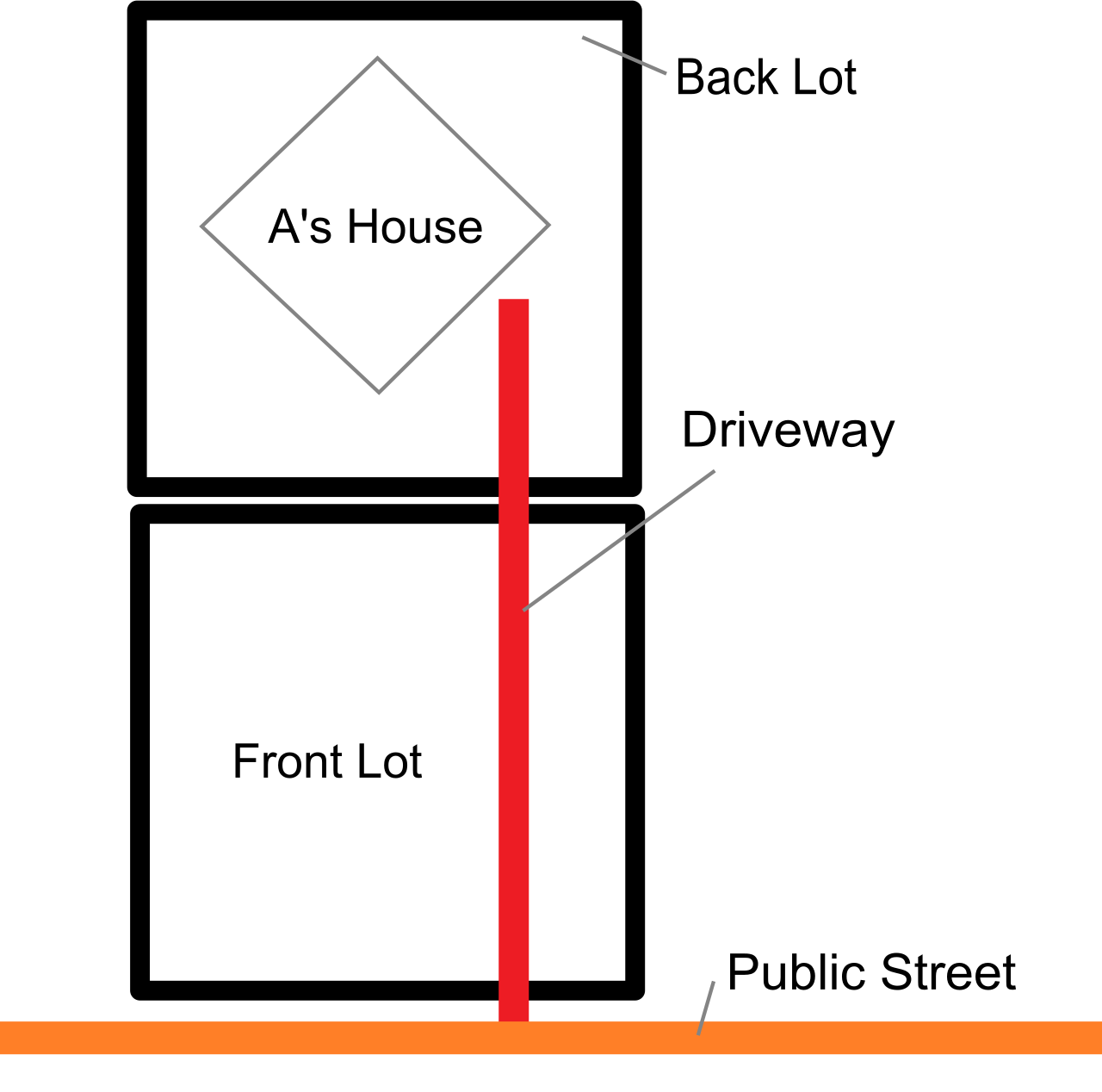
Necessity. An easement of necessity is implied only where the dominant land would otherwise be completely unusable — the classic case is land left with no legal means of access at all. This is a narrow doctrine: mere inconvenience is not enough, and if there is any other way onto the land, however awkward, necessity will not apply.
Common intention. Here the emphasis shifts from the land's usability to the parties' shared purpose: an easement is implied where both parties to the transaction held a specific common intention as to how the land would be used, and the easement is required to give that shared intention effect. Wong v Beaumont Property Trust Ltd [1965] 1 QB 173 is the leading illustration: a tenant needed to install a ventilation duct on the landlord's property in order to run a restaurant lawfully (to comply with health regulations), and because both parties had contemplated the restaurant use when the lease was granted, the court implied the easement necessary to make that use possible.
The rule in Wheeldon v Burrows. Wheeldon v Burrows (1879) 12 Ch D 31 implies the grant of an easement on a sale of part of land, where a quasi-easement existed over the land the seller retains, exercised for the benefit of the land now being sold. A quasi-easement is simply a pattern of use that would qualify as an easement if the two plots were already in separate ownership — for instance, the seller habitually used a track across the retained land to reach the part now being sold. Three conditions must be met: the quasi-easement must have been continuous and apparent (visible evidence of its use, such as a worn path or a made-up drainage channel), and it must be necessary for the reasonable enjoyment of the land granted — a lower bar than strict necessity. Critically, the rule only works one way: it implies grants in favour of the buyer, and cannot imply a reservation in favour of the seller. A seller who wants to keep an easement over land they are selling must reserve it expressly, because equity will not assist a seller who failed to protect their own position when drafting the transfer.
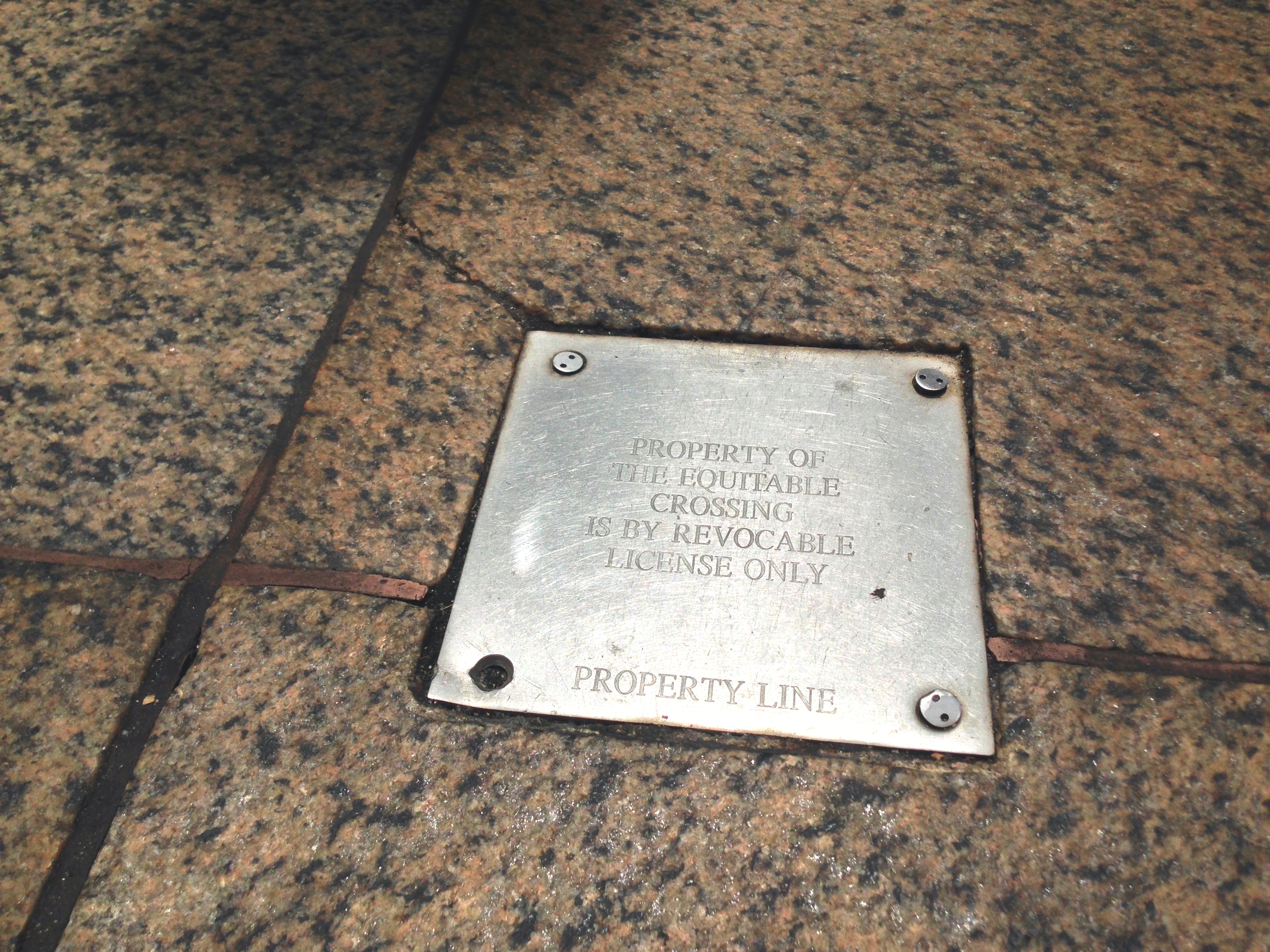
Section 62 Law of Property Act 1925. This provision operates on conveyance, and its effect is transformative: it can convert an existing precarious privilege or licence — a right that could be revoked at any time — into a full legal easement, simply by force of the conveyance itself, provided no contrary intention is expressed. The doctrine has real bite because a licence (permission that stops the moment it is withdrawn) suddenly becomes a permanent proprietary right. Section 62 operates specifically where the benefiting and burdened land were, before the conveyance, in different occupation (for example, a landlord permitting a tenant to use a yard, followed by the tenant buying the freehold) — the change in the legal relationship between the parties on conveyance is what triggers the conversion.
Prescription
Prescription lets an easement arise from long, continuous use of a right, with no express grant ever having been made — the law essentially presumes that if a right has been exercised long enough, it must have had a lawful origin, even if none can now be proved.
For prescription to succeed, the use must have been as of right, captured in the maxim nec vi, nec clam, nec precario — without force, without secrecy, and without permission. Use that depends on the servient owner's permission can never ripen into a prescriptive easement, because permission is the opposite of a claim of right. Prescription must also operate by or against a freehold owner: a mere tenant cannot acquire an easement by prescription against the freehold reversioner, because a tenant's rights are already defined and limited by the lease.
There are three routes to establishing prescription, and SQE1 candidates should be comfortable moving between them:
Common law prescription. Presumes continuous enjoyment since the year 1189 ("time immemorial"). In practice this presumption is easily rebutted — any evidence that the use began after 1189 defeats the claim, which makes pure common law prescription fragile in most real disputes.
Lost modern grant. A legal fiction that presumes a lost deed of grant where a right has been enjoyed as of right for at least twenty years. This route sidesteps the 1189 problem entirely by inventing a (deliberately unfindable) grant rather than relying on immemorial use.
The Prescription Act 1832. A statutory alternative with its own periods. Under section 2, twenty years of uninterrupted enjoyment of an easement (other than light) cannot be defeated merely by showing the use began after 1189, while forty years of uninterrupted enjoyment makes the right absolute and indefeasible, unless it was enjoyed by written consent or agreement. Light is treated differently again: an easement of light enjoyed without interruption for twenty years becomes absolute and indefeasible unless enjoyed by consent given in writing. Finally, an interruption lasting more than one year breaks the chain — that period of use does not count towards the prescriptive period at all.

Whether an easement binds a buyer of the servient land depends heavily on whether it is legal or equitable, and on how it was created.
An express grant of a legal easement over registered land is a registrable disposition: under section 27 Land Registration Act 2002, it must be completed by registration to take effect at law. Until it is registered, it takes effect only in equity — a sharp trap for a buyer who assumes a properly drafted deed is enough on its own.
Implied and prescriptive legal easements are treated far more generously, because there is no deed to register in the first place. Under Schedule 3 paragraph 3 Land Registration Act 2002, such an easement can override a registered disposition without ever being noted on the register — but only if the buyer had actual knowledge of it, or it would have been obvious on a reasonably careful inspection of the servient land. Even where neither of those is satisfied, the easement can still override the disposition if it was exercised within the year before the disposition took place. This last limb exists precisely to catch rights that are intermittent (used seasonally, say) and so might not be "obvious" on a single inspection, yet are recent enough that the buyer ought to have made further enquiries.
An equitable easement, by contrast, gets none of this protection by default: it must be protected by entry of a notice on the register to bind a subsequent purchaser for value of the servient land. No notice, and a purchaser for value simply takes free of it.
A freehold covenant is a promise made by deed between freehold landowners governing the use of land. Covenants split into two functional categories, and classifying a covenant correctly is the first move in almost every covenants problem:
- A restrictive covenant requires the covenantor to refrain from doing something on their own land (for example, not to build above a certain height).
- A positive covenant requires the covenantor to spend money or take some other positive action (for example, to maintain a shared fence or contribute to the cost of a private road).
Classification turns on substance, not wording: a covenant dressed up in negative language ("the covenantor shall not allow the fence to fall into disrepair") is positive in substance if compliance genuinely requires expenditure or action, because what matters is what the covenantor must actually do to comply, not how the clause is phrased.
The starting position at common law is that the original covenantor remains liable to the original covenantee under privity of contract, even after selling the burdened land — a contractual promise does not evaporate just because the promisor no longer owns the relevant land. Everything that follows in this topic is about whether, and how, that promise also becomes enforceable by and against people who were never party to the original contract: successors in title.
At common law
For the benefit of a covenant to pass at common law to a successor of the original covenantee, two conditions must be satisfied: the covenant must touch and concern the dominant land (it must genuinely relate to the use, value, or enjoyment of that land, not be purely personal), and the original covenantee must have held a legal estate in the dominant land at the time the covenant was made.
P & A Swift Investments v Combined English Stores Group plc [1989] AC 632 relaxed one part of this test: a successor claiming the benefit at common law need not hold the identical legal estate that the original covenantee held — the requirement is satisfied by holding a legal estate in the land, not the specific estate.
Statute reinforces this further. Section 78 Law of Property Act 1925 implies that every covenant is made with the covenantee's successors in title, which has the effect of automatically annexing the benefit of a qualifying covenant to the covenantee's land — meaning the benefit attaches to the land itself and passes with it on every subsequent transfer, without any need for the parties to say so expressly.
In equity
Equity is more generous still, because it recognises additional mechanisms by which the benefit can pass. For the benefit of a restrictive covenant to pass in equity, the covenant must touch and concern the dominant land, and the original parties must have intended the benefit to run with that land. That intention can be satisfied in any of four ways:
- Express annexation — clear words in the instrument creating the covenant permanently attach the benefit to identified dominant land.
- Statutory annexation under section 78 LPA 1925 — the same statutory presumption that operates at common law also operates in equity.
- Express assignment — the benefit is expressly assigned at the same time as the transfer of the dominant land to the new owner (an assignment made later, disconnected from a transfer of the land, will not do).
- Building scheme (see below).
Building schemes
A building scheme (or scheme of development) is a special equitable mechanism that allows mutual restrictive covenants to be enforceable between all plot owners within a defined estate, regardless of the order in which the plots were originally sold. This solves a problem the ordinary annexation and assignment rules cannot: on an estate developed and sold off in stages, a plot sold early cannot normally enforce a covenant against a plot sold later using ordinary annexation, because the later covenant did not exist when the earlier plot was conveyed.
Elliston v Reacher [1908] 2 Ch 374 set out the traditional requirements, including a common vendor, land laid out in defined plots, and a shared intention that the covenants be mutually enforceable between all buyers. Re Dolphin's Conveyance [1970] Ch 654 relaxed this further, holding that a building scheme could be recognised even without a common vendor, provided a clearly defined area existed with mutual restrictive covenants intended for the reciprocal benefit of all plot owners — shifting the focus from the formal mechanics of a single seller to the substance of a shared, reciprocal scheme.
At common law: it simply does not run
The burden of a covenant does not run with freehold land at common law — a successor to the original covenantor is not automatically bound. Austerberry v Oldham Corporation (1885) 29 Ch D 750 established this for positive covenants specifically, and Rhone v Stephens [1994] 2 AC 310 confirmed the House of Lords' refusal to extend the burden of positive covenants to run even in equity. This is arguably the single most important structural fact in this entire topic: positive covenants essentially cannot bind successors through the ordinary machinery of property law, at law or in equity. Everything else in this section is either equity's solution for restrictive covenants, or a workaround for positive ones.
Workarounds for positive covenants
Because positive covenants cannot run with the land, practitioners rely on indirect devices:
- Chains of indemnity covenants. Each successive buyer of the burdened land covenants with their seller to observe the original covenant and to indemnify that seller for any breach. This creates a chain running back to the original covenantor, but the chain can break if any party in it becomes insolvent or cannot be traced — leaving the original covenantor exposed to liability for a breach they did not commit and could not prevent.
- The doctrine of mutual benefit and burden. Halsall v Brizell [1957] Ch 169 allows the burden of a positive obligation to be enforced against a successor who chooses to take an associated benefit (for example, using a shared private road while refusing to contribute to its upkeep). For the doctrine to apply, the successor must have a genuine choice whether to take the benefit, conditional on accepting the burden — a successor who has no real alternative but to take the benefit cannot be said to have "chosen" it.
In equity: Tulk v Moxhay
For restrictive covenants only, equity supplies a genuine mechanism for the burden to run. The rule in Tulk v Moxhay (1848) 2 Ph 774 allows the burden of a restrictive covenant to bind successors of the servient land, provided four conditions are met:
Requirements under Tulk v Moxhay
- The covenant must be negative in substance (restrictive covenants only — this is why the common law/positive-covenant problem above matters so much: equity's rescue only reaches half the problem).
- The covenant must touch and concern the servient land.
- The original parties must have intended the burden to bind successors in title to the servient land.
- The covenantee must retain land capable of benefiting from the covenant at the time it was made.
On intention, section 79 Law of Property Act 1925 does useful work for a covenantee: it presumes that a covenant is made on behalf of the covenantor's successors in title, unless a contrary intention appears in the instrument creating the covenant — so silence favours enforceability against successors, and a covenantor who wants to limit liability to themselves personally must say so expressly.
Unregistered land
Restrictive covenants and equitable easements are both creatures of equity that need protection against a purchaser who has no notice of them, and unregistered land handles this through the land charges register rather than notice:
- A restrictive covenant over unregistered freehold land created after 1925 is registrable as a Class D(ii) land charge under the Land Charges Act 1972.
- An equitable easement over unregistered freehold land created after 1925 is registrable as a Class D(iii) land charge under the same Act.
Registered land
A restrictive covenant over registered freehold land must be protected by entry of a notice on the register of the servient title to bind a subsequent purchaser for value — the same protective device used for equitable easements, discussed above.
Positive covenants cannot be protected by a notice in the same way, precisely because their burden does not run with the land in the first place: there is no proprietary burden for a notice to protect. This is why the indemnity-chain and mutual-benefit-and-burden workarounds matter so much in practice — they are the only tools available once the burden of a positive obligation needs to reach a successor.
Remedies and modification
A breach of a restrictive covenant can be remedied by an injunction to restrain the breach, or by an award of damages. On the other side of the ledger, covenants are not necessarily permanent: under section 84 Law of Property Act 1925, the Upper Tribunal (Lands Chamber) has jurisdiction to discharge or modify a restrictive covenant affecting freehold land. Grounds include that the covenant is obsolete, or that it impedes some reasonable use of the land without securing any practical benefit of substantial value to the person entitled to enforce it. This safety valve exists because restrictive covenants can bind land indefinitely, and without it, an obsolete restriction agreed by long-dead parties could permanently sterilise otherwise reasonable modern use of land.
The examinable skeleton of this topic is a sequence of three questions, and most SQE1 problem scenarios are really just testing whether you can walk through them in order. First, for an easement: does the claimed right satisfy the four Re Ellenborough Park characteristics, and if so, how was it created — expressly, impliedly, or by prescription — and is it legal or equitable as a result? Second, for a covenant: is it positive or restrictive in substance, because that single classification determines whether the burden can ever bind a successor at all. Third, whichever right is in play: has it been properly protected — by registration, by notice, or (for implied and prescriptive easements) does it override automatically under Schedule 3 — so that it will actually bind the buyer sitting in front of you.