Co-ownership and Trusts of Land
Two people buy a house together. One dies. Does the survivor own it all, or does the dead partner's share pass to their children under a will? The answer turns entirely on a single word choice made — often unknowingly — at the moment of purchase: joint tenancy or tenancy in common. Nearly every co-ownership dispute a solicitor encounters, from a messy cohabitation breakup to a business partner's bankruptcy, is a variation on this one fork in the road.
Co-ownership arises whenever two or more people hold concurrent interests in the same piece of land at the same time — a couple buying a family home, siblings inheriting a farm, business partners acquiring premises. English land law recognises exactly two ways to structure that concurrent holding: the joint tenancy and the tenancy in common. Understanding the difference is not academic hair-splitting; it determines who inherits, who can force a sale, and who a buyer must pay to get clean title.
A joint tenancy treats the co-owners as together holding a single, indivisible interest in the whole property. Nobody owns "a share" — conceptually, each joint tenant owns the entirety, simultaneously with the others. A tenancy in common, by contrast, gives each co-owner a distinct, quantifiable, undivided share — one-half, one-third, 65%. That share is a separate piece of property in its own right: it can be sold, mortgaged, or left by will independently of what the other co-owners do.
The Four Unities
A joint tenancy can only exist where four conditions — the four unities — are all present:
Possession: every co-owner is entitled to physical possession of the whole land; no one is confined to a particular room or plot. Interest: every joint tenant's interest must be identical in extent, nature, and duration — you cannot be a joint tenant of a freehold while your co-owner is a joint tenant of a lease. Title: every joint tenant must derive title from the same document or act — typically the same conveyance or transfer. Time: every joint tenant's interest must vest at the same moment.
A tenancy in common needs only the first of these — unity of possession. It can exist perfectly well without unity of interest, title, or time, which is precisely why unequal, staggered, or differently-sized shares are only ever possible under a tenancy in common.
The four unities are the diagnostic test, but the consequence that clients actually care about is survivorship — in Latin, jus accrescendi. Under a joint tenancy, when one joint tenant dies, their interest does not pass under their will or intestacy at all. It simply evaporates, and the surviving joint tenant(s) automatically hold the whole property between themselves. Survivorship operates instantly and independently of anything the deceased wrote in a will — you cannot leave a joint tenancy interest by will, because by the moment of death there is nothing left to leave.
A tenancy in common carries no survivorship whatsoever. A deceased tenant in common's share is a normal asset of their estate: it passes under their will, or under the intestacy rules if they left none.
| Joint Tenancy | Tenancy in Common | |
|---|---|---|
| Shares | No distinct shares — one indivisible interest | Distinct, quantifiable undivided shares |
| Four unities | All four required | Possession only |
| Survivorship | Yes — automatic, overrides any will | None — share passes under will/intestacy |
| Can leave by will | No | Yes |
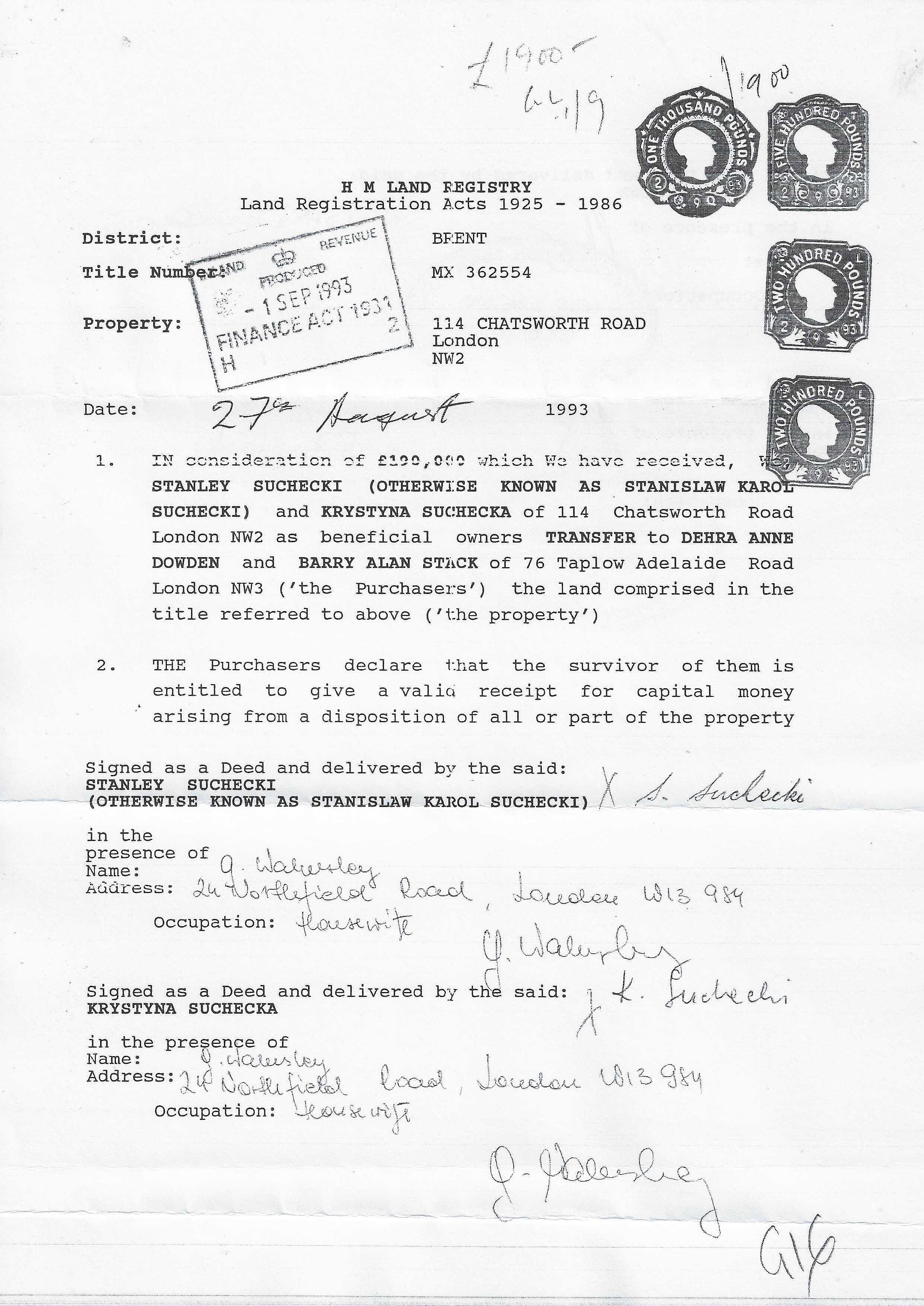
Here is the twist that trips up most students: legal title to co-owned land can only ever be held as a joint tenancy. Section 1(6) of the Law of Property Act 1925 (LPA 1925) flatly prohibits a legal estate being held by persons as tenants in common. Whatever the co-owners actually intend about their beneficial shares, the paper title in their names at HM Land Registry is a joint tenancy, full stop.

There is a further mechanical constraint: section 34(2) LPA 1925 caps the number of people who can hold the legal estate at four trustees. If five or more people buy land together, only the first four named — provided they are of full age — become the legal owners, holding on trust for everyone with a beneficial interest.
The crucial escape valve is that this restriction applies to the legal title only. The equitable (beneficial) interest behind that legal title is free to be held either as a joint tenancy or as a tenancy in common, entirely independently of how the legal title is structured. This split — legal joint tenancy on top, equitable interest of whatever flavour underneath — is the engine that drives almost every co-ownership problem in practice, and it is why a solicitor's real job is very often not "who are the legal owners" (that's on the register) but "what are the equitable shares" (that often is not).
Equity has a starting presumption: equity follows the law. If the legal title is held as a joint tenancy, equity presumes the beneficial interest mirrors that — also a joint tenancy — unless the facts point the other way. But this presumption is readily displaced.
Express words of severance in the conveyance or transfer are the clearest override. Phrases like "in equal shares" or "share and share alike" show the parties intended distinct, quantifiable shares, and equity will hold a tenancy in common accordingly.
Even without express words, equity recognises several situations where a tenancy in common should be presumed:
- Where co-owners contributed unequal purchase money, equity may presume a resulting trust in shares proportionate to each person's financial contribution.
- Where co-owners bought the property for a joint business venture, equity presumes a tenancy in common — commercial parties are not assumed to want survivorship windfalls between themselves.
- Where co-mortgagees or co-lenders advance money on a joint mortgage, equity again presumes a tenancy in common between them.
The Domestic Cohabitation Problem
Family homes create a distinct sub-branch of the law, because unmarried cohabitants rarely execute an express declaration of trust and their contributions are often informal, unequal, or non-financial (childcare, DIY, paying bills rather than the mortgage). For these cases, courts do not default to a resulting trust based purely on financial contribution; instead they apply the common intention constructive trust.
In Stack v Dowden [2007] UKHL 17, the House of Lords held that where legal title to a family home is held in joint names, equity starts from the presumption that the beneficial interest is also held jointly, unless the contrary is shown. That presumption can only be rebutted by evidence of the parties' whole course of dealing in relation to the property — not just who paid what, but discussions, financial arrangements, and the practical reality of how the couple ran their life together.
In Jones v Kernott [2011] UKSC 53, the Supreme Court went one step further: where the court can infer the parties did intend to depart from equal shares but cannot pin down precisely what shares they intended, the court may impute a fair share based on the whole course of dealing, rather than simply defaulting to equality.

If, however, the transfer deed does contain an express declaration of trust stating the beneficial shares, that declaration is conclusive. It shuts down any resulting or constructive trust analysis entirely, absent fraud or mistake — which is exactly why conveyancers should always press clients to complete the declaration of trust panel on the TR1 transfer form rather than leaving beneficial ownership to be reconstructed years later from bank statements and remembered conversations.
Severance is the process by which an equitable joint tenancy is converted into an equitable tenancy in common. It is worth repeating the point that trips up exam candidates constantly: severance can only ever affect the equitable interest. The legal joint tenancy can never be severed — it remains fixed by section 1(6) LPA 1925 regardless of what happens in equity. Once severance occurs, the severing co-owner holds a distinct equitable share that no longer carries, or is subject to, survivorship.
Statutory Severance by Notice
Section 36(2) LPA 1925 gives any joint tenant a unilateral right to sever the equitable joint tenancy simply by serving written notice of that intention on the other joint tenants. Crucially, this requires no agreement or consent from anyone else — one determined co-owner can sever entirely on their own initiative. The notice takes effect once it is validly served, even if the recipient never actually opens or reads it; the mechanics of service, not receipt, are what count.
Section 196 LPA 1925 sets out what counts as valid service, including leaving the notice at the other joint tenant's last known place of abode or business. It also matters for practice that commencing court proceedings seeking a declaration or division of shares can itself amount to sufficient written notice of severance — a client does not need to send a separate letter if they have already issued proceedings asking the court to divide the property.
The Williams v Hensman Methods
Beyond the statutory notice route, Williams v Hensman (1861) 1 J&H 546 identified three further methods by which a joint tenancy can be severed in equity:
- Act operating on one's own share. A joint tenant who sells, or otherwise alienates, their equitable interest to a third party automatically severs the joint tenancy as to that share — mortgaging or assigning your interest has the same effect, because you are unilaterally dealing with your own beneficial stake in a way inconsistent with the "one indivisible interest" structure of a joint tenancy.
- Mutual agreement. All the joint tenants agree between themselves to hold as tenants in common. This agreement need not be in writing, and — remarkably — need not even be legally enforceable to sever in equity.
- Course of dealing. A pattern of conduct sufficient to show that all the joint tenants mutually treated their interests as a tenancy in common, even without a discrete agreement. This requires evidence of an intention common to all joint tenants — a single owner unilaterally acting as though shares exist is not enough.
The thread running through all three methods, and the statutory route, is that a purely unilateral, uncommunicated intention to sever — deciding privately that you want a tenancy in common, without giving notice or dealing with your own share — achieves nothing. Severance requires an outward act.
Severance by Operation of Law
Two further events sever a joint tenancy automatically, without any notice, agreement, or dealing:
- The forfeiture rule: where one joint tenant unlawfully kills another, the joint tenancy is treated as severed immediately before the death, so the killer cannot benefit from survivorship.
- Bankruptcy: where a joint tenant becomes bankrupt, the joint tenancy is severed because the trustee in bankruptcy acquires the bankrupt's now-severed share, which vests for the benefit of creditors.
The Arithmetic of Severance
Where severance affects only one joint tenant's share out of several, that individual takes an equal share as a tenant in common, while the remaining co-owners continue to hold the rest as joint tenants among themselves (so survivorship still operates between them). And critically for exam problem-questions: severance of an equitable joint tenancy between two co-owners always produces equal shares as tenants in common — 50/50 — regardless of what the co-owners originally contributed to the purchase price. Severance resets shares to equality; it does not resurrect the original contribution ratios.
Whenever land is co-owned, a trust of land arises automatically — whether that trust is express, implied, resulting, or constructive. The governing statute is the Trusts of Land and Appointment of Trustees Act 1996, commonly abbreviated TLATA 1996 or TOLATA 1996. Under this structure, legal title is held by the trustees (who must, remember, hold as joint tenants under s1(6) LPA 1925), while the equitable interest is held by the beneficiaries — who are very often the same people as the trustees, simply wearing two hats.
A few structural provisions matter for how the trust actually operates day to day:
- Section 3 abolished the old doctrine of conversion, so a beneficiary's interest under a trust of land is now treated as an interest in the land itself, not merely in the eventual sale proceeds — a change that matters because it lets beneficiaries assert occupation rights against the land.
- Section 6 gives trustees of land all the powers of an absolute owner for the purposes of their trustee functions — they can sell, lease, mortgage, and manage the land much like an outright owner would.
- Section 11 imposes a duty on trustees, so far as practicable, to consult beneficiaries of full age with an interest in possession before exercising their functions.
- Section 12 gives a beneficiary with an interest in possession the right to occupy the trust land, provided the trust's purposes include making the land available for their occupation.
- Section 13 allows the trustees to exclude or restrict that occupation right, or to impose conditions — such as requiring the occupying beneficiary to pay outgoings or compensate an excluded beneficiary. That compensation is often informally called occupation rent, and a beneficiary excluded from occupation may be entitled to it, funded from the occupying beneficiary's share.
When co-owners cannot agree — about whether to sell, who should occupy, or the size of their respective shares — the dispute is resolved not through the family or criminal courts but through an application under section 14 TLATA 1996. Any trustee of land, or indeed any person with an interest in property subject to a trust of land (including a beneficial joint tenant or tenant in common), can apply to the court for an order relating to the exercise of the trustees' functions. That order might direct a sale, postpone a sale, or make a declaration as to the nature or extent of someone's interest. A secured creditor of a beneficiary — most commonly a trustee in bankruptcy — can also apply under section 14 for an order for sale, which is how bankruptcy disputes over the family home typically reach court.
Establishing a beneficial interest is only half the battle: the court's power under section 14 is discretionary, so proving you own a share does not guarantee a sale will be ordered.
The Section 15 Factors
Section 15 TLATA 1996 lists the matters the court must weigh in exercising that discretion:
- the intentions of the person or persons who created the trust of land;
- the purposes for which the trust property is held;
- the welfare of any minor who occupies, or might reasonably be expected to occupy, the land as their home;
- the interests of any secured creditor of any beneficiary.
Where the application concerns a dispute between trustees themselves, section 15 also requires the court to have regard to the circumstances and wishes of beneficiaries of full age with an interest in possession. This list is not exhaustive — the court can take other relevant matters into account. This is a deliberate broadening compared with the old law: under the pre-1996 regime (section 30 LPA 1925), courts had a narrower discretion that gave less scope to factors like the welfare of minors, which is precisely why TLATA 1996 was needed.
Bankruptcy Cases: Creditors Usually Win
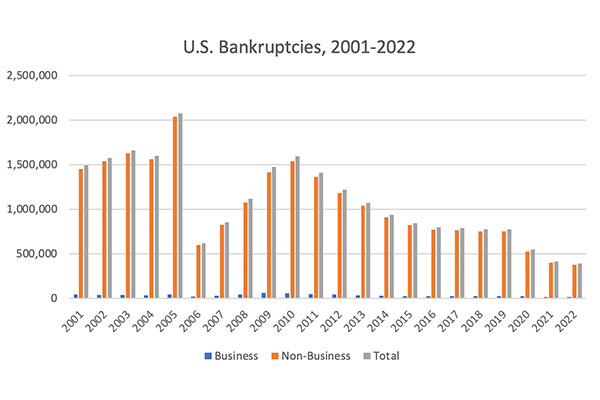
Section 14 applications by a trustee in bankruptcy deserve special attention because the outcome is heavily skewed. In Re Citro [1991] Ch 142, the Court of Appeal held that a bankrupt's creditors' interests will generally prevail over the interests of the bankrupt's family occupying the home, even where eviction causes real hardship — the court there accepted that a wife facing eviction with young children was a sympathetic case, but not an exceptional one. That approach is reinforced by statute: section 335A of the Insolvency Act 1986 provides that once one year has passed since the bankrupt's estate first vested in a trustee, the interests of creditors are assumed to outweigh all other considerations unless the circumstances are exceptional. In practice, this means families facing a bankruptcy-driven sale application have a narrow, closing window in which non-financial factors can realistically prevail.
A buyer of co-owned land is not expected to investigate the beneficial interests behind the trust — that would make conveyancing unworkable. Instead, the buyer is protected by overreaching. Under sections 2 and 27 LPA 1925, paying the purchase money to at least two trustees (or a trust corporation) detaches the beneficiaries' equitable interests from the land entirely and shifts them into the sale proceeds. The beneficiaries still have their money; the buyer takes the land free of those equitable interests, regardless of how many beneficiaries there were or what their shares looked like.
This is why the number of legal owners on the register matters so much in practice:
- Where there is a sole surviving legal joint tenant and no evidence of severance, that sole owner is presumed to hold the whole beneficial interest too, and can give a valid receipt for the purchase money alone — no second trustee, no overreaching required.
- But where the sole surviving legal owner's equitable joint tenancy has in fact been severed — for instance, one of them died after severing their share, so the survivor now holds only their own share plus a resulting trust interest for the deceased's estate — a purchaser cannot safely assume there is only one beneficial owner. A prudent purchaser should insist on a second trustee being appointed so overreaching can operate properly.
A Form A restriction on the register is the practical warning sign here: it alerts a purchaser that the equitable interest may be held as a tenancy in common, and that payment to two trustees is required. Importantly, a Form A restriction does not itself sever anything — severance is a substantive equitable event that happens (or doesn't) independently — the restriction merely provides evidence, or protective notice, that a tenancy in common exists or may exist. Any single joint tenant can apply unilaterally to enter a Form A restriction, without needing the others' agreement, precisely because the restriction only reflects a severance that has already happened rather than creating one.
A solicitor advising a client buying a house with a partner, a sibling inheriting alongside three others, or a bankruptcy trustee chasing a debtor's home, is really only ever asking three linked questions: How is the legal title held (always a joint tenancy, capped at four people)? How is the equitable interest held, and has anything happened to sever it? And if the co-owners cannot agree, what does a section 14/15 TLATA 1996 application look like on these facts? Every concept in this topic — the four unities, survivorship, the Williams v Hensman methods, overreaching — exists to answer one of those three questions.