Pure Economic Loss and Psychiatric Harm
Cut off the power to a factory for fifteen hours, and the melted metal in the furnace is physical damage — recoverable. But the four other melts that never happened because the power was down? That lost profit is pure economic loss, and English law, as a general rule, will not pay for it. This asymmetry sits at the heart of one of the most conceptually demanding corners of the tort syllabus, and understanding why the law draws this line — rather than merely memorising that it does — is what separates a solicitor who can advise a client with confidence from one who is guessing.
Pure economic loss is financial loss a claimant suffers that does not flow from injury to their own person or damage to property they already own. It is loss that arrives purely as a number on a balance sheet, untethered from any physical harm to the claimant. The general exclusionary rule in negligence holds that such loss is not recoverable.
Spartan Steel & Alloys Ltd v Martin & Co (Contractors) Ltd [1973] QB 27 supplies the textbook illustration. Contractors negligently cut a cable supplying power to the claimant's factory, stopping the furnace mid-melt. The Court of Appeal drew a sharp line: the physical damage to the metal already in the furnace, and the profit lost on that specific melt, were recoverable — that loss was consequential on physical damage. But the profit lost on four further melts that could not proceed during the blackout was pure economic loss, and irrecoverable, because it flowed from no damage to anything the claimant owned.
Why exclude it at all? The floodgates concern is real: unlike physical damage, which tends to have a natural, self-limiting scope, economic ripples from a single negligent act can spread indefinitely — every downstream supplier, customer, and employee of the factory in Spartan Steel suffered some knock-on loss. A duty of care pitched that wide would expose defendants to liability "in an indeterminate amount for an indeterminate time to an indeterminate class," as the American case Ultramares famously put it — a formulation English courts have absorbed as background policy even without citing it. The law responds not by banning recovery for economic loss outright, but by recognising narrow, carefully policed exceptions where the policy risk is controlled. Negligent misstatement is the first and most important.
Hedley Byrne & Co Ltd v Heller & Partners Ltd [1964] AC 465 is where the House of Lords first recognised that pure economic loss caused by a careless statement — as opposed to a careless act — could ground a duty of care. A bank gave a credit reference on a client to another bank, which passed it to an advertising agency that extended credit in reliance on it. The client went under. On the facts, the claim failed — because the bank had appended a disclaimer — but the principle survived and became the foundation stone: liability for negligent misstatement arises from a voluntary assumption of responsibility by the defendant for the accuracy of what they say.

That assumption of responsibility crystallises into a duty of care only where three elements are present:
- A special relationship exists, involving the exercise of special skill or judgement by the defendant;
- The claimant reasonably relied on the defendant's statement; and
- The defendant knew, or ought to have known, that the claimant would rely on it for a particular purpose.
Hedley Byrne duty of care (negligent misstatement): special relationship (special skill/judgement) + reasonable reliance by the claimant + defendant's knowledge (actual or constructive) that the claimant would rely on the statement for that purpose.
Because the duty rests on an assumed responsibility, a defendant can refuse to assume it — hence the disclaimer that decided Hedley Byrne itself. But a disclaimer is not a magic word; it must survive scrutiny under the Unfair Contract Terms Act 1977. Smith v Eric S Bush [1990] 1 AC 831 shows the limit: a mortgage valuer instructed by a building society disclaimed liability to the ultimate house purchaser, who paid for the valuation and relied on it in place of her own survey. The House of Lords held the disclaimer unreasonable under section 2(2) of the Unfair Contract Terms Act 1977 — this was a modest, ordinary residential purchase where reliance on a single valuation was standard practice — and so the disclaimer was ineffective. The case does double duty on the syllabus: it also confirms that Hedley Byrne liability can extend to a claimant who was never the direct recipient of the statement, provided she was a known, intended third-party reliant — the valuer knew the report was for the purchaser's benefit even though it was commissioned by the lender.
Hedley Byrne's assumption-of-responsibility logic does not require the parties to be otherwise unconnected. Henderson v Merrett Syndicates Ltd [1995] 2 AC 145 confirmed that a tortious duty of care can arise even where the same parties are linked by contract — the existence of a contractual relationship does not exclude a parallel tortious one. The practical payoff is concurrent liability: where duties in both contract and tort arise on the same facts, a claimant may choose whichever route offers the more favourable limitation period or measure of damages. For a solicitor advising a professional-negligence client years after the event, this is not academic — it can be the difference between a claim that is time-barred and one that is not.
The assumption-of-responsibility idea has also stretched, cautiously, to reach third parties who were never contracting parties at all. White v Jones [1995] 2 AC 207 is the leading illustration: a solicitor instructed to prepare a will delayed, the testator died before the will was executed, and the intended beneficiary lost her legacy. The House of Lords held the solicitor owed a duty of care in tort to the disappointed beneficiary — an exception to the ordinary rule against third-party recovery for pure economic loss, justified on the basis that otherwise nobody would have a remedy: the estate suffered no loss (the money simply stayed in it), and the beneficiary had no contract with the solicitor to sue on. Spring v Guardian Assurance plc [1995] 2 AC 296 extends the same logic to employment references: an employer preparing a reference for a former employee owes that employee a duty of care in its preparation, because a careless, damaging reference causes the employee financial loss with no other remedy available.
Two further authorities mark the edges of individual and third-party responsibility. Williams v Natural Life Health Foods Ltd [1998] 1 WLR 830 held that a company director who makes a negligent misstatement on the company's behalf is not personally liable unless he personally assumed responsibility and the claimant relied on that personal assumption — the corporate veil is not casually pierced just because the claimant dealt with a company's human agent. And South Australia Asset Management Corp v York Montague Ltd [1997] AC 191 — the SAAMCO case — addressed not whether a duty existed but how far its damages should reach: a negligent valuer is liable only for the loss flowing from the inaccuracy of the information given, not for every loss flowing from the transaction the claimant chose to enter. The SAAMCO principle distinguishes a duty to supply information relevant to someone else's decision from a duty to advise on the decision itself, and caps damages accordingly — if a valuer overstates a property's value by £500,000, the lender's recoverable loss is capped at that £500,000 shortfall, not the total loss caused by a subsequent property-market crash that would have hit any accurate valuation just as hard.
Where a claimant's situation does not fit an established category, courts fall back on the Caparo three-stage test, drawn from Caparo Industries plc v Dickman [1990] 2 AC 605: was the harm reasonably foreseeable; was there a relationship of proximity between the parties; and is it fair, just and reasonable to impose a duty? In Caparo itself, auditors preparing a company's statutory accounts were held to owe no duty to a takeover bidder who used those accounts to justify launching a bid — the accounts were prepared for shareholders' collective scrutiny of management, not to guide outsiders' investment decisions, so there was no relevant proximity for that purpose.
The third limb — fair, just and reasonable — does the real policy work: it is less a test than a control device, a valve courts open or close to manage how far liability for economic loss should expand. Customs and Excise Commissioners v Barclays Bank plc [2007] 1 AC 181 confirmed that English courts do not apply Caparo mechanically as the only route to a novel duty; they use it alongside two other lenses — the assumption-of-responsibility approach from Hedley Byrne, and the incremental approach, which asks whether the new fact pattern is sufficiently analogous to a situation where a duty is already established, reasoning cautiously outward from settled ground rather than starting from abstract principle. Exam scenarios that resist neat categorisation reward an answer that runs all three lenses rather than forcing the facts into Caparo alone.
Murphy v Brentwood District Council [1991] 1 AC 398 shows the exclusionary rule reasserting itself against a tempting exception. A local authority negligently approved defective foundations; the resulting cracks were not injury to person or other property — they were a defect in the building itself, discovered before anyone was hurt. The House of Lords held that the cost of repairing, or the diminished value of, a defective building is pure economic loss, irrecoverable against the negligent builder or approving authority. Murphy overruled Anns v Merton London Borough Council, confining negligence claims over defective premises to cases of physical injury or damage to property other than the defective item — a decisive retreat from an earlier, more expansive era of duty-of-care reasoning, and a reminder that this whole area of law has moved in one direction only: toward tighter control.
| Route | Test | Leading authority |
|---|---|---|
| Negligent misstatement | Special relationship + reasonable reliance + defendant's knowledge of reliance | Hedley Byrne v Heller [1964] |
| Third-party reliance on a statement | Known, intended reliant third party | Smith v Eric S Bush [1990] |
| Assumption of responsibility alongside contract | Concurrent tortious duty despite a contract | Henderson v Merrett [1995] |
| Disappointed beneficiary | No other remedy exists for either estate or beneficiary | White v Jones [1995] |
| Novel duty, no fit category | Foreseeability + proximity + fair, just and reasonable | Caparo v Dickman [1990] |
| Novel duty (multi-factor) | Assumption of responsibility / Caparo / incremental analogy | Customs and Excise v Barclays Bank [2007] |
Move from financial loss to a different but related exclusionary anxiety: the law's caution about liability for psychiatric harm. A claimant must prove a recognised psychiatric illness — ordinary grief, distress, sorrow, or anxiety, however genuine, is not actionable on its own. This threshold matters practically: a client who is simply devastated by witnessing an accident has no claim; a client diagnosed with PTSD or a depressive disorder may.
The law then splits claimants into two categories with sharply different tests, and confusing the two is the single most common exam error on this topic.
Primary Victims
A primary victim is a claimant within the foreseeable zone of physical danger created by the defendant's negligence, or one who reasonably believes themselves to be so. Page v Smith [1996] AC 155 supplied the crucial simplification: a primary victim need only show that some physical injury was reasonably foreseeable — it is not necessary to show that psychiatric injury specifically was foreseeable. Once physical injury of some kind was foreseeable, the eggshell skull rule applies in full: the defendant takes the claimant as found, so a pre-existing psychiatric vulnerability that produces an unusually severe reaction does not defeat or reduce the claim.
The "reasonable belief" limb is assessed objectively, not by reference to the claimant's own subjective fright. McFarlane v EE Caledonia Ltd [1994] 2 All ER 1 held that a claimant's belief that he was in physical danger must be one a reasonable person would have held on the facts — a claimant cannot bootstrap primary-victim status merely by asserting he felt afraid.
Secondary Victims
A secondary victim suffers psychiatric illness through witnessing injury or peril to someone else, not through danger to themselves. Because this category has no natural limit — anyone who hears about a tragedy might claim distress — Alcock v Chief Constable of South Yorkshire Police [1992] 1 AC 310, arising from the Hillsborough disaster, erected four control mechanisms, all of which a secondary victim must satisfy:
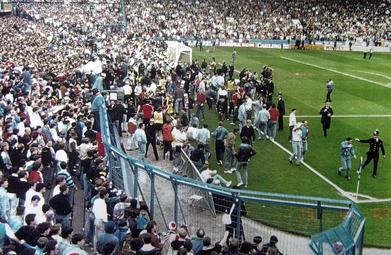
Alcock control mechanisms for secondary victims:
- A close tie of love and affection with the person endangered or injured — presumed between parents and children and between spouses, but otherwise must be proved.
- Proximity in time and space to the shocking event or its immediate aftermath.
- Perception of the event, or its immediate aftermath, with the claimant's own unaided senses — not learned from a third party or broadcast media.
- Psychiatric harm caused by a sudden shock — the sudden appreciation, by sight or sound, of a horrifying event that violently agitates the mind.
Each limb has generated its own case law refining what counts. On sudden shock: Sion v Hampstead Health Authority [1994] 5 Med LR 170 held that psychiatric illness caused by watching a relative deteriorate and die gradually over many days, with no single shocking moment, is not actionable — the mechanism demands a shock, not a slow accumulation of grief. On the "immediate aftermath": McLoughlin v O'Brian [1983] 1 AC 410 allowed a claim where the claimant arrived at hospital shortly after a road accident and saw her family still in substantially the condition the accident had left them in — the aftermath had not yet resolved, so proximity was satisfied even though she was not at the scene itself. On what counts as "the event" at all: Taylor v A Novo (UK) Ltd [2013] EWCA Civ 194 held that the relevant shocking event is the original accident caused by the defendant's negligence — not a later, temporally separate consequence, such as a collapse and death occurring three weeks afterward, even though the claimant witnessed that collapse directly and it was causally connected to the original injury.
Rescuers and Involuntary Participants
Two further categories test the boundary between primary and secondary status. Chadwick v British Railways Board [1967] 1 WLR 912 held that a rescuer who suffers psychiatric harm through involvement in the immediate aftermath of a horrifying accident may recover — but only where physical injury to the rescuer himself was reasonably foreseeable, folding rescuers back into ordinary primary-victim reasoning rather than granting them a free-standing exception. Dooley v Cammell Laird & Co Ltd [1951] 1 Lloyd's Rep 271 recognised the involuntary participant: a claimant who reasonably but mistakenly believes his own actions have caused death or serious injury to a co-worker can recover for the resulting psychiatric harm, even though he was never himself in physical danger — the horror of believing oneself the cause of a colleague's death is treated as its own gateway into primary-victim-style recovery.
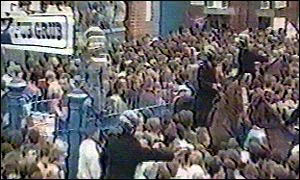
White v Chief Constable of South Yorkshire Police [1999] 2 AC 455 — the Hillsborough litigation again, this time brought by police officers who attended the disaster — closed off an attractive-looking shortcut. The officers were not themselves in physical danger, so they were secondary victims and had to satisfy the full Alcock mechanisms; neither their employment relationship with the force nor their rescuer-like involvement lifted that burden. The case confirms a broader principle: an employer's duty to protect an employee from psychiatric harm does not exceed the ordinary Alcock mechanisms applicable to any secondary victim — being an employee, or acting in a quasi-rescuer role while on duty, is not itself a passport to easier recovery.
Fear of Future Illness
Rothwell v Chemical & Insulating Co Ltd [2007] UKHL 39 addressed a different frontier: psychiatric illness caused by fear of developing a disease in the future, rather than by witnessing a shocking event. Claimants who had developed pleural plaques from asbestos exposure — symptomless markers of exposure, not a disease in themselves — argued that their resulting anxiety about future illness, in some cases amounting to clinical depression, should be actionable. The House of Lords held it was not: anxiety about the risk of a disease not yet suffered is not treated in negligence as actionable damage, even where it rises to a recognised psychiatric illness and even when combined with an existing but symptomless physical condition. The foreseeable future harm (the disease) had not occurred; only the fear of it had, and fear alone — however medically real — does not cross the threshold.

The two halves of this topic carry different limitation clocks, and getting the right one matters for any client-facing advice on whether a claim is still viable.
Section 11, Limitation Act 1980: a three-year limitation period for claims involving personal injury — including recognised psychiatric illness — running from the date of the negligent act, or the claimant's date of knowledge if later.
Section 2, Limitation Act 1980: a six-year limitation period for negligence claims not involving personal injury — including claims for pure economic loss — running from the date the damage occurs.
Psychiatric harm counts as personal injury for limitation purposes, so section 11's three-year clock applies to primary- and secondary-victim claims alike. Pure economic loss claims — a negligent valuation, a botched will, a careless reference — run on section 2's longer six-year clock instead. A client who comes to a solicitor five years after a negligent survey may still be in time; a client five years after a road traffic accident causing PTSD generally will not be, absent a late date of knowledge or a court's discretion to disapply the limit.
The two halves of this topic — economic loss and psychiatric harm — share a single structural logic even though the facts look nothing alike: both involve a kind of harm the law treats as inherently harder to contain than a broken arm or a dented car, so both are hedged with tests that do the same job as a dam. Hedley Byrne's assumption of responsibility, Caparo's three limbs, and the incremental approach all police who can claim for economic loss; Alcock's four control mechanisms police who can claim for someone else's suffering. Learn the control mechanisms as a set, not case by case, and a client's fact pattern in the SQE1 exam becomes a checklist exercise rather than a guessing game.