Principles of Negligence
A driver runs a red light and clips a cyclist, who is left with a shattered wrist, a diagnosed anxiety disorder from watching it happen, and a business that folds because he can no longer work. Three separate claims sit inside that one moment of carelessness, and negligence law exists to sort out which of them the driver must actually pay for. The whole architecture rests on four sequential questions: did the defendant owe the claimant a duty of care, did they breach that duty, did the breach cause the damage, and was the damage too remote to count? Fail any one link and the claim collapses, however careless the defendant was. This is the analytical spine you will run in almost every SQE1 tort scenario, so understanding why each stage exists — not just reciting its label — is what separates a solicitor who spots the winning argument from one who misses it.
The neighbour principle
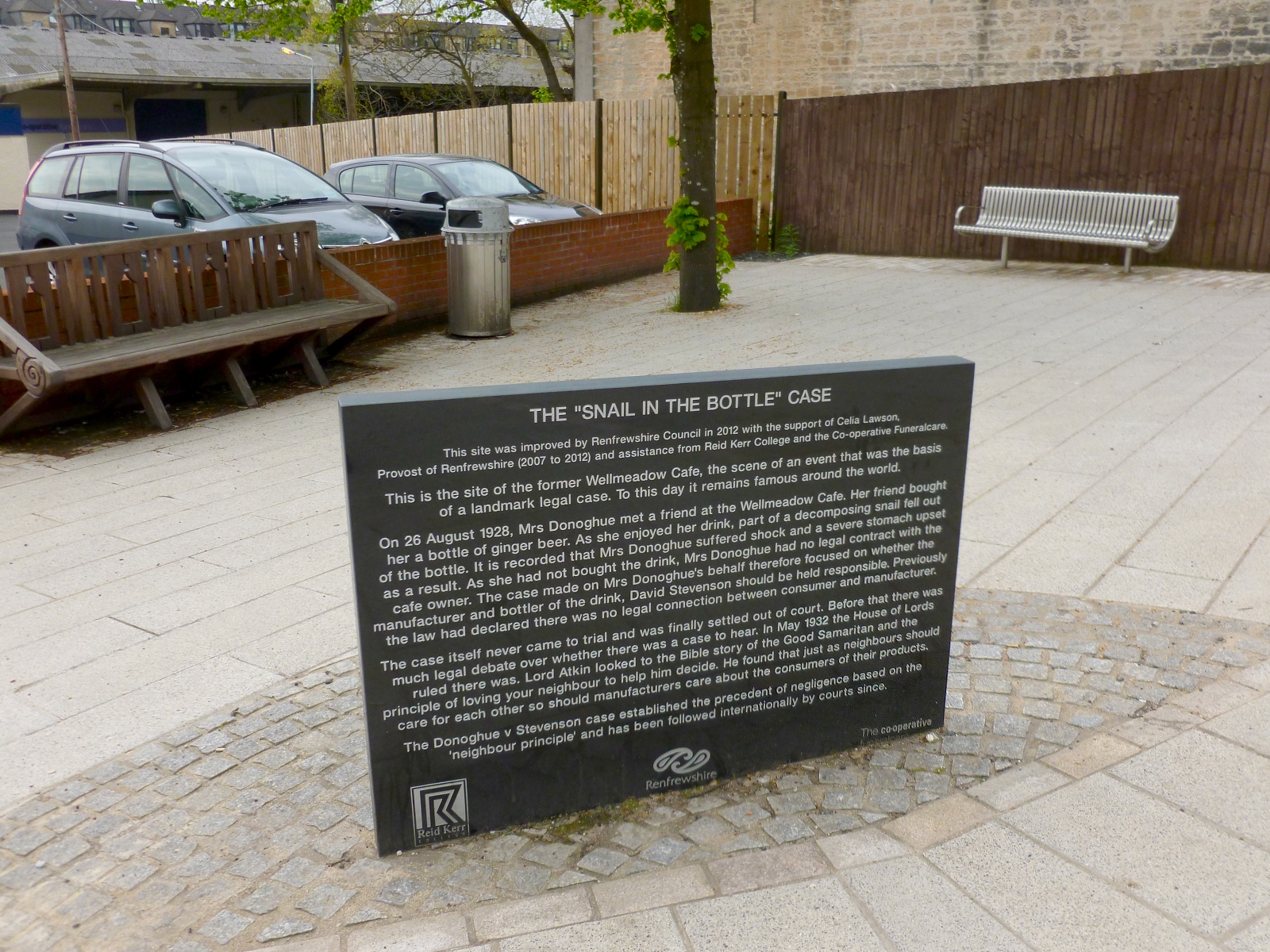
Everything starts with Donoghue v Stevenson [1932], the case of the decomposed snail in a ginger beer bottle that never actually went to trial on the facts — the House of Lords was only deciding whether a manufacturer could owe a duty to a consumer who never bought the product directly. Lord Atkin's answer created the neighbour principle: a person must take reasonable care to avoid acts or omissions which they can reasonably foresee would be likely to injure their neighbour — defined as anyone so closely and directly affected by the act that the defendant ought reasonably to have them in contemplation when directing their mind to the acts or omissions in question. Notice what this does: it detaches duty from any pre-existing contract or direct dealing. The manufacturer never met the claimant, yet the foreseeability of harm travelling down the supply chain was enough.
Caparo and the three-stage test — but only for the genuinely new
Nearly six decades later, Caparo Industries plc v Dickman [1990] refined this into a structured three-stage test for whether a duty of care exists:
- Was harm to the claimant reasonably foreseeable as a result of the defendant's conduct?
- Was there a relationship of sufficient proximity between claimant and defendant?
- Is it fair, just, and reasonable to impose a duty in these circumstances?
Generations of students have treated Caparo as the universal opening move in every duty analysis. That is a mistake the Supreme Court corrected in Robinson v Chief Constable of West Yorkshire Police [2018]. Robinson held that the three-stage test is reserved for genuinely novel duty situations — facts that do not fit any existing category. Where an established category of duty already exists (manufacturer–consumer, doctor–patient, road users to each other), courts simply apply that existing precedent by analogy; there is no need to re-run the full Caparo machinery each time. Robinson also confirmed, on its facts (police officers who knocked over a bystander while arresting a suspect), that public authorities including the police are subject to ordinary negligence principles — there is no blanket immunity from suit merely because the defendant is a public body performing a public function. Practically: identify first whether your facts resemble an established duty category. Only reach for Caparo when they genuinely do not.
Omissions: why doing nothing is usually safe
A recurring trap in problem questions is the omissions principle: there is generally no duty to act to prevent harm caused by a third party or by a naturally occurring event. Watching a stranger drown in a lake and doing nothing is not, in itself, negligence — however morally troubling that feels, the law does not impose a general duty of rescue. But three recognised exceptions convert inaction into liability:
- The defendant created or controlled the source of danger that caused the harm.
- The defendant voluntarily assumed responsibility for the claimant's welfare.
- The defendant had a sufficient degree of control over a third party who went on to cause the damage.
Spot the exception and the omission becomes actionable; miss it and a client walks away from a claim they should have brought.
Psychiatric harm: primary and secondary victims
Not every injury is physical. The law separates primary victims — those within the actual area of physical danger — from secondary victims, who witness injury to someone else without being physically endangered themselves. Primary victims need only show that some form of physical or psychiatric injury was foreseeable. Secondary victims face a much tighter gate, because the courts have long worried about opening liability to an indefinite class of shocked bystanders. A secondary victim must establish all of the following:
- A close tie of love and affection with the person injured or endangered.
- Proximity in time and space to the traumatic event or its immediate aftermath.
- That the harm was caused by direct perception of the event through the claimant's own unaided senses (not, for example, a phone call describing it).
And in either category, the claimant must show a recognised psychiatric illness — clinical depression or PTSD, for instance — rather than the ordinary grief, distress, or upset that any decent person feels on hearing bad news. The law compensates pathology, not sadness.
Pure economic loss and negligent misstatement
Pure economic loss — financial loss unconnected to any physical damage to the claimant's person or property — is generally not recoverable in negligence, subject to limited exceptions. Why the hostility? Because unconnected financial loss can ripple outward almost infinitely (a burst water main that shuts down an entire business district), and the law wants a firmer anchor than mere foreseeability before opening the floodgates.
The major exception is negligent misstatement, recognised in Hedley Byrne & Co Ltd v Heller & Partners Ltd [1964]: a duty of care can arise for financial loss caused by inaccurate advice or information where there is a special relationship of reliance between the parties. That duty arises specifically where the defendant assumes responsibility for the accuracy of the information or advice given — think of a bank's careful reference about a client's creditworthiness, given knowing that a third party will rely on it commercially.
The objective reasonable person
Once a duty is established, the question becomes whether the defendant breached it. This is assessed objectively: did the defendant fall below the standard of the reasonable person in the defendant's position? The test does not ask what this particular defendant honestly believed was safe — it asks what a reasonable person occupying that role would have done.
Two cases show how this objective standard resists individual excuse. In Nettleship v Weston [1971], a learner driver was held to the standard of the ordinarily competent and experienced qualified driver, not a lower standard tailored to her inexperience — the public needs a consistent standard of road safety regardless of who happens to be behind the wheel. Children, however, are judged more sympathetically: the standard of care expected of a child defendant is what is reasonable for an ordinarily prudent child of the defendant's own age, recognising that childhood judgment genuinely differs from adult judgment.
The professional standard: Bolam, Bolitho, and the Montgomery revolution
Professionals get their own variant of the objective test. Bolam v Friern Hospital Management Committee [1957] held that a professional does not breach their duty if they acted in accordance with a practice accepted as proper by a responsible body of opinion in that profession — even if other equally competent professionals would have done things differently. This gave doctors, in particular, wide latitude to defend their clinical choices by pointing to a supporting body of peer opinion.
Bolitho v City and Hackney Health Authority [1997] narrowed that latitude slightly: the responsible body of opinion relied upon must be capable of withstanding logical analysis — a court will not defer to professional opinion that is not internally logical, even if a body of professionals genuinely holds it.
The most significant modern development is Montgomery v Lanarkshire Health Board [2015], which addressed a different question entirely: not what treatment to give, but what to tell the patient about it. Montgomery held that a doctor must take reasonable care to ensure a patient is aware of material risks in a recommended treatment and of reasonable alternative treatments. A risk is material where a reasonable person in the patient's position would be likely to attach significance to it, or where the doctor knows this particular patient would attach significance to it. Crucially, Montgomery replaced the Bolam professional-practice standard for questions of consent and risk disclosure with this patient-focused test — doctors no longer get to decide, by reference to what other doctors would have disclosed, how much a patient needed to know before consenting. Advising on breach in a clinical negligence problem question therefore requires you to separate the diagnosis and treatment question (still broadly Bolam/Bolitho) from the consent and disclosure question (now Montgomery).
The risk calculus: probability, magnitude, cost, and social utility
Courts weigh several factors when deciding whether a defendant's conduct fell below the reasonable standard:
| Factor | Case | Principle |
|---|---|---|
| Probability of harm | Bolton v Stone [1951] | The likelihood that harm will occur at all is relevant — a cricket ball escaping a ground only a handful of times in decades supported a finding of no breach. |
| Magnitude of harm | Paris v Stepney Borough Council [1951] | The potential severity of harm to a particular claimant matters — a one-eyed employee was owed extra care over eye protection, because losing his remaining eye was catastrophic for him specifically. |
| Cost and practicability of precautions | Latimer v AEC Ltd [1953] | The cost and practicability of eliminating a risk is weighed against the risk itself — a flooded factory floor did not require closing the factory when sawdust was a reasonable, proportionate response. |
| Social utility | Compensation Act 2006, s 1 | A court may have regard to whether requiring particular precautions might prevent a desirable activity from being undertaken at all — protecting socially valuable activities (school trips, sporting events) from being strangled by excessive defensive caution. |
Finally, compliance with common industry practice is evidence of meeting the required standard, but it is not automatically conclusive — an entire industry can, in principle, be found negligent if its common practice is itself unreasonable.
Factual causation — the but-for test
Even a clear breach goes nowhere unless it actually caused the claimant's damage. Factual causation is tested using the but-for test: would the damage have occurred but for the defendant's breach? If the answer is that the same damage would have happened anyway, the breach is not a cause in law, however careless it was.
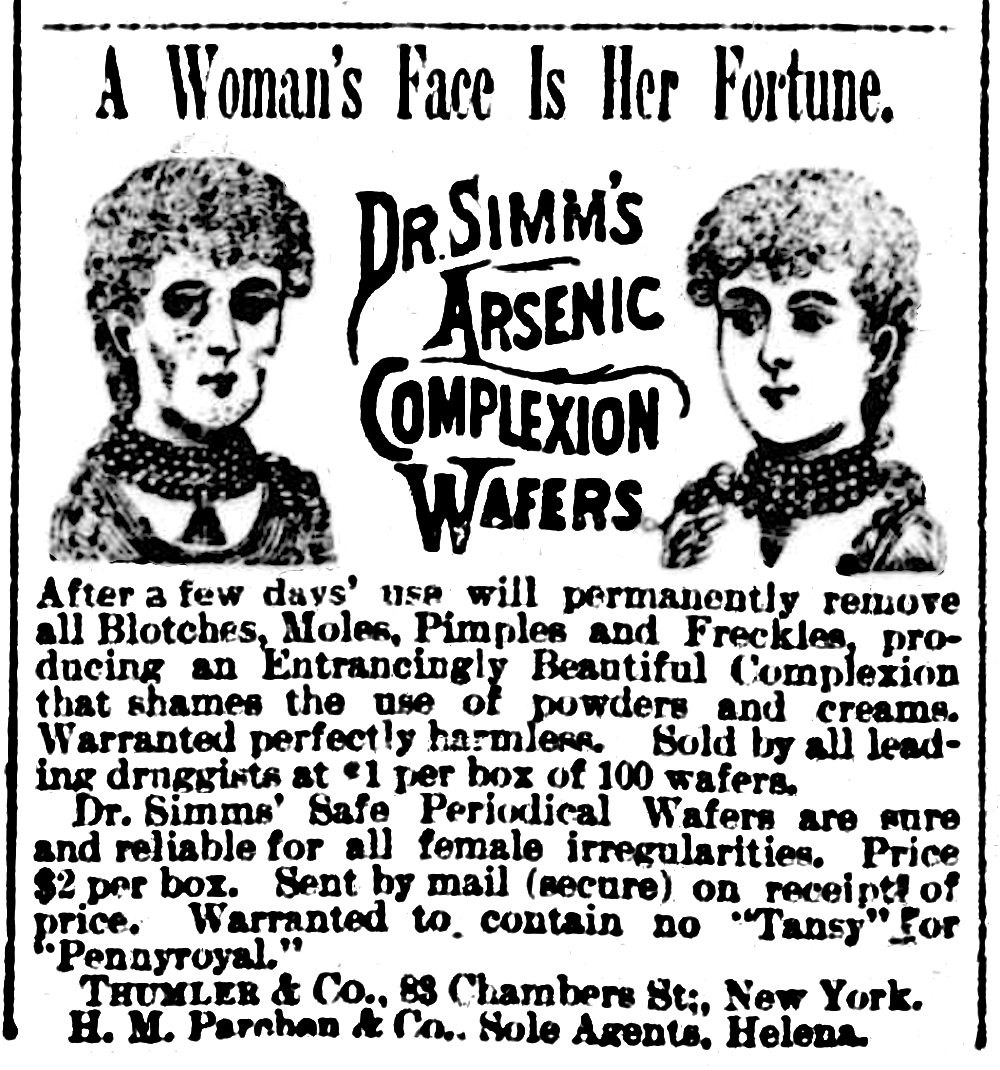
Barnett v Chelsea & Kensington Hospital Management Committee [1969] is the classic illustration: a hospital negligently failed to examine and treat a patient who later died of arsenic poisoning, yet the claim failed on causation, because the poisoning was so advanced that the patient would have died regardless of any treatment given. Negligence without causation is not actionable negligence.
Material contribution and the mesothelioma exception
Some situations resist a clean but-for analysis, particularly where multiple causes combine. Bonnington Castings Ltd v Wardlaw [1956] established the material contribution test: where an indivisible injury (there, pneumoconiosis from years of dust exposure) results from multiple sources, causation can be proved by showing the defendant's breach materially contributed to that injury, without needing to isolate precisely how much of the damage came from the defendant's breach versus other, non-tortious sources.
Fairchild v Glenhaven Funeral Services Ltd [2002] goes further still, creating a special, narrow exception for mesothelioma claims. Because medical science cannot identify which single asbestos exposure among several employers actually triggered the cancer, Fairchild allows a claimant to establish causation against each defendant by showing that defendant's breach materially increased the risk of the disease — a significant relaxation of ordinary causation rules, justified by the unique evidentiary black hole mesothelioma presents and the injustice of leaving a genuinely wronged claimant with no remedy against anyone.

Loss of a chance
English law has firmly resisted extending recovery to loss of a chance of a better medical outcome. In Hotson v East Berkshire Area Health Authority [1987], a boy's chance of avoiding a hip deformity following a fall was assessed at only 25% even with prompt treatment; because he could not prove causation of the physical injury on the balance of probabilities (i.e., that treatment would more likely than not have avoided the deformity), his claim for the lost chance itself failed. Gregg v Scott [2005] confirmed the same approach for a delayed cancer diagnosis: English law generally does not permit recovery in negligence for the loss of a chance of a better outcome — causation remains an all-or-nothing, balance-of-probabilities inquiry, not a proportional one.
Legal causation and breaking the chain
Even where factual causation is proved, the chain can be broken by a novus actus interveniens — an intervening act — such that the original defendant is no longer legally responsible for what follows. A third party's intervening act breaks the chain only where it is unreasonable, unforeseeable, or extraneous to the original negligence. A claimant's own conduct can also break the chain, but only where it is highly unreasonable — an ordinary, understandable reaction to the defendant's negligence will not sever liability. In the medical context specifically, treatment that is grossly negligent, as opposed to an ordinary misadventure or recognised risk of treatment, can break the chain running back to the original tortfeasor — the negligent doctor, not the original wrongdoer, becomes the sole cause in law.
The Wagon Mound test
Causation established in fact and law is still not enough; the damage must not be too remote. The Wagon Mound (No 1) [1961] replaced the older "direct consequences" test with a foreseeability-based remoteness test: a defendant is only liable for types of harm that were reasonably foreseeable at the time of the breach. Crucially, the test asks whether the type or kind of damage was foreseeable — not whether its precise extent or the exact manner of its occurrence was foreseeable. A fire is a foreseeable type of harm from spilt oil, even if nobody could have predicted the precise mechanism by which it ignited.
The Wagon Mound (No 2) [1967], on similar facts but a different claimant, confirmed that a type of harm foreseeable as a real possibility is not too remote merely because the likelihood of it occurring was small. Foreseeability, not probability, is the touchstone.
The egg-shell skull rule
Smith v Leech Brain & Co [1962] supplies the enduring counterweight: the egg-shell skull rule requires a defendant to take the claimant as found. If the claimant had a pre-existing vulnerability (in Smith, a pre-malignant condition triggered into cancer by a burn) that made the actual injury far more severe than an ordinary person would have suffered, the defendant is fully liable for that greater injury — provided the type of injury suffered was itself a foreseeable kind of harm arising from the breach. The rule does not let a defendant escape liability for severity simply because the claimant happened to be more fragile than expected; it only requires that the general category of harm was foreseeable in the first place.

A defendant facing an otherwise complete negligence claim can still reduce or extinguish liability through defences.
Contributory negligence, under the Law Reform (Contributory Negligence) Act 1945, is a partial defence: where the claimant's own fault contributed to their damage, the court apportions damages to the extent it considers just and equitable, having regard to the claimant's share of responsibility. This is not all-or-nothing — a claimant who failed to wear a seatbelt might have damages reduced by 15–25%, not lose the claim entirely.
Volenti non fit injuria ("no injury is done to one who consents") is a complete defence. It applies where the claimant freely and voluntarily consented, with full knowledge of the risk, to the specific risk that caused the injury — a genuinely high bar, since merely knowing a general activity carries some risk is not the same as consenting to the specific negligence that occurred.
The illegality defence, expressed in the maxim ex turpi causa non oritur actio ("no action arises from a base cause"), may bar a claim entirely where the claimant's own criminal conduct is inextricably linked to the damage suffered — for example, injury sustained while actively participating in a burglary with the defendant. The link must be genuinely close; illegality somewhere in the claimant's background is not enough on its own.

Personal injury damages
Damages for personal injury are compensatory: the aim is to place the claimant, so far as money can achieve it, in the position they would have been in had the tort not occurred. They divide into two categories:
- General damages compensate for pain, suffering, and loss of amenity (PSLA), together with future financial losses that cannot be precisely calculated at trial (future loss of earnings, future care costs).
- Special damages compensate for financial losses that can be precisely calculated up to the date of trial — lost earnings to date, medical expenses already incurred, damaged property.
PSLA awards are assessed with reference to the Judicial College Guidelines for the Assessment of General Damages in Personal Injury Cases, a tariff derived from decided cases that gives practitioners a starting bracket for a given injury.
Future pecuniary loss — most commonly future loss of earnings — is calculated using a multiplicand (the annual net loss) and a multiplier (which discounts that annual figure to reflect the fact the claimant receives it as an early lump sum rather than spread over future years). The multiplier itself is drawn from the Ogden Tables, which apply actuarial life-expectancy data and discount-rate assumptions to convert an annual loss into an appropriate capital sum.
Damages may also include the reasonable cost of future medical or nursing care, including private treatment, where reasonably incurred. Because serious personal injury litigation can take years to resolve, the court can order interim payments to meet a claimant's immediate financial needs before final resolution, and — where there is a chance the claimant will develop a serious future disease or deterioration — can award provisional damages, preserving the claimant's right to return for a further award if that feared event later materialises.
Death: estate claims and dependants' claims
Death does not extinguish a negligence claim; it splits it into two distinct routes.
Section 1 of the Law Reform (Miscellaneous Provisions) Act 1934 provides that a deceased person's existing causes of action generally survive for the benefit of their estate. The estate's claim, however, is calculated without reference to any loss of earnings for the period after death — the estate recovers for what the deceased suffered and lost up to death, not for the earnings the deceased would have gone on to earn had they lived. A bereavement damages claim under the Fatal Accidents Act 1976 specifically does not survive for the estate's benefit — it belongs to the dependant personally, not the estate.
The Fatal Accidents Act 1976 creates a separate claim for specified dependants of a person killed by a tort, for the loss of financial dependency they suffer as a result of the death. Section 1(3) defines dependants broadly to include a spouse, a civil partner, a former spouse, and specified relatives such as parents, children, and siblings; s 1(3)(b) extends this to a cohabitant who lived with the deceased as husband, wife, or civil partner for at least two years immediately before the death. Section 1A provides a fixed statutory bereavement award, set at £15,120 for deaths occurring on or after 1 May 2020 — but this award is confined to a narrow class of claimants: primarily the spouse or civil partner of the deceased or, in limited circumstances, a parent of a deceased child under 18. Funeral expenses reasonably incurred as a result of the death are also recoverable under the Act.
A claim by dependants under the 1976 Act and a claim by the estate under the 1934 Act can be, and commonly are, brought together in the same proceedings, subject always to avoiding double recovery for the same loss — the two claims compensate different people for different things (dependency loss versus the deceased's own pre-death losses), but any overlap must be eliminated.
Limitation
Claims do not last forever. Section 11 of the Limitation Act 1980 generally requires a negligence claim for personal injury to be brought within three years of the date the cause of action accrued, or the claimant's date of knowledge, whichever is later. Section 14 defines that date of knowledge as the date the claimant knew the injury was significant and that it was attributable to the defendant's act or omission — protecting claimants whose injuries only manifest, or are only linked to a cause, well after the event (industrial disease is the paradigm case). Section 33 gives the court a residual discretion to disapply the three-year period where it would be equitable to allow the action to proceed regardless — a safety valve for deserving claimants who miss the primary deadline for good reason. A claim brought on behalf of a deceased's estate under the 1934 Act remains subject to this same three-year personal injury limitation period, running from death or knowledge.
Return to the cyclist at the opening. The rider will likely establish duty by straightforward analogy to the established road-user category (no need for Caparo), breach by reference to the driver's failure to meet the standard of the reasonable, competent driver, factual causation via the but-for test, and a foreseeable type of harm under Wagon Mound. His psychiatric injury claim, if he is a primary victim within the zone of danger, needs only foreseeability of some injury; a bystander who merely heard about the crash would face the much harder secondary-victim hurdles. His business losses raise the pure economic loss question, and any lost earnings claim will be built on a multiplicand-and-multiplier future loss calculation drawn from the Ogden Tables. Every doctrinal rule in this topic exists because, somewhere, a real claimant's real losses turned on exactly that distinction — which is why the SQE1 tests it not as abstract taxonomy, but as the practical toolkit you will use to advise a client on the very first day of practice.