Fiduciary Obligations and Stranger Liability
A trustee who quietly diverts a lease, a directorship opportunity, or a commission to themselves has not necessarily done anything a reasonable person would call unfair. That is precisely the point equity refuses to accept. Fiduciary law does not ask whether the fiduciary caused loss, acted in bad faith, or even acted dishonestly — it asks only whether they occupied a position of conflict or unauthorised profit, and if they did, it imposes liability regardless of motive or outcome. This is the strictest form of civil liability in English private law, and understanding why equity chooses strictness over fairness is the key to the whole topic.

The foundational statement comes from Bray v Ford [1896] AC 44: a person in a fiduciary position is not, unless expressly permitted, entitled to place themselves in a position where their interest and their duty conflict. Notice what that formulation does not require — it says nothing about the fiduciary's honesty, and nothing about whether the conflict actually produced harm. That omission is deliberate. A fiduciary must not place themselves in a position where their personal interest conflicts, or may conflict, with the interests of the person to whom the duty is owed, and the no-conflict rule applies strictly and is breached even where the fiduciary acted honestly and in good faith. It is breached, too, even where the beneficiary suffers no loss from the conduct in question.
Running alongside the no-conflict rule is a second, related discipline: the no-profit rule. A fiduciary must not profit from their position, or from opportunities or information acquired through it, without the fully informed consent of the beneficiary. Crucially, this rule imposes strict liability to account for an unauthorised profit, regardless of the fiduciary's fraud or absence of bad faith. The remedy is not punishment for wrongdoing; it is disgorgement of a gain the fiduciary was never entitled to keep. Ask why equity is this severe, and the answer is structural rather than moral: fiduciary relationships are built on trust that cannot be policed transaction-by-transaction, so the law removes the temptation altogether by making any unauthorised gain automatically forfeit, whatever the fiduciary's state of mind.
Four cases, spanning nearly two and a half centuries, show the rule being applied with unwavering consistency across wildly different facts.
Keech v Sandford (1726) Sel Cas Ch King 61 is the founding case. A trustee held a lease on trust for an infant beneficiary. When the lease came up for renewal, the landlord refused to renew it in favour of the trust itself — yet was willing to renew it to the trustee personally. The trustee took the renewal for himself. The court held that the trustee who personally renews a lease previously held on trust becomes a constructive trustee of the renewed lease for the beneficiary. What makes this case so instructive is that the trustee was liable even though the landlord had refused to renew the lease for the benefit of the trust itself — in other words, the beneficiary could not possibly have obtained the very benefit the trustee took. Liability did not depend on the trust losing an opportunity it could have exploited; it depended purely on the trustee's fiduciary position being the vehicle for the gain.

Regal (Hastings) Ltd v Gulliver [1942] UKHL 1 transplants the same logic into the corporate context. Directors of a company arranged for a subsidiary to acquire cinema leases, but the subsidiary could not raise sufficient capital, so the directors personally subscribed for the shortfall of shares and later sold them at a profit when the company (including the subsidiary) was sold. The House of Lords held that directors who make a profit by reason of their fiduciary office must account for it even if the company suffered no loss — indeed, the company arguably benefited from the directors' initiative. Lord Russell of Killowen's judgment supplies the doctrinal anchor for the whole area: liability to account for fiduciary profits does not depend on fraud or absence of bona fides. The directors had acted entirely honestly and had arguably rescued the deal, yet they still had to hand over their profit.

Boardman v Phipps [1967] 2 AC 46 (also cited [1966] UKHL 2) pushes the rule further still. A solicitor acting for a trust used information he acquired in that capacity to identify an opportunity to buy shares in a company the trust already held a minority stake in. He bought shares for himself (with the trustees' informal blessing but not the full, informed consent of all beneficiaries), the investment was a considerable success, and the trust benefited enormously from the resulting increase in the value of its own shareholding. The House of Lords nevertheless held that the solicitor who used trust-related information to buy shares for personal profit was liable to account despite acting honestly. But equity tempered strictness with fairness on the question of remedy: the House of Lords awarded the fiduciary an equitable allowance for the skill and effort he had used in generating the profit — recognising that stripping him of every penny would unjustly enrich the trust at his expense, even while insisting the underlying profit belonged to the beneficiaries.
Industrial Development Consultants Ltd v Cooley [1972] 1 WLR 443 completes the picture with the doctrine of the "maturing business opportunity." A managing director was approached about a lucrative contract on behalf of his company, feigned illness to be released from his directorship, and then took the contract for himself once free of his fiduciary role. He was held liable to account for profit from a maturing business opportunity he diverted from his company to himself. This produces the sharpest illustration of the principle's reach: a fiduciary breaches the no-profit rule by diverting a maturing business opportunity belonging to the principal, even if the principal could not itself have obtained that opportunity — the company in Cooley may well have been refused the contract had the director stayed in post and pursued it honestly on the company's behalf, but that possibility is irrelevant. The opportunity arose in the fiduciary's hands because of his office, and that is enough.

For decades, English law was unsettled on whether a bribe or secret commission received by an agent was merely a debt the agent owed the principal (a personal claim) or property the agent held on trust for the principal (a proprietary claim) — a distinction that matters enormously if the agent becomes insolvent. FHR European Ventures LLP v Cedar Capital Partners LLC [2014] UKSC 45 resolved the question decisively: a bribe or secret commission received by an agent is held on constructive trust for the principal. The Supreme Court held that this proprietary constructive trust remedy gives the principal priority over the fiduciary's unsecured creditors if the fiduciary becomes insolvent — the bribe never really belonged to the fiduciary's own estate, so the principal can trace and recover it ahead of ordinary creditors who must share what remains.
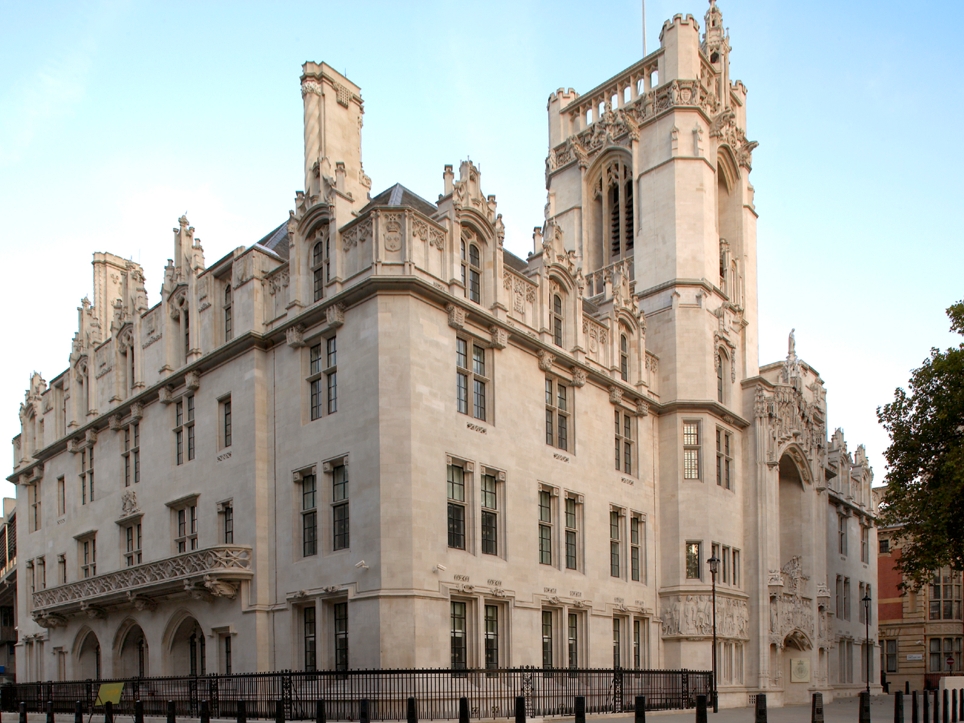
The significance of FHR is best understood as tidying up a doctrinal split. It resolved a prior conflict between Attorney General for Hong Kong v Reid and Sinclair Investments v Versailles Trade Finance in favour of a proprietary remedy for bribes — the Privy Council in Attorney General for Hong Kong v Reid had favoured a proprietary constructive trust, while the Court of Appeal in Sinclair Investments v Versailles Trade Finance had confined recipients of secret profits to a personal remedy only. The Supreme Court sided unambiguously with Reid, giving claimants the strongest possible remedy against a corrupt fiduciary's ill-gotten gains.

The no-profit and no-conflict rules are strict defaults, not absolutes — a fiduciary can lawfully profit or act in a position of conflict if properly authorised. Fully informed consent to a fiduciary's profit or conflict of interest requires disclosure of all material facts to the person giving consent; half-disclosure or selective candour will not do, because the whole point of the consent mechanism is to let the beneficiary make a genuinely free and informed choice to release the fiduciary from the strict rule. Separately, the governing instrument itself can do the same work in advance: a trust instrument can expressly authorise a trustee to retain profits, remuneration, or benefits that would otherwise breach the no-profit or no-conflict rules, sidestepping the need for after-the-fact consent altogether.
Remuneration for professional trustees is a specific and heavily tested application of this authorisation principle, now governed by statute. Section 28 of the Trustee Act 2000 allows an express professional charging clause in a trust instrument to entitle a professional trustee or trust corporation to payment even for services a lay trustee could have performed — reversing the old, narrower common-law approach that construed charging clauses strictly against the trustee. Where the trust instrument is silent, Section 29 of the Trustee Act 2000 steps in to imply a professional charging clause for a trust corporation or professional trustee, though for an individual professional trustee (as opposed to a trust corporation) this default entitlement is subject to the other trustees' written agreement. Both sections exist to give professional trustees a workable, non-strict route to being paid for their expertise without falling foul of the no-profit rule.
A closely related but distinct pair of doctrines governs a trustee's personal transactions with trust property, and SQE1 candidates frequently conflate the two.
Under the self-dealing rule, any transaction in which a trustee purchases trust property is rendered voidable, regardless of how fair the price paid. The origin of the principle is Ex parte Lacey (1802) 6 Ves 625, which established that a trustee must not manage the trust property for their own private benefit and advantage — a trustee sitting on both sides of a sale (as seller-on-behalf-of-the-trust and buyer-in-their-own-right) creates an unacceptable structural conflict, whatever price is actually agreed. Because the vice lies in the structure of the transaction rather than in any unfairness of outcome, a beneficiary may set aside the transaction as of right (ex debito justitiae) — without needing to prove the price was unfair or that the trustee acted improperly.
Tito v Waddell (No 2) [1977] Ch 106 draws the crucial line distinguishing the self-dealing rule from the fair-dealing rule for trustee transactions with trust property. The fair-dealing rule applies where a trustee purchases a beneficiary's equitable interest in the trust property — rather than the trust property itself — and here equity is markedly more forgiving: under fair-dealing, the transaction stands unless the beneficiary shows it was unfair, or the trustee fails to prove full disclosure and a fair price. The burden essentially shifts depending on which rule applies, which is the examinable crux:
| Self-dealing | Fair-dealing | |
|---|---|---|
| What is bought | The trust property itself | The beneficiary's equitable interest |
| Default outcome | Voidable automatically | Stands, presumptively valid |
| Who must prove what | Beneficiary need prove nothing beyond the self-dealing itself | Beneficiary alleges unfairness, or trustee must prove full disclosure + fair price |
| Escape route | Trust instrument authorisation, or fully informed consent of all beneficiaries with capacity | Trustee demonstrating fairness and disclosure |
Just as with the no-conflict rule generally, the self-dealing rule can be displaced by clear authorisation in the trust instrument or by fully informed consent of all beneficiaries with capacity — reinforcing that strictness in fiduciary law is always a strong default rather than an inflexible prohibition.
So far, every rule discussed has applied to someone who is actually a trustee or fiduciary. But trust law also reaches outward to catch people who were never appointed as trustees at all. A person who is not a trustee can still incur personal liability to the trust as a stranger through the doctrines of knowing receipt or dishonest assistance. A related but conceptually separate figure is the trustee de son tort: someone who, without being properly appointed, assumes the duties and role of a trustee and is treated as one for liability purposes — effectively self-appointing through conduct rather than through valid documentation, and thereby taking on the full weight of fiduciary obligations they never formally accepted.
Knowing Receipt
Knowing receipt requires that the stranger received trust property, or its traceable proceeds, transferred to them in breach of trust, for their own benefit. The modern test for the "knowing" element comes from Bank of Credit and Commerce International (Overseas) Ltd v Akindele [2001] Ch 437: the test is whether the recipient's state of knowledge makes it unconscionable for them to retain the benefit received. This unconscionability test replaced the earlier five-category classification of knowledge derived from Baden v Societe Generale, which had proved unworkable in practice — courts had struggled to slot real facts neatly into five artificial categories of knowledge, and Akindele swept that scaffolding away in favour of a single, flexible conscience-based inquiry.
A more recent and much-tested refinement comes from Byers v Saudi National Bank [2023] UKSC 51, which held that a knowing receipt claim requires the claimant to hold a continuing equitable proprietary interest in the property at the moment the defendant receives it. This matters enormously in multi-jurisdictional and tracing-heavy fact patterns: if the claimant's equitable proprietary interest in the property is extinguished before the defendant receives it — for example, because the property passed through a jurisdiction whose law does not recognise the equitable interest, destroying it before the stranger ever laid hands on it — a knowing receipt claim fails outright, however unconscionable the recipient's later conduct might otherwise look. In reaching this conclusion, the Supreme Court in Byers characterised knowing receipt as an equitable wrong analogous to the tort of conversion, requiring knowledge rather than imposing strict liability — knowing receipt punishes the unconscionable retention of another's continuing property right, not the mere fact of having once handled trust money.
Dishonest Assistance
Dishonest assistance is the doctrine's mirror image: it does not require the stranger to have received any trust property personally at all. Instead, liability rests on three cumulative elements. First, dishonest assistance requires a breach of trust or fiduciary duty by the primary trustee or fiduciary as a precondition — there must be an underlying wrong for the stranger to have assisted. Second, it requires that the stranger assisted in, or facilitated, the primary breach. Third, and most contested in the case law, it requires the stranger to have acted dishonestly in providing that assistance.
The dishonesty element has undergone significant doctrinal evolution, and the sequence of cases is a favourite examination thread:

- Royal Brunei Airlines Sdn Bhd v Tan [1995] UKPC 4 established that liability for dishonest assistance depends on the dishonesty of the assisting stranger, not the state of mind of the primary trustee — a trustee's breach can be entirely innocent while the stranger who helps them is fully culpable. The case also held that dishonesty for accessory liability means not acting as an honest person would in the circumstances, assessed objectively.
- Twinsectra Ltd v Yardley [2002] UKHL 12 was subsequently interpreted as requiring both an objective standard of dishonesty and the defendant's own subjective awareness that their conduct was dishonest by that standard — a hybrid, and notably more defendant-friendly, formulation than Royal Brunei's purely objective approach.
- Barlow Clowes International Ltd v Eurotrust International Ltd [2005] UKPC 37 pulled the law back toward Royal Brunei, clarifying that dishonesty is judged predominantly objectively, without a separate requirement that the defendant realised their conduct was dishonest by ordinary standards.
- Ivey v Genting Casinos (UK) Ltd [2017] UKSC 67 then confirmed a single objective test for dishonesty applying uniformly across both civil and criminal law, finally settling the debate. The Ivey test operates in two stages: a court first ascertains the defendant's actual subjective knowledge or genuine belief as to the relevant facts (what did this particular defendant actually know or believe was going on?), and only then asks whether the defendant's conduct, given that actual knowledge or belief, was dishonest, assessed objectively by the standards of ordinary decent people. The subjectivity lives entirely in stage one (fact-finding about the defendant's own mind); the standard applied to those facts in stage two is always objective and external.
One further point is frequently tested precisely because it is counter-intuitive: carelessness or negligence alone does not amount to dishonesty for dishonest assistance purposes. A stranger who is sloppy, incurious, or even negligent in failing to spot a breach of trust is not thereby dishonest — dishonesty requires the objectively condemnable state of mind identified by Ivey, not mere failure to meet a standard of care.
The two stranger doctrines are not mutually exclusive. A stranger can be liable for both knowing receipt and dishonest assistance on the same facts if the separate elements of each doctrine are independently satisfied — for instance, a stranger who both receives misapplied trust property and also actively helps the trustee conceal the breach could face liability under both heads simultaneously. But the remedies they generate differ in a way that matters enormously in insolvency:
A successful knowing receipt claim can give rise to a personal liability to account as a constructive trustee, and may also support a proprietary tracing claim into identifiable trust property — because the claim is anchored in the defendant actually holding (or having held) property in which the claimant retains an interest. A successful dishonest assistance claim, by contrast, gives rise only to a personal liability to account, and does not itself confer a proprietary interest in the assisted breach — the assistant never received the property, so there is nothing for a proprietary claim to attach to; the claimant is left as an unsecured creditor of the dishonest assistant.
This distinction echoes back to where this topic began. The remedy for a breach of the no-profit or no-conflict rule by a fiduciary is typically an account of unauthorised profits, which may be supplemented by a proprietary constructive trust over identifiable profits — exactly the reasoning that FHR European Ventures extended to bribes, and exactly the reasoning that separates the fortunate claimant with a continuing proprietary interest from the unlucky one left holding only a personal claim against an insolvent defendant.