Trustees' Duties and Powers
A trust cannot run itself. Every duty a settlor imposes and every power a settlor confers is only as good as the machinery that puts a human being — a trustee — into office, keeps that office filled, and tells the occupant how carefully and how boldly they may act. That machinery is the subject of this topic, and it rewards close attention because SQE1 loves to test it through messy fact patterns: a trustee who has emigrated, an elderly trustee losing capacity, a beneficiary who wants their inheritance early, or a portfolio that has quietly drifted into speculative assets nobody reviewed.
Start with the question every practitioner asks first when a trust runs into trouble: who has the power to change the trustees? Section 36(1) Trustee Act 1925 answers it with a hierarchy, and the hierarchy matters because getting it wrong means a purported appointment is simply void.
The power to appoint a replacement trustee belongs, first, to any person nominated for that purpose in the trust instrument — settlors often reserve this role for themselves or a trusted adviser. Only if no such person exists, or is willing and able to act, does the power pass to the surviving or continuing trustees for the time being. And if there are no surviving or continuing trustees able to act at all, the power falls to the personal representatives of the last surviving trustee — the people administering that trustee's estate step into the gap.
Section 36(1) can be triggered where an existing trustee:
has died, remains outside the United Kingdom for more than twelve months, wishes to be discharged, refuses to act, is unfit to act, is incapable of acting, or is a minor.
Notice how wide that list is — it covers everything from death to a trustee who has simply had enough and wants out. This is the practical engine room of trustee changes, and it is precisely why SQE1 scenario questions so often open with "Trustee X has emigrated to Australia" or "Trustee Y has just been diagnosed with dementia."
How many trustees can there be? Section 34(2) Trustee Act 1925 caps a private trust of land created after 1925 at a maximum of four trustees. If a settlor names more than four, only the first four named who are able and willing to act become trustees — the rest simply never take office. This cap has one important exception: it does not apply to land held on trust for charitable, ecclesiastical, or public purposes, where the number of trustees can run much higher.
The four-trustee ceiling connects to a separate, sharper rule that examiners love to test through conveyancing scenarios: a sole trustee who is not a trust corporation cannot give a valid receipt for capital money arising on a disposition of trust land. Picture a solicitor acting on a sale where only one trustee remains — that sale cannot complete safely until a second trustee is appointed, because the buyer's solicitor will (rightly) refuse to hand over the purchase price against a receipt from a single individual trustee. Overreaching, which protects a purchaser against beneficial interests in land, requires payment to at least two trustees or a trust corporation.
Beneficiaries Taking Control
What if the trustees and any nominated appointor are all unwilling or unable to act, but the beneficiaries themselves are unanimous and of full age? The Trusts of Land and Appointment of Trustees Act 1996 (TLATA 1996) gives them a route in. Section 19 TLATA 1996 allows beneficiaries who are all of full age and capacity, and together absolutely entitled to the trust property, to direct the appointment or retirement of a trustee — provided the trust instrument does not already nominate someone else to make that appointment. This is a beneficiary override, but only where the beneficiaries collectively hold every last scrap of the beneficial interest.
Section 20 TLATA 1996 handles a narrower, more delicate problem: a trustee who has become incapable of acting because of mental disorder, where nobody is entitled to appoint a replacement under section 36(1). Here the beneficiaries (again, all of full age, capacity, and absolutely entitled) can direct the appointment of a replacement for the incapacitated trustee.
When the Court Steps In
Sometimes nobody in the private machinery can act, and the trust would otherwise stall. Section 41 Trustee Act 1925 gives the court an inherent and statutory power to appoint a new trustee whenever it is expedient to do so, and it is inexpedient, difficult, or impracticable to make an appointment without the court's assistance. Think of this as the safety net beneath sections 36, 19, and 20 — when the private appointment routes are all blocked, the court can still get a trustee into office.
Retirement Without Replacement
Not every departing trustee needs a replacement. Section 39 Trustee Act 1925 allows a trustee to retire without anyone being appointed in their place, but only if, after the retirement, at least two individual trustees or a trust corporation remain to carry on the trust — the four-trustee cap has a mirror-image floor. Retirement under section 39 requires the retiring trustee's co-trustees, and any person empowered to appoint trustees, to consent by deed to the discharge. Without that deed of consent, the retirement simply does not take legal effect.
Vesting the Trust Property
Once a new trustee is appointed or an old one discharged, someone has to actually transfer legal title to the trust assets into the right names — and doing that asset-by-asset would be a conveyancer's nightmare. Section 40 Trustee Act 1925 solves this with a vesting declaration: a deed appointing or discharging a trustee can include a declaration that automatically vests the trust property in the continuing trustees, with no separate conveyance required.
But automatic vesting has real limits, and these are exactly the kind of exceptions SQE1 tests to see whether candidates have memorised the headline rule without understanding its edges:
| What the vesting declaration covers | What it does NOT cover |
|---|---|
| Most trust property generally | Land subject to a mortgage held by the trustees as security — this still needs an express conveyance |
| — | Stocks, shares, or other securities requiring a registered transfer to change legal ownership |
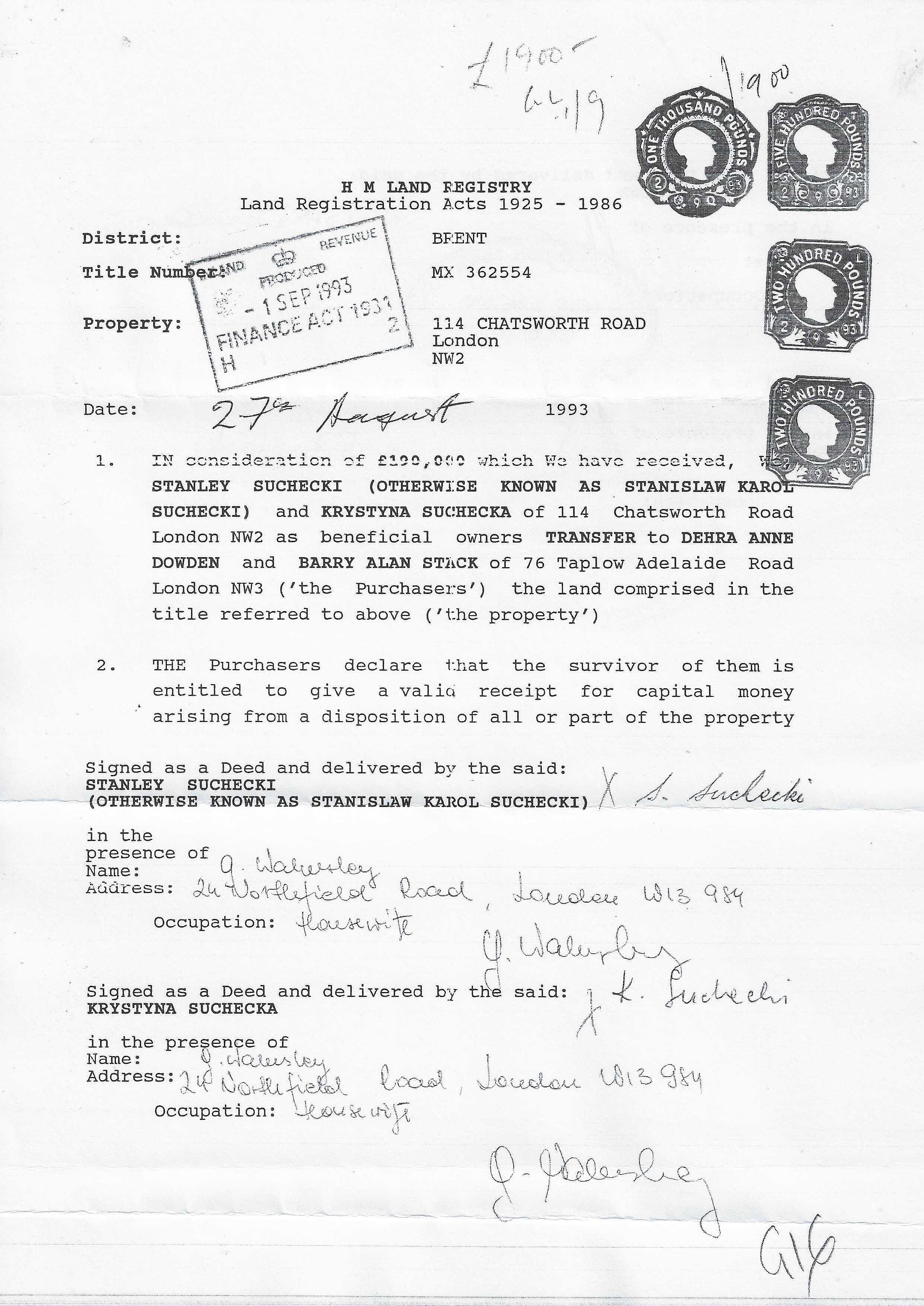
The logic is simple once you see it: a vesting declaration is a shortcut for legal title that would otherwise need a formal document, but it cannot override a third party's registration system (the share registrar, the Land Registry's mortgage entry) or displace security interests that depend on that separate machinery.
Appointing the right people is only step one. Once in office, how carefully must a trustee behave? Section 1 Trustee Act 2000 supplies the modern statutory answer: a trustee must exercise such skill and care as is reasonable in the circumstances of the case.
The statutory duty of care is not one-size-fits-all. It takes into account any special knowledge or experience that a particular trustee has, or holds themselves out as having — and it imposes a higher standard on a trustee acting in the course of a business or profession connected to their trustee role.
So a retired accountant serving as a lay trustee is held to a higher standard than a trustee with no relevant background, and a professional trust corporation is held to a higher standard still. This variable standard is elegant precisely because it maps onto real life: the law expects more of those who claim more expertise.
Schedule 1 Trustee Act 2000 tells you when this statutory duty of care actually bites — it applies specifically when a trustee is exercising the general power of investment, reviewing investments, delegating functions, or arranging insurance. And crucially, the statutory duty of care is a default rule: the trust instrument can restrict, modify, or exclude it entirely, which is why reading the trust deed's exoneration clauses is always step one in any professional negligence analysis of trustee conduct.
The Common Law Backdrop
The statutory duty of care did not spring from nowhere — it codifies (and refines) a common law standard with deep roots. In Learoyd v Whiteley, the court held that a trustee must administer the trust with the care that an ordinary prudent person of business would exercise when managing their own affairs. That "ordinary prudent businessperson" became the touchstone against which trustee conduct is measured for well over a century.
But "ordinary" does not mean "uniform." In Bartlett v Barclays Bank Trust Co, the court confirmed that a professional or paid trustee — such as a trust corporation — is held to a higher standard of skill and care than a lay trustee. This is the common law ancestor of the graduated standard now written into section 1 Trustee Act 2000, and the two sit comfortably together: statute did not displace the case law logic, it formalised it.
Duty of Care vs Fiduciary Duty — Do Not Conflate Them
Here is a distinction SQE1 examiners actively probe, because students routinely blur it: the duty of care (how carefully a trustee acts) is conceptually separate from a trustee's fiduciary duties — most importantly, the duty not to place themselves in a position where personal interest conflicts with trust duty (the no-conflict rule). A trustee can act with perfect skill and diligence and still commit a breach of fiduciary duty by, say, buying trust property for themselves at an undervalue. Conversely, a trustee acting with total loyalty can still breach the duty of care through simple carelessness. Keep these two duties in separate mental boxes.
One more structural rule sits alongside both: in the absence of a contrary provision in the trust instrument, trustees must exercise their discretionary powers unanimously, not by majority vote. A 2-1 split among three trustees on whether to sell an asset or advance capital to a beneficiary is not a valid decision unless the trust instrument specifically permits majority decision-making.
Modern trusteeship is, in large part, about managing money — and the Trustee Act 2000 gave trustees dramatically wider investment powers than they had under the old, restrictive statutory investment lists.
Section 3 Trustee Act 2000 confers the general power of investment: a trustee may make any kind of investment that they could make if they were absolutely entitled to the trust assets. This is a sweeping default power — think of it as putting the trustee's investment freedom on par with an individual investing their own money. It can, however, be restricted or excluded by a provision in the trust instrument, so (again) the trust deed always needs checking first.
One notable carve-out: the general power of investment under section 3 does not authorise a trustee to invest directly in land, except by way of a loan secured on land. Direct land purchase needs a different statutory hook entirely — section 8 Trustee Act 2000, which gives trustees the power to acquire freehold or leasehold land in the United Kingdom, whether for investment, for occupation by a beneficiary, or for any other reason. Students sometimes assume section 3 covers land because it sounds so broad; it does not, and examiners test that gap directly.
The Safeguards Around Investment
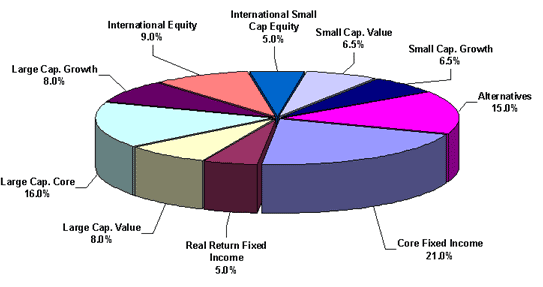
Wide powers come with matching obligations to exercise them prudently. Section 4 Trustee Act 2000 requires a trustee exercising a power of investment to have regard to the standard investment criteria: the suitability of the investment to the trust, and the need for diversification of trust investments (so far as appropriate to the circumstances of the trust). Section 4 also imposes an ongoing duty: trustees must review the trust investments from time to time and consider whether they should be varied. A portfolio chosen wisely in year one and never revisited again is itself a breach.
Section 5 Trustee Act 2000 adds a procedural safeguard: before exercising a power of investment, a trustee must obtain and consider proper advice about how the power should be exercised, having regard to the standard investment criteria. "Proper advice" means advice from a person the trustee reasonably believes to be qualified by ability in, and practical experience of, financial matters relevant to the proposed investment — typically an IFA or investment manager. There is a sensible escape valve, though: a trustee may exercise the investment power without obtaining advice if they reasonably conclude that, in the circumstances, doing so is unnecessary or inappropriate — for instance, where the sum involved is trivial or the trustee is themselves the qualified professional.
What "Prudent" Actually Means: The Case Law
Three cases give the standard investment criteria their teeth, and each answers a slightly different question.
Cowan v Scargill asks: whose interests come first? The court held that trustees exercising investment powers must act in the best financial interests of the beneficiaries and set aside their own personal or ethical preferences — the National Union of Mineworkers pension trustees could not refuse profitable investments merely because they conflicted with union policy on, say, competing energy sources. But the principle has a genuine exception: ethical considerations can override pure financial return where the trust's purpose is itself non-financial, or where all the beneficiaries happen to share the same ethical view (so no beneficiary is actually harmed by the ethical stance).
Nestle v National Westminster Bank asks: how skilled must the ordinary trustee be? The answer is reassuring for the non-expert lay trustee — the standard is that of an ordinary prudent businessperson, not an exceptional one. Trustees are not held to a counsel-of-perfection standard of investment genius; they are held to competent, careful ordinariness.
Harries v Church Commissioners for England refines Cowan v Scargill for the charity context: charity trustees may decline an investment on non-financial grounds only where the investment would conflict with the charity's own purposes or risk alienating significant support for the charity. A cancer charity declining to invest in tobacco shares is the textbook illustration — declining is legitimate there precisely because the investment cuts directly against the charity's mission, not merely because trustees personally disapprove of tobacco.
Delegating Investment Decisions
Trustees rarely manage large portfolios personally — the Trustee Act 2000 expressly contemplates delegation, subject to firm guardrails. Section 11 Trustee Act 2000 allows trustees to delegate their delegable functions, including investment and asset management decisions, to an agent. But delegation has a hard limit: delegable functions do not include decisions about how trust assets or income should be distributed, nor decisions about how to exercise any discretion whether to distribute at all. You can outsource stock-picking; you cannot outsource who gets the money.
Where trustees do delegate asset management functions, section 15 Trustee Act 2000 requires the agreement authorising the agent to be in or evidenced in writing, and to include a written policy statement guiding how the agent should exercise those functions — a governance safeguard that stops delegation from becoming abdication.
Finally, sections 21 to 23 Trustee Act 2000 require trustees to keep delegation arrangements under review, and — this is the payoff for compliance — they generally protect a trustee from liability for an agent's defaults, provided the trustee complied with the statutory duty of care in both appointing and supervising that agent. Delegate carelessly and supervise nobody, and the shield disappears; delegate and supervise properly, and the trustee is not on the hook for the agent's own mistakes.
The final piece of the puzzle is what trustees can do for beneficiaries who have not yet reached full entitlement — typically minors, or those with only a contingent interest. Two statutory powers matter here, and SQE1 tests them constantly because they hinge on a single, crucial date.
Maintenance: Using Income
Section 31 Trustee Act 1925 gives trustees the power to apply trust income for the maintenance, education, or benefit of a beneficiary who has not yet reached eighteen. This is the "income" power — it lets trustees pay school fees, living costs, or other support out of income the trust is generating, rather than locking it all away until the beneficiary turns eighteen or vests in their capital.
The rule changed significantly with the Inheritance and Trustees' Powers Act 2014. For trusts created on or after 1 October 2014, the 2014 Act amended section 31 so that trustees may apply as much income as they think fit for a minor's maintenance, education, or benefit — removing the old objective reasonableness proviso entirely and replacing it with a purely subjective, trustee-judgment test.
That matters because the original wording of section 31 (still governing trusts created before that date) required trustees, in applying income, to have regard to the age of the beneficiary and the amount of income available — a more constrained, circumstance-anchored test. Trusts created before 1 October 2014 continue to be governed by that original wording of sections 31 and 32, unless the trust instrument expressly incorporates the 2014 amendments.
Under section 31, income not applied for a minor's maintenance does not simply evaporate — it must be accumulated by the trustees and added to trust capital, growing the pot that the beneficiary will eventually receive.
Advancement: Using Capital
Section 32 Trustee Act 1925 is the capital counterpart: it gives trustees a statutory power of advancement, letting them pay or apply trust capital for the advancement or benefit of a beneficiary who holds a vested or contingent interest in that capital — think of a deposit for a first home, or capital to start a business, paid out ahead of the beneficiary's full entitlement date.
Here too, 1 October 2014 is the hinge date. Before the 2014 Act, section 32 limited the power of advancement to one-half of a beneficiary's presumptive or vested share of trust capital — trustees simply could not advance more than 50% of what the beneficiary stood to receive. The Inheritance and Trustees' Powers Act 2014 removed that one-half cap for trusts created on or after 1 October 2014, so trustees of those newer trusts can advance the beneficiary's whole share if they judge it appropriate.
Two further constraints apply regardless of which version of section 32 governs:
Where exercising the power of advancement would prejudice a person with a prior life interest in the capital advanced, the trustees must first obtain that person's written consent — you cannot raid capital out from under a life tenant without their agreement.
Any sum advanced under section 32 must be brought into account against that beneficiary's eventual absolute share — an advancement is a down payment against the future entitlement, not a bonus on top of it.
And like the duty of care itself, both statutory powers are defaults: sections 31 and 32 apply only in the absence of a contrary intention expressed in the trust instrument, so a well-drafted trust deed can widen, narrow, or exclude either power entirely.
The exam-critical takeaway: whenever a maintenance or advancement question turns up, the very first thing to establish is when the trust was created. That single fact — before or after 1 October 2014 — determines which version of sections 31 and 32 governs, and therefore whether the objective reasonableness proviso and the one-half cap apply at all.
What happens when a trustee exercises a power validly on its face, but the decision turns out to have disastrous, unforeseen consequences — a huge, unanticipated tax bill, say? For years, the so-called rule in Re Hastings-Bass offered a broad escape route, letting courts unwind trustee decisions that had "unintended consequences." The Supreme Court in Pitt v Holt narrowed that dramatically.
The Court held that the rule in Re Hastings-Bass only permits a court to set aside a trustee's exercise of a power where the trustee's failure to take a relevant consideration into account amounted to a breach of fiduciary duty — mere hindsight regret, or an outcome nobody wanted, is not enough on its own. Following competent professional advice, even if that advice later proves wrong, will generally not itself be a breach of duty, which is precisely why Pitt v Holt closed off so many of the tax-mitigation "undo" claims that had previously succeeded under the looser Hastings-Bass approach.
But the Supreme Court did not leave claimants with nothing. It confirmed a separate, older doctrine can still apply: a voluntary disposition by a trustee may be set aside for mistake, where there was a causative mistake of sufficient gravity to make it unjust for the transaction to stand. This equitable jurisdiction survives Pitt v Holt intact and gives trustees (and their advisers) a narrower, but still real, route to correct a genuinely serious error — as distinct from a decision that was properly made but simply turned out badly.
A useful way to hold all of this in your head for the exam: think of a trust's life cycle as office, conduct, powers, and correction. Sections 36, 34, 39, and 40 Trustee Act 1925, plus sections 19 and 20 TLATA 1996, govern who holds office as trustee and how that changes. Section 1 Trustee Act 2000, alongside Learoyd v Whiteley and Bartlett v Barclays Bank, governs the standard of conduct expected once in office — kept firmly distinct from fiduciary loyalty duties. Sections 3 to 15 Trustee Act 2000, tested against Cowan v Scargill, Nestle, and Harries, govern the investment powers trustees exercise with that trust property, while sections 31 and 32 Trustee Act 1925 govern how they can advance income and capital to beneficiaries before full entitlement arrives — always checking the 1 October 2014 dividing line first. And Pitt v Holt governs correction when a properly exercised power still goes badly wrong. Master that structure, and the individual sections stop being isolated numbers to memorise and become a coherent map of trustee life.