Freehold: Searches, Enquiries, and Finance
The register at HM Land Registry tells you who owns a freehold and what burdens sit on the title itself — but it says nothing about whether the road outside is publicly maintained, whether a planning enforcement notice is about to land on the doormat, or whether the garden backs onto a former colliery. That gap between what title documents disclose and what a buyer actually needs to know is precisely why pre-contract searches and enquiries exist, and it is the reason a competent buyer's solicitor never advises exchange of contracts on the strength of the title alone.

A useful way to organise the whole topic is to separate two different sources of risk. Title-based risk — easements, covenants, charges — is what the Land Registry entries and title investigation are for. Everything else is held by third parties: local authorities, water companies, government agencies, the seller. Pre-contract searches investigate matters of public record held by those third parties, and pre-contract enquiries put direct questions to the seller's side of the transaction. Both happen before exchange, because once contracts are exchanged the buyer is bound, and caveat emptor leaves little room to unwind a nasty surprise discovered afterwards.
The Local Land Charges Register is the single most important public register outside the title itself. A search using form LLC1 reveals financial charges and restrictions on the use of land that have been registered against the property — not personal obligations between neighbours, but public-law burdens imposed by an authority. Historically each local authority maintained its own register, which produced patchy quality and inconsistent turnaround times; HM Land Registry has been progressively taking over this function from individual authorities under a national digitisation programme, standardising both the search process and its reliability.
What actually shows up on an LLC1 result is a mixture of planning and financial matters:
- Planning and heritage designations: conservation area status, tree preservation orders, and listed building status.
- Enforcement: planning enforcement notices where the authority has acted against a breach.
- Compulsory and public-health matters: compulsory purchase orders and smoke control orders.
- Financial charges: sums the local authority is owed and has secured against the land, such as charges for road-making or drainage works it carried out.
- Section 106 obligations: a Section 106 planning obligation, agreed between a developer and the local planning authority under the Town and Country Planning Act, restricts how land may be used or developed. If it has been registered as a local land charge it will appear on the LLC1, and a buyer's solicitor must read it carefully because it binds successors in title, not just the original developer.

Where the LLC1 tells you what has already been registered, form CON29 asks the authority a structured set of questions about matters that might not amount to a registrable charge at all but still bear directly on the property's use and value. The standard CON29 enquiries cover:
Planning permissions and building regulation approvals — has the property benefited from consent, and was it built or altered in compliance with building regulations? Road status — are the roads and footpaths fronting the property publicly maintained, or could the buyer become liable for their future upkeep? Enforcement and stop notices — has the authority issued any notice in relation to a planning or building regulation breach at the property?

Road adoption status is worth pausing on, because it is a classic exam trap: a road that looks like any other public street can in fact be a private road not yet adopted by the highway authority, leaving frontagers jointly liable for repair costs that can run into thousands of pounds.
Beyond the standard list, form CON29O contains optional additional enquiries a solicitor raises only where the property's particular circumstances make them relevant — there is no obligation to ask every optional question on every transaction, and doing so needlessly slows the search down and adds cost. Typical triggers include a property near a common (raising commons registration issues) or in the path of a proposed road scheme. Other CON29O questions worth flagging for a client include whether the property is registered as a house in multiple occupation (HMO) and whether any contaminated land or pollution notices have been served on it.

Because the water and sewerage network is run by regional undertakers rather than local authorities, drainage and water enquiries are submitted separately, on form CON29DW, to the relevant water and sewerage undertaker rather than the local authority. A CON29DW result confirms whether the property is connected to public foul and surface water sewers and to a public water main — connection to a private drain or septic tank instead carries its own maintenance and cost implications the buyer needs to understand before completion.
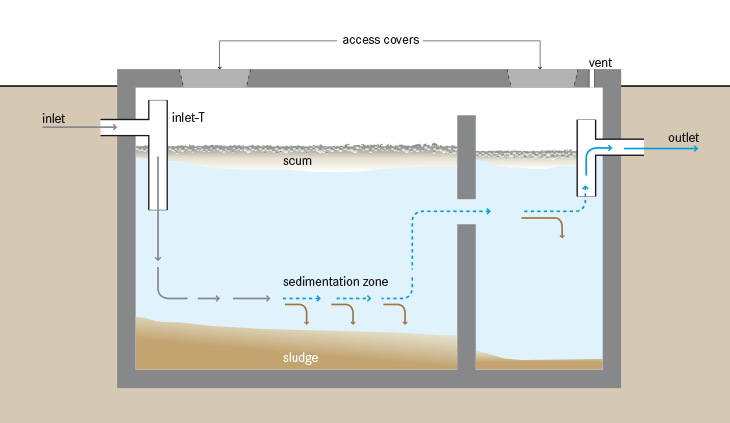
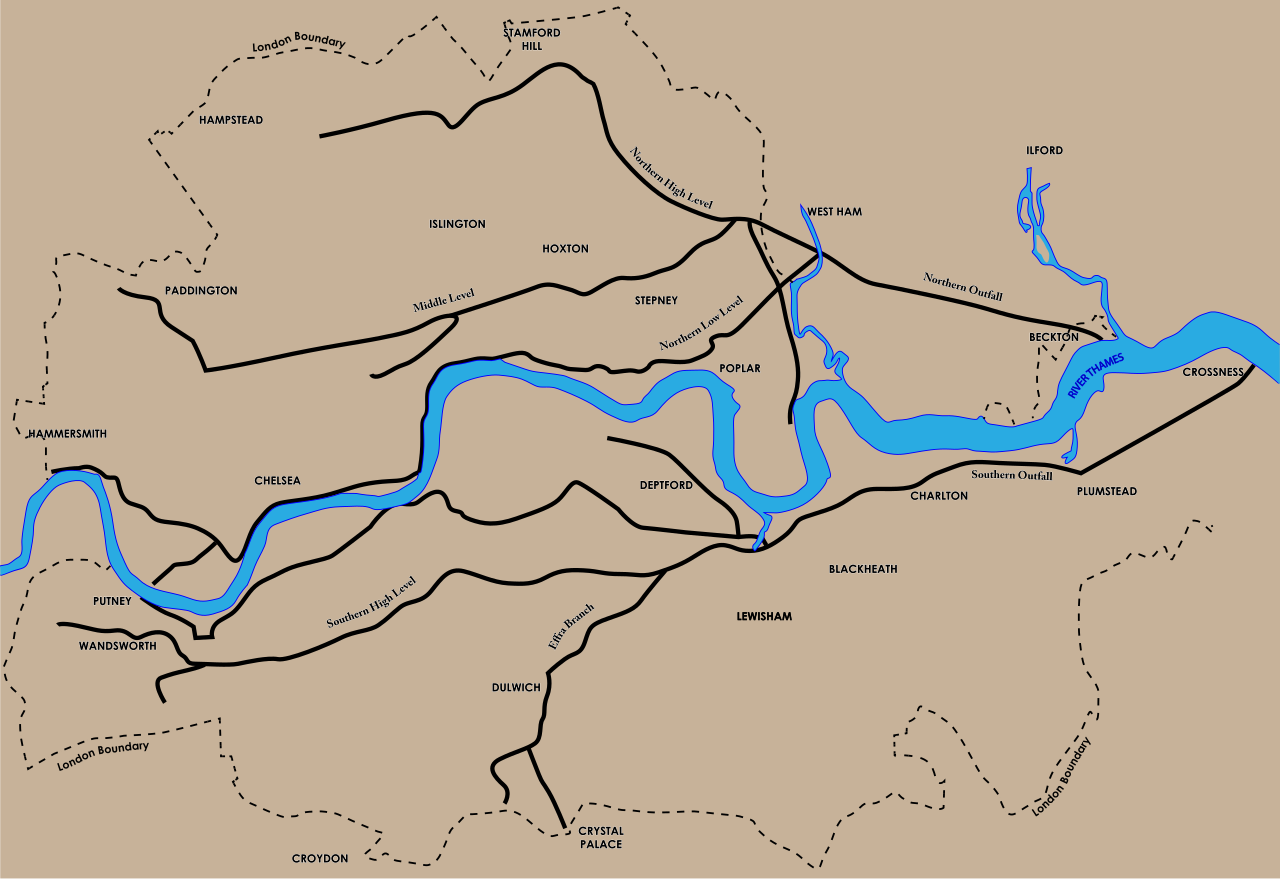
The search also maps the location of public sewers relative to the property. This matters practically: if a public sewer runs beneath or close to a planned extension, the buyer may need sewer diversion consent from the water company before building works can lawfully proceed, which can add significant delay and cost to a renovation project the client may already have priced into their offer.
An environmental search is a desktop exercise — no one visits the site — that assesses whether the property has been affected by past or present contaminated land, nearby landfill sites, or industrial pollution. It typically also folds in flood risk reporting, drawing on data such as that held by the Environment Agency, so one search product often answers two distinct client concerns at once.

The stakes here are not merely aesthetic. Under the contaminated land regime (Part IIA of the Environmental Protection Act 1990), a buyer who knowingly purchases a contaminated site can become liable for remediation costs as a "knowing permitter" — liability that can attach even though the buyer did not cause the contamination. That single rule is the entire reason an environmental search is treated as standard due diligence rather than an optional extra: skipping it does not make the contamination disappear, it just means the buyer finds out about it after they are already fixed with knowledge and exposed to liability.
Two more specialist searches round out the picture:

- A chancel repair search checks whether the property lies within a parish where the owner could be liable to contribute to repairing the parish church chancel — a genuinely medieval liability that can still bind a modern buyer. Because chancel repair liability can be a historic, non-registrable overriding interest in some cases, a search alone cannot always give complete comfort, which is why buyers commonly take out chancel repair indemnity insurance as a belt-and-braces alternative (or supplement) to relying on the search result.
- A coal mining search, submitted to or via the Coal Authority, is recommended wherever a property sits within a former coalfield. It reveals the presence of mine entries, historic underground workings, and any recorded mining subsidence damage notices or claims affecting the property — information a structural surveyor cannot give you and a title search will never show. Depending on where in the country the property is, other mining searches — for tin, brine, or limestone workings, for example — can be equally essential; the geography of the site, not a fixed checklist, dictates which search is appropriate.
Where any of the above indicators suggest a heightened risk, it is common to commission a dedicated, standalone flood risk search or report for more granular data than the environmental search alone provides.

Practice point on timing: local search results are only treated as reliable for a limited period. A search obtained too far in advance of completion risks being stale by the time the transaction actually completes, so conveyancers routinely repeat or update searches where there has been a long gap between the original search and completion.
Searches interrogate public bodies; pre-contract enquiries interrogate the seller directly, through their solicitor, to clarify matters that are specific to this transaction and simply will not appear on any register. The Law Society has standardised much of this process through a family of forms:

| Form | Purpose |
|---|---|
| TA6 — Property Information Form | Seller discloses boundaries, disputes, notices received, alterations carried out, and services connected to the property |
| TA10 — Fittings and Contents Form | Records what fittings and contents the seller will (and will not) leave behind on completion |
| TA7 — Leasehold Information Form | Used only for leasehold sales; discloses lease terms, service charges, ground rent, and management arrangements |
These forms are the buyer's solicitor's first line of enquiry, but they are a floor, not a ceiling. A competent solicitor raises additional bespoke enquiries whenever a search result, one of the property information forms, or the title documents themselves reveal an issue that needs further clarification — a vague answer on the TA6 about a boundary dispute, for instance, should always prompt a specific follow-up question rather than being left unresolved.
None of this evidence-gathering matters unless it is turned into advice. The results of searches and enquiries feed directly into the buyer's solicitor's report on title, the document that tells the client whether it is safe to proceed and flags any risks that need addressing before exchange. Evaluating an adverse entry is a judgement call with three broad options, and choosing correctly is the applied skill SQE1 is really testing:
- Raise a further enquiry to clarify the position (e.g., ask the seller for more detail on an enforcement notice).
- Obtain indemnity insurance to protect against a risk that cannot practically be eliminated (chancel repair liability is the classic example).
- Advise the client not to proceed, where the risk is serious enough that no amount of insurance or clarification makes the purchase prudent.
Turning from due diligence to money: a freehold purchase can be funded from the buyer's own cash resources, from mortgage borrowing, or from a combination of the two. A mortgage is a loan secured against the property by a legal charge, which gives the lender defined rights over the property — most importantly, the right to take possession and sell — if the borrower defaults on repayments. To take effect at law, that legal charge must be completed by deed and then substantively registered against the property's title at HM Land Registry; an unregistered charge simply does not bite as a legal mortgage, however carefully it was drafted.
Mortgage products vary along two independent axes, and it is easy to conflate them:
Repayment vs. interest-only: a repayment mortgage requires the borrower to pay off both capital and interest over the term, so the loan is fully cleared by the end; an interest-only mortgage requires only interest payments during the term, with the capital falling due — and needing a separate repayment strategy — at the end.
Fixed vs. variable/tracker rate: a fixed-rate mortgage charges a set interest rate for an agreed period, giving payment certainty; a variable or tracker-rate mortgage has a rate that can move, often in line with a base rate, giving exposure to (and sometimes benefit from) rate changes.
Beyond the standard residential mortgage, several specialist products come up regularly in SQE1 scenarios:
- A buy-to-let mortgage is assessed primarily on the rental income the property is expected to generate, rather than solely on the borrower's personal income — a structurally different affordability test from an owner-occupier mortgage.
- A bridging loan is short-term and typically higher-interest finance used to bridge a funding gap, most commonly where a purchase completes before a related sale completes and the buyer needs the cash now.
- A joint borrower sole proprietor (JBSP) mortgage allows someone who is not on the property's title — often a parent — to be a party to the mortgage covenant, which increases the borrowing capacity the lender will assess without giving that person any ownership interest.
- Where part of the deposit is a gift, the solicitor must identify the source of the gifted funds as part of anti-money laundering source-of-funds checks — a gift does not exempt the transaction from AML scrutiny; if anything it invites more of it.
Once a lender agrees to lend, it issues a mortgage offer, setting out the agreed loan amount, interest terms, and any special conditions that must be satisfied before the loan is released on completion. Because most residential lending in England and Wales follows a common template, instructions from a lender to a conveyancing solicitor are typically given under the UK Finance Mortgage Lenders' Handbook, which standardises the requirements the great majority of participating lenders impose. The Handbook is split into a general Part 1, applying to all participating lenders, and a lender-specific Part 2 setting out that particular lender's additional requirements — a structure worth remembering because exam scenarios often turn on whether a requirement comes from the common Part 1 baseline or a bespoke Part 2 addition.
Practically speaking, the same solicitor very often acts for both the buyer-borrower and the lender in a single transaction — it is efficient and the norm for standard residential purchases. But this is only permissible where there is no conflict of interest and no significant risk of one arising. Under the SRA Code of Conduct, a solicitor with an own-interest conflict, or a conflict between two clients, must not act — or must cease acting — for one or more of the affected clients; this is not a discretionary courtesy but a professional-conduct rule with teeth.

The risk of dual representation is treated as low — and therefore generally acceptable — where the mortgage is on standard terms and the approved Certificate of Title is used. That Certificate was developed jointly by the Law Society and mortgage lender bodies specifically to standardise the confirmations a solicitor gives to a lender, which in turn reduces the conflict-of-interest risk that would otherwise arise from one solicitor serving two clients whose interests could diverge.
The Certificate of Title, defined: the document a conveyancing solicitor submits to the lender confirming that the property's title is good and marketable and that the loan can safely be released.
Before signing, the solicitor must be satisfied that the title is free of any defect that a reasonably competent conveyancer would regard as unacceptable to a mortgagee — an objective professional standard, not the solicitor's personal comfort level. If, while acting for both parties, the solicitor discovers a matter that would cause a reasonable conveyancer to decline to certify title, the solicitor must report that matter to the lender; silence is not an option simply because it might upset the borrower client. And where a genuine conflict of interest does crystallise between borrower and lender, the solicitor must normally cease acting for the lender, and depending on the circumstances may need to cease acting for the borrower too.
A solicitor acting for a lender carries a distinct checklist of protective steps that go beyond simply certifying title:
- Redemption of existing charges: confirm that any existing mortgages or charges on the property will be redeemed from the sale or remortgage proceeds on or before completion. A redemption statement from the existing lender confirms the amount required to discharge that mortgage as at a specified date, including any early repayment charges — get this wrong and the new lender's charge could rank behind a mortgage everyone assumed had been paid off.
- Valid execution: ensure the new mortgage deed is validly executed by all legal owners of the property before completion; a deed signed by only one of two joint proprietors does not bind the other's share.
- Occupier consents: where a non-owning occupier — an adult child, a cohabitee — will live at the mortgaged property, the lender typically requires that occupier to sign a consent or waiver postponing any rights they might otherwise assert against the lender's charge, protecting the lender's priority if the borrower later defaults.
- Buildings insurance: confirm that buildings insurance is in place, noting the lender's interest, from and including the date of exchange of contracts or completion, whichever the lender instructs — leaving the property uninsured for even a short gap is a real and avoidable risk.
- Easements: verify that easements necessary for the use and enjoyment of the property — rights of access or drainage, for instance — actually exist and are disclosed to the lender if they are absent, since a property landlocked without a formal right of way is far less secure collateral than it appears.
- Restrictive covenants: where it is a specific requirement of that particular lender, report restrictive covenants affecting the property together with an assessment of whether they are enforceable or have been breached.
- Flying freeholds: a flying freehold — where part of a freehold property is supported by, or overhangs, neighbouring property (a bedroom cantilevered over next door's passage, for example) — must be reported to the lender, because it may require specific title indemnity insurance or the lender's express consent before it will lend.
Certifying title and releasing funds is not the end of the lender's solicitor's job. After completion, the solicitor must register the new legal charge at HM Land Registry, because — as already established — an unregistered charge over registered land simply does not take effect as a legal mortgage. But between the earlier pre-contract searches and the moment of actual completion, the world keeps moving: new adverse entries can appear, and the seller or borrower could become insolvent. A dedicated suite of pre-completion searches exists precisely to close that gap.
| Search | Used for | Priority period |
|---|---|---|
| OS1 | Whole of a registered title | 30 working days |
| OS2 | Part of a registered title | 30 working days |
| K15 | Unregistered land (Land Charges search against the estate owner's name) | 15 working days |
| Bankruptcy-only search | Individual borrower | none |
| Company search (Companies House) | Corporate seller or borrower | none |
An OS1 (whole title) or OS2 (part of a title) search confirms that the official copies remain up to date and reveals any adverse entries made since they were originally obtained. Both confer a priority period of 30 working days from the date of the search result, during which the applicant's own registration application takes precedence over any competing entries lodged in the meantime. For unregistered land, the equivalent protection comes from a Land Charges search against the estate owner's name, form K15, rather than an OS1 or OS2 search against a registered title — the difference in form tracks the difference in what is actually being searched (a name-based register versus a title-based one). A K15 search confers a shorter priority period of 15 working days.
It is worth being precise about what "priority" protects in each case, because the two systems work slightly differently: for registered land, the buyer's own registration application must be lodged within the OS1/OS2 priority period to keep priority; for unregistered land, it is completion of the transaction — not the registration application — that must occur within the K15 priority period. Confusing the two is an easy way to lose priority protection at exactly the moment it matters most.
Two further checks carry no priority period at all, so they are conducted as close to completion as practicable rather than banked in advance:
- A bankruptcy-only search against an individual borrower checks that no bankruptcy petition or order is registered against them.
- Where the seller or borrower is a company, a company search at Companies House checks for insolvency proceedings and any existing registered charges.

If a company or bankruptcy search reveals an existing registered charge, the lender's solicitor must check that it will be released or postponed so that the new charge takes the priority the lender actually requires — otherwise the new lender could find itself second in line behind a charge nobody accounted for. Taken together, the purpose of this entire pre-completion suite is straightforward even though the mechanics differ by form: to protect both buyer and lender against adverse entries or insolvency events arising in the gap between the earlier pre-contract searches and the moment completion actually happens.