Grants of Representation
A bank will not release a penny of a dead person's money to a stranger who simply walks in and says "I'm the executor, trust me." It wants a piece of paper from the court. That piece of paper is the grant of representation, and everything in this topic — which grant to apply for, who gets to apply, how the estate is valued, and how the tax bill gets paid before anyone can touch the deceased's own cash — flows from the fact that authority over a dead person's property has to come from somewhere official.

A grant of representation is a court order issued by the Probate Registry confirming a personal representative's legal authority to collect in, manage, and distribute a deceased person's estate.
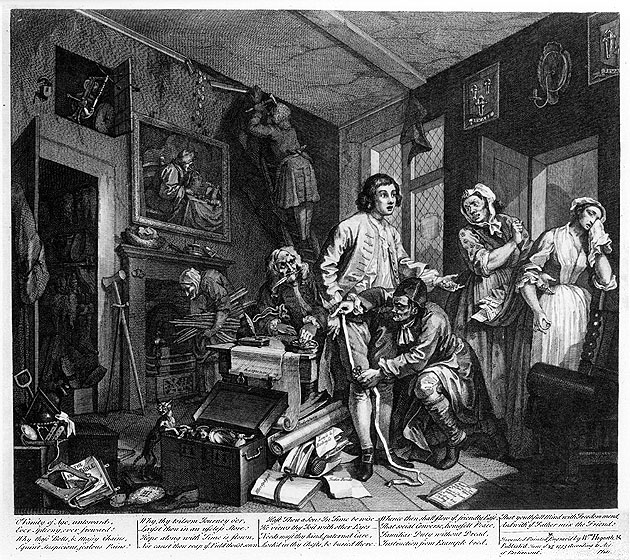
Its practical function is evidential: it is the document that lets a bank, a land registry, or a share registrar hand over assets with confidence, because the grant is the state's certification that this named individual is entitled to act. Without it, a third party has no way of knowing whether the person in front of them is genuinely authorised or simply an opportunist with a photocopied will.

That said, a grant is not always necessary. Two situations commonly let a personal representative skip the application entirely. First, jointly owned assets passing by survivorship — a joint bank account, or land held as joint tenants — pass automatically to the surviving owner outside the estate, so there is nothing for a grant to unlock. Second, many banks and building societies operate their own small-estates limits, below which they will release funds on production of a death certificate and an indemnity, without insisting on a grant at all. Both are exceptions of convenience, not law — where any single asset exceeds the institution's threshold, or where land is held as tenants in common, a grant is back on the table.

Which grant is issued depends entirely on what the deceased left behind and who is willing to act:
| Grant | When issued | Recipient |
|---|---|---|
| Grant of probate | Valid will exists | Executor named in the will, willing and able to act |
| Letters of administration with will annexed | Valid will exists | No named executor is willing or able to extract probate |
| Letters of administration (simple) | No valid will (intestacy) | Person entitled under the intestacy rules |
The distinction between the first and the other two is not merely terminological — it has a real legal consequence that examiners love to test. An executor's authority derives from the will itself, so an executor can validly act — paying debts, even beginning to distribute — from the moment of death, before any grant is issued; the grant merely evidences authority that already existed. An administrator's authority derives from the grant itself, so an administrator can do nothing — no transaction is valid — until the grant is actually issued. This is why solicitors advising an intestate estate must be far more cautious about any interim action than solicitors advising under a will with a willing executor.
Not everyone can walk up to the Probate Registry and demand a grant. The Non-Contentious Probate Rules 1987 (NCPR) fix a strict pecking order, and an applicant must "clear off" everyone ranked above them — either because those people do not exist, have died, or have renounced — before their own entitlement to apply arises.
Where there is a valid will: rule 20
Under rule 20 NCPR 1987, priority runs: (1) the executor; (2) a residuary legatee or devisee holding on trust for another; (3) any other residuary legatee or devisee (including someone entitled to undisposed-of residue); (4) the personal representative of a deceased residuary legatee or devisee; (5) any other legatee or devisee, or a creditor of the deceased; (6) the personal representative of that other legatee, devisee, or creditor.
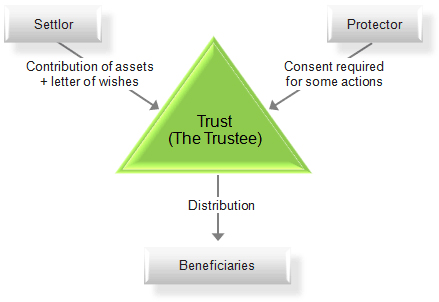
Notice the logic: the will's own chosen executor comes first, then those whose share of the estate is largest and most directly tied to its overall administration (residuary beneficiaries), and only at the bottom do specific legatees and mere creditors get a look-in.
Where the deceased died wholly intestate: rule 22
Under rule 22 NCPR 1987, priority on intestacy runs: (1) surviving spouse or civil partner; (2) children of the deceased (or their issue); (3) parents; (4) siblings of the whole blood (or their issue); (5) siblings of the half blood; (6) grandparents; (7) uncles and aunts of the whole blood, then of the half blood; and, failing all of these, (8) the Crown, via the Treasury Solicitor, claiming bona vacantia.

This mirrors — deliberately — the beneficial entitlement under the intestacy rules themselves: the people most likely to inherit are also the people best placed to administer.
An executor is never obliged to act. They may renounce probate — permanently surrendering the right — provided they have not already intermeddled in the estate (for example, by paying a bill from estate funds or taking possession of estate property). Intermeddling signals that the executor has accepted the office in substance, so the law will not then let them walk away from its responsibilities. Alternatively, an executor who is not ready to apply immediately but does not want to give up the right permanently can have power reserved to them, preserving their ability to apply for a grant later, typically once their co-executors have acted.
Where an executor with a prior right simply will not commit either way, any interested party can force the issue with a citation to accept or refuse a grant — a formal court process compelling that executor either to apply for probate or to renounce.
Occasionally the rigid order of priority has to give way to circumstances. Under section 116 of the Administration of Estates Act 1925, the court has a discretion to pass over a person who would otherwise be entitled to a grant and appoint someone else instead, where "special circumstances" make that necessary — for example, an entitled person who is missing, incapacitated, or manifestly unsuitable.
Separately, section 114(2) of the Administration of Estates Act 1925 imposes a numbers requirement: where the estate includes a life interest or a minority interest (an infant beneficiary), the grant must go to at least two individual administrators, or a trust corporation. This rule protects vulnerable and future interests by preventing a single administrator from having unchecked control. Crucially, this restriction attaches to administrators, not executors — a sole executor can obtain a grant of probate alone even where a beneficiary is a minor, because section 114(2) never touches executorship at all. Students frequently trip on this distinction: the same underlying vulnerability (a minor beneficiary) produces a different procedural consequence depending purely on whether the deceased left a valid, executor-appointing will.
Since the Non-Contentious Probate (Amendment) Rules 2018, an applicant no longer swears an oath before a solicitor or Registry official; instead they sign a statement of truth, which — unlike the old oath — does not need to be witnessed. This modernisation streamlined what had been a formal, in-person ritual into something that can largely be handled remotely.

Indeed, the application itself can now be made online through the HM Courts and Tribunals Service probate portal, or on paper using:
- Form PA1P — where the deceased left a valid will.
- Form PA1A — where the deceased died intestate.
Whichever route is used, the applicant must lodge the original will and any codicils, together with the official death certificate. Where a will's attestation clause is missing or defective, the Registry may demand further evidence that it was validly executed (for instance, an affidavit from a witness) before it will accept the will as proof of due execution.
Two specialist grants deal with gaps in the ordinary process:
- A grant ad colligenda bona is a limited grant permitting the collection and preservation of perishable or otherwise endangered assets (a failing business, a decomposing asset, livestock) while the full grant application is still pending. It is a stopgap, not a full administration power.
- A grant de bonis non administratis picks up where a first grant leaves off: it is issued to complete the administration of an estate where the original personal representative has died before finishing the job.
Before the Registry will issue any grant, inheritance tax (IHT) on death generally has to be reported, and any tax due paid. Under section 226 of the Inheritance Tax Act 1984, that tax is due at the end of the sixth month after the month of death — so an April death carries a payment deadline of 31 October.
Excepted estates: when the full IHT400 isn't needed
Not every estate requires the full-blown IHT400 account and its supporting schedules. An excepted estate is one that can bypass that full reporting obligation, and there are three categories:
- Low value estates — the gross estate does not exceed the available nil rate band, which has stood at £325,000 since 6 April 2009.
- Exempt estates — broadly, estates below a higher gross-value ceiling that qualify for spouse, civil partner, or charity exemption.
- Estates of foreign domiciliaries — non-UK-domiciled deceased with limited UK assets.

Excepted-estate reporting was substantially simplified by the Inheritance Tax (Delivery of Accounts) (Excepted Estates) (Amendment) Regulations 2021, effective 1 January 2022:

- The standalone IHT205 and IHT217 forms were abolished — personal representatives now provide the excepted-estate information as part of the probate application itself, rather than as a separate HMRC submission.
- The gross value threshold for an exempt excepted estate rose from £1 million to £3 million.
- The threshold for chargeable trust property and specified lifetime gifts within an excepted estate rose from £150,000 to £250,000.
HMRC has not lost its ability to check these self-certified estates: for deaths on or after 1 January 2022, it may issue a written request for further information about an excepted estate within 60 days of the first grant being made.
Where an estate does not qualify as excepted, the personal representatives must deliver the full IHT400 account with its supporting schedules to HMRC as a precondition of the grant.
Valuing the assets
Every asset in the estate must be valued at its open market value as at the date of death. Section 160 of the Inheritance Tax Act 1984 defines that value as the price the property might reasonably be expected to fetch if sold on the open market at that time — not a forced-sale price, and not the deceased's own sentimental estimate.
Different asset classes demand different levels of rigour:

- Land and buildings generally require a formal valuation from a qualified surveyor.
- Unlisted or unquoted shares need a specialist valuation, because there is no public market price to fall back on.
- Household goods and personal chattels are valued either individually or as a job lot, depending on their nature and worth.
- Under the related property rules in section 161 of the Inheritance Tax Act 1984, a shareholding may need to be valued together with shares held by a spouse or civil partner, which can push a modest minority holding into a much more valuable controlling stake for valuation purposes.
- Jointly owned property passing by survivorship must still be valued and reported for IHT purposes, even though — as noted above — it never passes under the will or intestacy rules and never needs a grant to be transferred.

If land or quoted shares are sold at a loss shortly after death, the estate need not simply absorb that loss for tax purposes: personal representatives can claim loss on sale of land relief where qualifying land is sold at a lower value within four years of death, or loss on sale of shares relief where qualifying quoted shares are sold at a lower value within twelve months of death.
Here is the practical bind at the heart of this topic: IHT is generally payable before the grant is issued, yet the deceased's own bank accounts are frozen and inaccessible without a grant. Personal representatives who have no other funds available face a genuine chicken-and-egg problem, and the syllabus expects you to know several routes out of it.

- The Direct Payment Scheme (DPS) lets a bank, building society, or National Savings and Investments account holding the deceased's own money pay HMRC directly, before the grant is issued, using Form IHT423 to instruct each institution. NS&I products can be encashed under the same scheme.
- Life assurance policies written in trust pay out directly to trustees or beneficiaries without needing a grant at all, since the policy proceeds never form part of the probate estate — a useful independent source of ready cash.
- A bank loan, secured against estate assets, can bridge the gap where the above sources are insufficient; interest on such a loan is generally deductible against the estate's income for income tax purposes, softening its cost.
- A solicitor acting for the estate may sometimes advance funds personally, or via the firm's client account, to cover the initial IHT payment, subject to reimbursement once the estate is unlocked.
The instalment option
For certain illiquid assets, the law offers a different kind of relief entirely: rather than finding cash to pay the tax up front, personal representatives can spread it out. Under section 227 of the Inheritance Tax Act 1984, IHT attributable to qualifying property may be paid by ten equal yearly instalments rather than as a single lump sum. The qualifying categories are:
- Land and buildings.
- A business, or an interest in a business.
- Shares giving the deceased control of a company.
The cost of choosing this route differs by asset type: interest generally runs on the whole outstanding balance for instalments relating to land, whereas for a business or unlisted shares, interest is charged only on instalments that are overdue — a meaningfully cheaper option for business assets. The relief is also conditional: if instalment-option property (land or a business, for instance) is sold before all instalments are paid, the outstanding IHT attributable to it becomes payable immediately in full — the instalment concession exists to help personal representatives hold onto illiquid assets, not to subsidise a sale. And instalments only ever apply to the qualifying property itself: choosing the instalment option for, say, a business does not delay payment of IHT on the rest of the estate, which remains due as a lump sum on the ordinary section 226 timetable.
A grants-of-representation problem on the exam is really asking you to trace one chain: identify what the deceased left (will or no will) to fix the type of grant; apply rule 20 or rule 22 to find who is entitled to apply, clearing off anyone ranked above them; check whether section 114(2) forces a second administrator; and then work out how the resulting personal representatives value the estate, report it (excepted or full IHT400), and — the piece candidates most often forget — actually find the cash to pay the tax bill that stands between them and the grant they need to access the deceased's own money.