Inheritance Act 1975 Claims
A will is the deceased's last word on their estate — but English law has never treated that word as absolute. The Inheritance (Provision for Family and Dependants) Act 1975 exists precisely because testamentary freedom can produce outcomes a court is prepared to override: a spouse left with nothing, a cohabitant excluded, a maintained dependant forgotten. For a solicitor advising either a disappointed applicant or an executor defending an estate, this Act is where family conflict and succession law collide, and SQE1 tests it at exactly that collision point — eligibility, grounds, and above all, the clock.

The Inheritance Act 1975 allows specified categories of applicant to ask the court for reasonable financial provision from a deceased person's estate, whether that estate passed under a valid will, under the intestacy rules, or under some combination of both — the statute is indifferent to how the estate devolved; it only asks whether the result was fair to the applicant. This jurisdiction is not universal. It applies only where the deceased died domiciled in England and Wales. A wealthy testator domiciled in Monaco who happened to own a London flat is outside the Act's reach entirely, however unfair the will might look to a disappointed family member — domicile is the jurisdictional gateway, and it is worth checking before anything else.
Section 4: An application must be made within six months from the date on which representation (the first grant of probate or letters of administration) is first taken out — except with the court's permission.
This is a trap-laden provision precisely because it is so short and so easy to miscalculate. "Representation" is a defined moment: not the date of death, not the date instructions are given, but the date the first grant issues. If a claim can be filed before a grant is even taken out, it can be — the Act does not require the claimant to wait.
Miss the window, and the claim is not dead — but it is now dependent on discretion rather than right. Only with the court's permission may an applicant proceed out of time, and permission is not a formality.
Re Salmon and the discretionary factors
The leading authority on that discretion is Re Salmon (Deceased) [1981] Ch 167, which distilled the considerations a court weighs when an applicant asks to be let in late. Think of these not as a checklist to tick mechanically but as a single question — has anything about the applicant's delay caused irreversible unfairness to someone else? — broken into component parts:
- Did the applicant act promptly once the six months had actually expired, or did they simply let the matter drift?
- Were negotiations with the estate already underway before time ran out — a strong indicator that the delay was procedural rather than a genuine change of mind?
- Has the estate already been distributed? Once assets are out the door and spent, unwinding a distribution to satisfy a late claim causes real prejudice to beneficiaries who received in good faith.
- Would refusing permission leave the applicant with no other remedy at all — for instance, no professional negligence claim against a solicitor who failed to issue in time?
- Does the applicant have an arguable case on the merits? A hopeless claim will not be indulged merely because the delay was innocent.
Cowan v Foreman [2019] EWCA Civ 1336 is the modern gloss on Re Salmon, and it corrects a mistake first-instance courts had been making: it is not enough to fixate on delay and merits alone and treat the other factors as makeweight. The Court of Appeal insisted that all the Re Salmon factors must be weighed together — in that case, permission was granted despite a very substantial delay because the estate had not been distributed and the applicant (a widow negotiating in good faith with trustees) would otherwise have been left without recourse. The takeaway for practice: a long delay is not fatal if distribution has not occurred and negotiations were live: the "stale claim" concern is not, on its own, decisive.
Eligibility is exhaustively defined — the applicant must fall within one of the categories in section 1(1), and no amount of moral entitlement substitutes for statutory standing.
| Category | Statutory basis | Who qualifies |
|---|---|---|
| Spouse/civil partner | s.1(1)(a) | Surviving spouse or surviving civil partner |
| Former spouse/civil partner | s.1(1)(b) | Former spouse or civil partner who has not remarried or formed a subsequent civil partnership |
| Long-term cohabitant | s.1(1A) | Lived with the deceased as if spouses/civil partners for the two years immediately before death |
| Child | s.1(1)(c) | Any child of the deceased, including an adult child — there is no age cut-off |
| Child of the family | s.1(1)(d) | Treated by the deceased as a child of the family in relation to a marriage or civil partnership |
| Maintained person | s.1(1)(e) | Anyone being maintained by the deceased immediately before death |
Two of these categories reward closer attention because they are where the exam likes to test edge cases.
Section 1(1)(d) originally only caught stepchildren of an actual marriage or civil partnership. The 2014 reforms (Inheritance and Trustees' Powers Act 2014) extended it to cover a person treated as a child of the family even where the deceased never married at all — provided the deceased stood in the role of a parent. A single parent's long-term partner who took on a parental role toward that partner's child, without ever marrying, now falls squarely within s.1(1)(d) where before 2014 they would have been shut out.
Section 1(1)(e) — the maintained applicant — is defined more precisely by section 1(3): a person is treated as maintained if the deceased was making a substantial contribution in money or money's worth towards that person's reasonable needs. Crucially, this excludes anyone who received support under a commercial arrangement for full valuable consideration — a live-in carer paid a market wage for services rendered is not "maintained" by their employer merely because bed and board came with the job; the payment has to be one-sided generosity, not an exchange.
Unlike many areas of civil claim where multiple causes of action might apply, the Inheritance Act has exactly one ground: that the disposition of the estate — whether by will, by the intestacy rules, or by the two operating together — does not make reasonable financial provision for the applicant. Everything else in the Act (eligibility, factors, orders) is scaffolding around that single question.
What counts as "reasonable" splits along one crucial fault line, tested constantly on SQE1:
Section 1(2)(a) — the spouse/civil partner standard: for surviving spouses and civil partners only, reasonable financial provision is not limited to maintenance. It reflects something closer to what a spouse might have received on divorce — a share of the fruits of the relationship, not merely enough to live on.
Section 1(2)(b) — the ordinary maintenance standard: for every other category of applicant (former spouses, cohabitants, children, children of the family, maintained persons), reasonable financial provision means only such provision as is reasonable for the applicant's maintenance — enough to live on, not a share of the estate's wealth for its own sake.

This distinction is the single biggest determinant of how much an applicant can realistically expect, and confusing the two standards is a classic exam error.
Having established a ground exists, the court turns to section 3(1), a checklist of factors relevant to every applicant regardless of category:
- The financial resources and needs of the applicant, of any other applicants, and of the beneficiaries of the estate.
- Any obligations and responsibilities the deceased had towards the applicant or a beneficiary.
- The size and nature of the net estate.
- Any physical or mental disability of the applicant or a beneficiary.
Layered on top of these general factors are category-specific add-ons:
- Section 3(2) — for a spouse or civil partner applicant: the applicant's age, the duration of the marriage or civil partnership, and — echoing the divorce-style standard above — what the applicant might reasonably have expected had the marriage or civil partnership ended in divorce or dissolution on the date of death rather than by death.
- Section 3(3) — for a child or person treated as a child of the family: how the applicant was being or might expect to be educated or trained.
- Section 3(4) — for a maintained applicant: the extent and basis on which the deceased had assumed responsibility for that person's maintenance.
If the ground is made out, section 2 gives the court a flexible toolkit rather than a single remedy:
- Periodical payments from the estate.
- A lump sum payment.
- Transfer of specified estate property to the applicant.
- Settlement of specified estate property for the applicant's benefit.
- Acquisition of property using estate funds, for transfer or settlement on the applicant.
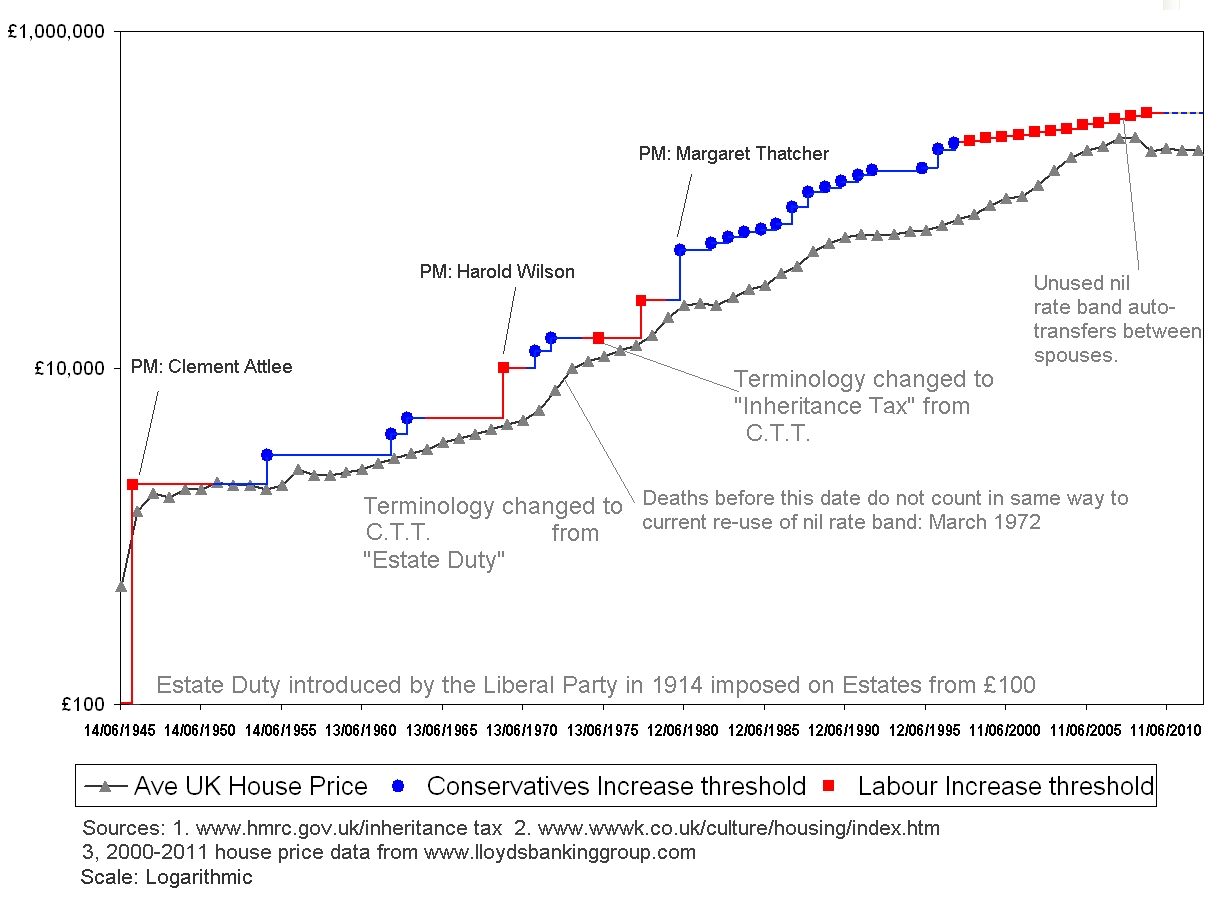
Orders are made against the "net estate," and section 25 defines it precisely: the property the deceased could dispose of by will, less funeral, testamentary, and administration expenses, debts, and liabilities. Notably, this net figure includes inheritance tax payable by reason of the death — IHT is deducted before the estate available for redistribution is calculated, not treated as a separate afterthought.
Bringing in property outside the will: section 9 and joint tenancies
A testator's most valuable asset is often a house held as beneficial joint tenants with a partner — property that passes by survivorship outside the will entirely and would otherwise sit beyond the Act's reach. Section 9 closes that gap: the court may treat the deceased's severable share of a joint tenancy as part of the net estate for Inheritance Act purposes. That severable share is valued as at the moment immediately before death — not at some later date when the property might have appreciated or depreciated — and, importantly, an application to bring it in must be made within the same six-month time limit as the main claim; it is not a separate, later-triggered window.
Anti-avoidance: sections 10–13
A deceased determined to defeat a future claim might try to give assets away before death, or contract to leave property to someone by will. Sections 10 to 13 are the Act's anti-avoidance response, allowing the court to claw back value from lifetime dispositions made with that intention:
- Section 10 lets the court order a recipient to provide money or property where the deceased made a disposition within six years of death intending to defeat an Inheritance Act application.
- Section 11 reaches a deceased who entered a contract to leave property by will, again with intent to defeat a claim.
- Section 12 places the burden of proving intention to defeat a claim squarely on the applicant, assessed on the ordinary civil standard — the balance of probabilities.
- Section 13 protects a trustee's personal liability, limiting exposure for distributing trust property before receiving notice of an intended Inheritance Act application — the trustee equivalent of the section 20 protection for personal representatives.
A typical SQE1 scenario gives you a disgruntled family member, a will that favours someone else, and a date. Work it in order: check domicile first (jurisdiction), confirm the applicant fits one of the section 1(1)/(1A) categories, identify which standard applies (spouse/civil partner versus maintenance-only), check the six-month clock against the date representation was first taken out, and — if that clock has run — walk through the Re Salmon/Cowan v Foreman factors to assess whether permission to proceed out of time is realistic. Only then does the analysis move to the section 3 factors and the remedies available under section 2. Treat the time limit as the first checkpoint, not an afterthought — a client's substantive case can be flawless and still fail at the door if you miss the six months and cannot persuade a court to let you in late.