Corporate and Personal Insolvency Procedures
A company that cannot pay its debts does not simply disappear — English law gives it, and the individuals behind it, a menu of formal procedures, each built for a different diagnosis. A business with a viable core but a cash crisis needs rescue machinery; a business with no future needs an orderly burial; an individual drowning in debt needs a route out that is proportionate to how much they owe and own. Your first job as a solicitor advising a distressed client is never "which insolvency procedure is fashionable" — it is diagnosis: is the client a company or an individual, is the underlying business viable, and what do the numbers actually show? Everything else in this topic follows from getting that triage right.
Before any formal procedure can begin, someone has to establish that a company meets the statutory definition of insolvency. Section 123 of the Insolvency Act 1986 gives two independent routes to that conclusion, and examiners love testing which one applies to a given fact pattern.
Section 123 Insolvency Act 1986 — the two tests
- Cash-flow test: the company has failed to pay a debt when it fell due.
- Balance-sheet test: the company's liabilities — including contingent and prospective liabilities — exceed its assets.
A company can fail either test and be treated as unable to pay its debts; it does not need to fail both. The cash-flow test is about liquidity today; the balance-sheet test is about solvency on paper, and it matters because a company can be technically balance-sheet insolvent for years while still meeting its bills as they fall due — until, eventually, it cannot.
The most common evidential shortcut to the cash-flow test is the statutory demand: a formal written demand requiring payment of an undisputed debt within 21 days. If the debtor does nothing, that silence is deemed evidence of an inability to pay debts — a powerful presumption that a creditor can use to justify a winding-up petition without having to prove insolvency from scratch. For a company, the minimum unpaid debt needed to present a winding-up petition on the back of an ignored statutory demand is £750 under section 123. A company facing a petition is not without a defence, however: it can dispute the petition on the ground that the underlying debt is genuinely disputed on substantial grounds — a real, arguable dispute, not a bare assertion, defeats the petition because the petition is not the right forum for resolving contested debts.
Personal insolvency uses a parallel mechanism but a very different number. The minimum debt for a creditor to petition for an individual's bankruptcy is £5,000 — raised from just £750 with effect from 1 October 2015, a change that filtered out a wave of disproportionate bankruptcy petitions over trivial consumer debts.
Where the business itself is worth saving, the company voluntary arrangement is often the lightest-touch tool available. A CVA is a formal agreement, made under Part I of the Insolvency Act 1986, between the company and its unsecured creditors to compromise or reschedule its debts — pay 40p in the pound over five years, say, instead of liquidating outright. Crucially, a CVA is proposed by the people who already know the business: the directors, or (where the company is already in administration or liquidation) the administrator or liquidator.

Before the proposal ever reaches creditors, a licensed insolvency practitioner must act as nominee, reviewing the proposal for basic viability and fairness. Creditors then vote, and the approval threshold is deliberately demanding:
A CVA is approved where 75% or more by value of unsecured creditors voting approve the proposal, and more than 50% in value of unconnected creditors voting also approve it.
That second limb exists precisely to stop a director-friendly majority of connected creditors from forcing through a deal that arm's-length creditors would reject. Once both thresholds are cleared, the CVA has a strikingly powerful effect: it binds all unsecured creditors entitled to vote — including those who voted against it, and even those who did not vote at all. It does not, however, automatically bind secured or preferential creditors, who must individually consent to be affected. Once approved, the nominee's role transforms: they become the supervisor, overseeing performance of the arrangement.
Two more design features are worth internalising. First, for eligible small companies, Schedule A1 of the Act offers a standalone statutory moratorium while a CVA proposal is being prepared — breathing space from creditor enforcement before the deal is even on the table. Second, and this is the CVA's defining commercial appeal: unlike administration or liquidation, a CVA leaves existing management in control of the company throughout. Directors who might resist administration (loss of control) or liquidation (end of the business) will often find a CVA far more palatable — which is exactly why it is the natural recommendation when advising a distressed but viable business alongside administration, in preference to liquidation, because the business can keep trading.
Where the CVA route is not realistic — perhaps the company needs a moratorium and restructuring muscle, or secured creditors need reassurance — administration under Schedule B1 of the Insolvency Act 1986 is the workhorse rescue procedure. Administration exists to give a company breathing space and professional management while its future is worked out, and it is built around a strict, cascading hierarchy of purpose.
Schedule B1, paragraph 3 — the three statutory objectives, pursued in strict descending order:
- Rescue the company as a going concern.
- Achieve a better result for creditors as a whole than immediate winding up would likely produce — but only if rescue is not reasonably practicable.
- Realise property to distribute to secured or preferential creditors — but only as a last resort, and only if it does not unnecessarily harm unsecured creditors.
The administrator cannot simply pick whichever objective is most convenient; they must genuinely test objective one before falling back to objective two, and test objective two before falling back to objective three. This ordering is the exam-favourite detail: a scenario describing an administrator who liquidates for secured creditors' benefit without first considering rescue is describing a breach of duty.
Getting into administration can happen two ways. The traditional route is by court order, on the application of the company, its directors, or a creditor. The far more common route today is out of court: the company or its directors simply file a notice of appointment. There is a third route reserved for a particular class of secured lender: a qualifying floating charge holder — one holding a floating charge over the whole or substantially the whole of the company's property — can appoint an administrator out of court under paragraph 14 of Schedule B1, without needing anyone's permission.

Whichever door the company walks through, entering administration triggers the procedure's signature protection: a statutory moratorium. This prevents creditors from taking enforcement action against the company without the administrator's or the court's consent, and critically it also blocks the commencement or continuation of legal process — including winding-up petitions — buying the company genuine space to restructure without being picked apart from multiple directions at once. The administrator must then set out formal proposals for achieving the statutory purpose and put them to a creditors' meeting. Throughout, the administrator acts as the company's agent but owes their duties to creditors as a whole, not to management — a role that combines operational control with a fiduciary-style obligation running the opposite direction from ordinary corporate agency.
Receivership is a fundamentally different animal from administration or liquidation: it is not a collective procedure for the company's benefit, but a secured creditor's private enforcement tool. A receiver is appointed by a secured creditor to realise specific charged assets and satisfy that one creditor's debt — nobody else's interests are the receiver's primary concern.
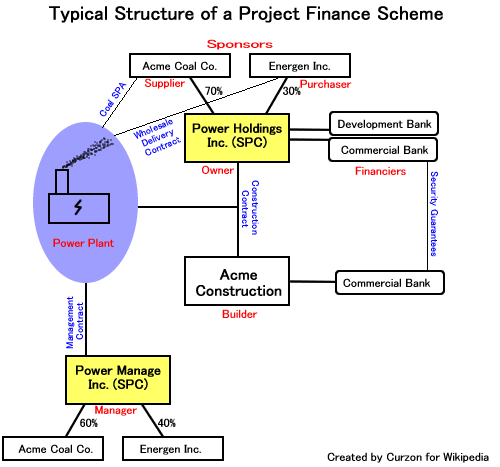
Historically, the most powerful version of this was the administrative receiver, appointed under a floating charge covering the whole or substantially the whole of a company's assets — effectively giving one secured lender control of the entire business. The Enterprise Act 2002 deliberately curtailed this: it abolished the right to appoint an administrative receiver for qualifying floating charges created on or after 15 September 2003, steering secured lenders toward the more collective, creditor-conscious administration regime instead. A handful of statutory exceptions survive for specialist finance structures — capital market arrangements, project finance, and public-private partnership transactions — reflecting Parliament's judgment that these deals depend on the certainty administrative receivership provides.
Separately, and untouched by the Enterprise Act restrictions, a Law of Property Act receiver can still be appointed over a specific charged asset — classically, land subject to a fixed charge — because this is enforcement of a fixed security interest in one asset, not seizure of an entire business. Whatever form the receivership takes, the receiver's primary duty is to realise the charged assets to repay the appointing secured creditor — full stop. Unlike an administrator, a receiver owes no broader duty to creditors as a whole.
Liquidation is the terminal procedure: winding up the company, realising its assets, distributing the proceeds, and then dissolving the company so it ceases to exist. There are three routes in, and distinguishing them is a recurring SQE1 fact pattern.
| Route | Who triggers it | Solvency position | Key procedural step |
|---|---|---|---|
| Members' voluntary liquidation (MVL) | Shareholders | Solvent | Directors make a statutory declaration of solvency — the company will pay its debts in full within a specified period not exceeding 12 months — then shareholders pass a special resolution appointing a liquidator |
| Creditors' voluntary liquidation (CVL) | Shareholders | Insolvent | Shareholders resolve to wind up without a declaration of solvency; directors must convene a creditors' decision procedure to approve the liquidator's appointment |
| Compulsory liquidation | Court, usually on a creditor's petition | Insolvent (or just and equitable) | Court makes a winding-up order if satisfied the company cannot pay its debts, or that winding up is just and equitable |
On a compulsory winding-up order, the Official Receiver automatically becomes liquidator unless and until a licensed insolvency practitioner is separately appointed — a useful default that keeps the process moving even before creditors organise themselves. Whichever route led there, the liquidator's job is the same: collect and realise the company's assets, distribute proceeds to creditors according to statutory priority (covered below), and — because a liquidator also has investigatory teeth — investigate directors' conduct and pursue claims to recover assets for creditors' benefit. Once the liquidation process completes, the company is dissolved and ceases to exist after a specified period.
Liquidators do not just collect assets that already exist; the Act also lets them go after directors personally where the company's decline was made worse by bad decision-making — and here the exam draws a sharp line between carelessness and dishonesty.
Wrongful trading (s 214 Insolvency Act 1986): a director continued trading after they knew, or ought to have known, there was no reasonable prospect of avoiding insolvent liquidation or administration.
Fraudulent trading (s 213 Insolvency Act 1986): the company's business was carried on with intent to defraud creditors, or for any fraudulent purpose.
The distinction is entirely about dishonesty. Wrongful trading requires no proof of dishonesty at all — an honestly optimistic director who simply should have known better is still caught. Fraudulent trading, by contrast, requires proof of actual dishonesty by those knowingly party to the fraudulent business — a much higher bar, which is why fraudulent trading claims are rarer in practice. A director facing a wrongful trading claim does have a genuine defence: showing that once they reached the "point of knowledge," they took every step to minimise potential loss to creditors — for example, seeking insolvency advice, cutting new credit, or pursuing rescue options rather than trading on regardless. Where either form of liability is established, the court can order the responsible person to make a contribution to the company's assets, restoring value for the creditor body.
A liquidator's or administrator's other major weapon is unwinding transactions the company entered into shortly before insolvency that improperly diminished the pot available to creditors. Three doctrines matter here, and the exam tests them by their look-back periods above all else.
Transactions at an undervalue (s 238) catch a gift, or any deal where the company received significantly less value than it provided. These can be challenged if entered into within two years before the onset of insolvency — and where the counterparty was a connected person, the company's insolvency at the time is presumed, shifting the burden onto the connected party to rebut it.
Preferences (s 239) arise where the company puts a creditor, surety, or guarantor in a better position than they would otherwise have been in on insolvent liquidation — think of a director quietly repaying a personal guarantee to a friendly creditor just before the company goes under. The look-back period depends on who benefited:
- Preference to an unconnected person: challengeable if made within six months before the onset of insolvency.
- Preference to a connected person: challengeable if made within two years before the onset of insolvency.
A preference claim additionally requires proof that the company was influenced by a desire to prefer the recipient — a subjective element that, again, is presumed where the recipient is a connected person (director, shadow director, or associate), unless rebutted.
Finally, floating charges granted shortly before insolvency can themselves be attacked under section 245: a floating charge created within 12 months before the onset of insolvency can be invalidated unless new consideration was given at the time it was created — the classic scenario being a charge granted to secure a pre-existing debt with nothing fresh advanced in return. Where the charge was granted to a connected person, that look-back period doubles to two years, mirroring the preference rules' logic that insiders deserve tighter scrutiny.
Once assets are realised, distribution follows a rigid statutory order — and one figure inside that order, the prescribed part, deserves particular attention because it exists purely to protect unsecured creditors from being frozen out by floating charge holders.
The statutory priority waterfall (corporate insolvency):
- Fixed charge holders — paid first, from the proceeds of the specific fixed-charge asset.
- Liquidation/administration expenses — including the office-holder's own remuneration.
- Preferential creditors — including employees' unpaid wages and holiday pay, up to a statutory cap; since December 2020, HMRC also ranks here as a secondary preferential creditor for taxes collected on behalf of others, such as VAT and PAYE.
- The prescribed part — set aside from floating charge realisations for unsecured creditors.
- Floating charge holders — paid from what remains after the prescribed part and preferential creditors.
- Unsecured creditors — share pari passu in whatever is left.
- Shareholders — last in line, paid only if a surplus remains after every creditor is satisfied.

The prescribed part, under section 176A, is calculated as 50% of the first £10,000 of net property plus 20% of the excess over £10,000 — a formula that gives unsecured creditors a meaningful share of smaller estates while tapering off on larger ones. It is capped: £800,000 for floating charges created on or after 6 April 2020, and £600,000 for charges created before that date. HMRC's return as a secondary preferential creditor in December 2020 was itself a significant shift — it pushed floating charge holders and unsecured creditors further down the queue behind the tax authority for those specific "collected on behalf of others" taxes, even though HMRC remains only an ordinary unsecured creditor for its own direct tax claims like corporation tax.
The Corporate Insolvency and Governance Act 2020 (CIGA 2020) added two significant rescue tools to the toolkit, both aimed at giving distressed-but-viable companies more room to manoeuvre than a CVA or administration alone provides.
The standalone company moratorium under Part A1 of the Insolvency Act 1986 gives a company breathing space from creditor enforcement while it seeks a rescue — notably, without the company needing to enter administration or a CVA to get it. The initial period is 20 business days, and directors can extend it unilaterally for a further 20 business days without needing creditor or court consent at all — a striking degree of self-help. Beyond that, extension requires either creditor consent or a court order. Overseeing the whole process is a monitor — who must themselves be a licensed insolvency practitioner — whose job is to keep assessing whether rescue as a going concern remains likely. Throughout the moratorium, directors retain day-to-day control of management, subject only to the monitor's oversight — a deliberately debtor-friendly design compared with administration, where an administrator takes over management entirely.
Separately, the restructuring plan under Part 26A of the Companies Act 2006 lets a company bind dissenting classes of creditors or members through a cross-class cram-down — provided the court is satisfied that no dissenting class is worse off than it would be under the "relevant alternative" (typically, what would happen if the company simply went into administration or liquidation instead). This is the tool of choice for large, complex restructurings where one class of creditors — say, a group of bondholders — is blocking a deal that every other stakeholder supports.
As a company slides toward insolvency, the compass directors are meant to steer by physically changes. Directors of an insolvent or near-insolvent company owe a duty to consider or act in the interests of creditors, a marked shift in emphasis away from shareholders — the people whose money is genuinely at risk are no longer the shareholders but the creditors, and the law expects directors to notice that shift and act accordingly. A director who fails to prevent trading beyond the point where there was no reasonable prospect of avoiding insolvency risks personal liability to contribute to the company's assets — the wrongful trading exposure discussed above.
Beyond financial contribution orders, the Company Directors Disqualification Act 1986 allows the court to disqualify a director found unfit to be concerned in company management following insolvency, typically for a period of two to fifteen years. Disqualification is a career-ending sanction distinct from — and often layered on top of — a wrongful or fraudulent trading contribution order.
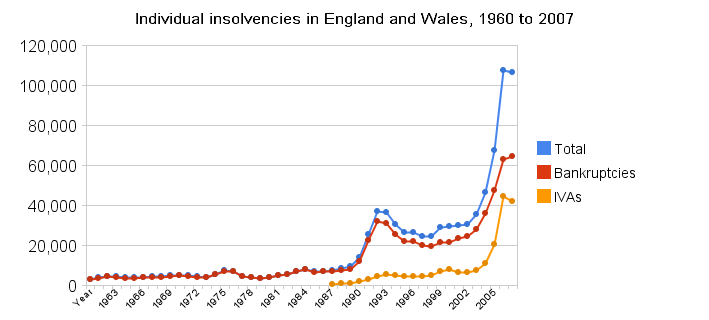
On the personal side, the individual voluntary arrangement (IVA) is the direct analogue of the CVA: a formal agreement, made under Part VIII of the Insolvency Act 1986, between an insolvent individual and their unsecured creditors. As with a CVA, the proposal is made through a licensed insolvency practitioner acting as nominee, and approval typically requires 75% or more by value of creditors voting to approve.
A debtor preparing an IVA proposal can apply to court for an interim order, which protects them from creditor action while the proposal is put together — the personal-insolvency equivalent of a moratorium. That protection is deliberately short and renewable: it initially lasts 14 days, extendable by a further 14 days. Once approved, the IVA binds all creditors who had notice of, and were entitled to vote at, the creditors' meeting — again reaching dissenters and non-voters, just like a CVA. The consequence of non-compliance is severe: a debtor who fails to keep to IVA terms may be declared in default and made bankrupt. The trade-off that makes an IVA attractive despite that risk is that it avoids the restrictions and stigma of bankruptcy while still binding dissenting unsecured creditors — a middle path between doing nothing and full bankruptcy.
For debtors at the opposite end of the financial spectrum — low income, low assets, low debt — a full IVA or bankruptcy is often disproportionate. The debt relief order (DRO) is the low-cost alternative, and following reforms that took effect in 2024, its thresholds are considerably more generous than they once were:
Debt relief order eligibility (England and Wales, post-2024 reform):
- Maximum total unsecured debt: £50,000
- Maximum value of other assets retained: £2,000
- Maximum value of a motor vehicle retained: £4,000
- The former £90 administration fee was abolished from 6 April 2024
Unlike a CVA or IVA, a DRO is not overseen by a licensed insolvency practitioner at all — it is administered by the Official Receiver, reflecting its design as a lightweight, largely administrative process for debtors with essentially nothing to distribute.
Bankruptcy is the formal, full-strength personal insolvency procedure, and it can be triggered either by the debtor's own petition or a creditor's petition (subject to the £5,000 threshold discussed earlier). The moment a bankruptcy order is made, the effect on the debtor's property is immediate and automatic: the individual's estate vests automatically in a trustee in bankruptcy — or, in the initial period before a trustee is appointed, in the Official Receiver. The trustee's job mirrors a liquidator's: collect, realise, and distribute the bankrupt's assets among creditors.
Bankruptcy is not indefinite. Under section 279, a bankrupt is automatically discharged on the first anniversary of the bankruptcy order — a relatively short window compared with older regimes, reflecting a policy shift toward giving debtors a genuine fresh start. That automatic discharge is not unconditional, though: under section 279(3), the court can suspend discharge where the bankrupt fails to cooperate with the trustee — for instance, refusing to disclose assets or hand over financial information. Once discharge occurs, section 281 releases the bankrupt from most bankruptcy debts — though not every category of debt is released, which is why "most" rather than "all" is the operative word.
Discharge does not mean the bankrupt walks away free of all consequence if their conduct was culpable: a bankruptcy restrictions order can extend restrictions on the bankrupt beyond the normal one-year discharge period, targeting genuinely blameworthy behaviour rather than mere financial misfortune.
One property-specific rule deserves separate attention because it is easy to overlook: under section 283A, an unrealised interest in the bankrupt's home automatically re-vests in the bankrupt three years after the bankruptcy order, if the trustee has not dealt with it by then. This stops trustees sitting indefinitely on a family home without acting. That three-year clock is not immovable, however — it can be paused or extended if the bankrupt fails to notify the trustee of their interest in the property, closing off an obvious strategy of simply staying quiet until the clock runs out.
Every fact pattern in this area ultimately resolves into the same triage sequence, and it is worth holding onto as a checklist when you sit the exam.
Step one: company or individual? The whole menu splits cleanly along this line — CVA, administration, receivership, and liquidation for companies; IVA, DRO, and bankruptcy for individuals.
Step two, for companies: is the business viable? A distressed but viable business points toward administration or a CVA, because the business can keep trading and value is preserved as a going concern. A business with no realistic prospect of rescue should go straight to liquidation to realise and distribute what remains — prolonging the inevitable with a rescue procedure only burns costs that would otherwise go to creditors.
Step two, for individuals: how much do they owe, and what do they own? An individual with a manageable but unsustainable debt burden is generally better advised toward an IVA or DRO than bankruptcy, precisely to avoid bankruptcy's restrictions and stigma. An individual with minimal assets and modest income facing debts within the DRO's statutory limits should be pointed toward a DRO specifically, because it is the most cost-effective route available to them.
Step three, always: who is affected, and in what order? Before recommending any course of action, a solicitor must weigh the interests and priority ranking of secured, preferential, and unsecured creditors — a CVA that looks attractive to the directors may still founder if secured creditors were never going to consent, and a liquidation recommendation is incomplete without knowing whether a floating charge holder will actually see a return once the prescribed part and preferential creditors are paid. Diagnosis, procedure, and priority — get those three right, and the rest of this topic is detail.