Insolvency Claw-back and Creditor Priority
Picture a company six weeks from a winding-up petition. Its director quietly transfers the company's only valuable asset to his brother for a nominal sum, then repays his golfing partner's unsecured loan in full while every trade creditor gets nothing. Both moves look, on paper, like ordinary transactions. Insolvency law's claw-back regime exists precisely to unwind them — to reach back through time and restore to the general creditor pool whatever value was diverted away from it in the run-up to collapse. For an SQE1 candidate, this is less about memorising sections in isolation and more about recognising a pattern: every claw-back provision asks the same three questions — what happened, how long before insolvency did it happen, and who is allowed to challenge it.

The clearest form of asset-stripping is the gift dressed up as a deal. A transaction at an undervalue under s238 Insolvency Act 1986 occurs where a company makes a gift or receives consideration significantly less in value than what it provides. Only an office-holder can pull the trigger here: section 238 allows only a liquidator or administrator to apply to court to challenge a transaction at an undervalue — an aggrieved creditor cannot bring the claim directly.
Timing matters enormously in this area of law, because every claw-back provision balances commercial certainty against fairness to creditors by fixing a lookback window. For s238, a transaction at an undervalue can be challenged if entered into within 2 years ending with the onset of insolvency.
But a transaction within the window is not automatically vulnerable — the company's financial state at the time is decisive, and the law draws a sharp line between strangers and insiders:
Unconnected person: the company must have been unable to pay its debts at the time of the transaction, or become unable to as a result of it. Connected person: inability to pay debts is presumed, unless the connected person proves otherwise.
Who counts as an insider for this purpose? A person connected with a company includes a director, a shadow director, or an associate of a director, as defined in s249 Insolvency Act 1986. The presumption exists because insiders have the access and incentive to strip value quietly, so the burden shifts to them to prove solvency survived the deal.
Even a genuine undervalue is not automatically set aside. Section 238(5) provides a defence where the company entered into the transaction in good faith and for the purpose of carrying on its business, but good faith and commercial purpose alone are not enough — the defence additionally requires that at the time there were reasonable grounds for believing the transaction would benefit the company. Think of a struggling manufacturer selling machinery cheaply to a supplier in exchange for continued credit terms that keep the business alive: if the director genuinely believed this kept the company trading, the defence can bite.
Where a transaction is successfully challenged, the remedy is broad and restorative rather than punitive: under s238(3), the court makes such order as it thinks fit to restore the company to the position it would have been in had the transaction not been entered into.
Where s238 targets underpriced deals, s239 targets favouritism among creditors. A preference under s239 Insolvency Act 1986 occurs where a company does something that puts a creditor, surety, or guarantor in a better position than they would be in on the company's insolvent liquidation — for example, repaying one supplier in full while others queue behind the floating charge holder.
The lookback windows mirror the insider/outsider distinction from s238, but are shorter for strangers:
| Recipient | Lookback period |
|---|---|
| Unconnected person | 6 months ending with onset of insolvency |
| Connected person | 2 years ending with onset of insolvency |
Timing alone does not make a preference challengeable, however. The statute demands a state of mind: a preference is only challengeable if the company was influenced in deciding to give it by a desire to produce the preferential effect. This is the single most exam-tested feature of s239, because it separates ordinary commercial repayment from unlawful favouritism. Just as with undervalue transactions, the burden of proving that desire shifts with connection: where the recipient was connected with the company, s239(6) presumes the company desired to prefer them, unless that presumption is rebutted, whereas where the recipient was not connected, the liquidator or administrator bears the burden of proving the company desired to prefer them.
The leading authority draws the crucial line between desire and mere pressure. In Re MC Bacon Ltd, the court established that a company merely acting under pressure from a creditor does not, on its own, show a desire to prefer that creditor. A director who grants security to a bank because the bank threatens to withdraw vital overdraft facilities has not "desired" to prefer the bank — the transaction is a response to commercial necessity, not a subjective wish to see that creditor do better than others. Distinguishing genuine desire from mere capitulation to pressure is exactly the kind of applied reasoning SQE1 scenario questions reward. And as with s238, only a liquidator or administrator may apply under s239 to set aside a preference — this is a recurring structural feature of Chapter VI of the Insolvency Act that is worth internalising once rather than re-learning per section.
Every lookback period above counts backward from a fixed statutory moment, and getting that moment wrong sinks an otherwise correct answer. Under s240(3), the onset of insolvency for a company in compulsory winding up is the date of presentation of the winding-up petition, while for a company in administration, it is the date of the administration application to court or, if none, the date the appointment of the administrator takes effect.

Several provisions also hinge on whether the company was, in fact, unable to pay its debts — a concept defined by s123 with three limbs worth holding in your head as a trio:
- Statutory demand test: a company is unable to pay its debts if it fails to satisfy a statutory demand for a debt exceeding the prescribed minimum within 3 weeks.
- Cash-flow test: the company cannot pay its debts as they fall due.
- Balance-sheet test: the company's liabilities, including contingent and prospective liabilities, exceed its assets.
A narrower but exam-relevant claw-back targets loan-shark style lending. Under s244, a credit transaction can be challenged as extortionate if entered into within 3 years before the company entered administration or went into liquidation, and unusually for this area of law, s244 applies the same 3-year lookback regardless of whether the credit provider is connected to the company or not — there is no shorter window for outsiders here.
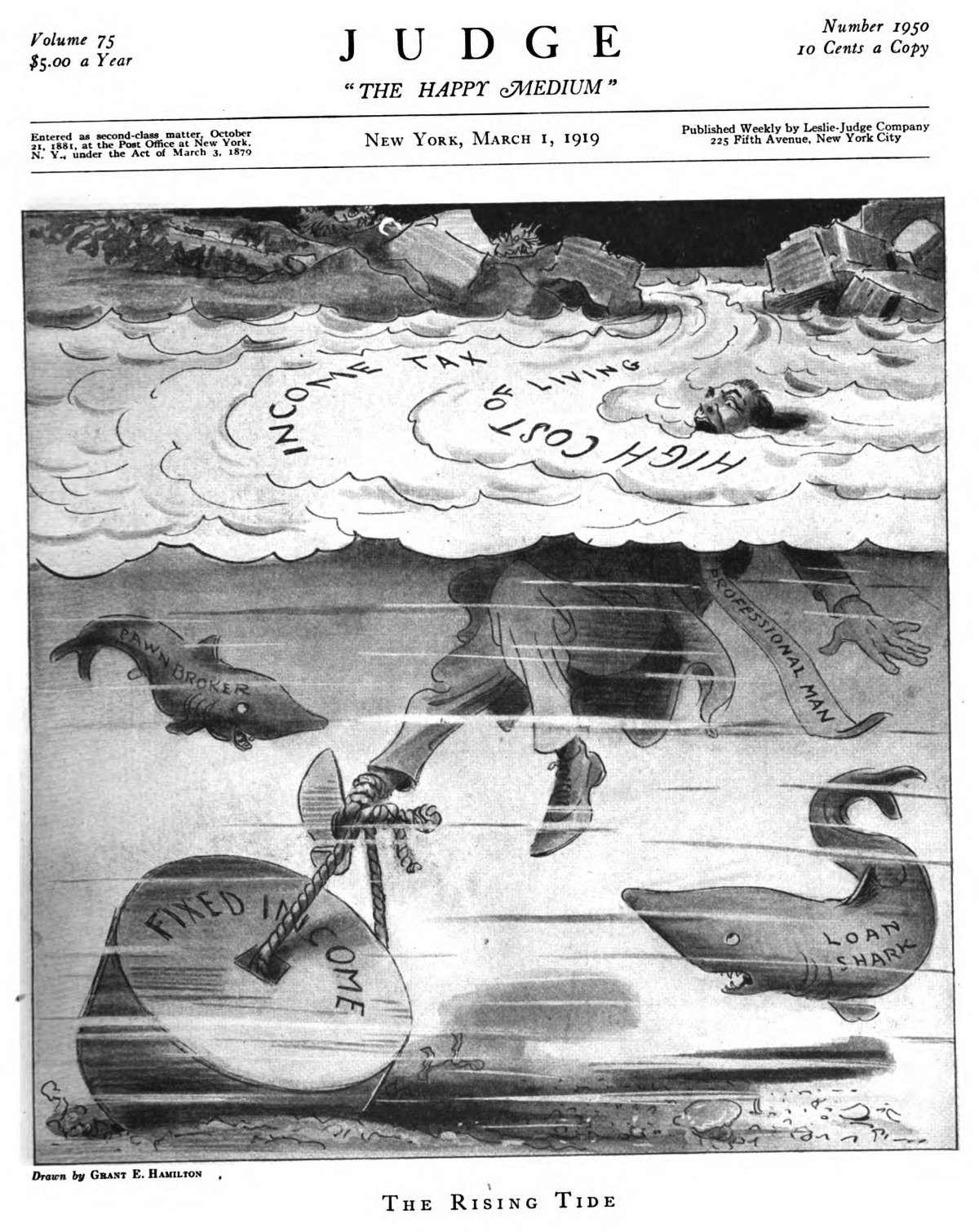
A transaction is extortionate if its terms require grossly exorbitant payments, considering the risk to the person providing the credit, or if it otherwise grossly contravenes ordinary principles of fair dealing. Once a challenge is brought, the burden flips onto the lender: a credit transaction is presumed to be extortionate once an application is made, unless the contrary is shown. The court's toolkit is flexible rather than all-or-nothing — remedies include setting aside the transaction, varying its terms, or ordering an account to be taken between the parties, so a genuinely commercial but harshly priced loan might simply be re-priced rather than unwound entirely.

Directors sometimes try to convert their own unsecured position into a secured one just before the company fails, by having the company grant them (or a friendly creditor) a floating charge over its assets for no new money. Section 245 exists to stop this. Under s245, a floating charge granted to an unconnected person within 12 months ending with the onset of insolvency can be avoided, while a floating charge granted to a connected person within 2 years ending with the onset of insolvency can be avoided — the same insider/outsider asymmetry recurs.
Solvency is again the qualifying condition for outsiders but not insiders: for an unconnected person, a floating charge is only avoidable if the company was unable to pay its debts at the time of, or as a result of, the charge's creation, whereas for a connected person, a floating charge can be avoided regardless of the company's solvency at the time of creation. This asymmetry makes sense once you see the underlying policy: a stranger who lent fresh money and took security in good faith deserves protection unless the company was already sinking, but an insider granting themselves security needs no such benefit of the doubt.
Crucially, s245 does not automatically wipe out a floating charge that secured genuine lending — it only claws back the value-for-nothing element. A floating charge avoided under s245 remains valid to the extent of any new value given to the company at the same time as, or after, the charge was created, and "new value" includes money paid, goods or services supplied, or an existing debt of the company discharged or reduced. So if a director takes a floating charge partly to secure a genuinely fresh cash injection and partly to secure a stale, pre-existing unsecured debt, only the stale-debt portion is vulnerable.

Section 423 is the odd one out in this family, because it is not really an insolvency remedy at all — it is a general anti-avoidance tool that happens to sit in the Insolvency Act. It shares its threshold test with s238: a transaction defrauding creditors under s423 requires the same undervalue test as a transaction at an undervalue under s238. But the purpose requirement is what makes it distinctive. A claim succeeds if it is proved that the transaction's purpose was to put assets beyond the reach of a person who is making, or may make, a claim against the debtor, or, in the alternative, that the transaction's purpose was to otherwise prejudice the interests of a claimant.
Three features make s423 uniquely powerful, and each is a favourite exam trap because it contradicts what students assume from s238/s239:
- No statutory time limit. Section 423 imposes no time limit on how long before the transaction a claim may be brought — there is no 2-year or 6-month lookback to check.
- No insolvency required. A claim can be brought whether or not the debtor is subject to formal insolvency proceedings at the time of the claim — a perfectly solvent debtor who moves assets to defeat a future judgment creditor can still be caught.
- Standing is not limited to office-holders. A victim of the transaction may apply for relief without needing a liquidator or administrator to bring the claim on their behalf — though a liquidator or administrator may also apply on behalf of the company's victims where formal proceedings exist.
And unlike s238/s239/s244/s245, which apply only to companies, s423 applies to transactions entered into by individuals as well as by companies — reflecting its origin as a general fraudulent-conveyance-style remedy rather than a purely corporate-insolvency tool.
Claw-back provisions unwind specific transactions. Fraudulent and wrongful trading, by contrast, impose personal liability on the people who ran the company into the ground — and the exam consistently tests the line between the two.
Fraudulent trading under s213 arises where, in the course of a winding up, the company's business was carried on with intent to defraud creditors or for any fraudulent purpose. Standing is tightly restricted — an application under s213 may only be made by the liquidator of the company — but liability is drawn widely once the claim is brought: liability extends to any person who was knowingly a party to the fraudulent carrying on of the business, not only directors. A financial adviser or accountant who knowingly assists a dishonest scheme is just as exposed as the board.
The dividing line between fraudulent and wrongful trading is dishonesty, and it is uncompromising: fraudulent trading requires actual dishonesty, as established in Re Patrick and Lyon Ltd — mere carelessness or poor judgement will never satisfy s213, however reckless. Where dishonesty is proved, the court may order a person liable for fraudulent trading to make such contribution to the company's assets as the court thinks proper.
Fraudulent trading also has a life outside insolvency law entirely: s993 Companies Act 2006 creates a criminal offence of fraudulent trading that applies whether or not the company is being wound up — prosecutors do not need to wait for liquidation. And the civil remedy's reach has been extended beyond liquidation too: s246ZA Insolvency Act 1986, inserted by the Small Business, Enterprise and Employment Act 2015, extends fraudulent trading liability to companies in administration, closing what had been a gap for companies rescued via administration rather than wound up.
Wrongful trading under s214, by contrast, applies only once the company has gone into insolvent liquidation — its civil-remedy scope has likewise been widened, since s246ZB, also inserted by the 2015 Act, extends wrongful trading liability to companies in administration. The trigger for personal liability is knowledge, not dishonesty: a director is liable for wrongful trading if they knew, or ought to have concluded, there was no reasonable prospect the company would avoid insolvent liquidation — and this exposure is not limited to the boardroom's official occupants, since wrongful trading liability extends to shadow directors as well as de jure directors.
The standard applied is a hybrid one, deliberately combining an objective floor with a subjective ceiling: the s214 standard combines the knowledge expected of a reasonably diligent person carrying out that director's functions with the director's own actual knowledge and skill. A director with genuine accountancy expertise is held to that higher personal standard, not merely the generic competence of an average director in the role. Directors are not, however, strictly liable the moment the tide turns — a director has a defence if they took every step a reasonably diligent director would have taken to minimise loss to creditors after the point they ought to have realised insolvent liquidation was unavoidable. This is why the moment-by-moment factual timeline matters so much in wrongful trading scenarios: everything before that "point of no return" is judged more gently than the conduct after it.
The clearest exam-tested contrast between the two provisions is this:
Wrongful trading under s214 does not require proof of dishonesty, unlike fraudulent trading under s213.
And the remedy is framed identically to fraudulent trading's — the court may order a liable director to make such contribution to the company's assets as the court thinks proper — but its character was settled authoritatively in Re Produce Marketing Consortium Ltd, where the court held that a wrongful trading contribution is compensatory, aiming to restore the loss caused to creditors rather than to punish the director. A finding under either section is a civil sanction with its own remedy, but it is not the only consequence a court can impose: a finding of wrongful trading or fraudulent trading may lead separately to a director's disqualification under the Company Directors Disqualification Act 1986 — a distinct, forward-looking sanction aimed at protecting the public from that individual running companies in future, not at compensating this company's creditors.

Once claw-back claims have clawed back whatever they can, the liquidator must distribute what remains according to a fixed statutory hierarchy — and this hierarchy is tested at least as often as the claw-back rules themselves, because it determines who actually gets paid.
The order sits outside ordinary contract law altogether: the statutory order of priority under the Insolvency Act 1986 overrides the ordinary contractual ranking that unsecured creditors might otherwise agree between themselves. Two creditors cannot simply agree between themselves to jump the queue past the statutory scheme (subject to true subordination arrangements, which operate within, not against, the statutory framework).

Working from the top:
- Fixed charge assets. Proceeds of assets subject to a valid fixed charge are paid to the fixed charge holder before any of the statutory order of priority under the Insolvency Act 1986 applies — fixed-charge assets essentially sit outside the general pool entirely.
- Expenses of the winding up. Under s176ZA, the expenses of the winding up are payable out of the company's assets, including floating charge assets, in priority to any claim of a floating charge holder — the office-holder must be paid for doing the job before the floating charge holder sees a penny.
- Preferential debts. Under s175, preferential debts as defined in Schedule 6 rank immediately after the expenses of the winding up and before all other unsecured debts. Within this category, ordinary preferential debts rank equally among themselves and abate in equal proportions if assets are insufficient to pay them in full — nobody inside the ordinary-preferential class jumps another. Ordinary preferential debts principally comprise two things: employee wages and salary earned in the 4 months before the relevant insolvency date, capped at £800 per employee (a figure set by the Insolvency Proceedings (Monetary Limits) Order 1986 that, remarkably, remains the current limit despite decades of inflation), and unpaid contributions owed by the company to an occupational pension scheme.
- Secondary preferential debts (HMRC). Since 1 December 2020, HM Revenue and Customs ranks as a secondary preferential creditor for certain tax debts collected by the company on the Crown's behalf, a status restored by the Finance Act 2020 after having been abolished in 2003. This secondary preference covers VAT, PAYE income tax, employee national insurance contributions, and Construction Industry Scheme deductions — sums the company held as a de facto trustee for HM Treasury rather than money it owed on its own account. Secondary preferential debts owed to HMRC rank after ordinary preferential debts and ahead of the claims of a floating charge holder. By contrast, HMRC remains an ordinary unsecured, non-preferential creditor for corporation tax and other taxes owed directly by the company rather than collected on the Crown's behalf — the crucial distinction is who the money economically belonged to.
- The prescribed part. Before the floating charge holder is paid, a slice must be carved out for unsecured creditors generally. Under s176A, the office-holder must set aside a prescribed part of the company's net property subject to a floating charge for unsecured creditors before paying the floating charge holder, but this obligation is not retrospective without limit: s176A applies only to floating charges created on or after 15 September 2003. The calculation itself is a two-tier formula: 50% of the first £10,000 of the company's net property plus 20% of the remaining net property. That percentage cannot run away indefinitely, however — it is capped, and the cap depends on when the relevant floating charge was created: £800,000 where the charge was created on or after 6 April 2020, and £600,000 where the charge was created before that date. The office-holder is not always forced to run this exercise for trivial sums: the office-holder may disapply the prescribed part requirement where the company's net property is below the prescribed minimum and the cost of distribution would be disproportionate to the benefit to unsecured creditors. Even then, an unsecured creditor is not entirely at the office-holder's mercy — even where the small-company disapplication applies, the court may still order the prescribed part to be made available on the application of an unsecured creditor.
- The floating charge holder. Only after preferential debts and the prescribed part have been satisfied is the holder of a floating charge paid from the remaining floating charge assets.
- Unsecured, non-preferential creditors. Any assets remaining after secured and preferential creditors are paid are distributed to unsecured, non-preferential creditors on a pari passu basis — proportionally, with no one non-preferential creditor jumping another.
- Shareholders. Only once every creditor class has been satisfied in full does anything reach the company's owners: any surplus remaining after all creditors have been paid in full is distributed to the company's shareholders according to their class rights.

The exam rewards candidates who can run a scenario through this framework quickly: identify the transaction type (undervalue, preference, extortionate credit, floating charge, or fraud on creditors); check the lookback window against the correct onset-of-insolvency date; test connection status, since it flips both the lookback period and the burden of proof; and, for personal-liability questions, separate dishonesty (s213) from mere foresight of the inevitable (s214). Then, when the question turns to who gets paid, run the fixed charge, expenses, ordinary preferential, secondary preferential, prescribed part, floating charge, unsecured, shareholder sequence in order — because a single misplaced rank in that ladder is usually the entire point of the question.