Leases in Land Law
A landlord who calls an agreement a "licence" while handing over the keys to a self-contained flat, accepting weekly payments, and never once setting foot inside cannot talk their way out of a tenancy. Land law does not care what the document says on its cover page; it cares what the parties actually did. That single insight — substance over label — is the spine of everything in this topic, from the boundary between a lease and a licence through to how leasehold obligations survive assignment, and how a landlord can lawfully bring a lease to an end.

A lease (or tenancy) is a proprietary estate in land: it gives the tenant exclusive possession of identified premises for a certain duration, usually in exchange for rent. Because it is an estate, it can bind successors in title, be assigned, mortgaged, and enforced against third parties. A licence, by contrast, is merely personal permission to be on land — a hotel guest's right to occupy a room, or a lodger's right to use a bedroom while the owner retains a key and provides services. A licence creates no proprietary interest and does not bind anyone who later buys the land.

Why does a solicitor need to get this right? Because the practical consequences are enormous. A tenant typically enjoys statutory protections (rent regulation, security of tenure, protection from unlawful eviction) that a licensee does not. Landlords therefore have every incentive to dress up what is really a tenancy as a "licence" to avoid those protections — and SQE1 scenarios routinely test whether you can see through the label.
Street v Mountford [1985] AC 809 is the foundational authority: the substance of an agreement, not the label the parties give it, determines whether it is a lease or a licence. Lord Templeman's reasoning was elegantly simple — if the agreement grants exclusive possession for a term at a rent, it is a tenancy, whatever it is called, because the parties cannot alter the legal consequences of the rights and obligations they have actually created merely by attaching a different label to the document.
Exclusive Possession
Exclusive possession means the occupier can exclude everyone — including the landlord — from the premises, save for rights of entry the landlord has expressly reserved (for example, to carry out repairs on notice). Contrast a clause giving the landlord unrestricted rights to enter and use the premises alongside the occupier: that is inconsistent with exclusive possession and points toward a licence, because the occupier has no ability to keep the "landlord" out.

Courts are alert to attempts to manufacture this appearance artificially. Where the true bargain between the parties in fact grants exclusive possession, courts may disregard clauses labelled as reserving non-exclusive rights as shams or pretences — paper devices inserted purely to defeat tenant protection, never intended to operate as written.
Two House of Lords cases, heard together and reported at the same citation, show both sides of this line:
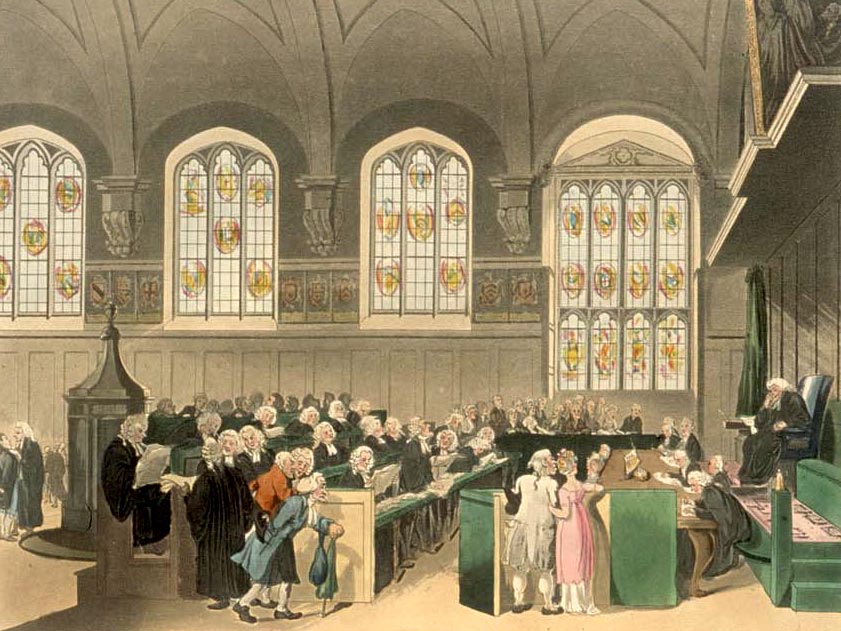
![The House of Lords chamber, sitting in its former judicial capacity — the body that decided AG Securities v Vaughan and Antoniades v Villiers together at the same [1990] 1 AC 417 citation.](https://cdn.theonlyever.com/lectures/topic-images/04ece8c7fa9a0005ae3b4b65912f038bc6127aecf8f3d7957a382e3018388363.jpg)
| Case | Facts | Outcome |
|---|---|---|
| AG Securities v Vaughan [1990] 1 AC 417 | Four individuals signed separate agreements, at different times and for different payments, to share a large flat; no one had a room of their own | Licences — genuinely no exclusive possession of any specific space |
| Antoniades v Villiers [1990] 1 AC 417 | An unmarried couple signed a joint agreement for a small flat containing a clause purporting to let the landlord introduce other occupiers | Joint tenancy — the non-exclusive occupation clause was a pretence; realistically no one else was ever going to be shoved into what was obviously a couple's home |
The lesson: look past the drafting to what the parties would realistically have expected to happen.
The Bruton Anomaly
Ordinarily a person can only grant an interest they themselves hold — you cannot grant a five-year lease if you only have a licence yourself. Bruton v London & Quadrant Housing Trust [2000] 1 AC 406 disrupted that tidy picture. A housing trust had only a licence from the council to use a property for the homeless, yet it granted Mr Bruton exclusive possession of a flat at a rent for a term. The House of Lords held this created a tenancy — because the Street v Mountford test asks only whether the hallmarks of a tenancy (exclusive possession, term, rent) are present between these two parties, not whether the grantor held a proprietary estate capable of supporting one. The result is a "Bruton tenancy": a tenancy that binds the immediate parties personally but, because the grantor had no estate to carve it from, creates no proprietary interest capable of binding third parties (such as the council). It is a genuine oddity in the law — a tenancy that is not, in the full sense, an estate in land.

Certainty of Term
A lease's term must have a certain and ascertainable maximum duration, fixed at the outset — the certainty of term requirement.
Prudential Assurance Co Ltd v London Residuary Body [1992] 2 AC 386: the House of Lords confirmed that a term of uncertain maximum duration cannot create a valid lease, even where the parties clearly intended one. A grant "for the duration of the war" or "until the land is required for road-widening" fails, however sensible it seemed commercially.
A periodic tenancy (weekly, monthly, yearly) satisfies this requirement by a conceptual trick: each period is treated as a certain term in its own right, which then continues to renew automatically until terminated by notice. The tenancy as a whole may run indefinitely, but at any given moment the parties are only committed to the current, certain period.
Finally, note that rent is not an essential requirement for a valid lease at common law — a landlord could grant exclusive possession for a term for no payment at all and still create a tenancy — though SQE1 scenarios overwhelmingly involve rent-paying arrangements, since that is the commercial reality tested.
Other Categories Worth Knowing
Not every occupation arrangement fits neatly into "lease" or "licence." A tenancy at will arises where the occupier holds possession with the owner's consent on terms that either party may terminate at any time — common where a prospective tenant is let into occupation while a formal lease is being negotiated. A tenancy at sufferance arises where a tenant simply remains in possession after the lease has ended, without the landlord's consent or objection — the landlord has not agreed to the continued occupation, but has not objected either.
Distinguishing a lease from a licence tells you what has been created; formalities tell you how it must be created to take effect at law.
Section 52, Law of Property Act 1925: a legal lease for a term exceeding three years must be created by deed.

Section 1(3), Law of Property Act 1925: any interest in land that fails to meet the formality requirements for a legal estate takes effect only as an equitable interest.
So a purported ten-year lease created by a handshake and a letter is not void — it simply cannot be a legal lease, and instead may survive (if at all) as something equitable.
There is a deliberately narrow exception for short leases, reflecting the reality that requiring a deed for every weekly tenancy would be commercially absurd:
Section 54(2), Law of Property Act 1925: a lease taking effect in possession for a term not exceeding three years, at the best rent reasonably obtainable, can be created without a deed or even writing.
Two conditions are easy to miss and are exactly the sort of detail SQE1 tests. First, the lease must take effect immediately in possession — a reversionary short lease (say, a two-year lease to start in six months' time) cannot rely on section 54(2), however short its term, because it does not take effect in possession now. Second, the rent must be the best reasonably obtainable — a peppercorn or concessionary short lease to a family member falls outside the exception.
Before a lease is even granted, a contract to grant one must itself satisfy formalities:
Section 2, Law of Property (Miscellaneous Provisions) Act 1989: a contract for the sale or other disposition of an interest in land — including a contract to grant a lease — must be made in a single written document, signed by both parties, containing all the terms the parties have expressly agreed.
Equitable Leases and Walsh v Lonsdale
What happens if the parties have a valid, specifically enforceable contract to grant a lease, but never execute the deed section 52 demands? Equity steps in.
Walsh v Lonsdale (1882) 21 Ch D 9: equity treats a specifically enforceable agreement for a lease as if the lease had already been granted — "equity looks on that as done which ought to be done." The result is an equitable lease.
An equitable lease is real, but structurally weaker than its legal counterpart for two reasons that matter enormously in practice. First, it depends entirely on the availability of specific performance as a discretionary equitable remedy — a tenant with unclean hands, or one seeking to enforce against a purchaser who lacks notice, may find the remedy simply unavailable. Second, whether it binds a third party who later acquires the land depends on registration (as a notice on a registered title, or the equivalent for unregistered land) rather than automatic proprietary priority. A legal lease of the same length binds the world; an equitable lease binds only those bound by notice or those against whom it has been properly protected.

Once a lease exists, the next question a solicitor must answer is: who can enforce its covenants against whom, especially after the original parties have moved on — the tenant assigns the lease, or the landlord sells the reversion?
Two distinct relationships matter here, and confusing them is a classic SQE1 trap:
- Privity of contract is the direct contractual relationship between the original landlord and the original tenant who actually signed the lease.
- Privity of estate is the relationship between whoever currently holds the landlord's reversion and whoever currently holds the tenant's leasehold estate — it exists regardless of who originally signed anything, because it tracks the estates, not the people.
The rules governing which covenants travel with these relationships depend critically on when the lease was granted, because Parliament overhauled the law with prospective effect only.

Old Tenancies (Granted Before 1 January 1996)
Leases granted before 1 January 1996 are "old tenancies," governed by the pre-existing common law rules.
Under an old tenancy, the original tenant remains liable under privity of contract for the entire term, even after validly assigning the lease away — their original promise to the landlord does not evaporate just because someone else is now in possession. This is why, historically, an original tenant of a long commercial lease could receive a demand for arrears from a defaulting assignee three moves down the chain, years after they left the premises.
Meanwhile, covenants that "touch and concern the land" (as opposed to purely personal covenants) pass automatically to an assignee of the lease or of the reversion through privity of estate, without needing an express assignment of the benefit.
Spencer's Case (1583) 5 Co Rep 16a: covenants touching and concerning the land bind successors in title through privity of estate, even without an express assignment.
New Tenancies (Granted On or After 1 January 1996)
Leases granted on or after 1 January 1996 are "new tenancies," governed by the Landlord and Tenant (Covenants) Act 1995 — a deliberate legislative response to the perceived unfairness of indefinite original-tenant liability under the old regime.
The Act abolishes continuing privity of contract liability for the original tenant once the lease is lawfully assigned — a clean break, in sharp contrast to the old-tenancy position above.
Section 3, Landlord and Tenant (Covenants) Act 1995: on assignment, the benefit and burden of all tenant and landlord covenants are automatically annexed to a new tenancy — regardless of whether they touch and concern the land. This is broader than the old Spencer's Case rule, which only ever caught covenants of that character.
The Act does, however, give landlords a safety valve: they may require an outgoing tenant to enter an Authorised Guarantee Agreement (AGA), guaranteeing the immediate assignee's performance of the covenants. Crucially, an AGA only makes the outgoing tenant liable for the default of that one immediate assignee — not for any subsequent assignee further down the chain. This prevents the old-regime problem of liability stretching indefinitely into the future.
The Act works both ways: a landlord who assigns the reversion of a new tenancy is automatically released from the landlord covenants, unless the tenant successfully objects to the release using the Act's procedure.
Finally, on any assignment (old or new tenancy) it is standard conveyancing practice to include an indemnity covenant, under which the assignee promises to indemnify the assignor against liability for future breaches — a private contractual backstop that supplements, rather than replaces, the statutory scheme.
Leasehold covenants can be classified by what they require. A restrictive covenant prohibits the tenant from doing something — for example, a covenant against alteration, or against a specified use. A positive covenant requires active performance — for example, a covenant to repair or to pay rent.
The alienation covenant deserves particular attention because it directly governs a tenant's commercial freedom to exit or restructure their occupation — it regulates the tenant's ability to assign, sublet, charge, or part with possession of the premises. There are three recognised strengths, and distinguishing them precisely is a favourite SQE1 point:
- Absolute covenant: prohibits assignment or subletting entirely — no mechanism to seek consent at all.
- Qualified covenant: permits assignment or subletting only with the landlord's consent, but says nothing about that consent being withheld unreasonably.
- Fully qualified covenant: permits assignment or subletting with consent, and expressly states that consent must not be unreasonably withheld.
Here is where statute intervenes decisively to protect tenants against landlords who might otherwise withhold consent capriciously:
Section 19(1)(a), Landlord and Tenant Act 1927: automatically converts a qualified covenant into a fully qualified covenant by implying a term that consent must not be unreasonably withheld. In practice, this means a genuinely "merely qualified" alienation covenant, unmodified by reasonableness wording, is rare in a properly drafted commercial lease — the statute effectively upgrades it regardless of the parties' drafting.
The same section allows the landlord to charge a reasonable sum for the legal and administrative expenses of considering and giving that consent.
The Landlord and Tenant Act 1988 adds a procedural discipline: it imposes a statutory duty on the landlord to give or refuse consent within a reasonable time, and to give written reasons if refusing. A landlord who sits on a consent request, or refuses without explanation, breaches this statutory duty, and the tenant may bring a claim in damages for that breach — a real commercial remedy where delay has caused loss, for instance a lost sub-letting opportunity.
Forfeiture is the landlord's right to terminate a lease early and recover possession where the tenant is in breach of covenant — but only where the lease actually contains a forfeiture clause or proviso for re-entry; there is no free-standing common law right to forfeit in the absence of such a clause.
The procedural path diverges sharply depending on what has been breached.
Forfeiture for Non-Payment of Rent
Forfeiture for non-payment of rent generally requires the landlord to make a formal demand for the rent first, unless the lease expressly dispenses with this requirement (as most professionally drafted leases now do). No section 146 notice is needed here — that notice regime is reserved for other breaches.
Forfeiture for Breach of Other Covenants
Forfeiture for breach of any covenant other than payment of rent requires the landlord to first serve a notice under:
Section 146, Law of Property Act 1925: the notice must (1) specify the breach complained of, (2) require the tenant to remedy it, if the breach is capable of remedy, and (3) require reasonable compensation in money for the breach.
The landlord must then allow the tenant a reasonable time to comply before proceeding to forfeit — there is no fixed statutory period; what counts as reasonable is a question of fact turning on how quickly the breach could realistically be fixed.
Waiver
A landlord can lose the right to forfeit almost by accident. Waiver occurs where the landlord, with knowledge of the breach, performs an unequivocal act recognising the continued existence of the lease — the paradigm example being demanding or accepting rent after learning of a breach. This is why solicitors routinely warn landlord clients: do not touch the rent account until you have decided whether you are forfeiting.
Method of Forfeiture and Residential Protection
Forfeiture may be effected either by peaceable re-entry onto the premises (physically retaking possession, historically by changing the locks) or by issuing court proceedings for possession.
Section 2, Protection from Eviction Act 1977: prohibits a landlord from forfeiting by peaceable re-entry where the premises are let as a dwelling and are lawfully occupied by a residential tenant. In that situation, the landlord must go to court — self-help re-entry is simply unlawful, whatever the lease says.
Relief from Forfeiture
Even after a landlord has validly triggered forfeiture, the tenant is not necessarily lost. A tenant facing forfeiture may apply to the court for relief, and the court has a discretion to grant relief on terms it considers just — commonly conditional on the tenant remedying the breach and paying the landlord's costs. If relief is granted, it restores the lease as though it had never been forfeited, reviving the tenant's original leasehold estate retrospectively — a striking illustration of equity's willingness to relieve against the harshness of forfeiture where justice demands it.
Forfeiture is the dramatic, breach-driven route. Leases far more commonly end through one of several routine mechanisms:
- Effluxion of time: a fixed-term lease simply expires at the end of its contractual term, with no further action required by either party.
- Notice to quit: a periodic tenancy is terminated by a valid notice to quit given by either landlord or tenant, expiring at the end of a period of the tenancy.
- Break clause: allows the landlord, the tenant, or both to terminate early on specified notice — but only if any conditions attached to exercising it (for example, giving vacant possession, or serving notice by a particular method) are strictly satisfied. Courts read break conditions unforgivingly; a technical slip can cost a tenant the right to break a lease they no longer want.
- Surrender: termination by mutual agreement between landlord and tenant — the leasehold estate is yielded up to the landlord's reversion, into which it then merges and is extinguished.
- Merger: occurs where the tenant acquires the landlord's reversion, or a third party acquires both the lease and the reversion — since one cannot hold a lease from oneself, the leasehold estate merges into the freehold and disappears.
- Frustration: in rare cases, a supervening event makes performance of the lease impossible or radically different from what was agreed, bringing the lease to an end — for example, destruction of the premises in circumstances the lease did not anticipate.
- Disclaimer: allows a trustee in bankruptcy or liquidator to terminate an insolvent tenant's onerous leasehold obligations, freeing the insolvent estate from an unprofitable lease.
Commercial tenants occupying premises for business purposes enjoy a significant statutory overlay that residential-focused thinking can easily miss.
Part II, Landlord and Tenant Act 1954: confers security of tenure on qualifying business tenants — the tenancy continues automatically after the contractual term ends, unless it is properly terminated using the Act's own procedures.
A protected business tenancy cannot simply be allowed to lapse or be ended by ordinary notice to quit. The landlord must use the statutory machinery — typically a section 25 notice (the landlord's notice proposing to end or renew the tenancy) or responding to a tenant's section 26 request for a new tenancy with a counter-notice. Only by relying on one or more of the statutory grounds for opposition set out in the Act (for example, persistent breach of covenant, or the landlord's intention to redevelop or occupy the premises itself) can a landlord actually defeat the tenant's right to a new lease.
Because this statutory protection can be commercially inconvenient for both sides in a short-term letting, the Act permits contracting out: landlord and tenant may exclude the security of tenure provisions entirely, but only by following a prescribed statutory warning and declaration procedure completed before the lease is granted. Skip that procedure, and the exclusion simply fails — the tenant gets full statutory protection regardless of what the lease document says. This is precisely the kind of formality-driven trap that rewards careful, methodical drafting over assumption.
Every thread here reduces to a handful of client-facing questions a solicitor must actually be able to answer: Does my client have a lease or merely a licence? Was it created validly, and if not, does an equitable lease survive? If my client is an assignor or assignee, whose liability attaches, and when did the lease begin? Can my landlord client refuse consent to assign, and on what terms? And if things go wrong, can the lease be forfeited — and if so, by what route, and can the tenant claw it back through relief? Land law's leases topic rewards exactly this kind of sequential, fact-sensitive reasoning, which is why SQE1 tests it through realistic scenarios rather than abstract definitions.