Leasehold: Structure and Content
A commercial lease is a machine for allocating risk over a term of years, and every clause in it is doing a specific job: deciding who pays for what, who bears the loss if disaster strikes, and who gets to walk away early. Read a lease the way an engineer reads a blueprint — not as prose, but as a set of interlocking mechanisms — and the whole document stops being intimidating and starts being predictable.

Strip away the drafting and every commercial lease has the same skeleton: parties, date, a description of the demised premises, the term, the rent, and the reciprocal tenant and landlord covenants that govern the relationship for the life of the lease. Two clauses do the structural heavy lifting.
The habendum clause — an old conveyancing term you will meet again and again — states the length of the term and the date on which it commences. It answers the question "how long, and from when?" A five-year lease "from and including 1 January" is doing its habendum job in that single phrase.
The parcels clause answers a different question: "exactly what is being let?" It defines the extent of the demised premises — the physical boundaries — together with the rights granted to the tenant (rights of way, use of shared parking) and the rights reserved by the landlord (access for repair, rights to run services through the demised premises). A dispute about whether a tenant can store bins in a rear yard is, at root, a parcels clause dispute.
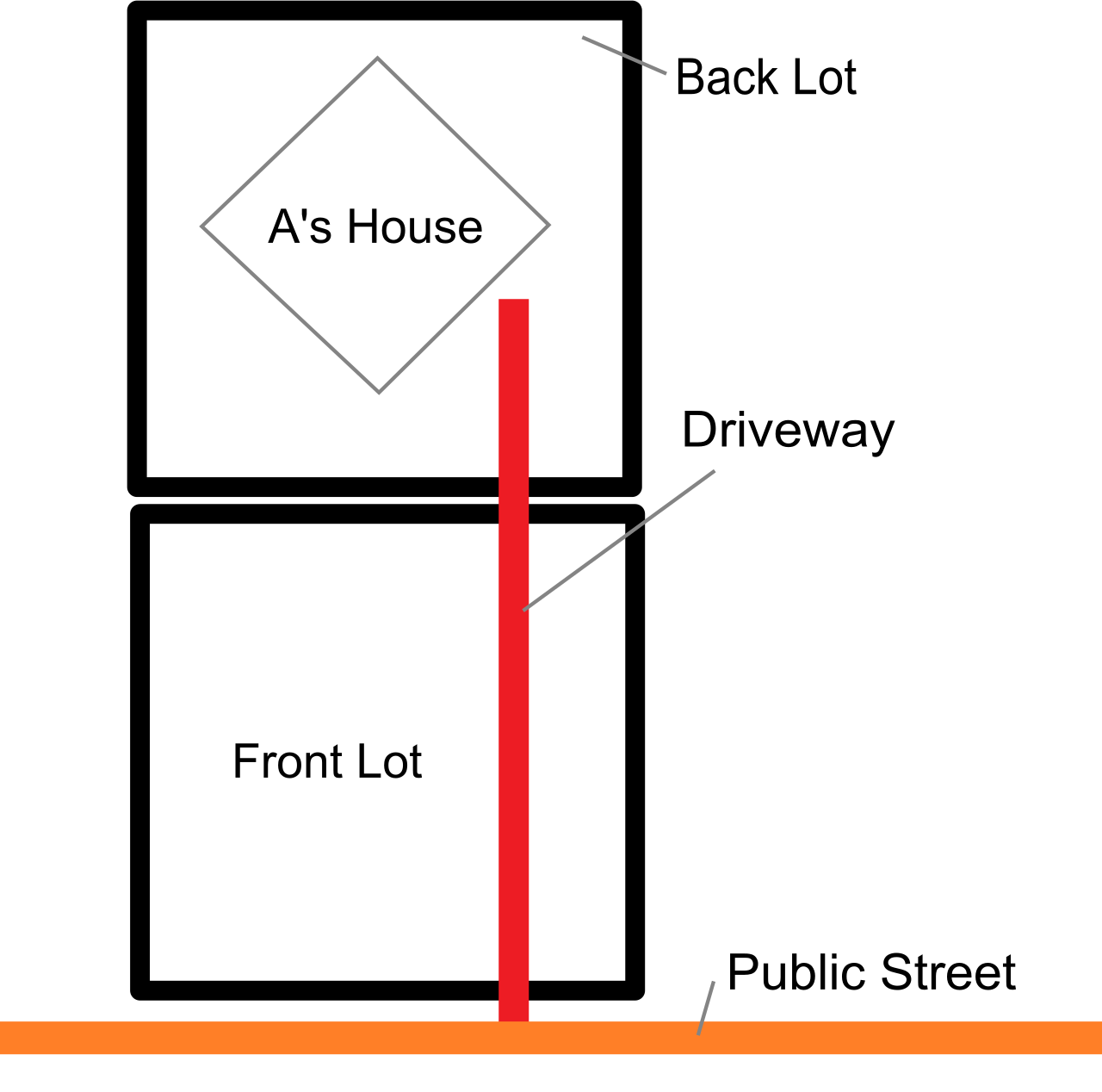
Definition: The demised premises are whatever the parcels clause says they are — no more, no less. If it is not described or granted, it is not included.
Covenants are simply promises with contractual teeth. Tenant's covenants typically cover payment of rent, payment of service charge, repair, contribution to insurance, restrictions on use, and restrictions on alienation (dealing with the lease). Landlord's covenants typically cover quiet enjoyment, insuring the building, and — in a multi-let building — providing services such as lifts, cleaning, and security to common parts.
The quiet enjoyment covenant is often misunderstood by students who picture literal silence. It actually protects the tenant from physical interference with possession by the landlord, or by someone lawfully claiming through the landlord — a landlord who cuts off the electricity supply or blocks the fire escape to pressure a tenant into leaving breaches quiet enjoyment even though nothing is noisy about it.

A rent cesser clause is the tenant's safety valve: it suspends the obligation to pay rent where the premises are destroyed or damaged by an insured risk and are unfit for occupation. Without it, a tenant whose building has just burned down would still owe full rent on a building it cannot use — an absurd result the rent cesser clause exists to prevent.
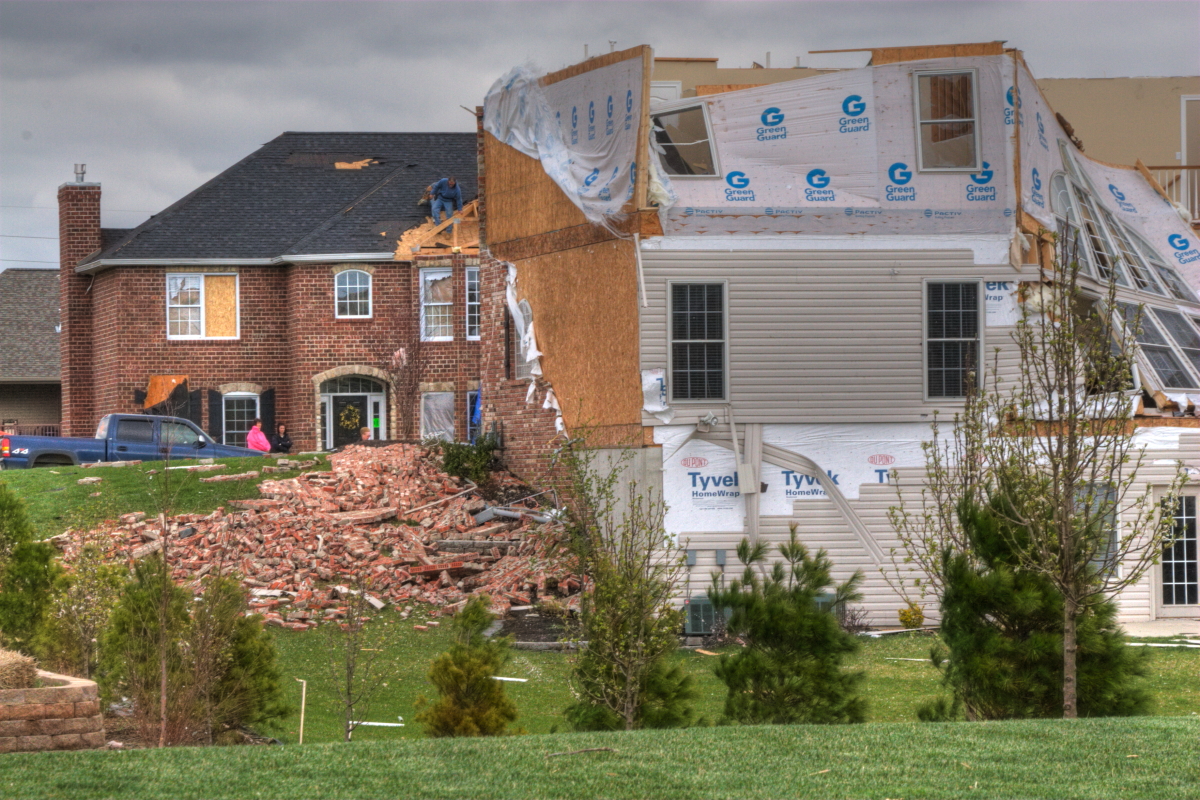
Repair covenants allocate responsibility between landlord and tenant for keeping the demised premises — and, where relevant, the structure — in good repair. The allocation is a spectrum, not a binary:
| Lease type | Tenant repairs | Landlord repairs |
|---|---|---|
| Full repairing and insuring (FRI) | Everything, plus bears the cost of insurance | Nothing structural — insurance and structural cost land on the tenant |
| Internal repairing | Interior only | Structure and exterior remain the landlord's |
A full repairing and insuring lease — universally abbreviated FRI — places both the repair obligation and the cost of insurance on the tenant, giving the landlord a genuinely passive investment. Under an internal repairing lease, by contrast, the tenant repairs only the interior while the landlord remains responsible for the structure and exterior. That sounds like a worse deal for the landlord — until you notice the escape hatch: a landlord can achieve an effective FRI outcome even on an internal repairing lease by recovering the cost of structural repairs through the service charge, passing the economic burden back to the tenant (or, in a multi-let building, to all the tenants) without changing who is nominally "responsible."
Two features of a repair covenant's operation matter enormously in practice:
- A covenant to keep premises in repair requires the tenant to put the premises into repair first if they were not already in repair at the start of the term — "keep" is read as including "put."
- The obligation is continuing: disrepair arising at any point during the term is a breach, not just disrepair present at the outset or at expiry.
The repair standard. The standard required is that of a reasonably minded owner, having regard to the age, character, and locality of the premises. A Victorian warehouse in a functional industrial estate is not held to the same standard as a newly built unit in a flagship retail development.
Capping Liability: The Schedule of Condition
Tenants (sensibly) resist open-ended repair obligations tied to an undefined historic standard. The tool for doing so is a schedule of condition — a document, typically including photographs, recording the physical state of the premises at the start of the term. Attaching a schedule of condition to a repair covenant caps the tenant's liability by reference to the condition actually recorded, rather than requiring a higher standard the premises never met. The practical consequence: the covenant does not oblige the tenant to hand back the premises in a better state than the condition shown in the agreed schedule.
Separately from any express covenant, the tort of waste can arise where a tenant causes damage beyond fair wear and tear — a residual liability that exists independently of what the lease says about repair.
Dilapidations
Dilapidations are breaches of a tenant's repair, decoration, or reinstatement covenants, typically assessed at or near the end of the term (though, as above, breach can technically arise at any point). The landlord's opening shot is a schedule of dilapidations — a document itemising the alleged breaches and the cost of remedying each one, usually served shortly before or after expiry to found a damages claim.
The Statutory Brake: Leasehold Property (Repairs) Act 1938
Landlords do not have unfettered freedom to forfeit or sue for repair breaches. The Leasehold Property (Repairs) Act 1938 applies to leases originally granted for a term of not less than seven years, of which at least three years remain unexpired. Where the Act applies, a landlord seeking to forfeit — or to claim damages — for breach of a repair covenant must serve a section 146 notice that expressly refers to the tenant's right to serve a counter-notice.
A tenant served with such a notice has 28 days from service to serve a counter-notice claiming the Act's protection.
Where the tenant serves a valid counter-notice, the landlord is stopped in its tracks: it may not proceed with forfeiture or a damages claim for the repair breaches without first obtaining the leave of the court. This is a real strategic weapon for tenants of longer leases facing an aggressive dilapidations claim, and spotting the seven-year/three-year threshold is the first thing an SQE1 scenario testing this area wants you to do.
An insurance covenant identifies who insures the building against specified risks — fire, flood, storm damage, and so on. In a multi-let building, it is almost always the landlord who covenants to insure the whole building, recovering the premium from tenants as an insurance rent or through the service charge — insuring floor-by-floor, unit-by-unit would be unworkable where risks (fire spreading through a shared structure) do not respect internal demises.

The landlord's insurance covenant typically extends further than physical reinstatement: it usually also covers loss of rent for a specified reinstatement period following damage or destruction, so the landlord's income stream survives even while the building is being rebuilt.
Two protective mechanisms sit alongside the substantive cover:
- A tenant's covenant not to invalidate the insurance policy — protecting the landlord's ability to claim at all, since insurers can void cover for breach of policy conditions (unauthorised alterations, hazardous storage, and the like).
- The landlord's reinstatement obligation is usually made conditional on the insurance proceeds not being withheld because of the tenant's own default. Where proceeds are insufficient to reinstate because of an act or default of the tenant, the tenant can find itself liable to make up the shortfall — the rent cesser clause protects the tenant from paying rent on a ruined building, but it does not let a tenant who caused the problem walk away from the cost of fixing it.
A rent review clause allows the rent to be adjusted — almost always upwards — at fixed intervals through the term, most commonly every five years in a standard commercial lease. The dominant model is open market rent review: the rent is assessed by reference to a hypothetical letting of the premises on the review date, as if it were being let fresh to a new tenant in the current market.
Upward-only rent review is the market norm from a landlord's perspective: it guarantees the reviewed rent can never fall below the rent payable immediately before review, even if market rents have actually dropped. This is one of the most contested points in lease negotiation precisely because it transfers all downside market risk to the tenant.
The mechanics of the hypothetical letting are carefully engineered by three linked concepts:
- Hypothetical lease assumptions specify the deemed terms — length of term, permitted use, and so on — on which the open market rent is assessed, so both sides are valuing the same notional transaction.
- Disregards exclude certain matters from consideration, most importantly the tenant's own improvements and the fact of the tenant's occupation. The disregard of tenant's improvements exists so that a tenant who has, at its own expense, upgraded the premises is not then charged a higher rent for the very improvements it paid for — provided those improvements were not required by the lease itself (an improvement the tenant was contractually obliged to make does not attract the disregard).
- The rebus sic stantibus principle requires the premises to be valued in their actual physical state, disregarding any notional alterations to the fabric of the building — the valuer values what is actually there, not a hypothetically improved or altered version of it.

When landlord and tenant cannot agree the figure, the clause typically hands the decision to an independent expert or an arbitrator. The distinction is conceptually important: an independent expert values the rent using their own knowledge and judgement (an inquisitorial role), whereas an arbitrator decides between the evidence and submissions the parties actually put forward (an adjudicative role, closer to a judge). If the parties cannot agree within the period specified in the lease, either may apply to the President of the Royal Institution of Chartered Surveyors to appoint the relevant third party.
One procedural trap worth flagging: time is generally not of the essence for service of a trigger notice under a rent review clause, unless the lease expressly says otherwise — a landlord who serves its trigger notice a few days "late" against a non-binding target date has not lost its right to review, in sharp contrast to the position on break notices below.
Alienation covenants control a tenant's ability to assign, underlet, charge, or part with possession of the demised premises. They sit on a spectrum of increasing tenant-friendliness:
| Covenant type | Effect |
|---|---|
| Absolute | Prohibits the dealing entirely — no right to even seek consent |
| Qualified | Prohibits the dealing without landlord's consent, silent on unreasonable withholding |
| Fully qualified | Prohibits the dealing without consent, and expressly states consent is not to be unreasonably withheld |
In practice the middle category barely exists as drafted, because of statute. Section 19(1) of the Landlord and Tenant Act 1927 implies a proviso into every qualified alienation covenant that the landlord's consent is not to be unreasonably withheld — so a qualified covenant is, in effect, treated exactly like a fully qualified one regardless of what the lease itself says. This is one of the cleanest examples in the whole syllabus of statute silently converting one type of clause into another.
Section 19(1A), added later, gives landlords a way to regain some of that lost control: it allows a qualifying lease to specify in advance the circumstances in which the landlord may withhold consent, or the conditions on which consent may be granted — effectively letting the parties pre-agree what "reasonable" means for their deal rather than leaving it to be litigated after the fact.
The Procedural Layer: Landlord and Tenant Act 1988
Section 19(1) tells you whether consent can be unreasonably withheld; the Landlord and Tenant Act 1988 tells you how the process must run. Under the 1988 Act, a landlord subject to a qualified covenant owes a statutory duty to give consent within a reasonable time unless it is reasonable to refuse, and must serve written notice of its decision — giving reasons if consent is refused or made conditional. Crucially, the burden of proving that a refusal (or any conditions imposed) was reasonable rests squarely on the landlord, not the tenant. Because these statutory duties are triggered by a written application, a tenant's request for consent should always be made in writing — an oral request risks never starting the statutory clock at all.
Assignment and the 1995 Act
Historically, an original tenant remained contractually liable for the whole term regardless of how many times the lease was subsequently assigned — a rule that could see a long-departed tenant sued for a successor's default years later. The Landlord and Tenant (Covenants) Act 1995 changed this prospectively: for new tenancies granted on or after 1 January 1996, the doctrine of privity of contract release applies, and the original (or any subsequent) tenant is automatically released from liability the moment it assigns the lease. Leases granted before 1 January 1996 are untouched by this reform and remain subject to the old rule — contractual liability for the full term survives every assignment.
Landlords naturally dislike losing their tenant covenant on assignment, so the 1995 Act gave them a substitute: the authorised guarantee agreement (AGA). An AGA lets the landlord require an outgoing tenant to guarantee the performance of covenants by its immediate assignee — the outgoing tenant does not remain liable forever, but does underwrite the very next tenant in the chain. That guarantee has a natural limit: an AGA ceases to apply once that assignee itself assigns the lease onward — you only ever guarantee the person you handed the lease to, never the whole future chain of assignees.
Underletting operates under its own constraint: an underletting typically requires the underlease to be granted on terms no more favourable to the undertenant than those in the headlease, including as to rent — protecting the value of the landlord's reversion and preventing a tenant from using an underletting to undercut the headline rent structure.
A break clause gives the landlord, the tenant, or both, the right to terminate the lease early by serving notice before the contractual expiry date. Break clauses are negotiated hard because the conditions attached to exercising them determine whether the "right" to break is actually usable.
Conditions commonly attached to a tenant's break right require payment of all rent due, giving vacant possession, and compliance with repair covenants as at the break date. That last condition is a minefield: where a break clause makes strict compliance with all tenant covenants a condition of exercise, even a trivial or technical breach — a missing licence copy, a minor disrepair — can invalidate the entire break, at massive cost to a tenant who thought it was walking away cleanly.
The Code for Leasing Business Premises 2020 pushes back against harsh break conditions. It recommends that a tenant's break right be conditional only on paying the basic rent up to the break date and giving up occupation with no continuing subtenants or occupiers — deliberately narrower than the "strict compliance with all covenants" trap above.
Two further procedural rules bite hard on break notices specifically:
- Time is treated as of the essence for service of a break notice — unlike the rent review trigger notice discussed earlier — so a notice served even one day outside the specified window is invalid, full stop.
- A break notice must strictly comply with any formalities specified in the lease: the method of service, the correct recipient, the correct form. Courts have repeatedly refused to rescue tenants who served a substantively correct but formally defective break notice.
The Code for Leasing Business Premises 2020
The Code for Leasing Business Premises — first edition — was published by the Royal Institution of Chartered Surveyors (RICS) on 12 February 2020 and took effect on 1 September 2020, replacing the earlier 2007 Code. For the first time, parts of the Code are a mandatory professional standard binding on RICS-regulated members acting in commercial lease negotiations, not merely persuasive good practice.
Beyond the break-clause recommendation above, the Code:
- Requires that details of any break clause — its conditions and any associated payment — be recorded in the heads of terms before the lease is granted, so break terms are agreed early rather than buried in late-stage drafting.
- Provides that a landlord must reimburse a tenant for rent, service charge, and insurance rent paid in advance for any period falling after the break date — a tenant who breaks mid-quarter should not be out of pocket for rent covering a period it no longer occupies the premises.
- Encourages plain English heads of terms setting out the principal commercial terms before detailed lease drafting begins, aiming to surface commercial disagreements early rather than after expensive drafting.
Forfeiture is the landlord's nuclear option: a remedy allowing termination of the lease before its contractual expiry date following a tenant's breach of covenant. It is powerful precisely because it destroys the tenant's entire interest, not just the value of the specific breach — which is exactly why the law surrounds it with procedural safeguards.
Two threshold points matter before forfeiture can even be considered. First, a right of re-entry or forfeiture clause must be expressly reserved in the lease — there is no free-standing common law right to forfeit absent that express reservation. Second, for non-payment of rent, forfeiture can be exercised by peaceable re-entry without a prior formal demand, provided the lease dispenses with the need for a formal demand (as most modern leases do).
For any breach other than non-payment of rent, section 146 of the Law of Property Act 1925 imposes a mandatory notice requirement: the landlord must serve a notice specifying the breach and, where the breach is capable of remedy, requiring the tenant to remedy it. If the landlord is also seeking compensation in money for the breach, the section 146 notice must additionally require the tenant to pay that compensation — a notice silent on compensation cannot later be used to found a damages claim for the same breach.
Waiver is a landlord's silent trap. A landlord waives its right to forfeit if, with knowledge of the breach, it performs an unequivocal act recognising the continued existence of the lease — demanding or accepting rent being the classic example. A landlord who discovers a breach and then invoices the tenant for the next quarter's rent has, without meaning to, given up its forfeiture right for that breach.
A tenant facing forfeiture is not without recourse: it may apply to the court for relief against forfeiture, an equitable jurisdiction allowing the court to reinstate the lease (typically on terms that the breach be remedied and costs paid) rather than let the landlord keep a windfall termination for what may be a modest default.
One residential carve-out matters for mixed-use scenarios common in SQE1 problem questions: forfeiture of a commercial lease by peaceable re-entry cannot be exercised against premises that are, or any part of which is, let as a dwelling and occupied by a residential occupier — the landlord must go through the courts instead, reflecting the law's heightened protection of residential occupation even within an otherwise commercial letting.
Commercial Rent Arrears Recovery (CRAR)
Where forfeiture feels disproportionate, or the landlord simply wants payment rather than possession, Commercial Rent Arrears Recovery (CRAR) — a statutory procedure under the Tribunals, Courts and Enforcement Act 2007 — lets a landlord instruct an enforcement agent to seize goods to recover unpaid rent, without going to court first.
CRAR has narrower scope than it might first appear:
- Available only for purely commercial premises — any residential element takes the letting outside CRAR entirely.
- Recovers only principal rent, not service charge or insurance rent, unless the lease expressly reserves those sums as rent.
- The landlord must give at least seven clear days' notice of enforcement (the "enforcement notice") before an agent can act.
- A minimum amount of net unpaid rent, prescribed by regulations, must be outstanding before CRAR is available at all — trivial arrears cannot trigger the procedure.
CRAR replaced the old common law remedy of distress for rent, bringing rent-arrears enforcement within a modern statutory framework with defined notice periods and safeguards that distress never had.

When a landlord does consent to a dealing, that consent needs to be recorded properly. A licence to assign documents the landlord's consent to an assignment, typically including the assignee's direct covenants with the landlord and, where required, an authorised guarantee agreement from the outgoing tenant. A licence to underlet performs the equivalent function for underlettings, but as a tripartite document between landlord, tenant, and undertenant, since all three parties need to be bound by the terms of the arrangement.
Bringing the threads together: the request that triggers all of this — the tenant's application for consent to assign, underlet, or charge — should be made in writing, precisely because it is the written application that starts the clock on the landlord's statutory duties under the 1988 Act discussed above. A verbal request to the managing agent at a site visit does not, on its own, put the landlord on the hook for a reasonable-time response.
Every clause examined here answers one of three questions a solicitor must be able to spot instantly in an SQE1 scenario: who pays (rent, service charge, insurance, repair), who controls (alienation, use), and who can end it early (break, forfeiture). A commercial lease that looks like an impenetrable wall of boilerplate is, on close reading, just those three questions answered clause by clause — and once you can see the questions, the answers in any given lease become predictable rather than mysterious.