Nature of Land and Estates
Land is not one thing in English law — it is two: a physical asset and a bundle of legal time. When you advise a client on "buying a house," you are really advising them on acquiring an estate, a slice of time carved out of an underlying, perpetual entitlement that in constitutional theory belongs to the Crown. Understanding that distinction — between the land itself and the estate a person holds in it — is the single most important intellectual move in this entire subject, and everything else in the syllabus builds on it.
English law splits all property into two categories. Real property covers freehold land and incorporeal hereditaments (intangible rights over land, such as easements). Personal property covers everything else — chattels (movable physical objects) and choses in action (intangible rights enforceable by legal action, like a debt or a shareholding).
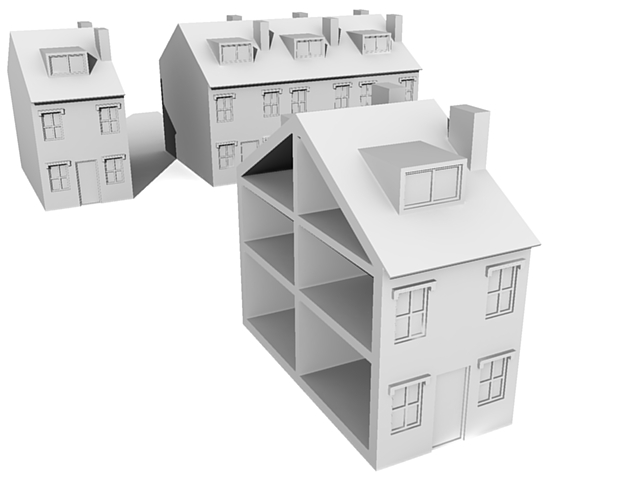
Leasehold land sits in an odd, historically contingent position: it is classified as personal property, not real property, and is known by the old label chattel real. This is not a modern drafting quirk — it reflects the medieval reality that leases were originally protected only by weak personal remedies, unlike freehold estates, which enjoyed the full protection of the real actions. The label survives even though a modern 999-year lease functions, economically, almost identically to a freehold.
Key maxim: Quicquid plantatur solo, solo cedit — whatever is affixed to the land becomes part of the land. This single principle explains why a building, once erected, is not a chattel sitting on the land but is treated as the land itself for most legal purposes — a point that becomes critical later when distinguishing fixtures from chattels.
Two doctrines, inherited from feudal land law, still structure the modern system.

The doctrine of tenure holds that no subject "owns" land outright in the way one owns a car. Instead, land is held from the Crown, which is the ultimate allodial owner of all land in England and Wales. A client's freehold title is a tenurial relationship, not absolute ownership — though for all practical purposes in modern practice, a fee simple absolute in possession is functionally indistinguishable from outright ownership.
The doctrine of estates answers a different question: not from whom is land held, but for how long. An estate measures the duration of a person's rights in land. This is why a solicitor never simply says a client "owns" land — the precise, technically correct statement is that the client holds a particular estate in the land.
Why does this matter to a trainee solicitor? Because every conveyancing transaction, every due diligence exercise, and every SQE1 problem question about land ultimately asks the same underlying question: what estate or interest does this person hold, and is it legal or equitable? Get that classification right and the rest of the analysis — priority, enforceability, formalities — follows logically.
Before 1925, English law recognised a sprawling, uncodified array of legal estates and interests capable of subsisting in land — a system that made conveyancing slow, risky, and expensive, because a purchaser had to investigate an unpredictable range of possible legal rights binding the land.
A central aim of the 1925 property legislation was to cut this down drastically, so that a purchaser needed to worry about only a small, fixed list of legal estates and interests. The Law of Property Act 1925 was the flagship statute of this reform package, which also included the Settled Land Act 1925, the Trustee Act 1925, and the Administration of Estates Act 1925 — a coordinated overhaul designed to make land as freely and safely tradeable as any other commodity.
Section 1: The Two Legal Estates
Section 1(1), Law of Property Act 1925: The only estates in land capable of subsisting or of being conveyed or created at law are — (a) an estate in fee simple absolute in possession; and (b) a term of years absolute.
Everything else, no matter how ancient or how important commercially, is relegated to equity. Unpack each phrase, because SQE1 tests the words precisely:
The fee simple absolute in possession is the legal estate known in everyday language as freehold ownership.
- Fee — the estate is inheritable: it can pass down through generations rather than expiring on the death of the current holder.
- Simple — the estate can pass to any class of heir, not merely to specified heirs of the body (as under the old, now-obsolete "fee tail").
- Absolute — the estate is not conditional: it is not subject to a condition or a determining event that could cut it short prematurely.
- In possession — the holder has an immediate right to physical possession of the land, or to receipt of the rents and profits from it (as opposed to a future interest that will only vest later).
Put those four words together and you get the maximum estate the law allows: unconditional, inheritable, immediate ownership for all practical purposes forever.

The term of years absolute is the legal estate known as a leasehold. Its defining feature is that it must have a certain or ascertainable maximum duration, fixed at the outset of the term — a lease with an uncertain maximum term is not a term of years absolute at all, and historically has been treated as invalid at law for want of certainty.
Section 1(2): The Closed List of Legal Interests
Beyond the two legal estates, section 1(2) sets out an exhaustive list of interests and charges capable of existing as legal interests in land:
| Legal interest | Statutory basis |
|---|---|
| Easement, right, or privilege equivalent to a fee simple absolute in possession or a term of years absolute | s.1(2)(a) |
| Rentcharge in possession (perpetual or for a term of years absolute), issuing out of or charged on land | s.1(2)(b) |
| Charge by way of legal mortgage | s.1(2)(c) |
| Right of entry annexed to a legal rentcharge or exercisable over a legal term of years | s.1(2)(e) |
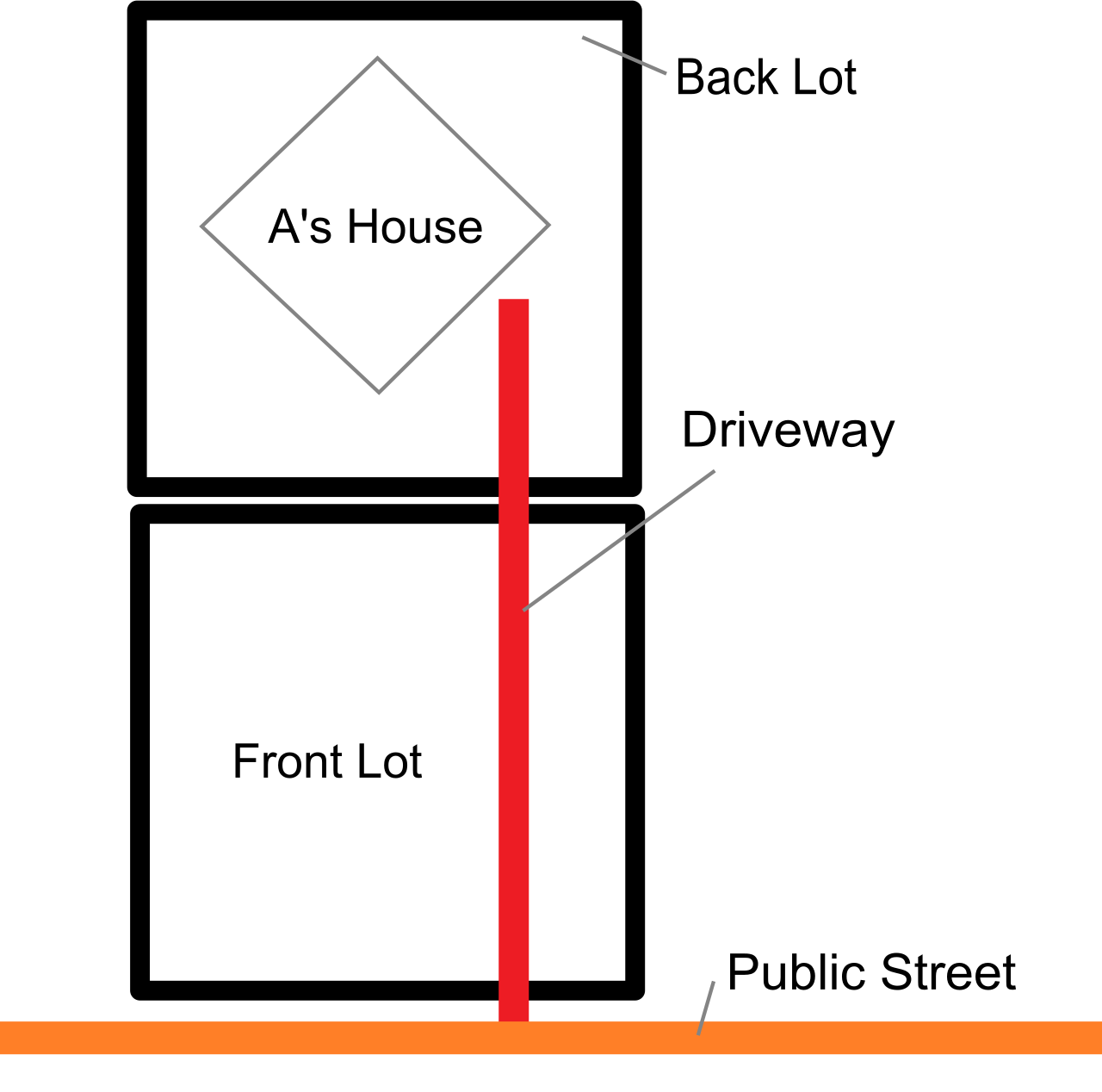
Note the internal logic: an easement can only be legal if it is granted for a duration equivalent to one of the two legal estates (i.e., forever, or for a fixed maximum term) — a "right of way for life," for example, cannot be legal, because a life interest is not one of the durations the statute recognises as capable of legal status.
Section 1(3): Everything Else Is Equitable
Section 1(3), Law of Property Act 1925: All other estates, interests, and charges in or over land take effect as equitable interests.
This is the great residual clause, and it captures several rights of enormous practical importance:
- A life interest — because a life is not a duration recognised by s.1(1), it can never be legal, however it is created.
- A restrictive covenant over freehold land.
- An interest under a trust of land (the beneficial interest of a co-owner, for instance).
- A specifically enforceable estate contract — a contract to create or transfer a legal estate that equity would order specifically performed generates, under the maxim "equity treats as done that which ought to be done," an equitable interest in the land even before completion.
This is not academic hair-splitting: the classification determines whether a right binds a later purchaser of the land — precisely the question a solicitor is paid to answer on every transaction.
- Legal proprietary rights are traditionally described as binding the whole world. A purchaser cannot simply plead ignorance of a legal easement or a legal mortgage; it binds regardless.
- Equitable proprietary rights in unregistered land historically bound everyone except a bona fide purchaser of a legal estate for value without notice — the celebrated "equity's darling" defence. Miss an equitable interest because you didn't have notice of it, and (in unregistered land) you might take free of it entirely.
- In registered land, the Land Registration Act 2002 has largely swept away the doctrine of notice and replaced it with a system built on the register: whether an equitable interest binds a purchaser now typically turns on whether it was protected by an entry on the register (or, in limited cases, qualifies as an overriding interest), not on what the purchaser subjectively knew.
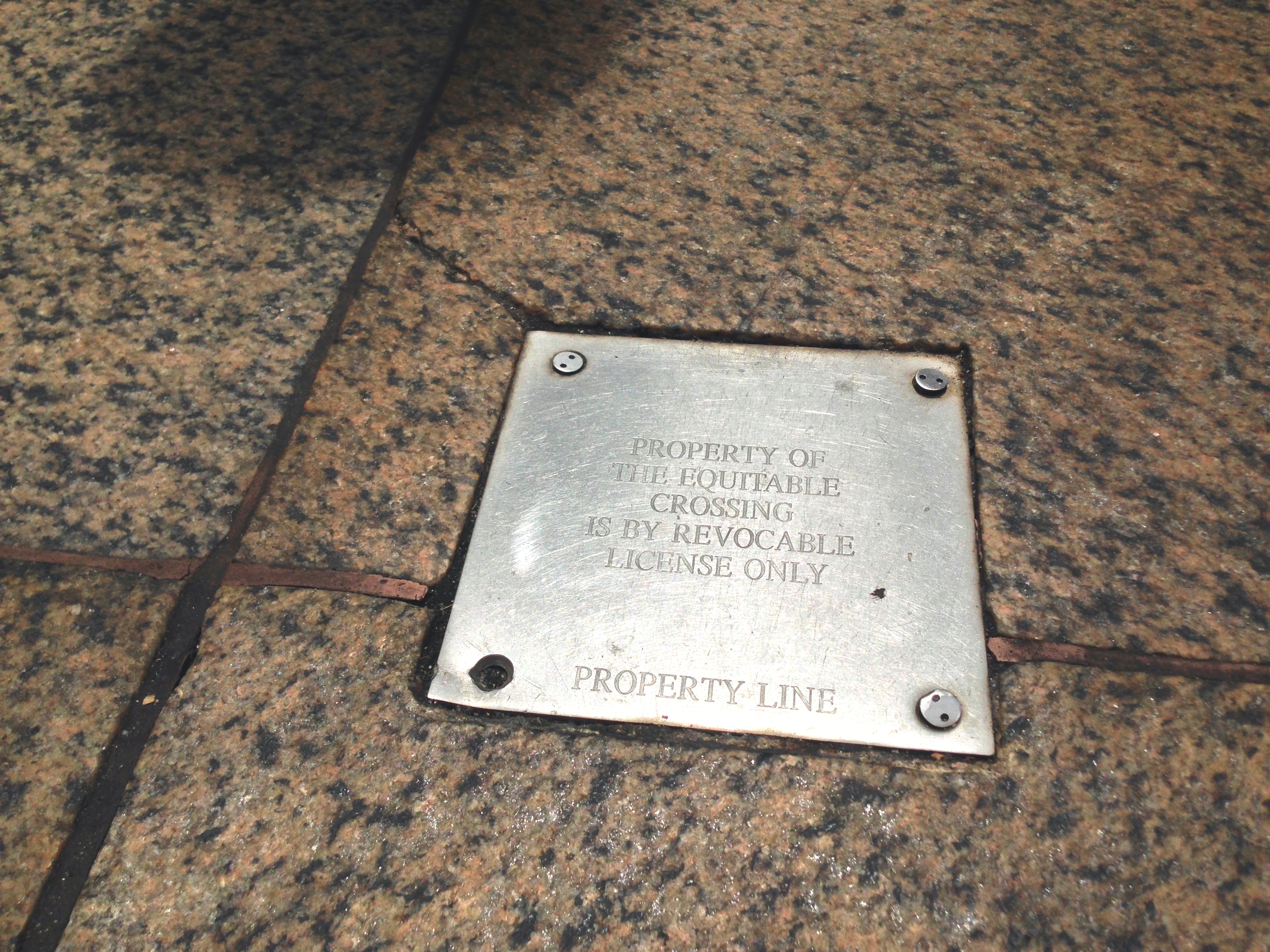
A proprietary right — legal or equitable — is capable of binding successors in title to the land. A purely personal right, by contrast, cannot. This is why a bare licence or a contractual licence to use land is generally treated as personal only: it binds the grantor, but not a new owner who later buys the land, because a licence does not appear on the closed list of proprietary interests recognised by the numerus clausus principle — English law simply refuses to let parties invent new categories of proprietary right by private agreement.
Substance is only half the exam. SQE1 tests formalities relentlessly, because a client's rights can evaporate entirely if the correct formality was skipped.
Section 52(1), Law of Property Act 1925: All conveyances of land or of any interest therein are void for the purpose of conveying or creating a legal estate unless made by deed.
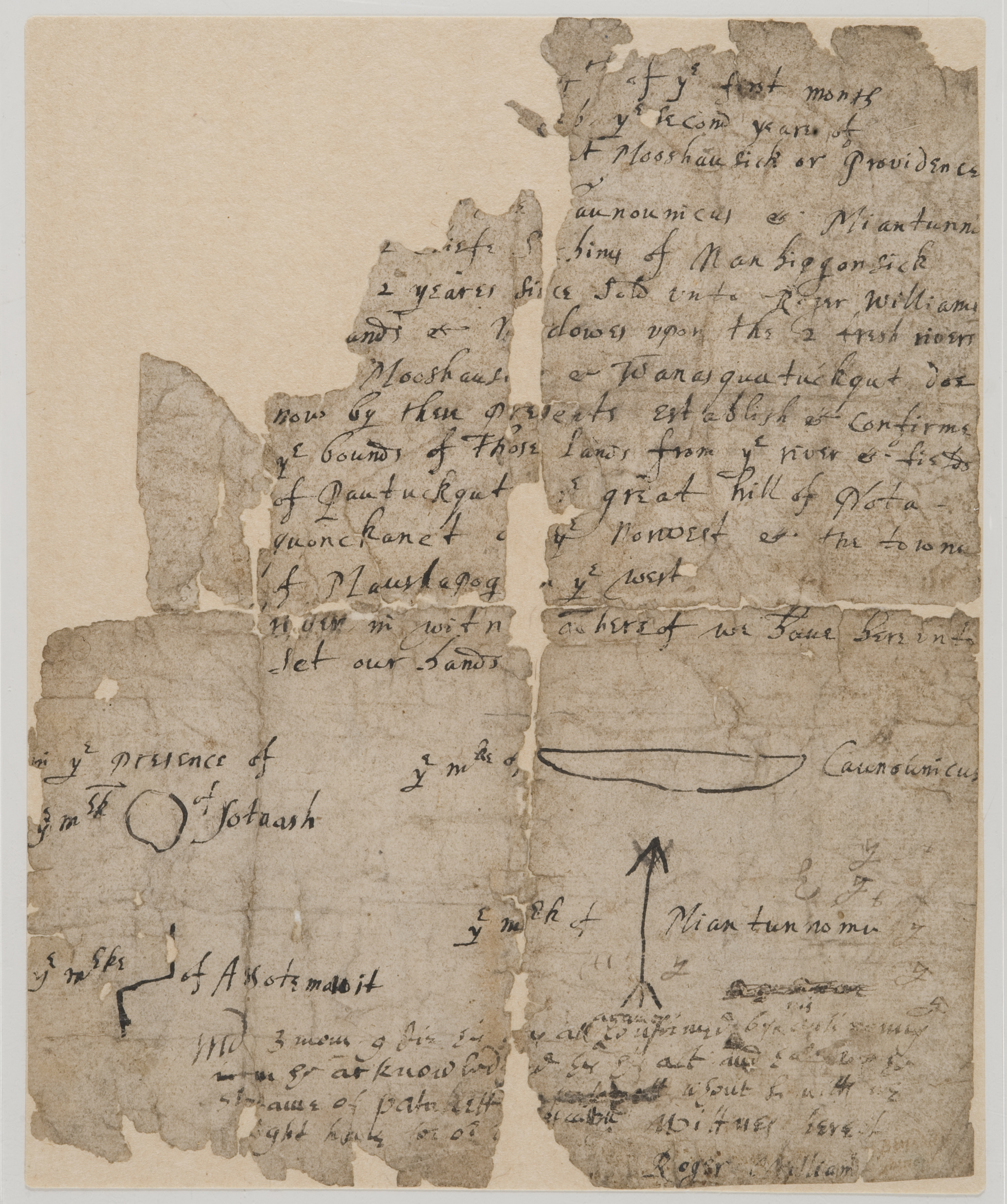
"Conveyance" here is broad: it captures a mortgage, a charge, a lease, an assent, and a vesting declaration, among others.
What Makes a Valid Deed
The Law of Property (Miscellaneous Provisions) Act 1989 modernised deed execution:
- Section 1(2): a deed executed by an individual must make clear on its face that it is intended to be a deed (traditionally by a statement such as "signed as a deed").
- Section 1(3): the individual must sign the deed in the presence of a witness who attests the signature — or, alternatively, sign at the individual's direction and in their presence, provided two witnesses attest the signature.
- The deed must also be delivered — meaning the person executing it demonstrates an intention to be bound by its terms; a signed document sitting in a drawer, not yet delivered, does not yet take effect.
Corporate Execution
Companies execute deeds differently. Under the Companies Act 2006:
- Section 44(2) permits execution by the signature of two authorised signatories.
- Section 44(2)(b) permits execution by a single director, provided the signature is witnessed and attested.
- Alternatively, a company may execute a deed by affixing its common seal in accordance with its articles of association.
The Exceptions to "Deed Required"
Section 52(2) of the Law of Property Act 1925 carves out exceptions to the general deed requirement — the two most heavily tested are:
- An assent by a personal representative vesting land in a beneficiary must be in writing, but need not be executed as a deed.
- Section 54(2) permits certain short leases to be created with no deed and no writing at all — a parol (oral) lease is enough — where the lease:
- takes effect in possession for a term not exceeding three years, and
- is granted at the best rent reasonably obtainable without taking a fine or premium.
This is the exception that explains why a landlord and tenant can validly agree a two-year assured shorthold tenancy over a handshake and a rent standing order, with no deed in sight — a genuinely important point for trainees advising residential landlords.
A contract to create or transfer an interest in land is governed by different rules from the conveyance itself.
Section 2(1), Law of Property (Miscellaneous Provisions) Act 1989: A contract for the sale or other disposition of an interest in land can only be made in writing, incorporating all the terms which the parties have expressly agreed, in one document or, where contracts are exchanged, in each.
The contract must also be signed by or on behalf of each party. Crucially, failure to comply with section 2 generally renders the contract void, not merely unenforceable — a much harsher consequence than the old law, and one every trainee must flag immediately when a client describes an informal "agreement" to sell land.
Two further formality rules govern trusts and equitable interests, both in the Law of Property Act 1925:
- Section 53(1)(b): a declaration of a trust of land must be manifested and proved by writing signed by the person declaring the trust (note: this only requires evidence in writing, not that the trust itself be created in writing).
- Section 53(1)(c): a disposition of a subsisting equitable interest (for example, assigning your beneficial interest under a trust to someone else) must be in writing, signed by the person disposing of it or their lawfully authorised agent.
- Section 53(2): crucially exempts resulting, implied, and constructive trusts from all of these writing requirements — which is exactly why informal cohabitation and common-intention constructive trust claims can succeed despite there being nothing in writing.
Modern land law is increasingly a story about the register, not the deed alone.
Compulsory first registration. Section 4 of the Land Registration Act 2002 lists trigger events requiring a previously unregistered title to be registered for the first time — the three most tested are:
- a transfer of a qualifying unregistered freehold estate;
- the grant of a lease for a term of more than seven years out of an unregistered estate;
- the creation of a first legal mortgage of a qualifying unregistered estate.
Miss the registration deadline (the priority period), and the consequence is severe: the legal estate reverts to the transferor, who then holds it on a bare trust for the transferee — the buyer's legal title evaporates until registration actually happens.
Registrable dispositions of already-registered land. Section 27 lists dispositions of a registered estate that must be completed by registration to operate at law, including:
- a transfer of a registered estate;
- the grant of a legal lease for a term of more than seven years;
- the express grant or reservation of a legal easement;
- the grant of a legal charge.
Critical consequence: a registrable disposition under section 27 takes effect only in equity until the relevant registration requirements are satisfied. A buyer who has "completed" in the conveyancing sense but not yet registered does not yet hold the legal estate — they hold, at most, an equitable interest pending registration. This is the formalities point that most often trips up students who assume "completion" and "legal ownership" are the same moment.
Return to the maxim quicquid plantatur solo, solo cedit. When an object is physically attached to land, the law must decide whether it has become part of the land (a fixture) or remains separate personal property (a chattel) — a question that matters enormously on a sale, because fixtures pass to the buyer automatically while chattels do not.
The classification is governed by a two-stage test:
- Degree of annexation — how firmly and permanently is the object fixed to the land or to a building on it?
- An object resting on the land purely by its own weight, with no physical attachment, is generally presumed to be a chattel.
- An object securely fixed to the land or to a building is generally presumed to be a fixture.
- Purpose of annexation — was the object affixed for the better enjoyment of the land (pointing towards a fixture), or for the better enjoyment of the object as a chattel (pointing towards a chattel remaining a chattel)? This test is applied objectively, judged from the circumstances, not by asking what the installer subjectively intended.
Landmark case: Elitestone Ltd v Morris [1997] 1 WLR 687 (House of Lords) held that a bungalow resting on, but not attached to, concrete pillars had nevertheless become part and parcel of the land itself — not merely a fixture, but the land. The case established a three-fold classification: objects on land are either chattels, fixtures, or things that have become part and parcel of the land, and a structure that could only be removed by demolition falls into that third category regardless of how it rests on its foundations.
On a sale of land, the practical consequence is stark: fixtures pass automatically to the buyer as part of the land unless expressly excluded by the contract, while chattels do not pass unless expressly included — which is precisely why a well-drafted sale contract itemises fixtures and fittings, to remove any doubt.

Land is not just a horizontal plot; it has vertical extent, historically captured by the maxim cuius est solum, eius est usque ad coelum et ad inferos — whoever owns the soil owns up to the heavens and down to the depths of the earth.
Downwards, this remains startlingly literal. In Bocardo SA v Star Energy UK Onshore Ltd [2010] UKSC 35, the Supreme Court held that ownership of land extends to strata several hundred metres below the surface — the landowner did not need to show any use or control of that deep strata for it to belong to them. That said, statute carves out major exceptions: the Petroleum Act 1998 vests ownership of petroleum found in strata beneath Great Britain in the Crown, and the Coal Industry Act 1994 vests ownership of coal beneath the surface in the Coal Authority, regardless of who owns the surface land.

Upwards, the maxim has been cut down considerably by the courts. In Kelsen v Imperial Tobacco Co Ltd [1957] 2 QB 334, the court granted an injunction restraining an advertising sign that projected into the airspace above the claimant's shop — a straightforward trespass into low airspace. But in Bernstein of Leigh v Skyviews & General Ltd [1978] QB 479, the court held that a landowner's rights to airspace are restricted to the height necessary for the ordinary use and enjoyment of the land and any structures on it — beyond that height, the landowner has no claim. This is precisely why a landowner's airspace rights do not extend to the upper airspace used by aircraft in ordinary overflight: a passenger jet at cruising altitude is nowhere near the "ordinary use and enjoyment" ceiling, however literally it sits above the land.
The distinction that opened this topic is also the one to close on, now fully equipped with detail:
An estate in land confers a right to exclusive possession of the land for a defined duration (fee simple absolute in possession, or term of years absolute). An interest in land, by contrast, is a right exercisable over land belonging to someone else (an easement, a mortgage, a restrictive covenant) — it does not confer possession, only a specific, limited entitlement against the estate owner.
Every problem question in this area is, at bottom, an invitation to classify: is this a legal estate, a legal interest, or an equitable interest? Was the correct formality used to create or transfer it? And, if registered land is involved, has the necessary registration step actually been completed? Master that sequence of questions and the doctrinal detail — however dense it looks in the statute book — becomes entirely manageable.