SRA Regulation and Equality
A solicitor who drafts a will for a stranger commits no crime. The same solicitor, drafting a transfer of registered land without authorisation, commits one punishable by up to two years in prison. The line between the two is not competence, ethics, or common sense — it is a single word: reserved. Understanding why that line sits exactly where it does, and who polices it, is the key to the whole architecture of legal regulation in England and Wales.
The Solicitors Regulation Authority (SRA) is the approved regulator for solicitors and law firms in England and Wales, operating under the Legal Services Act 2007 (LSA 2007). But "approved regulator" is not, historically, the SRA's own title — it belongs to the Law Society. The Law Society has delegated its regulatory functions to the SRA, which now acts as an independent, arm's-length body.

This split exists for a structural reason the LSA 2007 insists on: representative functions (lobbying for solicitors, promoting the profession — the Law Society's job) must be separated from regulatory functions (disciplining solicitors, protecting the public — the SRA's job). A body that both represents and disciplines the same profession has an obvious conflict of interest: it is marking its own members' homework while also being their union rep. The Act forces the split so that public protection is never subordinated to professional self-interest.

Above both sits the Legal Services Board (LSB), the oversight regulator created by the LSA 2007 to approve and supervise all the approved regulators — the SRA included. Think of it as a three-tier structure: LSB oversees, the Law Society holds the formal "approved regulator" status but has handed the reins to the SRA, and the SRA does the actual day-to-day regulating.
The regulatory objectives: what the SRA is for
Section 1 of the LSA 2007 sets out the regulatory objectives every approved regulator — the SRA included — must have regard to when exercising its functions. There are now nine:
Section 1(1) LSA 2007 — the regulatory objectives (a) protecting and promoting the public interest (b) supporting the constitutional principle of the rule of law (c) improving access to justice (d) protecting and promoting the interests of consumers (e) promoting competition in the provision of legal services (f) encouraging an independent, strong, diverse and effective legal profession (g) increasing public understanding of citizens' legal rights and duties (h) promoting and maintaining adherence to the professional principles (i) promoting the prevention and detection of economic crime
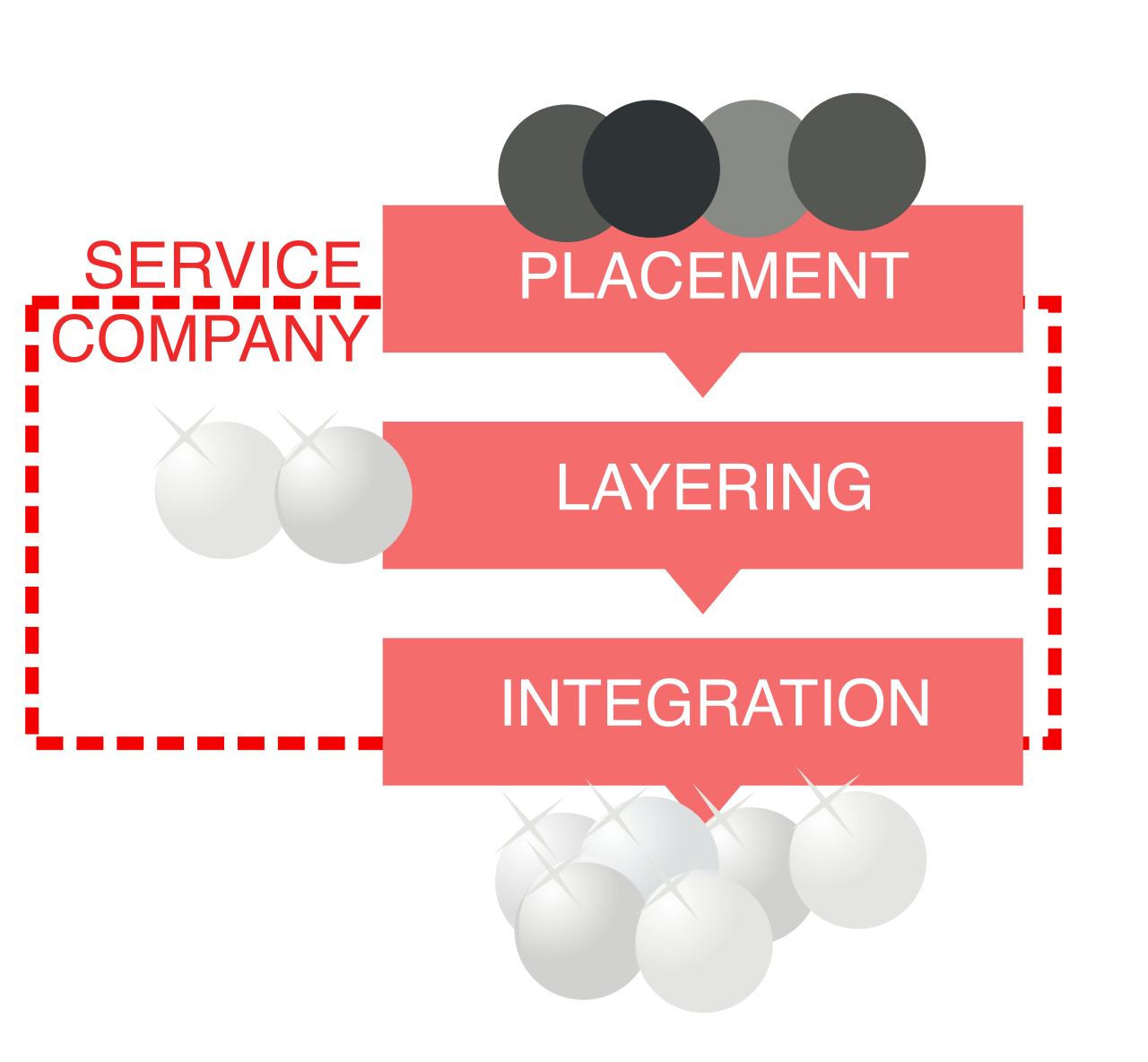
The ninth objective is the newest: it was inserted by the Economic Crime and Corporate Transparency Act 2023, reflecting Parliament's judgment that legal professionals are a recognised gatekeeping point for money laundering and fraud, and that regulators should be explicitly tasked with policing that risk rather than leaving it as an inference from "public interest."
Note the phrase "have regard to" — these are objectives to weigh, not a rigid hierarchy. That matters practically: a rule that restricts competition (e) might still be justified if it better protects consumers (d) or supports the rule of law (b).
Risk-based regulation: why the SRA doesn't audit every firm every year
The SRA does not apply uniform scrutiny to all 10,000-plus firms it regulates. Instead it operates a risk-based approach, concentrating supervisory resources on the firms and practice areas that pose the greatest risk to consumers and the public interest — think client account fraud, immigration work, or firms with a history of complaints — rather than spreading inspection effort evenly. This is a rational response to scale: a regulator with finite resources that tried to scrutinise every firm equally would under-protect the public from the small number of firms that actually cause the most harm.
The single most examinable structural idea in this area is the reserved legal activity. A reserved legal activity is one that, by law, only an authorised or exempt person may carry out — defined by section 12 and Schedule 2 of the LSA 2007. Section 12 lists exactly six:
| Reserved legal activity | Everyday example |
|---|---|
| Exercise of a right of audience | Advocating for a client at a court hearing |
| Conduct of litigation | Issuing and progressing court proceedings on a client's behalf |
| Reserved instrument activities | Preparing a transfer or charge of registered land |
| Probate activities | Preparing papers to found a grant of probate |
| Notarial activities | Acts reserved to notaries public |
| Administration of oaths | Administering a statutory declaration or oath |
The list is deliberately narrow. This is the concept students most often get backwards: most of what solicitors actually do all day is not reserved. Giving legal advice, drafting a will, negotiating a commercial contract, or advising on a divorce settlement are not reserved legal activities — an unqualified person can lawfully do all of them (badly, perhaps, but lawfully). Reservation is not a general monopoly on "legal work"; it is a narrow, activity-specific licence requirement attached to the six activities where the LSA 2007 judged the risk of harm from incompetent or unregulated practice to be highest — typically because the activity affects third parties or the court itself, not just the client who hired the practitioner.
Because the list is narrow, "am I doing something reserved?" is a more useful exam question than "am I doing something legal?" — a paralegal drafting a commercial contract is fine; a paralegal purporting to conduct litigation without supervision is not.
The criminal consequence of getting it wrong
Section 14 of the LSA 2007 makes it a criminal offence to carry on a reserved legal activity without being entitled to do so. The penalties scale with the mode of trial:

- On indictment: imprisonment for up to 2 years, a fine, or both.
- On summary conviction: imprisonment for up to 12 months, a fine, or both.
There is a further, separate consequence specific to advocacy and litigation: a person who purports to exercise a right of audience or a right to conduct litigation without entitlement is also guilty of contempt of the court concerned. This is a useful detail to hold onto — it means the same unauthorised act can trigger both a criminal prosecution under the Act and a contempt sanction from the court itself, because the court has an independent interest in protecting the integrity of its own proceedings.
On 25 November 2019, the SRA Standards and Regulations — universally shortened to STARs — replaced the old SRA Handbook. The shift in name reflects a genuine shift in regulatory philosophy: STARs are outcomes-focused, stating high-level standards of behaviour rather than prescribing exhaustive, box-ticking rules for every conceivable scenario. The regulator trusts solicitors to exercise professional judgment about how to achieve the right outcome, rather than handing them a checklist.
The seven Principles
STARs are built around seven SRA Principles, which apply to every solicitor and every firm the SRA regulates:
The seven SRA Principles — you must act in a way that:
- upholds the constitutional principle of the rule of law and the proper administration of justice
- upholds public trust and confidence in the solicitors' profession and in legal services
- acts with independence
- acts with honesty
- acts with integrity
- encourages equality, diversity and inclusion
- acts in the best interests of each client
Two things are worth noticing structurally. First, honesty (4) and integrity (5) are listed as separate Principles — a deliberate signal that they are conceptually distinct: honesty is about truthfulness, integrity is the broader quality of adhering to ethical standards even when no one would catch you failing to. Second, when two or more Principles conflict, the one that prevails is whichever best serves the public interest — particularly the public interest in the proper administration of justice. So if acting in a client's best interests (Principle 7) would require misleading the court, Principle 1 wins: the duty to the administration of justice overrides the duty to the client. This tie-break rule is one of the most heavily tested single facts in SQE1 ethics questions.
Two codes, not one
STARs split conduct obligations across two separate Codes:
- The Code of Conduct for Solicitors, RELs and RFLs — applies to individuals, regardless of the firm structure they practise in (in-house, private practice, or otherwise).
- The Code of Conduct for Firms — applies to authorised and recognised bodies and their managers and compliance officers.
This individual/entity split matters because a firm can breach its Code (say, on systems and controls) even where no individual solicitor has personally done anything wrong, and vice versa.
COLP and COFA: the two compliance anchors
Every SRA-regulated firm must appoint two named compliance officers:
- A Compliance Officer for Legal Practice (COLP) — responsible for ensuring the firm complies with its regulatory obligations generally (the Codes, the Principles, authorisation conditions).
- A Compliance Officer for Finance and Administration (COFA) — responsible specifically for compliance with the SRA Accounts Rules.
The split exists for the same reason the Law Society/SRA split exists: concentrating accountability in named individuals, one for general conduct and one for money, makes it much harder for a firm to diffuse responsibility when something goes wrong.
A right without a remedy is a hollow right. Professional indemnity insurance (PII) exists to close that gap: it protects clients and third parties by ensuring compensation is actually available if a solicitor or firm is found liable for a claim arising from their legal work. Without mandatory PII, a client with a valid negligence claim against an insolvent two-partner firm would have a judgment worth exactly nothing.

The SRA's Indemnity Insurance Rules require every SRA-authorised firm to hold qualifying PII that complies with the SRA Minimum Terms and Conditions (MTC). The MTC set a floor beneath which no policy may fall — insurers can offer more generous terms, but never less generous ones. The headline minimum limits:
| Firm type | Minimum PII cover (per claim) |
|---|---|
| Relevant recognised body / relevant licensed body (broadly, incorporated practices such as LLPs) | £3 million |
| All other firms (sole practitioners, traditional partnerships) | £2 million |
Two features of the MTC are easy to miss and heavily tested:
- There is no monetary limit on defence costs cover, however large the limit for the claim itself.
- Cover operates on an each-and-every-claim basis — each separate claim in a policy year attracts the full minimum limit, not a shared pool. A firm hit by three unrelated £2 million claims in one year is covered for all three, not just the first.
Run-off cover and what happens after a firm dies
When an SRA-regulated firm ceases to practise — closes, merges, or otherwise stops trading — its PII insurer must provide run-off cover for six years from the date the firm's insurance ends. Run-off cover protects clients who only discover a problem, and bring a claim, after the firm that caused it has already shut down; without it, closing a firm would be a convenient way to escape liability for past negligence.
Six years does not cover every possible late-emerging claim, however (professional negligence limitation periods can, in some circumstances, run longer). For claims surfacing after the statutory six-year run-off period expires, the Solicitors Indemnity Fund (SIF) provides supplementary cover for civil claims against solicitors — a safety net behind the safety net.
The Compensation Fund: discretionary, not a right
Separate again from PII is the SRA Compensation Fund — a discretionary fund of last resort that may compensate clients who have suffered loss because of dishonesty or a failure to account by an SRA-regulated person. The word "may" is doing real work here: no applicant has an enforceable legal right to a grant from the Compensation Fund; every payment is discretionary. The Fund is financed by contributions from the very firms and individuals the SRA regulates — in effect, the profession collectively insures the public against its own worst-behaving members, on a goodwill rather than contractual basis.
Complaints about service vs complaints about conduct
It is easy to conflate "my solicitor did a bad job" with "my solicitor broke the rules," but the SRA only handles the latter. Complaints about the service a client received — poor communication, delay, being overcharged — go to the Legal Ombudsman, operated by the Office for Legal Complaints, entirely separately from the SRA's conduct-based regulatory role. The SRA polices whether solicitors behaved properly; the Legal Ombudsman polices whether clients got decent service. A solicitor can lose a Legal Ombudsman complaint for shoddy service while remaining in perfectly good standing with the SRA, and vice versa.
Everything above is sector-specific regulation. The Equality Act 2010 is not — it is general UK law that binds solicitors and firms in exactly the two capacities in which anyone else is bound: as employers of staff, and as providers of services to clients. The Act consolidated and replaced almost all of the UK's prior anti-discrimination legislation (the Sex Discrimination Act, Race Relations Act, Disability Discrimination Act, and others) into one statute.
The nine protected characteristics
The Act protects nine characteristics: age, disability, gender reassignment, marriage and civil partnership, pregnancy and maternity, race, religion or belief, sex, and sexual orientation.
Disability gets its own statutory definition. Under section 6, a person is disabled if they have a physical or mental impairment that has a substantial and long-term adverse effect on their ability to carry out normal day-to-day activities. "Long-term" has a precise meaning too: an effect is long-term if it has lasted, or is likely to last, 12 months or more. A broken leg expected to heal in eight weeks is not a disability under the Act; a recurring condition expected to last over a year is.
The five wrongs the Act creates
| Section | Wrong | Definition |
|---|---|---|
| s.13 | Direct discrimination | Treating a person less favourably than others because of a protected characteristic |
| s.19 | Indirect discrimination | Applying a provision, criterion or practice (PCP) that puts people with a protected characteristic at a particular disadvantage, without objective justification |
| s.26 | Harassment | Unwanted conduct related to a protected characteristic that has the purpose or effect of violating dignity, or creating an intimidating, hostile, degrading, humiliating or offensive environment |
| s.27 | Victimisation | Subjecting a person to a detriment because they have done (or are believed to have done) a protected act — e.g. bringing discrimination proceedings |
| ss.20–21 | Failure to make reasonable adjustments | A duty to adjust so disabled people are not placed at a substantial disadvantage; failing that duty is itself unlawful discrimination |
Two of these repay closer attention.
Indirect discrimination is the only one of the five with a built-in defence. Unlike direct discrimination, which cannot be justified, indirect discrimination can be lawful if the person applying the PCP shows it is a proportionate means of achieving a legitimate aim. A firm requiring all trainees to work rotating night shifts might disproportionately disadvantage employees with childcare responsibilities (often correlating with sex) — but if the firm can show the requirement genuinely serves a legitimate business need and there is no less discriminatory way to achieve it, the PCP survives.

The duty to make reasonable adjustments for service providers — including law firms dealing with clients, not just employers — is anticipatory. This is the single most counter-intuitive point in this cluster: a firm cannot lawfully wait until a disabled client turns up and asks for step-free access or an accessible format before thinking about it. The duty requires adjustments to be considered in advance, as a matter of course, not reactively triggered by a specific request. A law firm whose only client meeting room is up a flight of stairs, with no plan for wheelchair users, is in breach the moment that becomes true — not only once a wheelchair-using client is turned away.
Where the Equality Act meets professional conduct
The Equality Act and the SRA's own rules are not alternatives — they stack. SRA Principle 6 (encouraging equality, diversity and inclusion) works alongside the Equality Act 2010, layering a professional conduct obligation on top of the general employment and service-provision law that already applies to everyone. The practical consequence: a breach of the Equality Act by a solicitor or firm can simultaneously amount to a breach of the SRA Principles and Codes of Conduct, exposing the same person or firm to separate regulatory sanction on top of whatever liability arises under the Equality Act itself (an employment tribunal award, for instance). One discriminatory act, two independent consequences.
The SRA closes the loop with its own sanctioning power, entirely separate from the criminal offences under section 14 or civil liability under the Equality Act. For misconduct — breach of the Principles, the Codes, the Accounts Rules, or the Equality Act in a way that also implicates Principle 6 — the SRA can impose sanctions ranging from a written rebuke or fine at the lower end, up to referral to the Solicitors Disciplinary Tribunal (SDT) for the most serious cases. The SDT is an independent statutory tribunal, separate from the SRA itself, which decides the most serious allegations of professional misconduct referred to it and has the power to suspend or strike off a solicitor entirely.
That separation between SRA (investigator/referrer) and SDT (independent decision-maker on the gravest cases) mirrors the Law Society/SRA split that opened this topic: at every level, the architecture of legal regulation in England and Wales keeps the body that accuses separate from the body that judges.