Human Rights and EU Law
A client walks into your office holding a letter from a local council threatening to evict her from social housing without a hearing. Another client, a journalist, has just been served with an injunction gagging a story two hours before publication. A third is furious that a decades-old EU regulation on food labelling has vanished from the statute book overnight. All three problems trace back to the same constitutional architecture: how the United Kingdom decides which external norms bind it, and on what terms it can take them back. That architecture is the Human Rights Act 1998 and the parallel story of EU law's rise and retreat in domestic law.

The Human Rights Act 1998 received Royal Assent on 9 November 1998 and came fully into force on 2 October 2000. Its genius — and the detail that trips up students who reach for the word "incorporation" — is that it does not formally incorporate the European Convention on Human Rights into UK law. Instead, section 1 defines "the Convention rights" as the specific rights and freedoms set out in the Articles and Protocols listed in Schedule 1 to the Act, and the rest of the statute builds a distinctly domestic mechanism for enforcing them. The Act gives further effect to Convention rights; the Convention itself remains an international treaty that the UK could, in principle, leave without repealing a single UK statute.
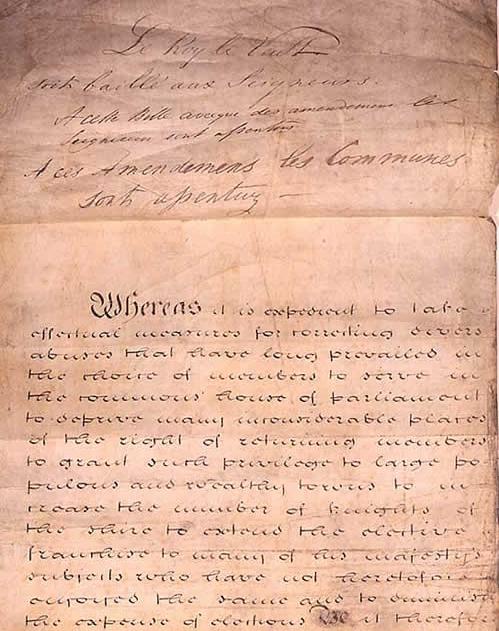
Convention rights (Schedule 1) you must know cold: Article 2 (right to life), Article 3 (prohibition of torture and inhuman or degrading treatment), Article 5 (right to liberty and security), Article 6 (right to a fair trial), Article 8 (right to respect for private and family life), Article 9 (freedom of thought, conscience and religion), Article 10 (freedom of expression), Article 11 (freedom of assembly and association), Article 14 (prohibition of discrimination in the enjoyment of Convention rights), and Article 1 of Protocol 1 (protection of property).
Not all of these rights behave the same way, and the distinction matters enormously for advising a client. Article 3 is an absolute right: no balancing, no derogation, no exceptions, ever. If your client has been tortured, there is no "legitimate aim" defence available to the state. By contrast, Articles 8, 9, 10, and 11 are qualified rights — the state may interfere with them, but only if the interference is (i) prescribed by law, (ii) pursuing a legitimate aim, and (iii) necessary and proportionate in a democratic society. That third limb is where most SQE1 scenario questions live, and it resolves through a structured proportionality analysis: is the aim of the interference sufficiently important; is the measure rationally connected to that aim; could a less intrusive measure have achieved the same result; and, standing back, has a fair balance been struck between the individual's rights and the interests of the community? Walk through those four questions in order whenever a client's qualified right has been restricted — it is the same skeleton a court would use, and examiners reward that structure.

Section 2: taking Strasbourg into account, not obeying it
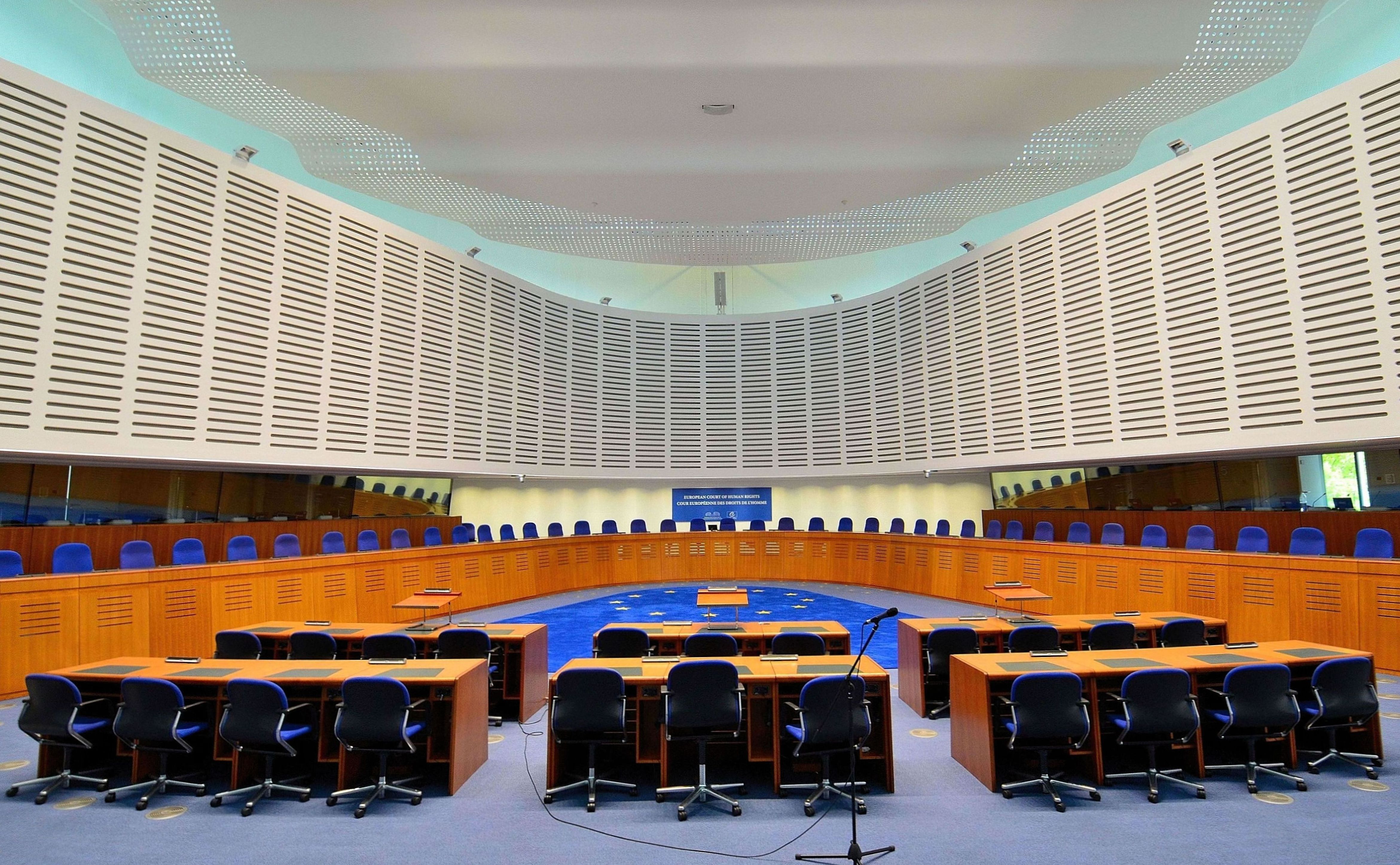
Section 2 requires a court or tribunal determining a question connected with a Convention right to take into account relevant judgments, decisions, declarations, and opinions of the European Court of Human Rights. Notice the verb: "take into account," not "follow" or "be bound by." A UK court is not strictly bound by Strasbourg jurisprudence as it would be by domestic precedent — it can depart from it, though it rarely does so lightly. This is the first thread in a pattern that runs through the whole topic: the UK borrows persuasive authority from an external body without ceding its own courts' final word.
Section 3: the interpretive obligation
Section 3 requires primary and subordinate legislation to be read and given effect, so far as it is possible to do so, in a way which is compatible with Convention rights. This obligation is retrospective in a specific sense: it applies to legislation whenever enacted, including Acts passed decades before the Human Rights Act itself existed. Section 3 is a powerful interpretive tool, but it has a hard limit — where compatible interpretation is genuinely impossible, section 3 does not affect the validity, continuing operation, or enforcement of the incompatible primary legislation, nor of incompatible subordinate legislation where the primary legislation prevents the incompatibility being removed. Parliament's Acts remain law even when a court cannot read them compatibly; the Act does not hand judges a power to strike legislation down.
Section 4: declarations of incompatibility
When section 3 reaches its limit, section 4 offers the fallback: certain courts (only the higher courts — the High Court and above, and equivalent courts; lower courts and tribunals have no such power) may make a declaration of incompatibility where a provision of primary legislation cannot be interpreted compatibly with Convention rights.

Crucially, a declaration of incompatibility does not invalidate the legislation. It does not affect the provision's validity, continuing operation, or enforcement, and it is not even binding on the parties to the proceedings in which it was made. It operates purely as a signal to Parliament — a formal, high-profile invitation to legislate — while preserving parliamentary sovereignty intact. This is the constitutional compromise at the heart of the whole Act: British courts can tell Parliament its law is incompatible with human rights, but they cannot overrule Parliament.

Section 6: unlawful acts of public authorities
Section 6 makes it unlawful for a public authority to act in a way which is incompatible with a Convention right. The definition of "public authority" is deliberately broad: it includes a court or tribunal, and any person certain of whose functions are functions of a public nature. It expressly excludes either House of Parliament (and anyone exercising functions connected with parliamentary proceedings) — Parliament cannot be sued under section 6 for the legislation it passes, which again protects parliamentary sovereignty. A body carrying out some public functions and some private ones is a "hybrid" public authority: it is only bound by section 6 in relation to its public acts, not its private ones — think of a private company running a state-contracted prison wing versus its ordinary commercial catering arm. There is also a built-in defence: a public authority is not liable under section 6 if primary legislation left it no choice but to act as it did.
Section 7: who can sue, and how long they have
Section 7 permits a person to bring proceedings against a public authority under the Act, or to rely on a Convention right in other proceedings, only if that person is or would be a "victim" of the unlawful act. This victim test deliberately mirrors the victim requirement under Article 34 ECHR (which governs standing to petition Strasbourg itself) — another instance of the domestic scheme tracking the Convention machinery it was built to domesticate.
Limitation period: Section 7(5) sets a one-year limitation period, running from the date of the act complained of, for proceedings under section 7(1)(a). This is subject to (a) any stricter time limit that applies to the specific procedure being used, and (b) the court's discretion to allow a longer period where it considers this equitable in all the circumstances. Advise clients early — a year sounds generous until a client sits on a grievance for eleven months before calling you.
Section 8: remedies and damages
Section 8 allows a court, in relation to an unlawful act of a public authority, to grant whatever relief or remedy is within its powers and which it considers just and appropriate. Damages are not automatic: they may be awarded only if the court is satisfied that an award is necessary to afford just satisfaction to the person affected, having taken account of all the circumstances of the case. When assessing quantum, courts must take into account the principles applied by the European Court of Human Rights itself under Article 41 of the Convention — so damages under the Human Rights Act are calibrated to Strasbourg's (often modest) approach, not to the more generous conventions of the domestic tort of negligence.

Sections 10, 12, 13, 14, and 19: the supporting machinery
A handful of further provisions round out the scheme, and each tends to appear as a single, precise exam point:

- Section 10 gives a Minister of the Crown power to make a remedial order amending legislation found incompatible — whether by a section 4 declaration or by a finding of the European Court of Human Rights — but only where there are compelling reasons to proceed by order rather than by primary legislation. Remedial orders under section 10 and Schedule 2 are ordinarily subject to a draft affirmative resolution procedure, requiring approval by both Houses before taking effect, though an urgent procedure exists allowing the order to take effect immediately, subject to later approval to remain in force.
- Section 12 imposes extra procedural safeguards, including notice requirements, wherever a court is considering relief that might affect the Article 10 right to freedom of expression — the provision your journalist client's lawyer will reach for first when resisting a pre-publication injunction.
- Section 13 requires a court to have particular regard to the importance of the Article 9 right to freedom of thought, conscience and religion, where a determination might affect a religious organisation's exercise of that right.
- Section 14 allows the UK to derogate from certain Convention rights in specified emergency circumstances, disapplying a designated derogation from the Act's effect for as long as it remains in force.
- Section 19 requires the Minister in charge of a Bill, in either House, to make a written statement before second reading — either that its provisions are compatible with Convention rights, or that the government nevertheless wishes to proceed despite being unable to make that statement. This is Parliament policing its own compatibility before a Bill even reaches committee stage.
What the Act did not create
One frequently tested point: the Human Rights Act did not create a free-standing tort of breach of privacy. There is no cause of action called "invasion of privacy" that a claimant can plead directly. What it did instead was shape the development of the existing equitable action for misuse of private information, through the courts' need to balance Article 8 (private life) against Article 10 (expression) whenever the two collide — precisely the tension your journalist scenario and a privacy-claimant scenario both sit on, from opposite sides.
The second half of this topic asks a different but structurally related question: how did EU law bind the UK, and what is left of that after Brexit?
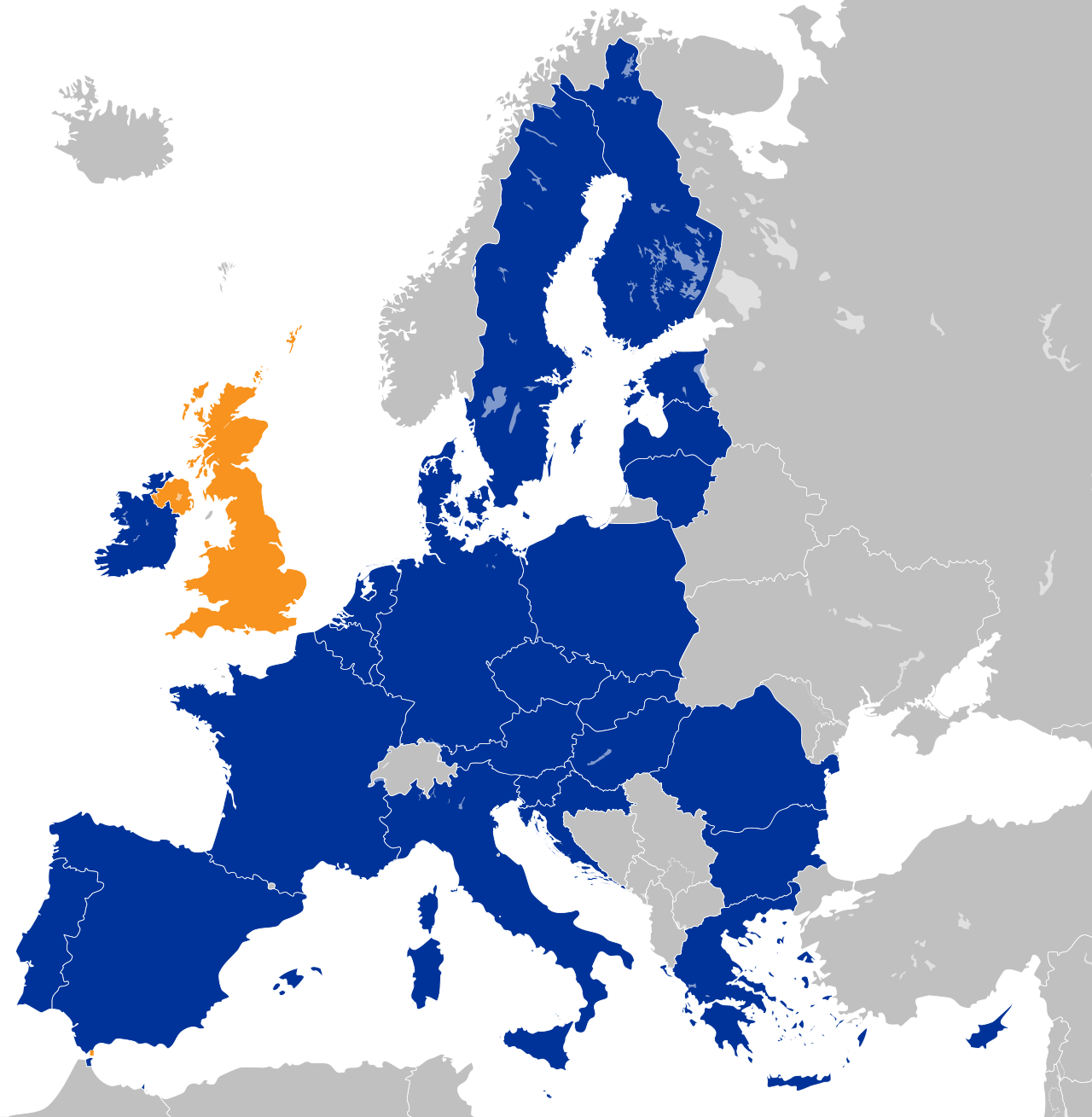
Before the UK's withdrawal from the EU, EU law took direct effect in the UK and enjoyed supremacy over inconsistent domestic law — but only because Parliament had given it that status. The vehicle was the European Communities Act 1972, which gave domestic legal effect to the UK's EU membership. Nothing about EU supremacy was inherent or self-executing from Brussels' side; it worked because a sovereign UK Parliament chose to make it work, through ordinary domestic legislation.
That is exactly why it could be undone the same way. The European Communities Act 1972 was repealed on 31 January 2020 ("exit day") by the European Union (Withdrawal) Act 2018, as amended by the European Union (Withdrawal Agreement) Act 2020. Rather than leaving a legal vacuum on that date, the 2018 Act converted the entire body of EU law applicable in the UK immediately before exit day into a body of domestic law called "retained EU law." Retained EU law comprised several categories: EU-derived domestic legislation (UK statutes and regulations implementing EU law), direct EU legislation as it had effect immediately before exit day, and retained general principles of EU law.

From "retained" to "assimilated": the 2023 Act
The next major shift came with the Retained EU Law (Revocation and Reform) Act 2023, which took a body of law originally preserved wholesale and began stripping out its distinctively "EU" character. With effect from 31 December 2023, the Act:
- Renamed "retained EU law" as "assimilated law."
- Abolished the principle of the supremacy of EU law and most retained general principles of EU law, as they had applied to domestic law.
- Meant courts are no longer required to interpret assimilated law consistently with EU law principles or pre-exit CJEU case law in the way the earlier retained EU law regime had demanded.
- Relaxed the test under which the Court of Appeal, the Supreme Court, and certain other specified courts may depart from retained EU case law, bringing it closer to the ordinary test those courts use for departing from their own precedent.
The practical effect for your client with the vanishing food-labelling regulation: that regulation did not disappear because of some EU-side decision. It was, and remains, a matter of UK domestic statute — Parliament converted it, Parliament renamed it, and Parliament can amend, repeal, or revoke it exactly as it could any other Act, because parliamentary sovereignty was never actually suspended. It was simply exercised, at scale, to preserve a body of law wholesale and then to unwind its special status.
The exception: Northern Ireland. Under the Windsor Framework, certain areas of EU law continue to apply in Northern Ireland in relation to trade in goods, notwithstanding the wider ending of EU law supremacy across the rest of the UK. This is a live carve-out, not a historical footnote — it reflects the practical reality of the Irish Sea border for goods and keeps a slice of genuine EU legal alignment operating within one part of the UK.

The residual constitutional role of EU law in the UK today, then, is confined to assimilated law as modified and preserved by domestic statute (subject to the Windsor Framework carve-out) — not to any continuing supranational EU legal order exerting authority over the UK from outside.

Step back from the statutory detail and both halves of this topic tell the same story. The Human Rights Act gives domestic effect to Convention rights without incorporating the Convention itself; sections 3 and 4 stop short of letting courts strike down primary legislation; the European Communities Act 1972 gave EU law supremacy purely as a matter of domestic statute, and Parliament withdrew that supremacy the same way it granted it. In every instance, an international or supranational norm binds the UK only because and only to the extent that an Act of Parliament says so — and what one Act of Parliament grants, a later Act of Parliament can modify or withdraw. That is parliamentary sovereignty in action, and it is the single idea an examiner is testing whenever a problem question asks you to explain why a "binding" European rule turned out not to bind a UK court, or why a declaration of incompatibility left an Act of Parliament fully in force.