Trustee Liability and Equitable Remedies
A trustee who sells the family silver to fund a personal gamble and a trustee who simply forgets to diversify a portfolio have committed the same wrong in the eyes of equity: both have breached the trust, and both face the same starting question — what must be done to put the trust fund back where it should have been? That question, and the web of remedies equity has built to answer it, is the spine of this topic. For a solicitor advising trustees or beneficiaries, getting the measure of liability wrong is not an academic slip; it is the difference between a client owing thousands and a client owing nothing, or between a client recovering nothing from an insolvent trustee and recovering everything from whoever holds the traceable proceeds instead.
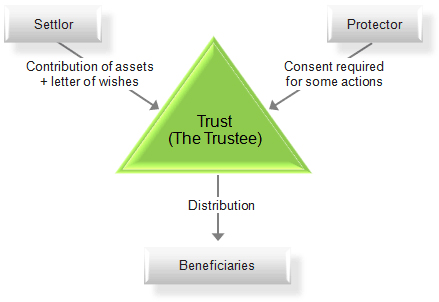
A breach of trust occurs whenever a trustee acts inconsistently with the trust instrument or with the general duties trust law imposes — there is no separate category for "small" breaches. Crucially, breach comes in two flavours: an act of commission, such as making an unauthorised investment, and an act of omission, such as failing to diversify the trust fund as a prudent trustee would. Both are treated identically.
What makes trusteeship unforgiving is that liability for breach of trust is strict. A trustee who genuinely and honestly believed the unauthorised investment was in the beneficiaries' best interests is still in breach — good faith is not a defence to liability, though, as you will see, it can be a route to relief from liability. This strictness is what makes the protective mechanisms later in this topic (s 61 relief, exemption clauses, beneficiary consent) so practically important: they are the only ways a trustee who has technically breached the trust can avoid paying for it.
The starting remedy for breach of trust is restorative, not punitive: the trustee must restore the trust fund to the position it would have occupied had the breach never happened. Where restoration in kind is impossible — the asset has been sold, the money spent — the trustee instead pays equitable compensation, calculated by comparing the trust fund's actual position against its hypothetical, breach-free position.
For decades, the interesting question was when that comparison is made. In Target Holdings Ltd v Redferns [1996] AC 421, the House of Lords held that equitable compensation is assessed at the date of trial, not the date of the breach. This matters enormously in practice: a solicitor who releases mortgage funds prematurely, in breach of trust, is not automatically liable for the whole sum released if, by the time of trial, the lender has obtained the security bargained for and suffered no ultimate loss.
That causal, loss-based approach was confirmed and sharpened by the Supreme Court in AIB Group (UK) plc v Mark Redler & Co Solicitors [2014] UKSC 58, which held that a but-for test of causation governs equitable compensation claims — the beneficiary must show the loss would not have occurred but for the breach. Two features distinguish this from ordinary common law damages, and both are easy exam traps:
![The UK Supreme Court, which absorbed the House of Lords' judicial functions in 2009 and decided AIB Group (UK) plc v Mark Redler & Co Solicitors [2014], confirming the but-for test of causation for equitable compensation.](https://cdn.theonlyever.com/lectures/topic-images/a38cae3fa8ff1fb3e93429704fc08e6bca5e66dd88e4b76dad80134df896ae77.jpg)
Key distinction: Foreseeability and remoteness of loss — core requirements for common law damages — play no role in equitable compensation. A trustee cannot escape liability by arguing the loss was an unforeseeable, remote consequence of the breach.
The flip side of but-for causation cuts in the trustee's favour: a trustee is not liable for losses that would have occurred regardless of the breach. If the mortgage security would have failed anyway due to a collapsing property market, the trustee-solicitor is not on the hook for that portion of the loss — this is precisely what AIB v Redler illustrates, where the bank recovered its actual shortfall rather than the full sum advanced.
Set-Off Between Gains and Losses
Trustees sometimes profit from one decision and lose on another. The general rule, illustrated in Bartlett v Barclays Bank Trust Co Ltd [1980] Ch 515, is that gains from one distinct breach of trust cannot be set off against losses from an unconnected breach — each breach is assessed on its own terms, so a trustee cannot dilute a costly failure by pointing to an unrelated success. The exception is where a single breach produces both gains and losses within the same transaction: there, netting is permitted, because the gain and loss share the same causal event.
Compensation Among Co-Trustees
Where co-trustees jointly commit a breach, they are jointly and severally liable to the beneficiaries — the beneficiaries can recover the full loss from any one of them, leaving that trustee to sort out the fairness of the burden afterwards. A trustee who has paid full equitable compensation may then seek contribution from a co-trustee also in breach. Contribution can escalate to a full indemnity in two situations: where the co-trustee seeking contribution was fraudulent or personally benefited from the breach, that trustee may be required to indemnify the innocent co-trustee completely rather than merely share the burden; and where a professional co-trustee (a solicitor, say) gave advice that a lay co-trustee reasonably relied upon, the professional may have to indemnify the lay trustee in full. This reflects a broader theme in equity: professional status raises both the standard expected and the share of blame allocated when things go wrong.
Courts also retain discretion to award interest on a sum of equitable compensation, to reflect the return the trust fund would otherwise have earned had the breach not occurred — compensation, after all, is meant to restore the fund's actual economic position, and a bare principal sum years after the event under-compensates for lost growth.
Sometimes a breach of trust is profitable — for the trustee, not the trust. Where a trustee makes an unauthorised profit, beneficiaries can elect between equitable compensation for their loss and an account of profits, which strips the trustee of the unauthorised gain. The account of profits is powerful precisely because it is loss-independent: a defaulting trustee must disgorge the profit regardless of whether the trust fund suffered any loss at all. If a trustee borrows trust money and turns it into a fortune through a lucky (if unauthorised) investment, the beneficiaries can claim that fortune even though the trust itself lost nothing.
No double recovery: A beneficiary cannot claim both equitable compensation for the loss and an account of profits from the same breach — that would let the beneficiary recover twice for one wrong. The beneficiary must elect the more favourable remedy.
Given how easily strict liability bites, equity and statute offer trustees several routes out.

Section 61 Relief
Section 61 of the Trustee Act 1925 empowers the court to relieve a trustee wholly or partly from personal liability for breach of trust. Relief requires the court to find that the trustee acted honestly and reasonably and ought fairly to be excused — a three-limbed test, and all three limbs must be satisfied. The burden of proof lies on the trustee seeking relief, not on the beneficiary opposing it, which matters for how these arguments should be pleaded and evidenced. Importantly, professional trustees are held to a higher standard when the court weighs "reasonableness" under s 61 — a solicitor-trustee cannot expect the same latitude a lay trustee, acting as a favour to a friend, might receive.
Exemption Clauses
A trust instrument may include a trustee exemption clause excluding or limiting liability for breach. The leading authority, Armitage v Nurse [1998] Ch 241, established that such a clause can validly exclude liability even for gross negligence, provided the trustee was not dishonest. There is, however, an irreducible floor:
A trustee exemption clause cannot exclude liability for the trustee's own dishonesty or fraud — honesty is the one duty equity will not let a settlor waive away.
Exemption clauses are also read purposively rather than literally: a trustee acting under such a clause remains liable where the conduct in question falls outside the scope of the powers the clause was meant to protect — a clause drafted to excuse investment errors, for instance, will not shield a trustee who does something the clause was never contemplating.
Beneficiary Consent and Impounding
A beneficiary who is of full age and capacity and absolutely entitled can consent to, or acquiesce in, a breach — and that consent bars that beneficiary's own claim against the trustee. Statute reinforces this: under section 62 of the Trustee Act 1925, where a beneficiary instigated, requested, or consented in writing to the breach, the court may impound that beneficiary's interest in the trust fund to indemnify the trustee. In effect, a beneficiary who pushed the trustee into the breach cannot then recover compensation funded by that same interest.
Trustee liability does not last forever. Section 21(3) of the Limitation Act 1980 imposes a general six-year limitation period for a beneficiary's action against a trustee for breach of trust, running from the date the right of action accrues. A beneficiary with only a future interest cannot sue until that interest falls into possession, so time simply does not run against them beforehand — a remainderman is not penalised for failing to litigate over a breach affecting an interest they cannot yet enjoy.
Two important carve-outs disapply the six-year period entirely under section 21(1):
| Section 21(1) exception | What it covers |
|---|---|
| Fraud limb | Any action against a trustee in respect of a fraud or fraudulent breach of trust to which the trustee was party or privy |
| Property limb | A claim to recover trust property, or its proceeds, still in the trustee's possession, or previously converted by the trustee |
The Supreme Court narrowed the fraud limb's reach in Williams v Central Bank of Nigeria [2014] UKSC 10, holding that it applies only to true trustees, not to third parties sued for dishonest assistance or knowing receipt — those secondary-liability claims remain subject to the ordinary six-year period even where the underlying breach was fraudulent. This is a favourite examiner trap: fraud by the trustee removes the limitation defence for the trustee, but does not automatically remove it for an assisting or receiving third party.
Separately, section 32 of the Limitation Act 1980 postpones the start of the limitation clock — for any claim, not just trust claims — where it is based on the defendant's fraud or deliberate concealment, until the claimant discovers, or could with reasonable diligence discover, the relevant facts.
Where no fixed limitation period applies, the equitable doctrine of laches can still bar a claim for an equitable remedy if the claimant has unreasonably delayed in a way that prejudices the defendant. Laches operates mainly to fill the space that a fixed statutory period does not cover — think of it as equity's backstop against stale claims rather than a competitor to the Limitation Act.
When a trustee misapplies trust property, the beneficiary's most powerful weapon is often not a personal claim against the (possibly insolvent) trustee, but a proprietary claim against whatever asset the misapplied property has become. Getting there requires tracing.
Tracing is a process, not a remedy. It is the exercise of identifying a new asset as the substitute for an original trust asset. It is not itself a cause of action — it simply identifies the target against which a proprietary claim can then be asserted.
Tracing is distinct from following, which tracks the very same asset as it passes from hand to hand, rather than identifying a substitute for it.
Common Law vs Equitable Tracing
Common law tracing is narrow: it lets a claimant trace value only through a clean, unmixed chain of substitutions, and it breaks down completely once trust money is mixed with other funds in a bank account. Equitable tracing is far more powerful — it can trace value through mixed funds, including a bank account holding money from several sources. The price of that power is a threshold requirement: a claimant relying on equitable tracing must first establish a pre-existing equitable proprietary interest in the original asset, such as an interest arising under a trust.
Tracing Through a Mixed Account
Once trust money lands in a trustee's own bank account alongside the trustee's personal funds, several presumptions and rules determine what the beneficiary can claim:
- Re Hallett's Estate (1880) 13 Ch D 696 presumes that a trustee who mixes trust money with personal money spends the trustee's own money first, leaving the trust money intact as long as possible — a presumption that favours the beneficiary.
- Re Oatway [1903] 2 Ch 356 refines this: where a trustee withdraws from the mixed fund, dissipates part of it, and invests the remainder in an asset that rises in value, the beneficiary may claim that investment ahead of the Re Hallett's Estate presumption — the beneficiary is not stuck with a worthless dissipated withdrawal while the trustee's "own money" conveniently ends up in the profitable asset.
- The lowest intermediate balance rule caps a beneficiary's tracing claim into a mixed account at the lowest balance the account held between the mixing and the tracing claim — you cannot trace into money that was never there.
- If the account later falls below the trust contribution and is subsequently topped up with the trustee's own money, the beneficiary cannot trace into that later deposit unless there is evidence the trustee intended to replace the trust money — an innocent coincidence of a later deposit does not resurrect a lost tracing claim.
Mixing With Other Innocent Contributors
Where the trustee's account holds money from multiple innocent contributors — not the trustee's own money — different rules apply. Clayton's Case established a first-in-first-out (FIFO) rule for identifying which contributor's money was withdrawn first from a mixed current account. But courts will disapply Clayton's Case where FIFO is impractical, contrary to the parties' intentions, or would produce an unjust result — a rule from banking practice was never built to deliver equitable justice between multiple defrauded contributors, and courts have not been shy about setting it aside. Instead, where trust money is mixed with money from another innocent trust or contributor, the general modern approach is that the parties share losses and gains rateably, in proportion to their respective contributions.

Tracing Into New Assets: Foskett v McKeown
The high-water mark of equitable tracing is Foskett v McKeown [2001] 1 AC 102, where the House of Lords confirmed that a beneficiary can trace trust money into a life insurance policy and claim a proportionate share of the policy proceeds — even though a life policy pays out on death, an event bearing no economic relationship to the amount of premium paid. This illustrates the beneficiary's key choice once a mixed-fund asset has been identified:

A beneficiary tracing into a mixed fund may elect between claiming a proportionate share of the resulting asset, or an equitable lien over it. An equitable lien secures repayment of the misapplied trust money as a charge on the asset, without claiming full beneficial ownership — useful where the asset's value might fall, since a lien guarantees at least the original sum (subject to the asset's value), while a proportionate share is riskier but can capture upside, as the Foskett claimants discovered.
A related device is subrogation: where trust money is used to discharge someone else's debt, the beneficiary can stand in the shoes of the discharged creditor and enforce that creditor's security — useful, for example, where trust money innocently pays off a mortgage that the beneficiary would otherwise have no claim to.
Why Proprietary Claims Matter, and Where Tracing Fails
A successful tracing claim matters most when the trustee is insolvent: a personal claim against an insolvent trustee is worth little more than a dividend in the estate, whereas a proprietary claim to a traceable asset gives the beneficiary priority over the trustee's general creditors. This is the practical payoff that makes the tracing machinery worth mastering.
But the right to trace is not indestructible. It is lost where the traceable asset is dissipated such that no substitute can be identified — the classic examples being money spent on a meal or a holiday, value consumed rather than converted. And a bona fide purchaser for value without notice of the trust who acquires the traced asset takes it free of the beneficiary's equitable interest, extinguishing the proprietary claim entirely (leaving, at most, a personal claim against the original wrongdoer).
Not every wrongdoer in a breach-of-trust story is a trustee. Equity imposes personal liability on two categories of outsider who become entangled in a breach.
Dishonest Assistance

A stranger who dishonestly assists in a breach of trust is personally liable to account as if a constructive trustee, even though that stranger never received a penny of trust property. The touchstone, per the Privy Council in Royal Brunei Airlines Sdn Bhd v Tan [1995] UKPC 4, is dishonesty, not knowledge — a shift away from older, knowledge-based formulations. Dishonesty itself is assessed by a combined test: what the defendant actually knew, judged against the objective standards of ordinary honest people. The Supreme Court in Ivey v Genting Casinos (UK) Ltd [2017] UKSC 67 confirmed this as a single, objective test for dishonesty across English law, removing any requirement that the defendant personally recognised their own conduct as dishonest — a defendant cannot escape liability by genuinely (if self-servingly) believing their sharp practice was fair.

Knowing Receipt
A stranger who knowingly receives trust property transferred in breach of trust, for that stranger's own benefit, is personally liable to account as a constructive trustee. BCCI (Overseas) Ltd v Akindele [2001] Ch 437 established the modern test: liability arises where the recipient's knowledge is such that it would be unconscionable to retain the benefit received — a single, flexible standard rather than a rigid checklist of knowledge categories.
Dishonest assistance vs knowing receipt: assistance requires no receipt of property at all — the wrongdoer merely helps the breach along; receipt requires that the defendant actually received trust property for personal benefit. Get this distinction right, because the limitation and remedial consequences (see Williams v Central Bank of Nigeria, above) can differ.
A defendant liable for knowing receipt who no longer holds the property remains personally liable to account for its value — disposing of the asset does not launder away the liability.
Constructive Trusts, Trustees de Son Tort, and Dealing Rules
Beyond assistance and receipt, a constructive trust may be imposed directly over property a fiduciary acquires in breach of the no-conflict or no-profit rules, giving beneficiaries a proprietary claim to it. And a person who was never validly appointed trustee but who intermeddles with trust property and takes on a trustee's functions is treated as a trustee de son tort, subject to exactly the same liabilities as a properly appointed trustee — equity looks at what someone does, not their paperwork.
Two further doctrines police a trustee's own dealings with trust property. The self-dealing rule renders a trustee's purchase of trust property voidable at a beneficiary's instance, regardless of how fair the price was — the conflict of interest alone is fatal. The fair-dealing rule is more forgiving where a trustee buys a beneficiary's equitable interest (rather than trust property itself): that purchase stands only where the trustee makes full disclosure and pays a fair price.
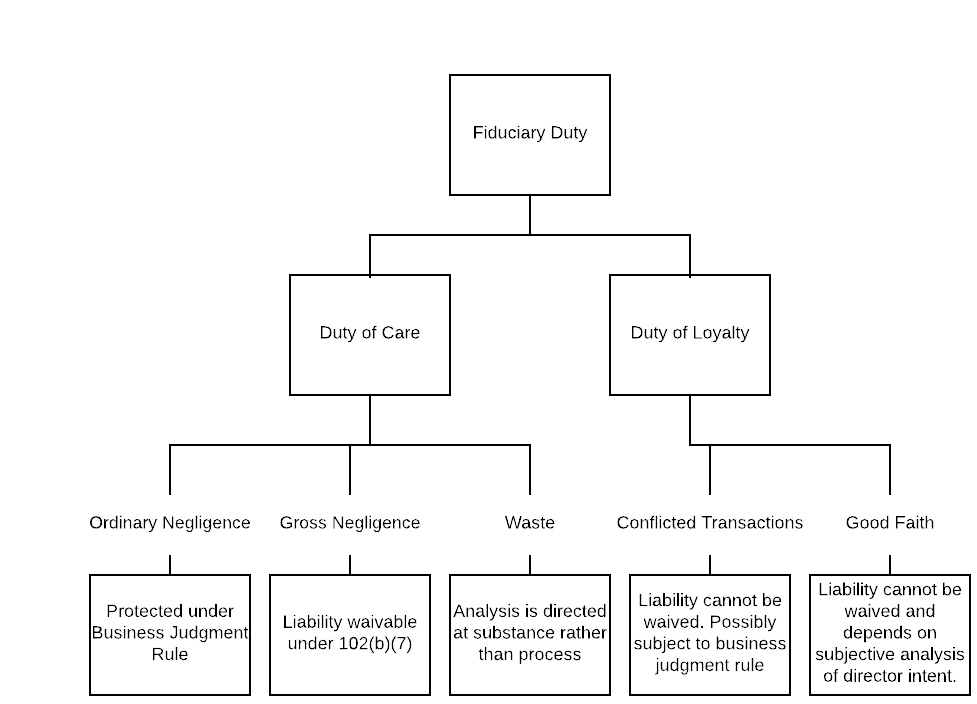
Finally, keep the conceptual map straight for the exam: a trustee's liability for breach of trust and liability for breach of a separate fiduciary duty (such as the no-conflict rule) can arise from the same set of facts — a trustee who profits from a conflicted position may face both — but they attract different remedies (equitable compensation and account of profits sit alongside constructive trusts and disgorgement of fiduciary gains). A client's problem rarely arrives labelled with the correct cause of action; part of the SQE1 skill is recognising which doctrinal box, or boxes, the facts actually belong in.