Main Idea and Supporting Details
Not sure you’re ready?
Take the ~3-minute readiness diagnostic and see where you stand.
When reviewing a patient's medical chart, you do not read it to memorize every individual word; you read it to extract the core clinical picture. If a patient presents with shortness of breath, elevated heart rate, and a history of smoking, the overarching clinical picture—the central idea—is a potential respiratory or cardiovascular event. The specific vital signs and patient quotes are merely the details supporting that conclusion. In the ATI TEAS 7 Reading section, interacting with a passage requires this exact same diagnostic precision. You must distinguish the general subject from the author’s specific argument, and separate the critical structural evidence from the supplementary noise.
Reading comprehension is not passive absorption; it is active deconstruction. To succeed on the TEAS, and subsequently in nursing and allied-health programs, you must learn to dissect a text with the same anatomical precision you will use to study the human body.

Before analyzing how an author builds an argument, we must separate three concepts that are frequently confused: the topic, the main idea, and the theme. Think of these as different depths of magnification on a microscope.
The Topic: The General Subject
The topic of a text is the general subject matter discussed by the author. It is the broadest categorization of the text. Because it is merely a category, a text's topic is usually expressed as a single word or a short phrase, and by rule, a text's topic is not grammatically expressed as a complete sentence.
If you are reading an article about the pathophysiology of Type 2 Diabetes, the topic is simply "Type 2 Diabetes" or "insulin resistance." It is what the text is about, but it tells you absolutely nothing about the author's specific stance on it.
The Main Idea: The Overarching Point
If the topic is the subject, the main idea is the specific overarching point an author makes about a text's topic. Because the author is making a distinct claim, a main idea is always grammatically expressed as a complete sentence.
Professor's Tip: When navigating a dense TEAS passage, asking "What does the author want me to know about the topic?" helps identify the main idea.
If the topic is "Type 2 Diabetes," the main idea might be: "Lifestyle modifications, such as dietary changes and consistent exercise, are the most effective first-line treatments for managing Type 2 Diabetes." Notice the shift? We have moved from a mere label (the topic) to a definitive statement (the main idea). Keep in mind that main ideas are primarily analyzed in informational texts like essays and textbooks—the exact types of texts you will encounter most frequently on the TEAS and in your medical coursework.
The Theme: The Universal Message
While topics and main ideas ground us in the facts of the text, a theme is a broad, universal lesson or message explored in a text. Unlike a main idea, a theme is an abstract idea rather than a specific factual statement about the text's subject.
Themes delve into the human condition: the resilience of the human spirit, the ethical cost of scientific advancement, or the inevitability of change. Because human experiences are complex, a single text can contain multiple different themes. Furthermore, while main ideas belong to informational texts, themes are most commonly analyzed in literary works like fiction and poetry. If you encounter a narrative passage on the TEAS, you will likely be asked to identify its theme.
Topic vs. Main Idea vs. Theme
| Concept | What is it? | Grammatical Form | Example | Best Found In |
|---|---|---|---|---|
| Topic | The general subject matter. | Word or short phrase (not a sentence). | Infection control. | All texts. |
| Main Idea | The specific point the author makes about the topic. | Complete sentence. | Hand washing is the most critical step in infection control. | Informational texts (essays, textbooks). |
| Theme | A broad, universal lesson or abstract idea. | Abstract phrase or sentence. | Small, unseen actions can have life-saving consequences. | Literary works (fiction, poetry). |
When you isolate a single paragraph, the author’s main idea will present itself in one of two ways: explicitly or implicitly.
An explicit main idea is directly stated by the author within the body of the text. You can point your finger directly at the sentence on the screen. In contrast, an implied main idea is not directly stated anywhere within the text. When faced with an implied main idea, a reader must infer an implied main idea by synthesizing the text's supporting details.
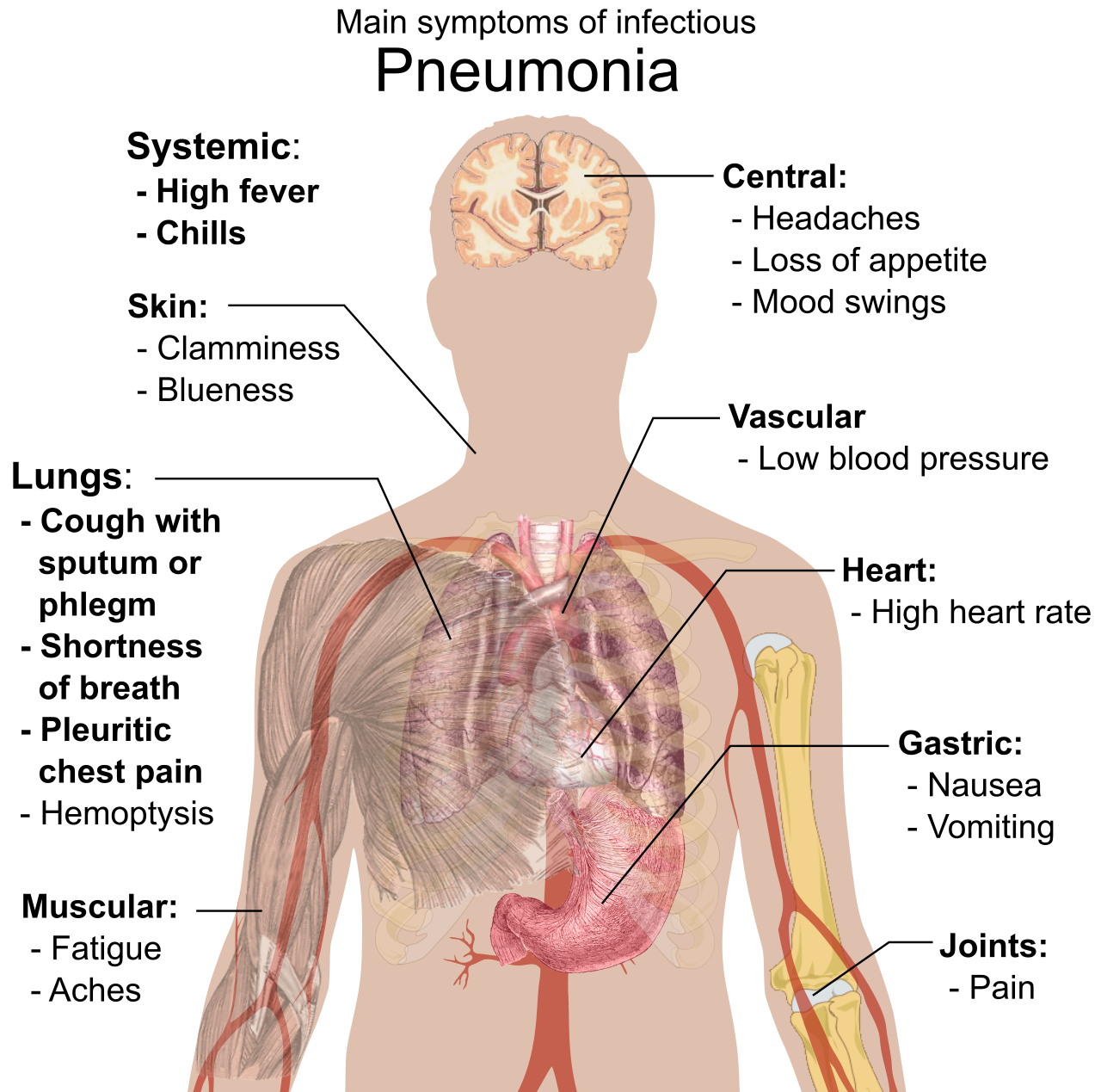
Think of an implied main idea like diagnosing an unstated illness. If a patient presents with a fever of 103°F, a productive cough, and chest pain, the chart might not explicitly state "Pneumonia" in the first line. You have to synthesize those symptoms (the supporting details) to arrive at the diagnosis (the implied main idea).
The Topic Sentence
When a paragraph features an explicit main idea, the sentence that carries it is known as the topic sentence. A topic sentence explicitly states the main idea of a single paragraph.
Where do we find it? Authors generally want to prime their readers, so a topic sentence is most frequently located as the first sentence of a paragraph. However, texts are dynamic. Depending on the author's rhetorical strategy, a topic sentence can be placed in the middle of a paragraph (often following an introductory hook or background context) or a topic sentence can be placed at the very end of a paragraph (acting as a concluding punchline after a buildup of evidence).
A main idea cannot stand alone; it requires a structural foundation. Supporting details provide evidence to back up a paragraph's main idea. However, not all details carry the same weight. You must learn to distinguish the load-bearing pillars from the decorative paint.
Major Supporting Details
Major supporting details directly explain or validate the main idea. They are the primary reasons, arguments, or foundational pillars of the paragraph.
To help readers navigate these structural pillars, authors use transition words to logically connect major supporting details to the main idea. You can often spot them by looking for signposts: sequential transition words like 'first', 'next', and 'finally' often introduce major supporting details.
Minor Supporting Details
If major details support the main idea, what supports the major details? Minor supporting details provide specific elaboration for major supporting details. They are the granular evidence.
In TEAS passages, minor supporting details often take the form of specific statistics (e.g., "78% of studied patients showed improvement") or minor supporting details often take the form of specific examples or direct quotes (e.g., "According to Dr. Smith, 'The cellular response is immediate.'").
Here is the ultimate test to distinguish the two: eliminating minor supporting details does not change the core meaning of a text. If you cross out a statistic or a brief quote, the author’s main argument still stands perfectly intact, resting comfortably on the major details.
Clinical Analogy:
- Main Idea: The patient is experiencing severe dehydration.
- Major Supporting Detail: The patient exhibits poor skin turgor and extreme lethargy.
- Minor Supporting Detail: The patient stated, "I haven't drank a glass of water since Tuesday."
If you remove the direct quote (the minor detail), the primary clinical finding (the major detail) still entirely proves the diagnosis (the main idea).

Paragraphs rarely exist in isolation. On the TEAS, you will be asked to read multi-paragraph passages. When you zoom out to view the entire passage, the terminology shifts slightly.
The central idea of a multi-paragraph text connects the main ideas of the individual paragraphs. It is the grand umbrella under which all the smaller paragraph-level main ideas fit. In academic writing, the central idea of a multi-paragraph text is typically called a thesis statement.
Just as a topic sentence anchors a single paragraph, the thesis statement anchors the entire essay. Predictably, a thesis statement is frequently located in the introductory paragraph of a multi-paragraph text, establishing the author's argument before the evidence is presented. Furthermore, to ensure the reader walks away with the core message, a thesis statement is frequently restated in the concluding paragraph of a multi-paragraph text.
How to Uncover the Central Idea
If you are struggling to find the overarching central idea of a dense, highly technical passage, there is a highly effective, systematic method to reveal it: Readers can synthesize the topic sentences of each paragraph to help determine the central idea of a multi-paragraph text.
If you read only the topic sentence of paragraph one, the topic sentence of paragraph two, and the topic sentence of paragraph three, you will have essentially read an executive summary of the entire passage. Those topic sentences form a clear, logical bridge that points directly to the author's central thesis.
Mastering this hierarchy—from the broad topic, to the central thesis, to paragraph-level main ideas, down to the major and minor details—transforms reading from a chore of memorization into a rigorous exercise in logic. When you sit for the TEAS, approach every text like a diagnostic puzzle, and the correct answers will reveal themselves in the structure.