Summarizing Text
Not sure you’re ready?
Take the ~3-minute readiness diagnostic and see where you stand.
When a critical care nurse hands off a patient at the end of a twelve-hour shift, they do not recount every sip of water the patient took, nor do they recite the exact, localized phrasing of every conversation held with the patient’s family. Instead, they deliver a precise, filtered report: the patient’s primary diagnosis, the most crucial interventions performed, and the current trajectory of their vital signs. This process of distillation is precisely the mechanical operation of summarizing a text. Reading comprehension is an exercise in signal processing. The author's main idea is the signal; the rhetorical flourishes, minor examples, and the reader's own internal assumptions are the noise.
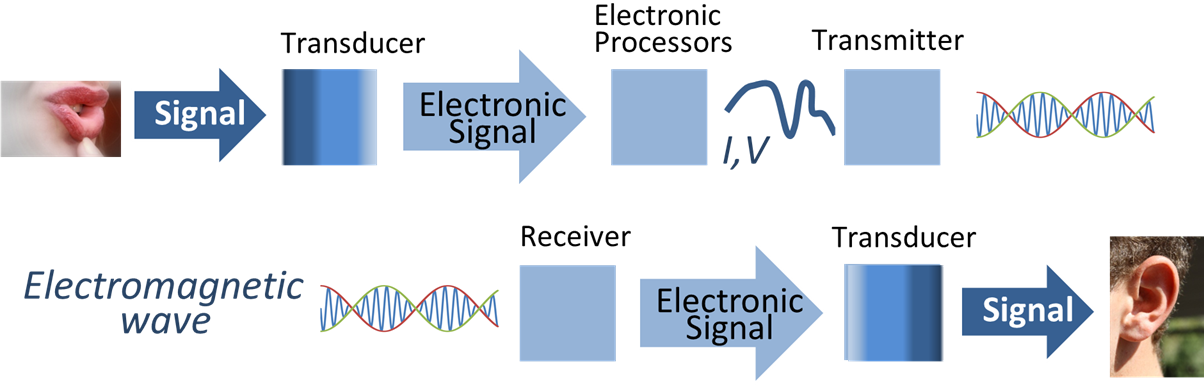
Summarizing is the act of extracting the signal while discarding the noise.
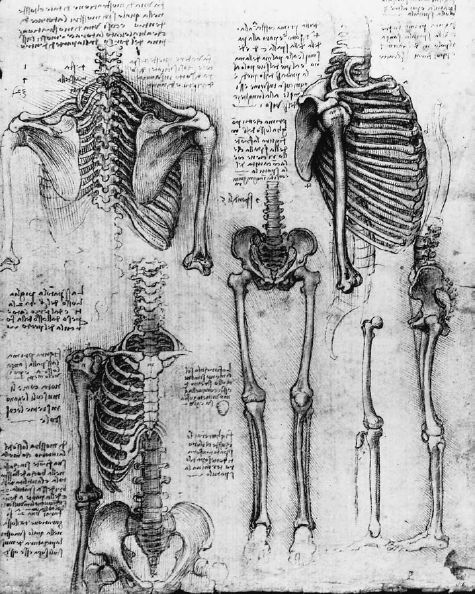
A summary is, at its core, a condensed version of an original text. If you think of a reading passage as a complex biological system, the summary is the skeleton. It provides the fundamental structure, but it lacks the skin, hair, and outward aesthetic details.
To build this structure accurately, an effective summary must do two things simultaneously:
- It captures the overarching main idea of the original text.
- It includes the primary supporting details that hold that main idea together.
Because it strips away everything else, a summary significantly reduces the word count of the original text. You are collapsing pages of exposition into a single, dense paragraph, or reducing a long paragraph into a single sentence. For a nursing student reading a multi-page journal article on the efficacy of a new intravenous antibiotic, the summary simply states the drug's overarching success rate, its primary mechanism, and its most common side effects.
Key Principle: If a sentence in a summary does not directly uphold the overarching main idea, it does not belong.
One of the most common cognitive traps students fall into is confusing summarizing with paraphrasing. While both require you to process information, their mechanical functions are entirely different.
Paraphrasing involves rewording a specific portion of text into the reader's own words. When you paraphrase, you are examining the text under a microscope. Because you are simply translating the author's phrasing into your own vocabulary, a paraphrase is typically similar in length to the original referenced text. Furthermore, a paraphrase retains specific, minor details from a localized section of text.
Summarizing differs from paraphrasing by focusing broadly on the overarching points of an entire text rather than specific sentences.
| Feature | Summarizing | Paraphrasing |
|---|---|---|
| Scope | Macro: Covers the entire passage. | Micro: Covers a specific sentence or paragraph. |
| Length | Significantly shorter than the original text. | Approximately the same length as the original text. |
| Detail Level | Excludes minor details; keeps only primary points. | Retains specific, minor details from a localized section. |
| Function | To provide an overarching overview. | To clarify or reword a specific localized thought. |
In science, an observer must not interfere with the experiment. In reading comprehension, the reader must not interfere with the text.
A summary must maintain a strictly objective tone. This means an effective summary completely excludes the reader's personal opinions, and it completely excludes the reader's personal biases. Your job is to act as a mirror, reflecting only what is physically printed on the page.
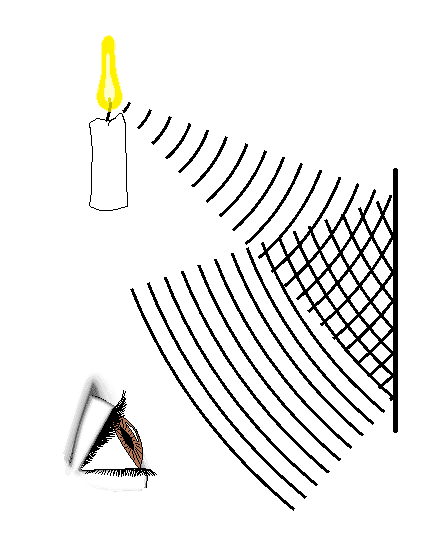
Furthermore, a summary must accurately reflect the author's original intent. Even if you profoundly disagree with the author's conclusion, your summary must state their conclusion exactly as they intended it. Adding outside information to a summary misrepresents the original text. If a passage discusses the historical use of willow bark for pain relief, but never mentions modern aspirin, you cannot add a sentence about aspirin to your summary—even if you know it to be a medical fact. In the context of a summary, adding outside truth is a structural error.
If objectivity is about keeping yourself out of the summary, filtering is about keeping the author's clutter out of the summary.
A summary must omit extraneous details from the original text. Extraneous details are pieces of information that distract from the primary message of a passage. They might be interesting, they might be colorful, but they are not structurally load-bearing.
Similarly, a summary must omit minor, highly specific examples from the original text. If an author writes a paragraph arguing that hospitals are adopting new sterilization technologies, and spends five sentences describing the specific UV light arrays used at one clinic in Ohio, the UV light array is a minor, highly specific example. It is extraneous. The summary only needs to note that hospitals are adopting new sterilization technologies.

How the ATI TEAS 7 Tests This Concept
The ATI TEAS 7 Reading section requires test-takers to distinguish a strong summary from incorrect choices containing opinions or minor details.
When you sit down for the TEAS exam, the test writers will deliberately try to trick you using your own logic against you. They know that when you see a statement that is factually true according to the passage, your instinct is to select it.
Exam Warning: Incorrect summary options on multiple-choice reading exams frequently include factually true statements that are too narrow in scope.
A sentence that focuses exclusively on one specific paragraph's detail cannot serve as the summary for an entire multi-paragraph passage. If you are asked to summarize a four-paragraph essay, and option "C" perfectly paraphrases paragraph three, option "C" is an incorrect summary. It is a localized detail masquerading as a global overview.
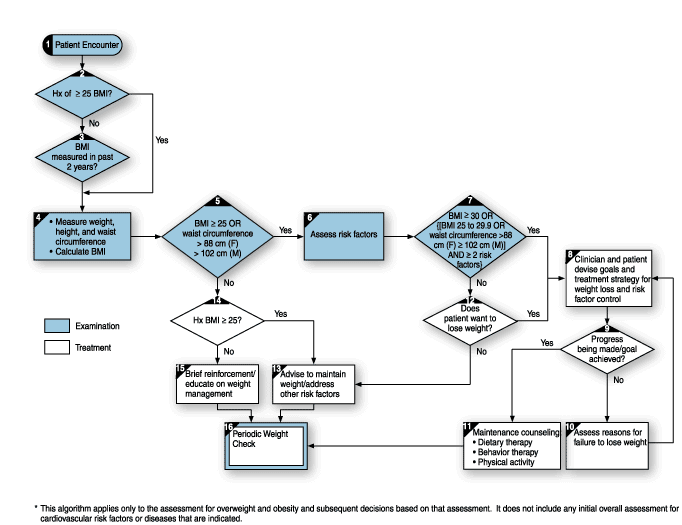
When confronted with a multi-paragraph passage on the ATI TEAS 7, you need a systematic, repeatable method to break it down. Think of it like taking a patient's history: you follow a specific order of operations to ensure you miss nothing vital.
Step 1: Identify the Overall Main Idea
The first step in summarizing a multi-paragraph passage is identifying the overall main idea. What is the single, overarching thesis the author is trying to convey? Often, this is introduced in the first paragraph and concluded in the final paragraph. Write this idea down mentally (or on scratch paper) in a single sentence.
Step 2: Extract Key Supporting Points
A well-structured passage is built logically. As a rule of thumb, each paragraph in a multi-paragraph passage typically contributes one key supporting point to the overall main idea. Look at each paragraph individually and ask: What is the primary reason this paragraph exists? Filter out the highly specific examples and extract that single supporting pillar.
Step 3: Synthesize and Sequence
An accurate summary of a multi-paragraph text synthesizes the overall main idea and the primary supporting points of each individual paragraph. You weave these pillars together into a cohesive whole.
Crucially, an accurate summary preserves the original text's logical flow of ideas and preserves the chronological order of events. If the original passage describes the symptoms of a disease, followed by its diagnosis, and finally its treatment, your summary must follow that exact same sequence. You cannot summarize the treatment before mentioning the symptoms; doing so destroys the author's logical architecture.
Putting It All Together: A Mental Check
Before you finalize your answer on the exam, run it through this final diagnostic checklist:
- Is it substantially shorter than the text?
- Does it cover the entire passage, or just a piece of it?
- Are my own opinions, biases, and outside knowledge completely excluded?
- Is the chronological and logical flow preserved?
- Are all minor examples and extraneous distractions omitted?
Mastering the art of the summary is not just about passing a multiple-choice exam. It is a foundational skill for clinical practice. Every time you review a patient's chart, read a specialist's consultation note, or catch up on the latest medical guidelines, you will be performing this exact cognitive distillation. You are learning to see the signal through the noise.