Word Meaning in Context
Not sure you’re ready?
Take the ~3-minute readiness diagnostic and see where you stand.
Reading a patient's chart at the end of a chaotic twelve-hour shift requires the exact same cognitive machinery as parsing a complex reading passage on the ATI TEAS 7 exam. When an attending physician writes that a patient’s condition is "intractable," you do not have the luxury of stepping away to consult a dictionary. Instead, you instantly scan the surrounding environment—the vital signs, the preceding sentences in the notes, the described symptoms—to deduce exactly what "intractable" means. Language is not a static list of definitions to be memorized via flashcards; it is a dynamic system of clues, structures, and emotional weights. To succeed on the TEAS, and subsequently in a clinical setting, you must learn to deduce a word's meaning based entirely on the ecosystem in which it lives.
Before we look at how a word interacts with its neighbors, we must understand its internal anatomy. Just as you break down the human body into systems, organs, and tissues, you can dissect words to find their meaning.
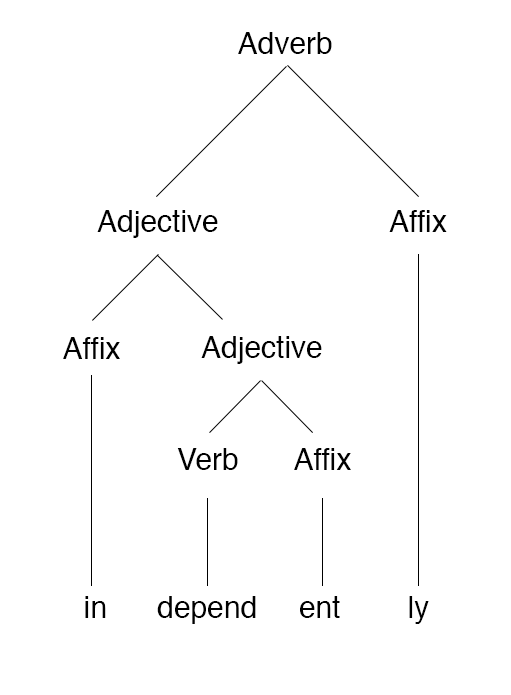
When you encounter an unfamiliar term, look first at its physical structure.
- A root word provides the core meaning of an unfamiliar word. Think of the root as the primary organ—like cardi (heart) or derm (skin).
- Prefixes alter the meaning of a root word. Attached to the front, they act like modifiers. Add brady- (slow) to cardia, and you get bradycardia (a slow heart rate).
- Suffixes can change the part of speech of a root word. Attached to the end, suffixes dictate how the word functions grammatically. Adding -itis (inflammation) to derm creates dermatitis (a noun representing a condition), while adding -ic to derma creates dermic (an adjective describing something related to the skin).
Understanding this anatomy is a powerful test-taking tool. Identifying the part of speech of an unknown word helps narrow down the possible dictionary definitions of that word. If the TEAS asks for the definition of "malleability" and you recognize the -ity suffix marks it as a noun denoting a state or quality, you can instantly eliminate multiple-choice options phrased as verbs or adjectives.
Words have two distinct layers of meaning: the objective and the subjective. You must be able to navigate both to fully comprehend a text.
Denotation is the literal dictionary definition of a word. It is the objective, factual meaning stripped of any emotional baggage.
Connotation represents the emotional or cultural associations attached to a specific word. It is the "feeling" the word leaves behind in the reader's mind.
Consider a clinical chart describing a patient's low body weight. The words slender, thin, and emaciated all share the same basic denotation: possessing little flesh or fat. However, they carry vastly different emotional weights:
- A word's connotation can be categorized as positive. (Slender implies health, grace, and fitness).
- A word's connotation can be categorized as negative. (Emaciated implies sickness, starvation, and fragility).
- A word's connotation can be categorized as neutral. (Thin is merely an objective physical descriptor).
Why does this matter on a standardized reading exam? Because authors select words with specific connotations to establish the emotional tone of a text. If an author describes a hospital administration's financial policy as "frugal" (positive/neutral connotation), the tone is approving or objective. If they describe the exact same policy as "stingy" (negative connotation), the tone is instantly revealed as critical. The TEAS will test your ability to read between these emotional lines.
When you cannot dissect a word internally, you must examine its external environment. Context clues are the surrounding words that provide hints about the meaning of an unknown word. Think of context clues as the diagnostic symptoms that allow you to identify an underlying linguistic condition.
Skilled readers unconsciously use five primary types of context clues:
1. Definition Context Clues
Sometimes, the author hands you the answer directly. Definition context clues directly state the meaning of a word within the same sentence.
- Example: "The patient suffered from aphasia, an inability to comprehend or formulate language due to brain damage."
- Mechanism: The phrase following the comma gives you the exact definition.
2. Synonym Context Clues
Synonym context clues use a word with a similar meaning near an unfamiliar word to explain the unfamiliar word.
- Example: "The surgeon’s meticulous approach was evident in her careful, precise suturing."
- Mechanism: "Careful" and "precise" act as synonyms, revealing that meticulous means paying extreme attention to detail.
3. Antonym Context Clues
Antonym context clues use a word with an opposite meaning to reveal the definition of an unknown word.
- Example: "The initial lab results were ambiguous, but the follow-up tests were crystal clear."
- Mechanism: By establishing an opposite relationship with "crystal clear," the text reveals that ambiguous means unclear or open to multiple interpretations.
4. Contrast Context Clues
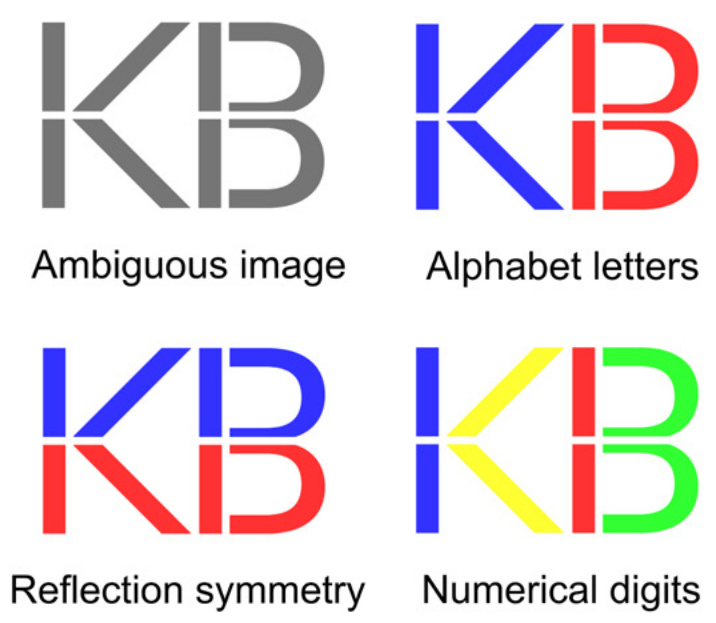
Similar to antonyms, contrast context clues highlight differences between words to clarify meaning. Authors often signal these differences through specific transitional vocabulary.
- Signal words for contrast context clues include the word 'unlike'. ("Unlike the benign cyst, this tumor is malignant.")
- Signal words for contrast context clues include the word 'although'. ("Although the medication is efficacious, it comes with severe side effects.")
5. Example Context Clues
Example context clues list specific instances to illustrate the meaning of a broader unfamiliar term.
- Example: "Standard PPE, such as gloves, N95 masks, and face shields, must be worn in this ward."
- Mechanism: By listing physical barriers worn for protection, the sentence illustrates the definition of Personal Protective Equipment without formally defining it.

English is notoriously tricky because it routinely reuses the same symbols to mean entirely different things. Homographs are words that share the exact same spelling. However, despite looking identical on the page, homographs possess multiple distinct dictionary meanings.
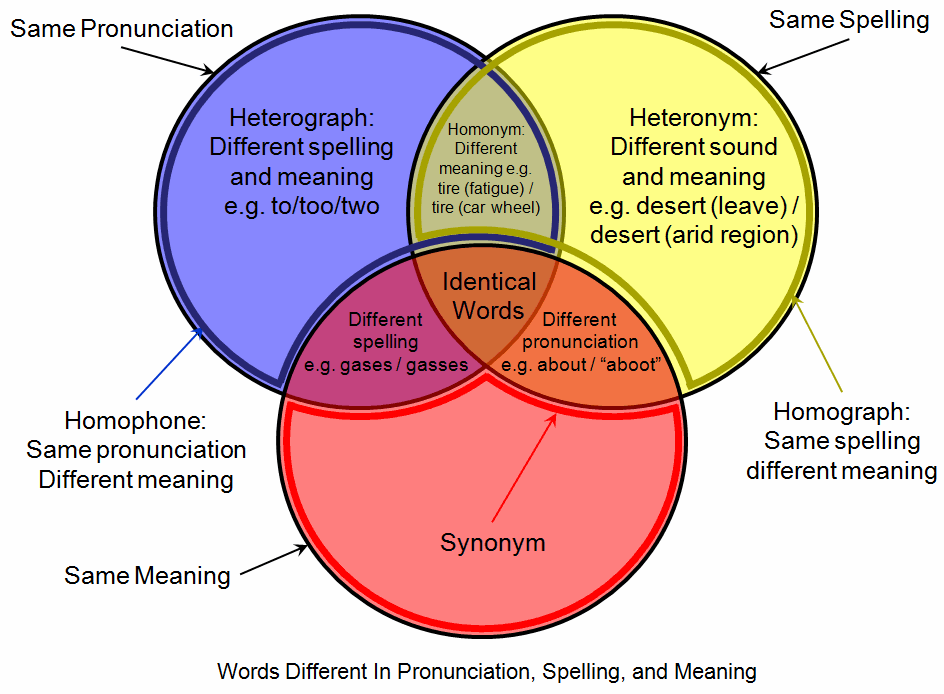
Take the word minute.
- Minute (noun): A unit of time equal to 60 seconds.
- Minute (adjective): Extremely small or insignificant.
Or the word tear.
- Tear (noun): A drop of salty liquid secreted by the eye.
- Tear (verb): To pull apart or rip something by force.
Because homographs are visually identical, you cannot rely on spelling to deduce their meaning. Therefore, readers must analyze the surrounding sentence structure to determine the intended meaning of a homograph. If a sentence reads, "The physician found a minute fracture in the tibia," examining the structure reveals that minute is acting as an adjective modifying "fracture," pointing you toward the definition "extremely small."
Patients will not always describe their symptoms using pristine, literal terminology. A patient might say, "It feels like an elephant is sitting on my chest," or "My head is killing me." These expressions are examples of figurative language. Figurative language expresses ideas beyond the literal, everyday meanings of the words. It uses imagination and comparison to convey complex feelings and concepts powerfully.
The ATI TEAS 7 frequently tests your ability to identify and interpret five major forms of figurative language:
| Type | Definition | Clinical / Real-World Example |
|---|---|---|
| Simile | A simile compares two distinct things using the word 'like'. Additionally, a simile compares two distinct things using the word 'as'. | "The patient's skin was as cold as ice." or "The ER was buzzing like a beehive." |
| Metaphor | A metaphor makes a direct comparison between two unrelated things. Unlike a simile, a metaphor asserts that one subject is another subject entirely, omitting 'like' or 'as'. | "The waiting room was a zoo." (It is not like a zoo; the sentence claims it is a zoo). |
| Personification | Personification attributes human qualities to non-human entities. | "The vital signs monitor shrieked angrily across the quiet ICU." (Monitors do not feel anger; humans do). |
| Idiom | An idiom is a culturally established phrase with a figurative meaning. Crucially, the figurative meaning of an idiom is entirely different from the literal translation of its component words. | "The patient kicked the bucket," or "The nurse is feeling under the weather." (No buckets are being kicked, and no one is standing in the rain). |
| Hyperbole | Hyperbole utilizes extreme exaggeration for emphasis. It is not meant to be taken literally, but rather to communicate the intensity of a situation. | "I've been waiting for my test results for a million years," or "This textbook weighs a ton." |
Why Figurative Language Matters
In academic reading, recognizing figurative language prevents catastrophic misinterpretations. If an author uses a metaphor, and you attempt to read it strictly for its denotation (its literal dictionary definition), the text will make zero sense. By understanding when an author is utilizing hyperbole for emphasis, or an idiom to connect culturally with the reader, you elevate your reading comprehension from basic word-recognition to true, sophisticated analysis.
When you sit down for the TEAS 7, treat every reading passage like a patient. Look for the structural symptoms (roots and affixes). Read the environmental signs (context clues). Assess the emotional state (connotation). By mastering these techniques, you transform reading from a passive task into an active, diagnostic science.