Fact Versus Opinion and Bias
Not sure you’re ready?
Take the ~3-minute readiness diagnostic and see where you stand.
Imagine reading a patient's handoff report. "The patient's core body temperature is 101.4°F. The patient is anxious and has the worst attitude." The first sentence determines your clinical intervention; the second risks clouding your judgment with the previous nurse's frustration. The ability to distinguish between objective reality and subjective interpretation is not merely a reading comprehension skill—it is the very foundation of evidence-based practice. To succeed on the ATI TEAS 7, you must master the mechanics of evaluating claims, dissecting how authors use language to obscure the line between what is true and what is merely felt.
To analyze a text like a clinician analyzes a lab panel, we must first separate the structural foundation of the text into two distinct categories: verifiable facts and subjective opinions.
The Architecture of a Fact
A fact is a statement capable of being objectively proven through verifiable evidence. It exists independently of the author's feelings. To prove it, facts rely on measurable data for verification, facts rely on historical records for verification, or facts rely on scientific evidence for verification. Because they are rooted in the physical and historical universe, factual statements often include specific dates, precise measurements, and geographical locations.
The Litmus Test for Facts A statement of fact is characterized by the ability to be tested for accuracy.
Here is the counterintuitive beauty of scientific and textual analysis: a testable statement remains a factual claim even if evidence ultimately proves the claim false. If an author writes, "The human femur contains 400 bones," they are making a factual claim. It is objectively, demonstrably false, but structurally, it is a factual claim because we can test it.

Furthermore, a statement containing statistical data is a factual claim, but you must treat data with academic skepticism. A factual claim containing statistical data requires independent verification to be proven true. You do not simply trust a statistic; you verify its source.
The Anatomy of an Opinion
Conversely, an opinion is a subjective statement expressing a belief or a subjective statement expressing a personal judgment. Because opinions live entirely within the human mind, opinions cannot be proven true, and equally, opinions cannot be proven false. You can test a patient's blood pressure; you cannot test whether the hospital's new policy is "fair."
You can instantly spot an opinion by looking for structural signal words:
- Value Words: Adjectives that assign worth. Value words like "best" express opinions, just as value words like "worst" express opinions, and value words like "beautiful" express opinions.
- Prescriptive Language: Words that dictate what ought to be done. The word "should" frequently signals an opinion, as does the word "ought".
- Cognitive Verbs: The word "believe" frequently signals an opinion.
- Pronouns: First-person pronouns like "I" often indicate an opinion, and first-person pronouns like "my" often indicate an opinion.
An author’s overall tone hinges on this divide. An objective tone avoids emotional language and presents information neutrally. In stark contrast, subjective writing incorporates the author's personal feelings and incorporates the author's personal interpretations.
We must draw a strict boundary between having an opinion and simply being wrong. Remember that personal opinions are subjective beliefs rather than objectively false claims. Believing that a certain medication tastes terrible is an opinion. Believing that antibiotics kill viruses is a misconception.
A misconception is an incorrect view based on faulty thinking. When an author holds a misconception, their writing frequently involves objectively false information presented as truth. Do not confuse an author's misconception for an opinion; an opinion is untestable, whereas a misconception is testable but fails the test.

When you read a passage on the TEAS, you must constantly ask yourself: Why did the author write this? Identifying the author's purpose helps readers detect potential bias and helps readers detect persuasive intent.
In scientific research, bias is a systemic error. In literature and media, bias is an unfair preference for a specific subject, or conversely, an unfair prejudice against a specific subject.
How do we detect it? Often by observing what the author leaves out. An author demonstrates bias by presenting only one side of an argument or by deliberately ignoring opposing evidence.
Bias comes in two distinct forms:
- Implicit Bias: The silent influence. Implicit bias refers to unconscious attitudes affecting an individual's understanding. The author might not even realize they are skewing the data.
- Explicit Bias: The overt stance. Explicit bias refers to conscious attitudes about a specific group, or deliberate prejudices about a specific idea.

Tone serves as a brilliant diagnostic tool here. Watch the author's attitude carefully. A mocking tone can indicate author bias, just as a sarcastic tone can indicate author bias. Even excessive positivity is a major red flag: an overly enthusiastic tone can indicate author bias. If the author sounds like a cheerleader rather than an observer, your academic alarms should ring.
The Danger of the Absolute: Stereotypes
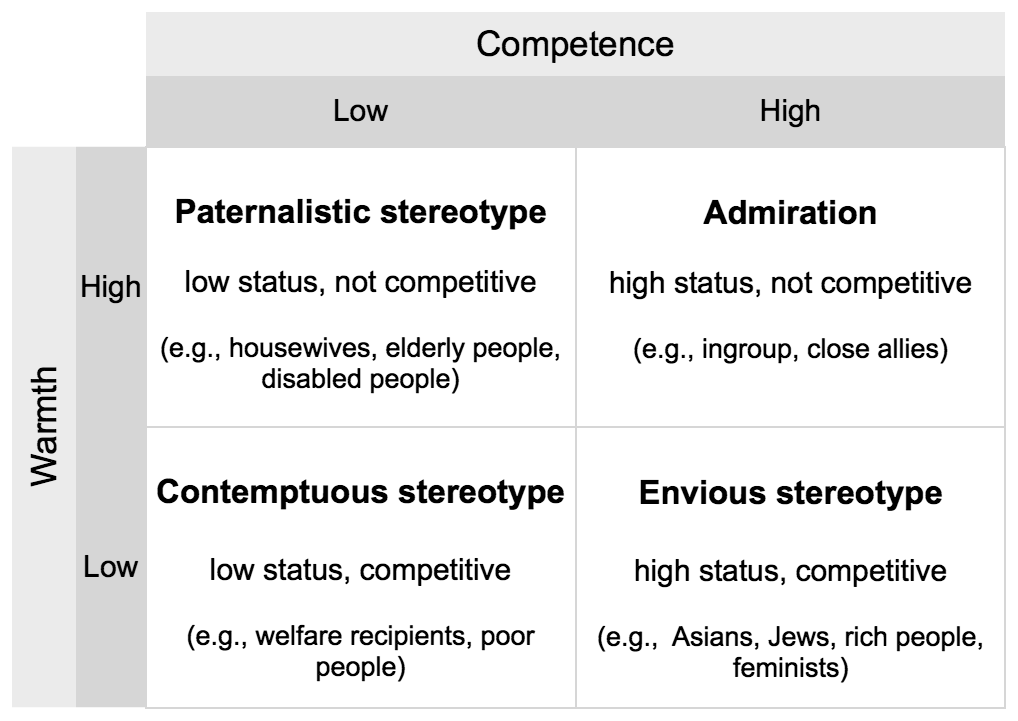
When bias metastasizes into how an author views populations, we get stereotypes. A stereotype is an oversimplified belief about a particular group of people—it strips away individual complexity and leaves only a generalized belief about a particular group of people.
To spot stereotypes on the TEAS exam, look for the math of extremes: absolutes.
- Stereotypes often utilize absolute words like "all" to group individuals together.
- Stereotypes often utilize absolute words like "always" to group individuals together.
- Stereotypes often utilize absolute words like "never" to group individuals together.
In biology, sociology, and healthcare, "always" and "never" rarely exist. When an author uses these absolutes to describe populations, you are looking at a stereotype.
Language possesses deep, stratigraphic layers. At the surface is the denotation of a word, which is the literal dictionary definition of the word.
But words carry immense psychological baggage beneath the surface. The connotation of a word is the emotional meaning attached to the word, as well as the cultural meaning attached to the word. Writers use this hidden baggage as a tool to shape your perception. Authors use words with strong positive connotations to subtly reveal bias, and equally, authors use words with strong negative connotations to subtly reveal bias.
Persuasive and Loaded Language
When an author wants something from you, they turn to persuasion. Persuasive language aims to convince the reader to adopt a specific viewpoint, or aims to convince the reader to take a certain action.
To achieve this, authors deploy a specific linguistic weapon known as loaded language. Loaded language refers to words with strong emotional connotations.
Consider how an author might describe a medical event:
- Instead of saying a disease "damaged" a community (neutral), an author might call its impact "devastating." Words like "devastating" are examples of loaded language.
- Instead of saying a new surgical technique was "successful" (neutral), they might call the result "glorious." Words like "glorious" are examples of loaded language.
- Instead of saying an accident was "severe" (neutral), they refer to it as "horrific." Words like "horrific" are examples of loaded language.
Why deliberately choose these intense words? Because authors use loaded language to influence an audience. By doing so, they engineer emotional appeals that deliberately bypass logical arguments to manipulate reader feelings. They do not want you to analyze their argument; they want you to feel it.
As a future healthcare professional and an astute reader, your job is to strip away the connotations, silence the loaded language, and evaluate the bare, empirical facts beneath.