Electricity and Magnetism
Not sure you’re ready?
Take the ~3-minute readiness diagnostic and see where you stand.
The human heartbeat is, at its core, a precise sequence of electrical discharges. Before a single muscle fiber contracts or a drop of blood is pumped, the sinoatrial node fires a burst of electric charge that cascades through the myocardium. Understanding electricity and magnetism is not merely an abstract physics exercise; it is the study of the fundamental forces that animate the human body and power the life-saving technology modern medicine relies upon. From the sudden surge of a defibrillator discharging stored energy to the silent, invisible magnetic fields of an MRI machine reading the alignment of hydrogen atoms in soft tissue, electromagnetic forces dictate the modern clinical landscape. To master these concepts is to understand the literal pulse of patient care.
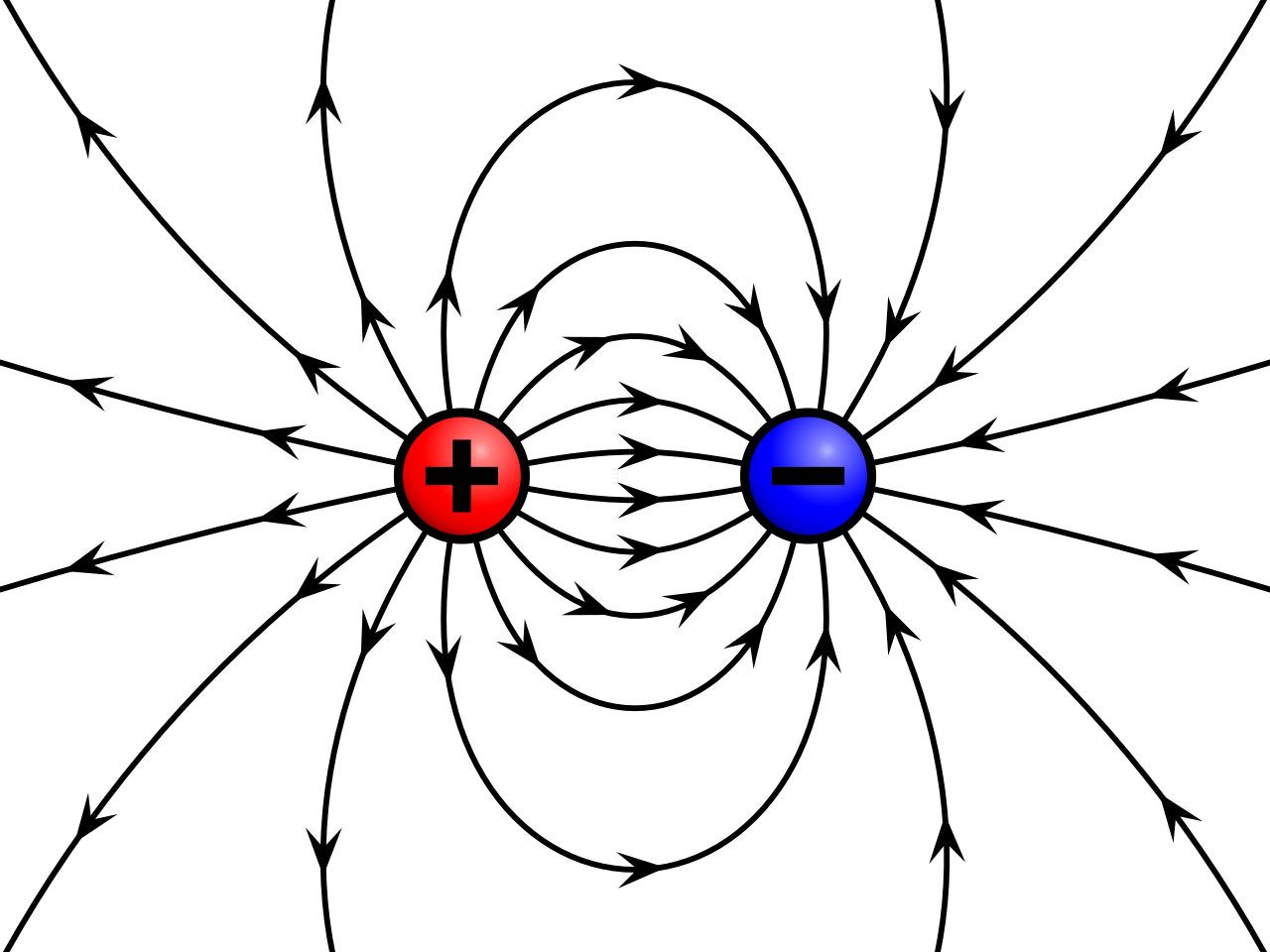
At the microscopic level, everything in the universe is constructed from atoms, which are themselves defined by their subatomic particles. Electrons naturally carry a negative electrical charge, while deep within the nucleus, protons naturally carry a positive electrical charge.
Nature seeks equilibrium, and charge dictates how these particles interact. Opposite electrical charges exert an attractive force on each other, pulling together with remarkable strength. Conversely, identical electrical charges exert a repulsive force on each other, pushing away. You can visualize this like the behavior of planetary gravity, but with an important twist: gravity only attracts, while electricity both attracts and repels. Furthermore, much like gravity, the electric force between two charges decreases as the physical distance between the charges increases. If you pull two charged particles apart, the invisible tether between them weakens exponentially.
When we quantify this foundational property of matter, we use specific metrics. The standard unit of electric charge is the Coulomb. A single Coulomb represents the collective charge of roughly six quintillion electrons—a vast number necessary to produce effects we can easily measure.
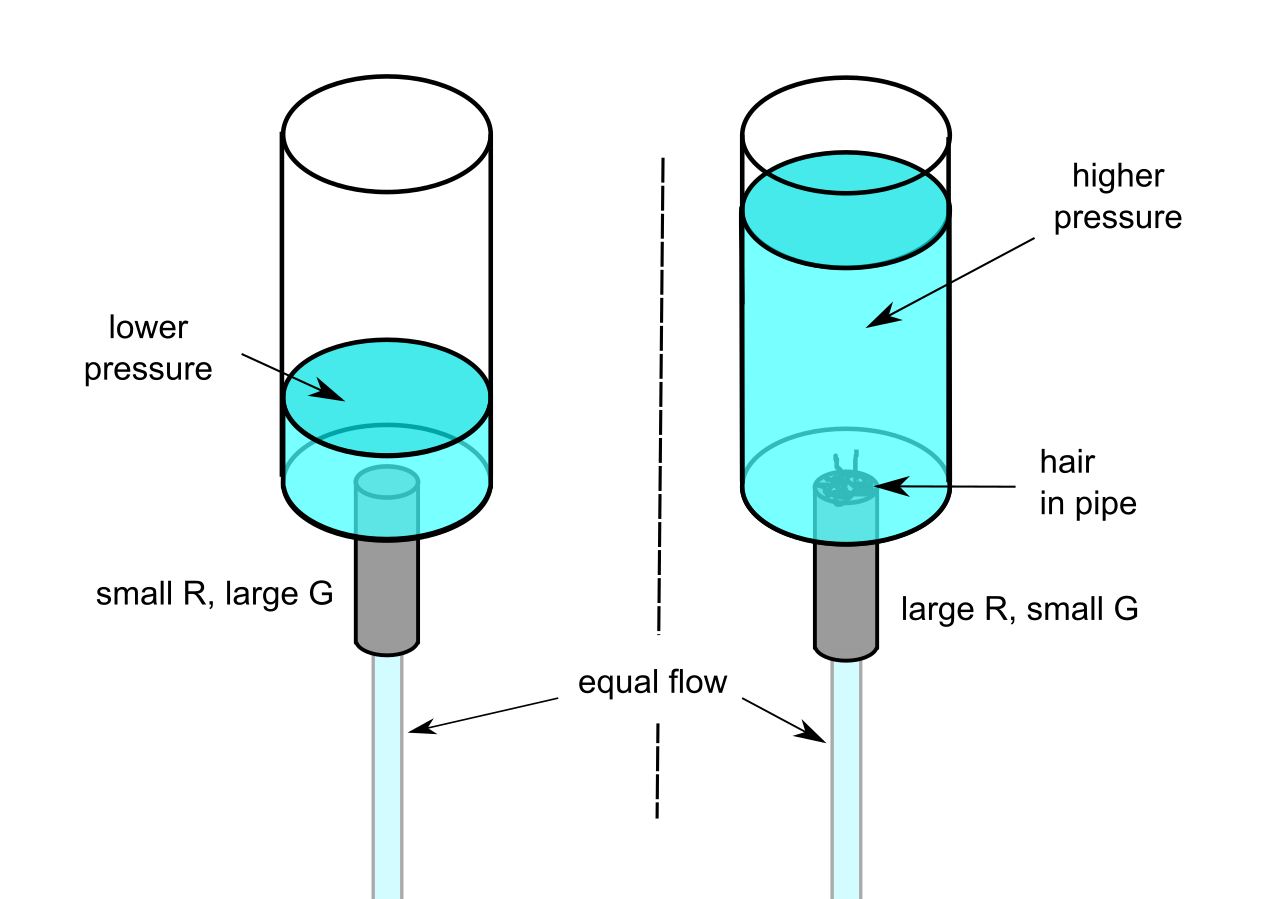
For allied-health professionals, the easiest way to understand electrical flow is to map it directly to blood flow. Hemodynamics and electrodynamics are governed by identical physical logic.
The Driving Force: Voltage (The "Blood Pressure")
Blood does not circulate without the pressure gradient generated by the heart. In electricity, voltage is the difference in electrical potential energy per unit charge between two specific points. It is the "push" that forces electrons to move. The standard unit of measurement for voltage is the Volt.
The Flow: Current (The "Cardiac Output")
When voltage pushes, charge moves. Electric current is the continuous rate at which electric charge flows past a specific point in a circuit. If you stand next to a wire and count the Coulombs racing past you every second, you are measuring current. The standard unit of measurement for electric current is the Ampere (often abbreviated as "amps").
The Opposition: Resistance (The "Vascular Resistance")
Just as vasoconstriction and plaque impede blood flow, physical materials impede the flow of electrons. Electrical resistance is a measure of the opposition to the flow of electric current through a given material. The standard unit of measurement for electrical resistance is the Ohm.
Ohm's Law
These three properties are forever locked in a mathematical dance known as Ohm's Law.
Ohm's Law states that voltage is mathematically equal to electric current multiplied by electrical resistance. Formula: V=I×R
The implications of this law are deeply intuitive. Assuming you keep resistance perfectly constant, increasing the voltage in a circuit proportionally increases the electric current. (If you increase the pumping pressure, the fluid flows faster). On the other hand, assuming voltage remains perfectly constant, increasing the resistance in a circuit proportionally decreases the electric current. (If you clamp the IV line, the flow drops).
| Concept | Analogous to... | Definition | Standard Unit |
|---|---|---|---|
| Voltage (V) | Blood Pressure | Difference in potential energy per unit charge. | Volt |
| Current (I) | Blood Flow / Cardiac Output | Continuous rate of electric charge flow. | Ampere |
| Resistance (R) | Systemic Vascular Resistance | Opposition to the flow of electric current. | Ohm |
To safely use electricity, we must dictate exactly where it goes and where it stops. We accomplish this through the careful selection of physical materials.
Conductors are physical materials that allow electric charge to flow freely with minimal resistance. Because their atomic structures loosely hold their outermost electrons, metals like copper and silver serve as excellent electrical conductors. This is why EKG leads utilize silver/silver-chloride sensors—they must flawlessly conduct the minute electrical impulses of the heart to the monitor.
Conversely, insulators are physical materials that heavily resist the flow of electric charge. Their atomic structures bind electrons tightly. Materials like rubber, dry wood, glass, and plastic serve as common electrical insulators. The thick rubber casing surrounding a hospital bed's power cord is an insulator, designed to keep 120 Volts from escaping into the patient's environment.
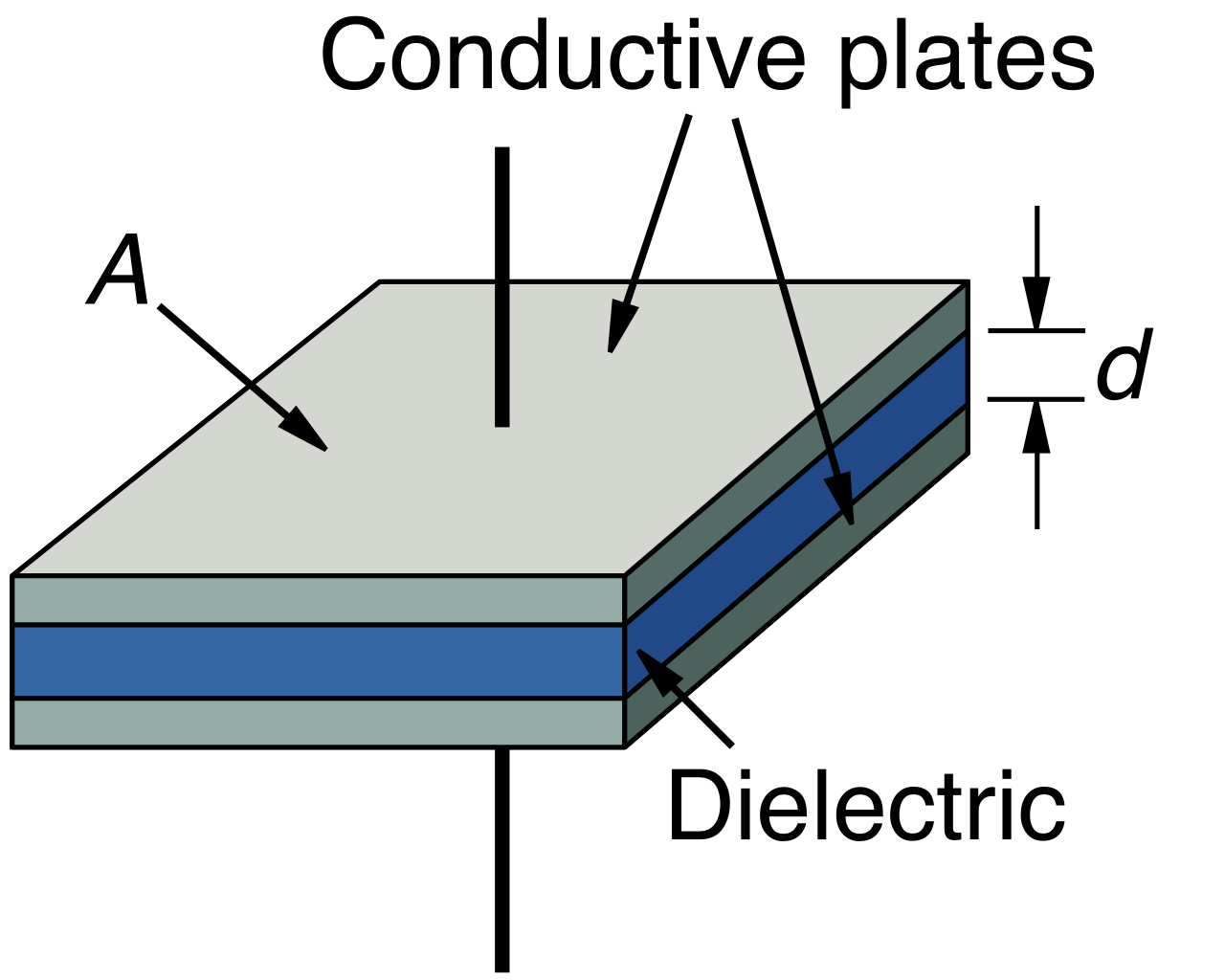
Sometimes, we need to hold onto a massive amount of charge and release it all at once—like an electrical dam. A capacitor is an electrical component designed to temporarily store electrical energy within an electric field. The standard unit of electrical capacitance is the Farad. A defibrillator relies on high-capacity capacitors. It slowly pulls trickle-current from the wall or a battery, stores it in the capacitor's electric field, and then dumps a massive, life-saving surge of energy across the myocardium in a fraction of a second.
Electricity will only flow if it has a path to leave the source, do its work, and return. An electrical circuit is a continuous closed loop that provides a complete path for electric current to flow. If someone unplugs a ventilator or snaps a wire, the loop is broken. An open electrical circuit contains a physical break in the pathway that entirely prevents the flow of electric current.
When designing a closed circuit, we have two primary architectural choices: series and parallel.
Series Circuits
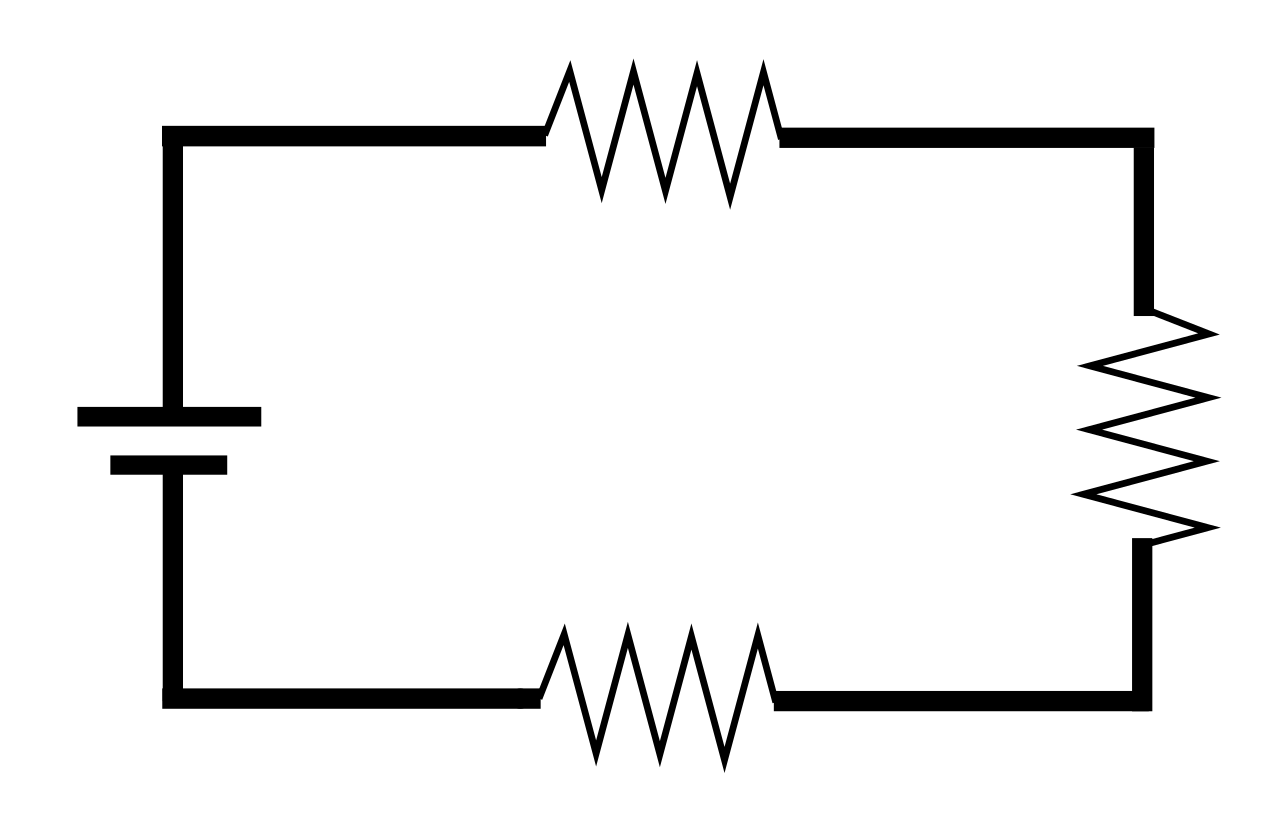
A series circuit provides only a single uninterrupted path for electric current to flow. Because there are no alternative routes, the amount of electric current is mathematically identical at all points within a closed series circuit. If 2 Amperes flow out of the battery, 2 Amperes must flow through every single device on that line. Consequently, the total resistance in a series circuit equals the direct sum of the individual component resistances. Every time you add a new device to a series line, you are adding another "kink in the hose," making it harder for the current to push through.
Parallel Circuits
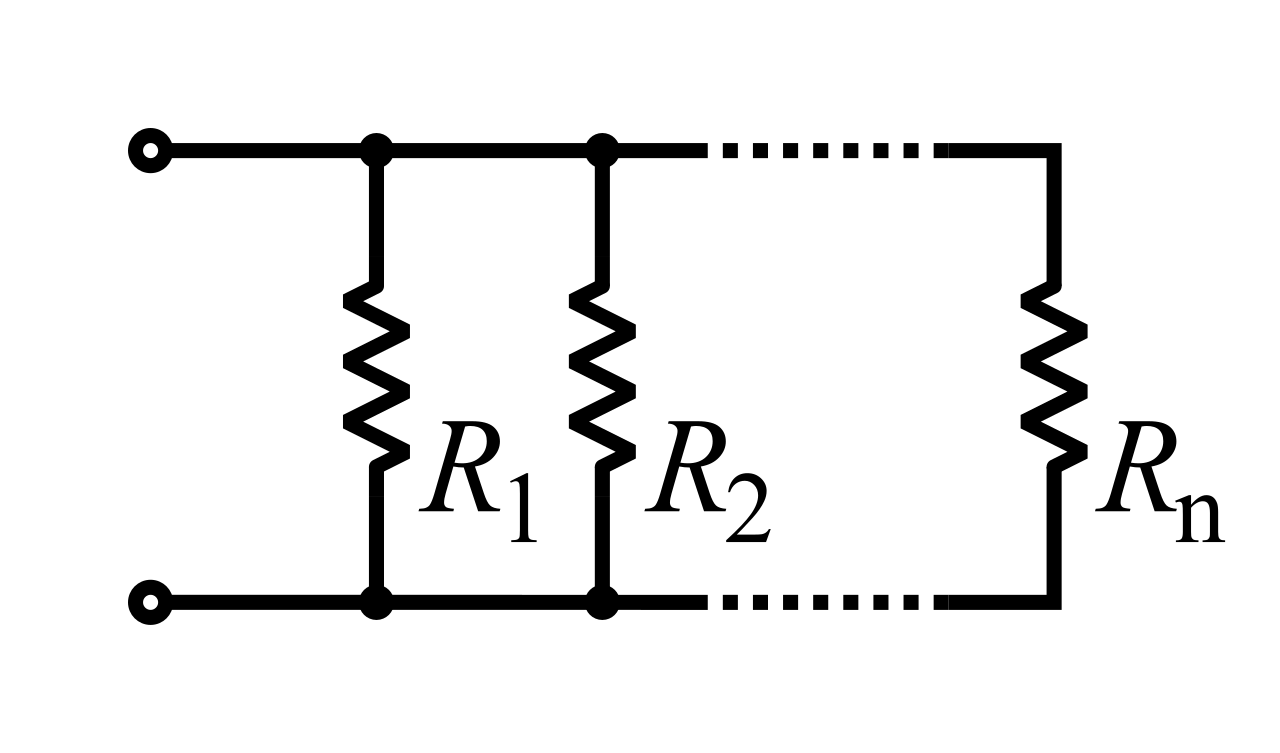
Modern clinical settings are not wired in series. If they were, one burned-out lightbulb would break the circuit and shut off every ventilator on the floor. Instead, they use parallel circuits. A parallel circuit provides multiple independent branching paths for electric current to flow.
In this setup, the fundamental rules change. Because every branch is connected directly across the main power source, the voltage measured across each individual branch in a parallel circuit is perfectly identical. Fascinatingly, adding additional branches to a parallel circuit physically decreases the total overall electrical resistance of the circuit. Think of a crowded highway: opening up an entirely new lane (a new branch) gives the cars (electrons) an alternative path, easing the total congestion (resistance), even if the new lane has some bumps of its own.
Not all current flows identically over time. We categorize electrical flow into two forms:
- Direct current (DC) flows in only one continuous forward direction through an electrical circuit. Devices powered by batteries, like a penlight or a pacemaker, utilize DC.
- Alternating current (AC) periodically reverses its direction of flow within an electrical circuit. The power grid delivers AC to hospital wall outlets, oscillating back and forth 60 times a second in the United States.
Regardless of whether the current is AC or DC, we must measure the actual work it accomplishes. Electrical power is the precise rate at which electrical energy is transferred by an electric circuit. The standard unit of measurement for electrical power is the Watt.
To calculate how much power a medical device is consuming, you simply multiply the "push" by the "flow." Electrical power equals the mathematical product of voltage and electric current.
Formula: P=V×I
Electricity does not exist in isolation. It is intimately bound to magnetism, a relationship that forms the backbone of modern diagnostics and heavy machinery.
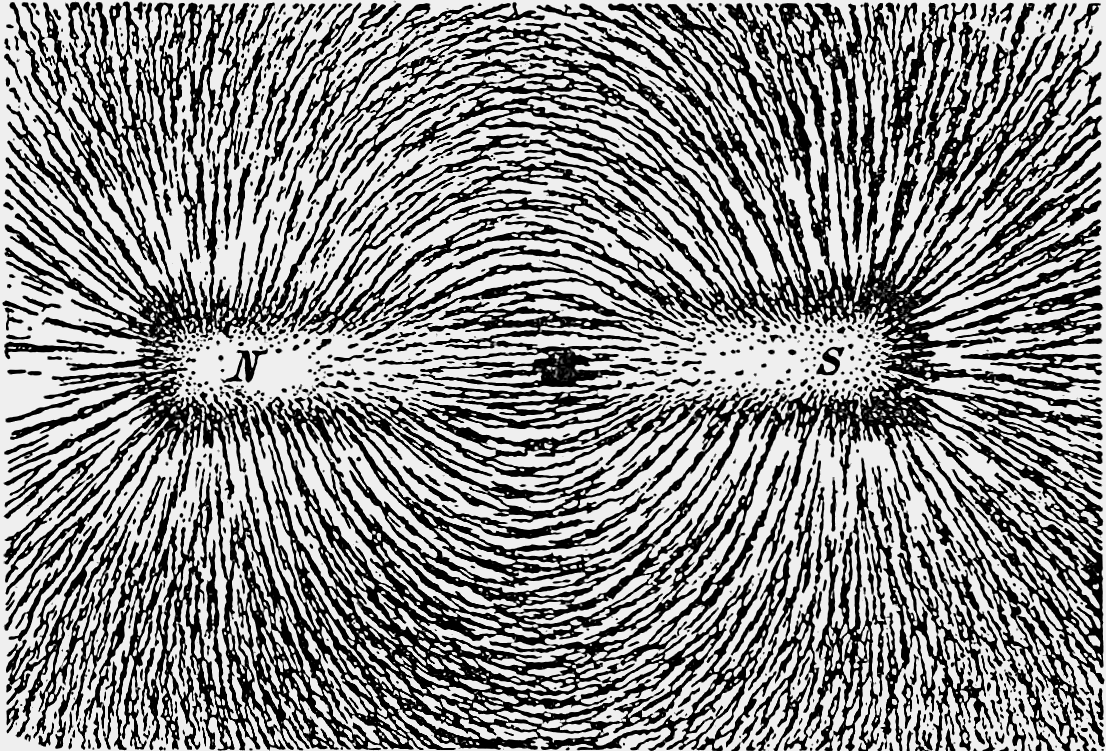
First, consider the permanent magnet. Every physical magnet contains exactly one north-seeking pole and exactly one south-seeking pole. You cannot isolate a north pole; if you snap a magnet in half, you simply create two smaller magnets, each with its own north and south. Behaving identically to electrical charges, opposite magnetic poles exert an attractive force on each other, and identical magnetic poles exert a repulsive force on each other.
The influence of a magnet extends invisibly into the room around it. A magnetic field is the specific region of space around a magnetic material where the force of magnetism actively acts. We visualize this field using lines of force. Magnetic field lines visually travel from the north pole to the south pole entirely outside of a magnetic body.
The Bridge Between Two Worlds
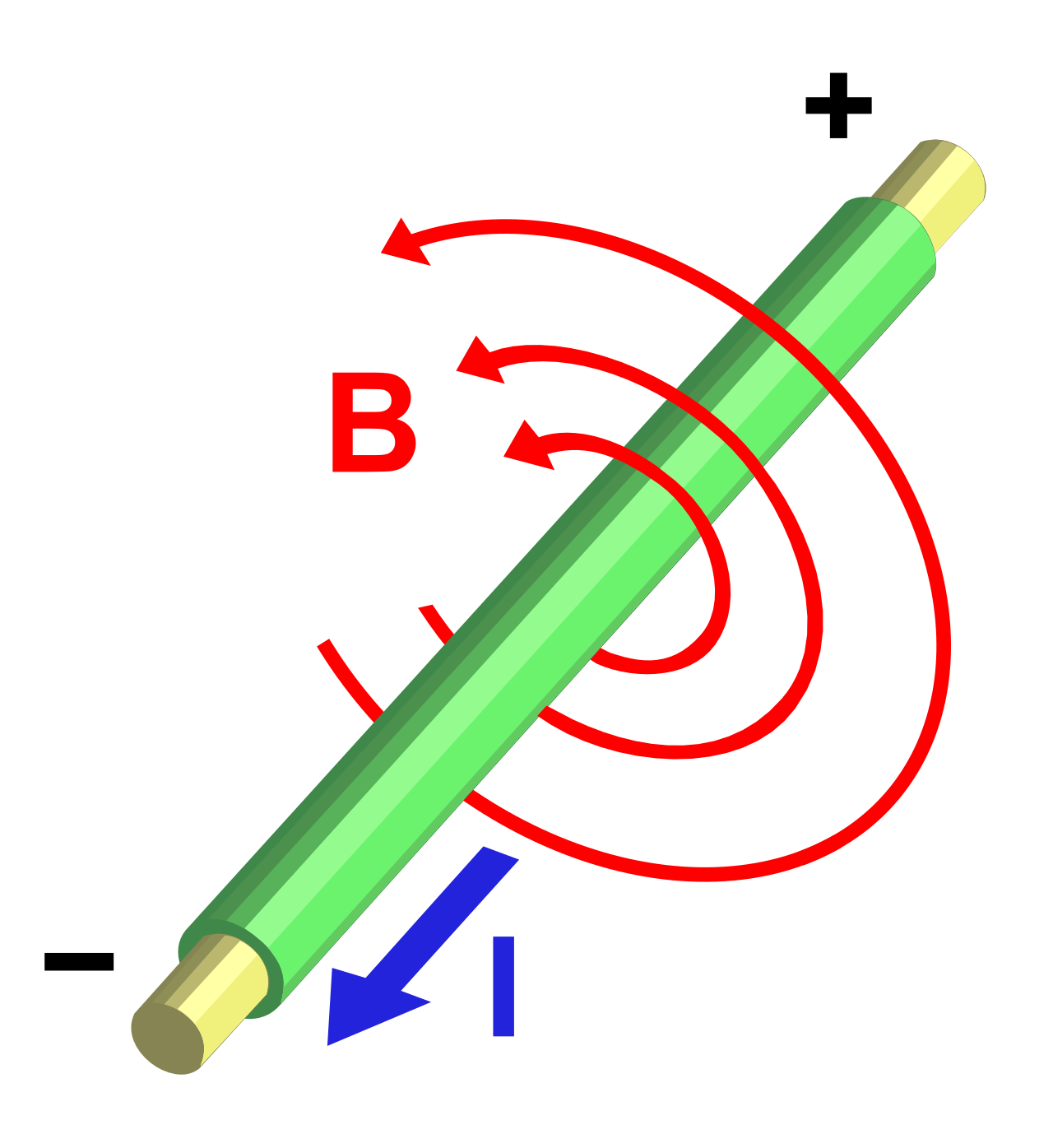
In the 19th century, physicists discovered a profound truth: electricity and magnetism are two expressions of the exact same fundamental force. Moving electrical charges physically generate a corresponding magnetic field in the surrounding space.
If you string a standard copper wire across a table and pass a current through it, it momentarily acts as a magnet. Specifically, an electric current flowing through a conductive wire creates a concentric magnetic field encircling the wire.
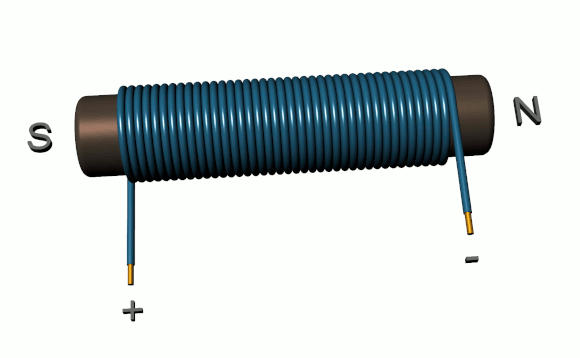
Engineers harness this phenomenon to create artificial, controllable magnets. An electromagnet is artificially created by wrapping a current-carrying coil of wire around a ferromagnetic solid core. (This is the underlying technology of an MRI machine, which uses colossal electromagnets to image internal tissues).
Because electromagnets are man-made, we can control their power. The overall magnetic strength of an electromagnet increases as the amount of electric current increases. Furthermore, the overall magnetic strength of an electromagnet increases as the total number of wire coils increases. More loops of wire and more current mean a denser, more powerful magnetic field.
Electromagnetic Induction: Generators and Motors
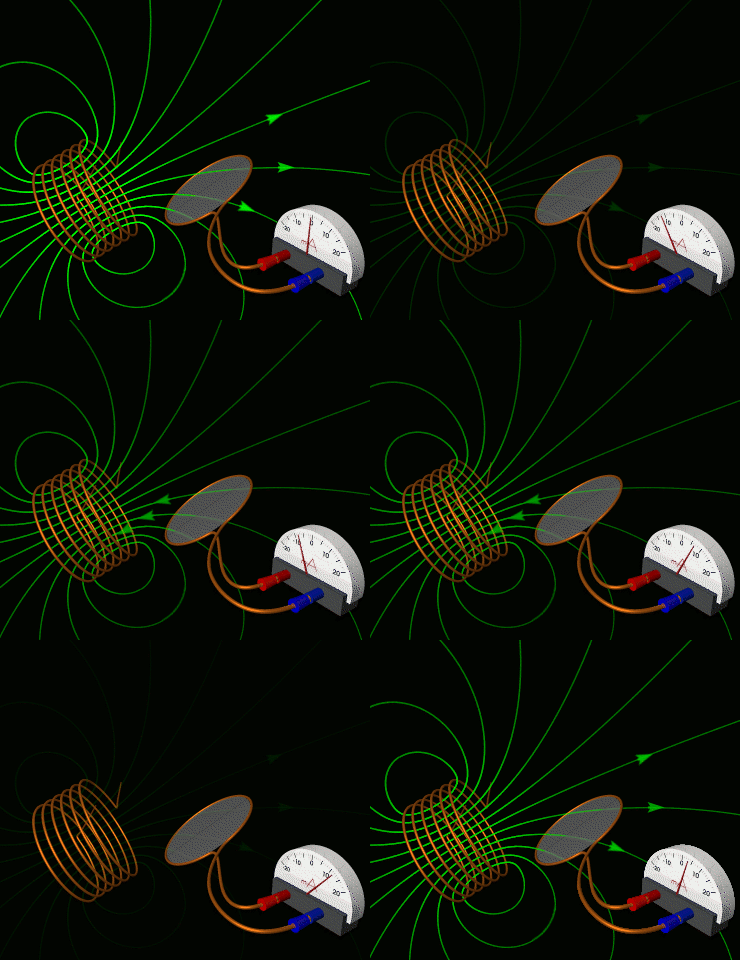
If moving electricity creates a magnetic field, nature demands symmetry: moving a magnetic field can create electricity.
Electromagnetic induction is the scientific process of generating an electric current by moving a conductor through a varying magnetic field. By simply spinning a coil of copper wire inside a ring of stationary magnets, we can force electrons to move.
This is the principle behind all global power generation and mechanical motion:
- An electrical generator actively converts mechanical energy into usable electrical energy using the principles of electromagnetic induction. When a hospital loses grid power, massive diesel engines physically spin conductive coils inside magnetic fields to artificially generate the AC current required to keep the ICU functioning.
- An electric motor actively converts electrical energy into physical mechanical energy through the interaction of magnetic fields and current-carrying conductors. By feeding electricity into a coil, the generated magnetic fields push against permanent magnets, causing the motor to spin. This powers everything from laboratory centrifuges to IV infusion pumps.