Waves, Light, and Optics
Not sure you’re ready?
Take the ~3-minute readiness diagnostic and see where you stand.
An ultrasound probe glides across a patient’s abdomen, sending high-frequency pulses through tissue to reveal the beating heart of a fetus. In the adjacent trauma bay, an X-ray exposes the jagged architecture of a fractured femur, while a pulse oximeter uses a tiny beam of red light to instantly measure oxygen saturation. Every one of these indispensable clinical tools relies upon a single, fundamental physical phenomenon: the wave. A wave is a physical disturbance that transfers energy from one location to another without transferring matter. When you observe a pulse traveling along an artery or hear a heartbeat through a stethoscope, you are not witnessing the physical transport of biological material from the chest to your ears; you are perceiving the pure transmission of energy.
To master the physics of waves for the HESI A2 exam, we must understand how these physical disturbances operate, how they differ, and how they interact with the physical world. Let us dismantle the mechanics of waves, sound, and light.
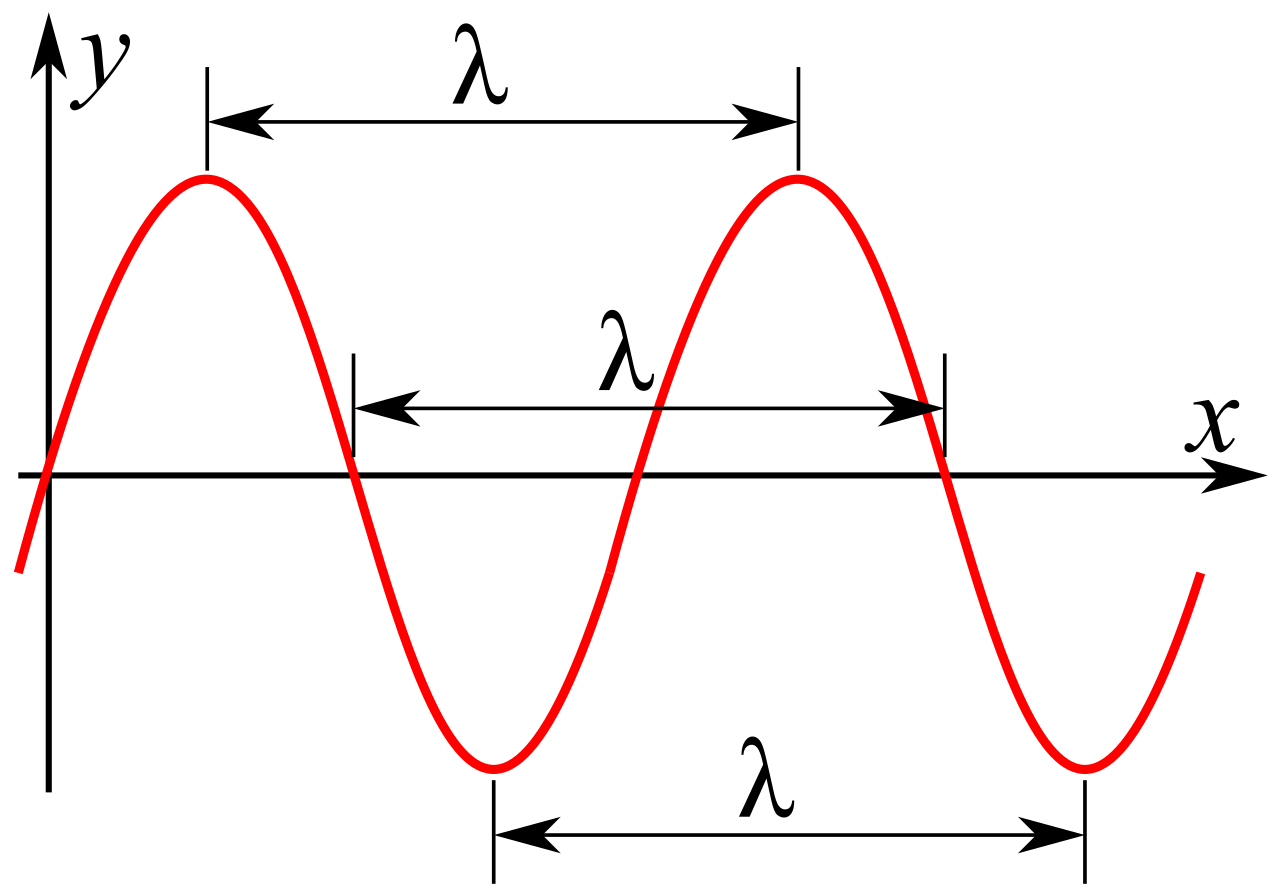
Before we can utilize waves in a clinical setting, we must speak the language of their geometry and timing. Imagine watching a rhythmic heartbeat on an EKG monitor; that tracing shares the same mathematical properties as physical waves in nature.
Wave Speed Formula Wave speed is mathematically calculated by multiplying the frequency of the wave by the wavelength of the wave (v=f×λ).
To understand that formula, we must define its components:
- Wavelength: The linear distance between two consecutive corresponding points on a continuous wave. If you measure from the peak of one wave to the exact peak of the next, you have found the wavelength.
- Amplitude: The maximum physical displacement of a wave from the wave's resting equilibrium position. In simple terms, this is the "height" of the wave from its flat baseline.
- Frequency: The total number of complete wave cycles that pass a given fixed point per unit of time.
- Period: The exact amount of time required for one complete wave cycle to pass a given fixed point.
Frequency and period dictate the timing of a wave, and they possess an inversely proportional mathematical relationship. If a wave's frequency increases (more cycles per second), the period (time per cycle) must decrease.
The standard physical unit of measurement for wave period is the second. For frequency, the standard physical unit of measurement is the Hertz (Hz). One Hertz is defined as being equal to exactly one complete wave cycle per second. When a medical monitor beeps at 2 Hz, it is beeping exactly twice every second.
How Waves Move: Transverse vs. Longitudinal
Waves transfer energy through a medium (or a vacuum), but the way they disturb that medium falls into two distinct categories.
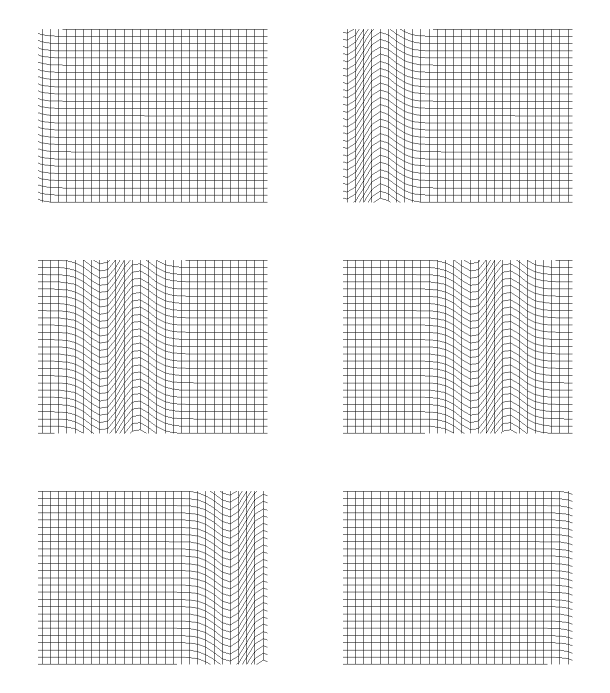
In a transverse wave, the particles of the medium vibrate perpendicularly to the direction of wave propagation. Imagine shaking a heavy battle rope at the gym up and down; the wave travels horizontally away from you, but the rope itself moves vertically. The highest vertical point of a transverse wave is called the crest, and the lowest vertical point is called the trough. Light waves propagate as transverse waves.
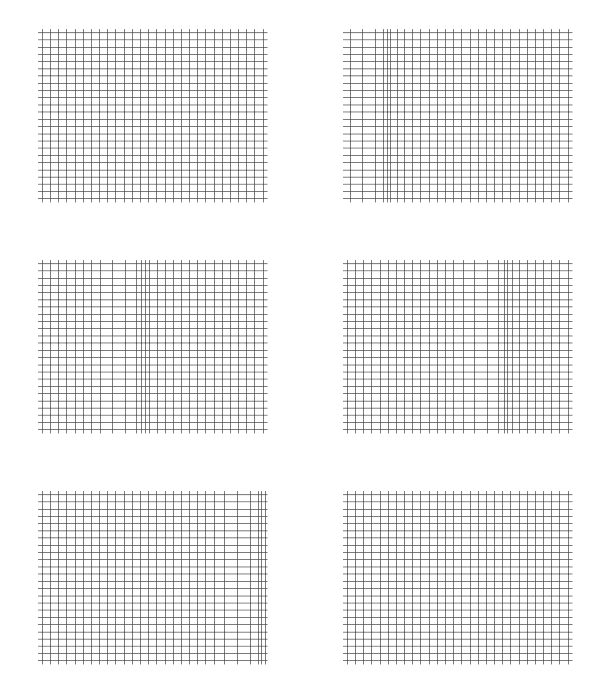
In a longitudinal wave, the particles of the medium vibrate parallel to the direction of wave propagation. Instead of a battle rope, imagine a metal slinky. If you push the end of the slinky forward, a pulse travels horizontally by compressing and expanding the coils in the same direction the energy is moving. Therefore, a longitudinal wave consists of alternating physical regions called compressions and rarefactions:
- Compressions are specific regions in a longitudinal wave where the medium's particles are compressed closest together.
- Rarefactions are specific regions in a longitudinal wave where the medium's particles are spread farthest apart.
Sound waves propagate as longitudinal waves.
When you speak to a patient or percuss a dense organ in their abdomen, you are generating sound. Sound is categorized as a mechanical wave. A mechanical wave requires a physical material medium to travel through—it cannot exist in a vacuum because there are no particles to compress and expand.
Because sound relies on particles physically bumping into one another, the density and state of the medium drastically affect its travel speed. The closer the particles are bound together, the faster the energy is transferred. Therefore:
- Sound waves propagate at faster speeds in solid materials than in liquid materials (think of bone conduction hearing).
- Sound waves propagate at faster speeds in liquid materials than in gaseous materials (sound travels much faster through amniotic fluid than through room air).
Perceiving Sound: Pitch, Loudness, and the Doppler Effect
Our brains interpret the physical geometry of sound waves as sensory experiences:
- Pitch: The perceived acoustic pitch of a sound is directly determined by the physical frequency of the sound wave. High frequency yields a high pitch; low frequency yields a low pitch.
- Loudness: The perceived acoustic loudness of a sound is directly related to the physical amplitude of the sound wave. A larger maximum displacement from equilibrium produces a louder sound.
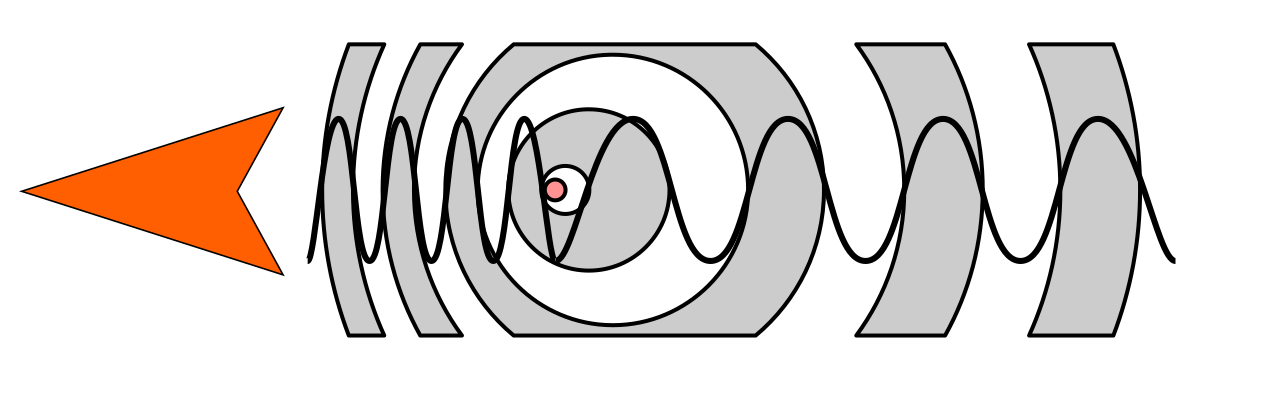
This brings us to a phenomenon you hear every time an ambulance speeds past your hospital: the Doppler effect. This is the perceived change in wave frequency caused by the relative motion between the wave source and the observer. As the ambulance approaches, the sound waves are compressed in front of the siren, causing you to perceive a higher frequency (pitch). As it speeds away, the waves stretch out, and you perceive a lower frequency. In medicine, Doppler ultrasounds use this exact principle, bouncing sound waves off moving red blood cells to determine the velocity and direction of blood flow.
Unlike the sound of a heartbeat, the light illuminating your surgical field obeys entirely different rules. Light is categorized as an electromagnetic wave. Most importantly, an electromagnetic wave does not require a physical medium to travel through space; it can travel perfectly through the empty void of a vacuum.
The Universal Speed Limit The absolute speed of light traveling in a perfect vacuum is exactly 299,792,458 meters per second.
Light is merely a fraction of the electromagnetic spectrum, which is a continuum that encompasses all possible frequencies of electromagnetic radiation.
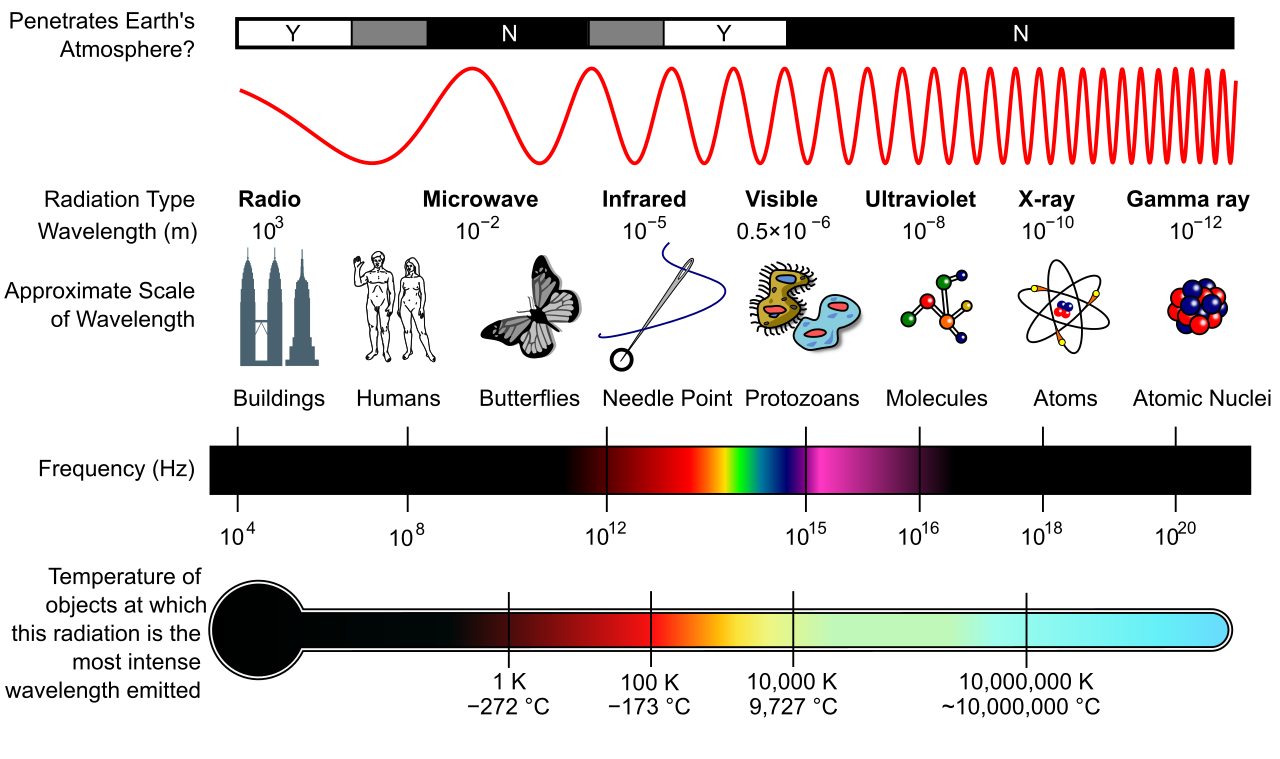
Navigating the Spectrum
Let us look at the extreme ends of this spectrum:
- Radio waves: These possess the longest wavelength and the lowest electromagnetic frequency found within the electromagnetic spectrum.
- Gamma rays: These possess the shortest wavelength and the highest electromagnetic frequency found within the electromagnetic spectrum. High frequency means immensely high energy, which is why gamma radiation is used strategically in oncology to eradicate tumor cells.
Visible light constitutes a highly limited and small proportional section of the total electromagnetic spectrum. Even within this tiny visible slice, different colors correspond to different physical properties:
- Within the visible light spectrum continuum, red light inherently possesses the longest physical wavelength.
- Conversely, violet light inherently possesses the shortest physical wavelength.
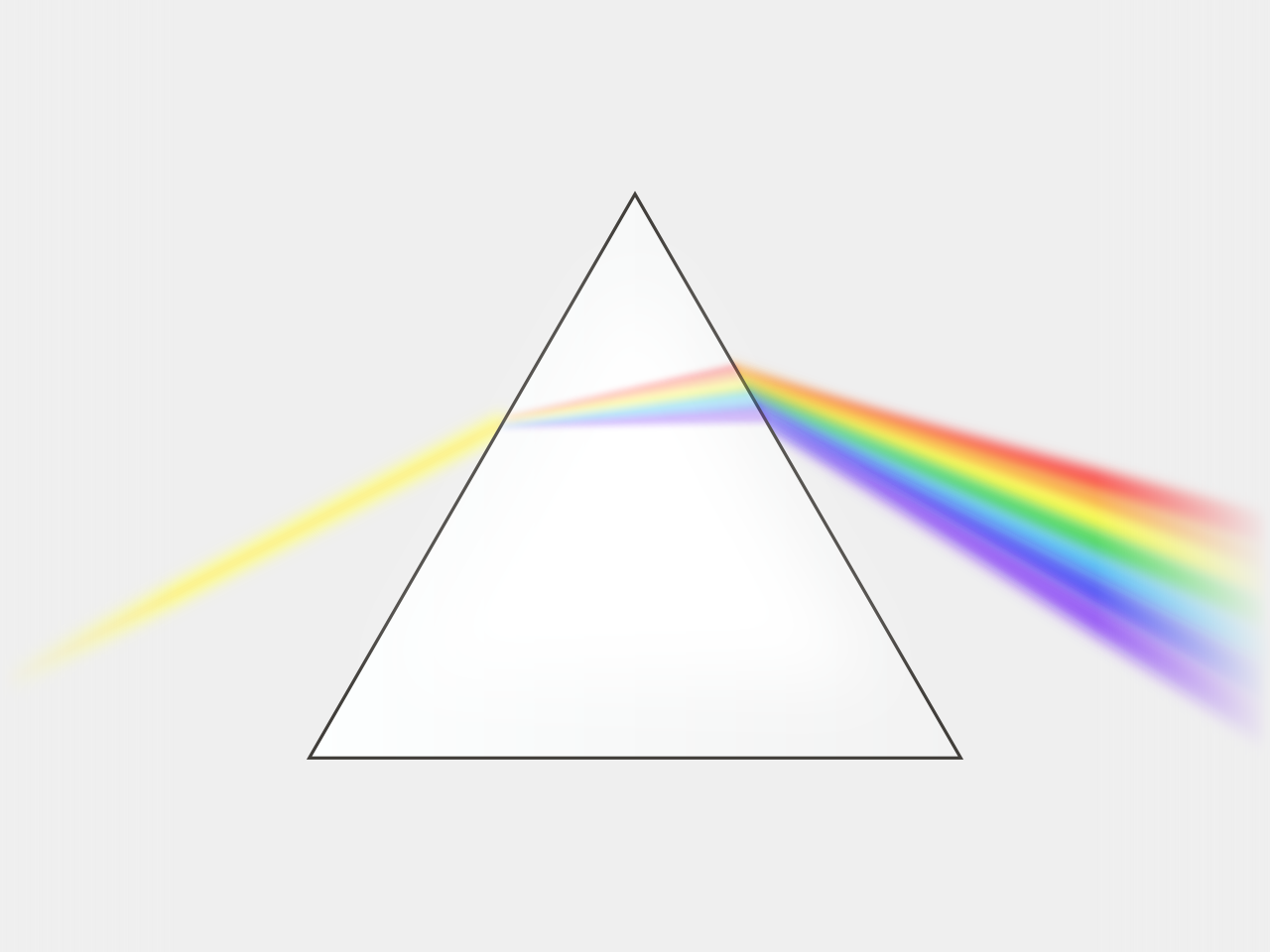
If you shine white light (which contains all visible colors) through a standard glass prism, the prism separates the white light into a visible color spectrum. This utilizes the optical process of dispersion. Optical dispersion is the specific physical process of separating combined white light into its distinct visible component colors.
| Wave Type | Wave Mechanics | Requires a Medium? | Key Clinical / Real-world Application |
|---|---|---|---|
| Sound | Longitudinal | Yes (Mechanical) | Ultrasound, Stethoscopes, Percussion |
| Light | Transverse | No (Electromagnetic) | X-rays, Pulse Oximetry, Lasers |
When a wave—whether it is a sound wave traveling through a lung or a light wave passing through the cornea of the eye—encounters an obstacle or a new medium, it changes its behavior. You must understand four primary wave phenomena:
1. Reflection
When a wave hits a surface and bounces back, it is reflecting. The law of reflection dictates that the angle of wave incidence is perfectly equal to the angle of wave reflection. If a light ray strikes a mirror at a 45-degree angle, it bounces off at exactly a 45-degree angle.
2. Refraction
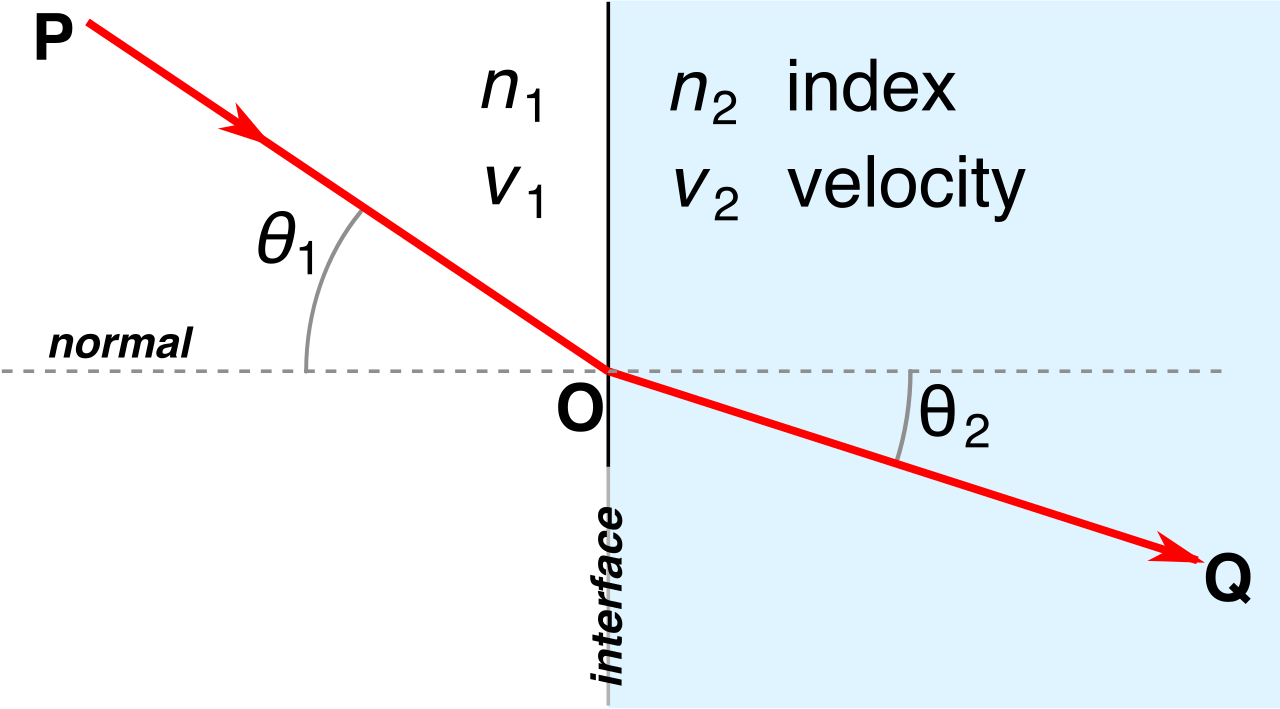
Refraction is the physical bending of a wave's directional path as the wave passes from one medium into a different medium.
Why does it bend? Refraction occurs strictly because a wave changes propagation speed when entering a medium with a different optical density. Imagine pushing a wheeled hospital gurney from a smooth tile floor onto a thick, dense carpet. If you push it at an angle, the wheel that hits the carpet first slows down, causing the entire gurney to pivot and change direction. Light does exactly the same thing when passing from air into water, or from air into the lens of an eye.
To quantify this, physicists use the index of refraction, which is a dimensionless mathematical ratio comparing the speed of light in a vacuum to the speed of light in a specific medium. A higher index means the light travels slower in that material.
3. Diffraction
Do not confuse refraction with diffraction. Diffraction is the physical bending and spatial spreading of wave fronts around physical obstacles or through small openings. If you can hear a colleague talking from around the corner of a hallway, even though you cannot see them, it is because sound waves diffract and spread out around the edges of the walls.
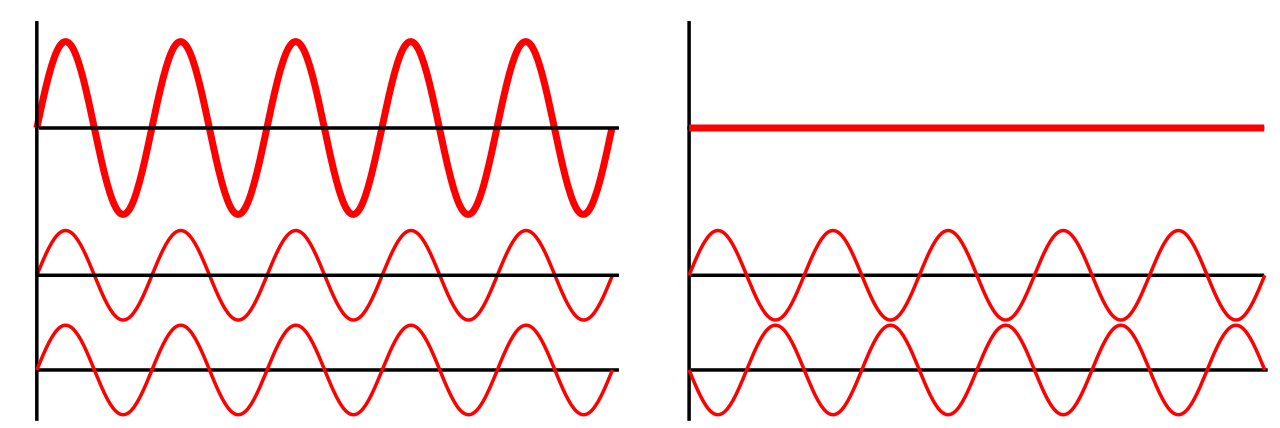
4. Interference
Interference is a physical phenomenon that occurs when two or more distinct waves overlap to form a single resultant wave. If the crests align, they combine to form a massive wave (constructive interference). If a crest aligns with a trough, they cancel each other out (destructive interference). Noise-canceling headphones utilize destructive interference by generating a sound wave perfectly inverted to the background noise.
Optics is the applied science of manipulating light waves. Whether you are adjusting a microscope, wearing corrective eyeglasses, or reading a patient monitor, you are interacting with optical principles.
Mirrors
A plane mirror possesses a completely flat and completely smooth reflective surface. When you look into a standard plane mirror on a clinic wall, it exclusively produces a virtual visual image that is the exact same size as the reflected physical object. The light rays bouncing off you obey the law of reflection perfectly, maintaining your exact physical proportions.
Lenses
Lenses utilize the principle of refraction to bend light purposefully. There are two primary types of lenses, defined by their physical shape and how they alter the trajectory of light rays.
Convex Lenses
- A convex lens is physically manufactured to be thicker in the middle portion than at the outer edges.
- Because of its geometry, a convex optical lens forces parallel incoming light rays to physically converge together at a single focal point.
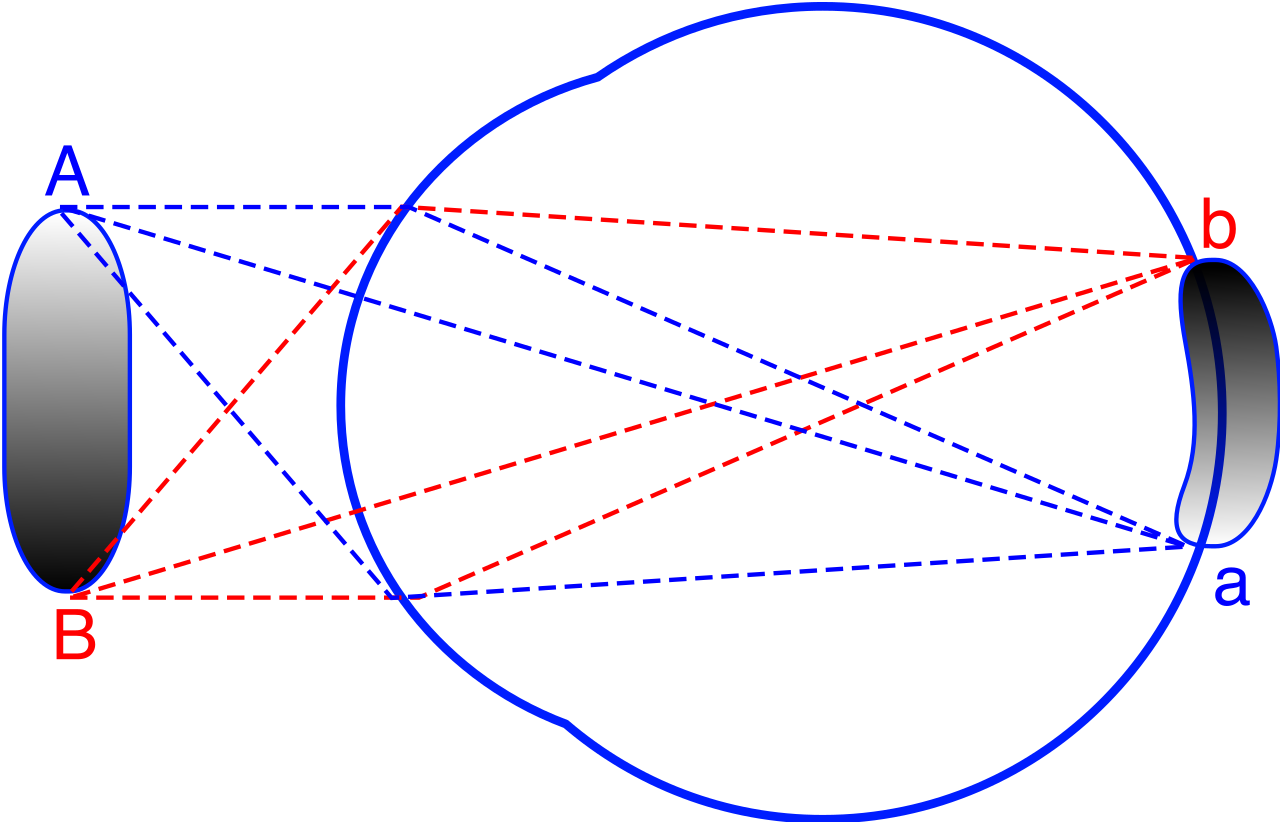
- Clinical Context: The lens of the human eye is a natural convex lens. When it loses its flexibility or shape, patients develop hyperopia (farsightedness), which is corrected by placing an artificial convex lens in front of the eye to help focus light correctly onto the retina. Magnifying glasses also use convex lenses.
Concave Lenses
- A concave lens is physically manufactured to be thinner in the middle portion than at the outer edges.
- By acting as a diverging tool, a concave optical lens forces parallel incoming light rays to physically diverge outward from one another.
- Clinical Context: Patients suffering from myopia (nearsightedness) possess an eyeball that is slightly too long, causing light rays to converge before they reach the retina. A concave lens spreads the light rays out just enough so that the eye's natural convex lens subsequently focuses them perfectly on the back of the retina.
| Lens Type | Shape Profile | Light Interaction | Effect on Rays | Common Application |
|---|---|---|---|---|
| Convex | Thicker in the middle | Converging | Forces rays to a single focal point | Treating farsightedness (hyperopia), magnifying glasses |
| Concave | Thinner in the middle | Diverging | Forces rays to spread outward | Treating nearsightedness (myopia) |
As you prepare for your HESI A2 assessment, remember that these are not abstract concepts confined to a chalkboard. They are the physical rules governing everything you will see, hear, and operate in a healthcare setting. Master the anatomy of the wave, respect the speed limits of the electromagnetic spectrum, and understand how mediums manipulate energy, and you will understand the physics driving modern patient care.