Inferences and Conclusions
Not sure you’re ready?
Take the ~3-minute readiness diagnostic and see where you stand.
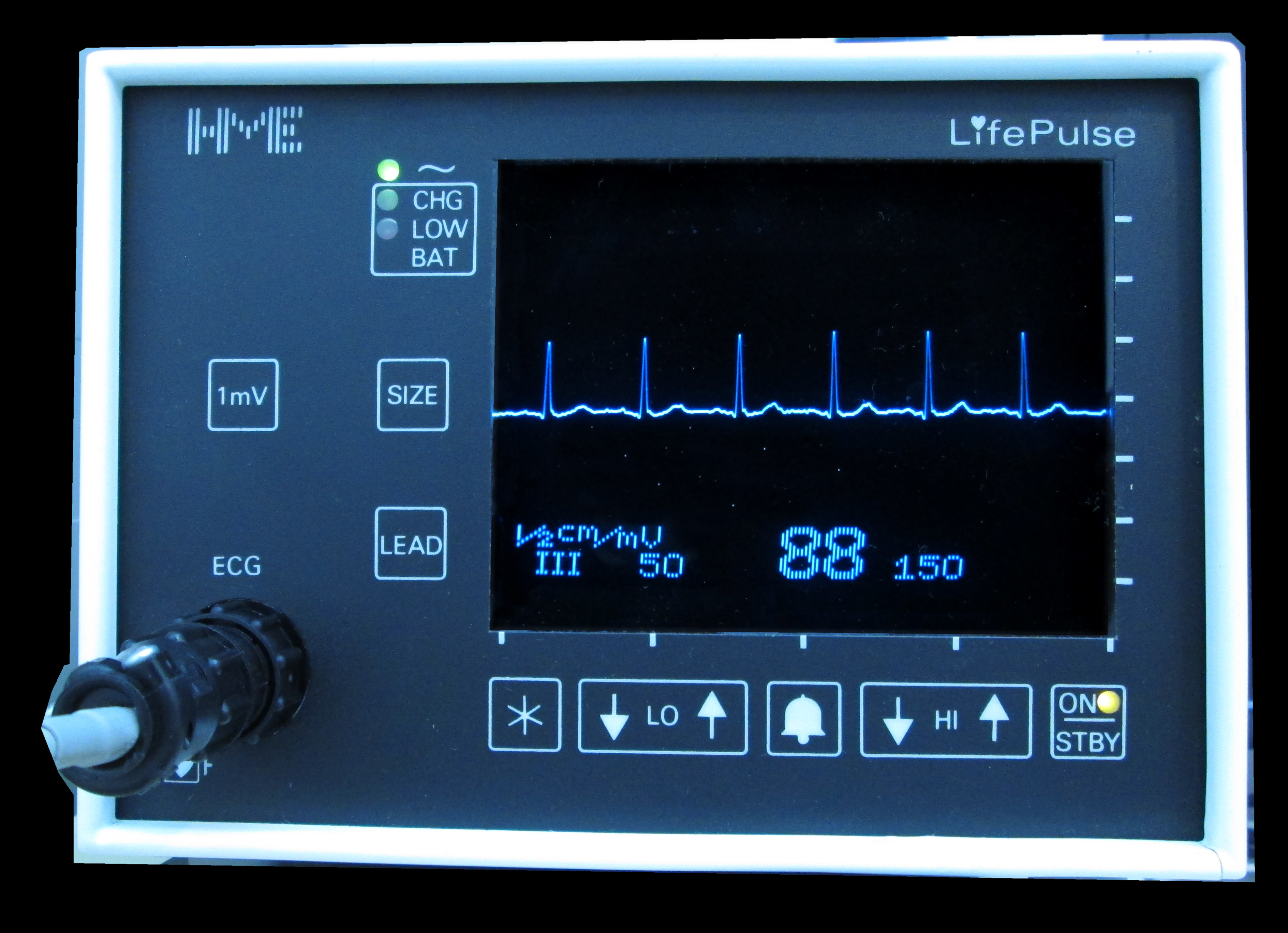
When a patient presents with a blood pressure of 85/50, a resting heart rate of 120 beats per minute, and pale, clammy skin, the medical chart does not explicitly print out the words: The patient is entering hypovolemic shock. Yet, any trained clinician reviewing those numbers immediately recognizes the crisis. You do not see the shock directly; rather, you see a collection of specific, observable data points, and your mind inevitably synthesizes them to reveal the underlying reality.
Reading comprehension on the HESI A2 exam operates on the exact same mechanics. An author rarely hands you their deepest meaning on a silver platter. Instead, they provide discrete data points—sentences, facts, and examples—and rely on you to connect the dots. To succeed on this assessment, you must learn to read a text the way a diagnostician reads a chart: strictly following the evidence, ignoring outside assumptions, and never diagnosing a condition that the symptoms do not support.
To master reading comprehension, we first have to agree on the fundamental particles of a text. In any written passage, information exists in two states: what is on the page, and what is hidden just beneath it.
Explicit statements are directly written out in the text by the author. They are the undeniable, black-and-white facts of the passage. If the text says, "The clinic's wait time decreased by twenty minutes after the new triage protocol was implemented," that is an explicit statement. There is nothing to guess; the data is right there.
However, exam questions rarely ask you to merely point at what is already obvious. They ask you to dig deeper by making an inference. An inference is a logical deduction based on specific evidence within a text. By definition, inferences are never explicitly stated in the reading passage. If you can point to the exact sentence that spells out the answer verbatim, you are not making an inference; you are just quoting.
When you make a valid inference, you are recognizing a logical implication—a natural consequence arising directly from a stated fact.
The Rule of Evidence: Evidence refers to the specific facts or examples the author provides to support a claim. A valid inference must be tethered to this evidence. If you drop a rock, the logical implication is that it will fall. If an author writes that a hospital ward is understaffed and patient call lights are flashing for hours, the logical implication is that patient care is being delayed.
While an inference is a stepping stone—a single logical deduction connecting point A to point B—a conclusion is the destination.
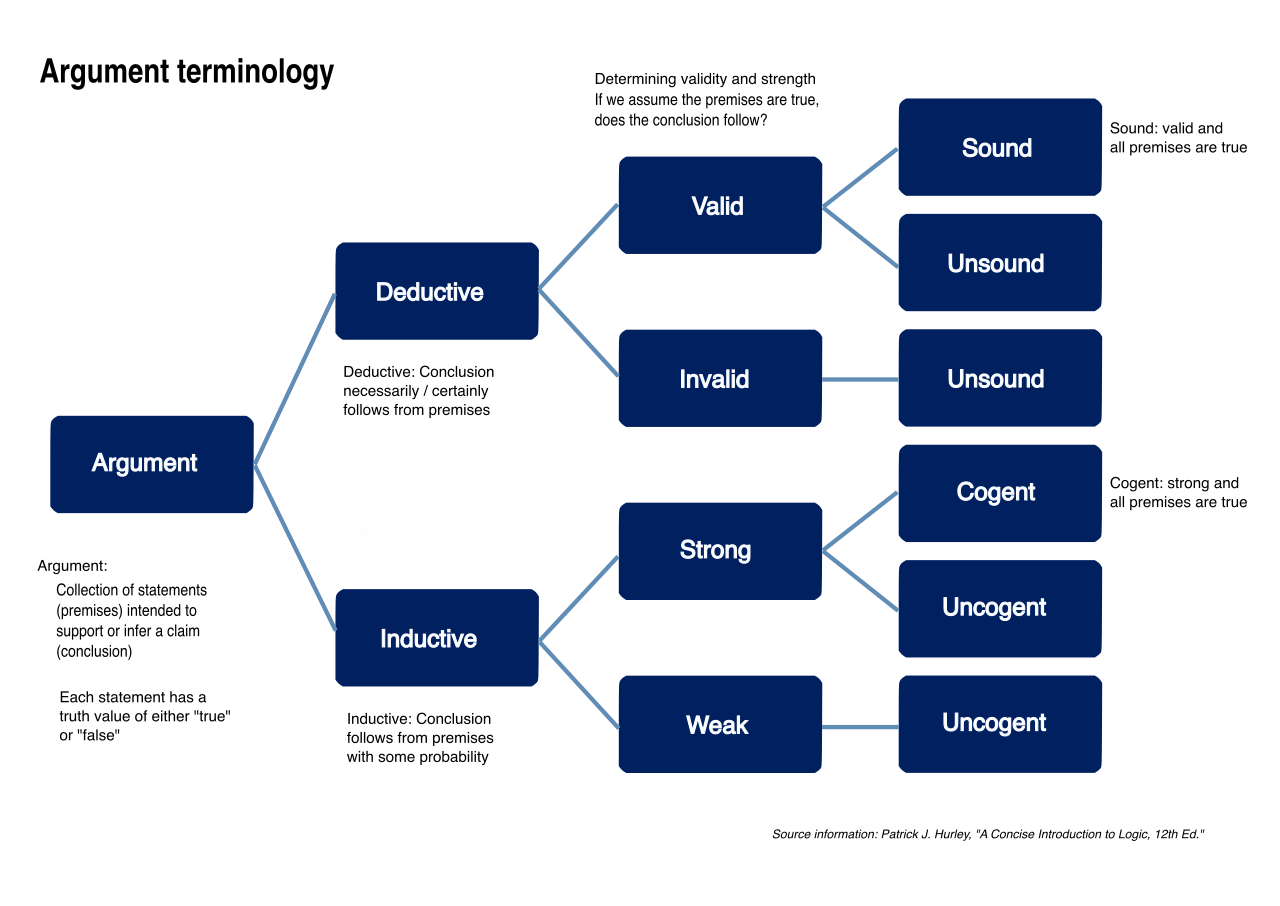
A conclusion is a final judgment formed by synthesizing multiple pieces of passage evidence.
Think of it like building a bridge. Readers must connect multiple pieces of explicit information to form a new logical idea. If Fact 1 is that antibiotics kill bacteria, and Fact 2 is that the patient has a viral infection, you synthesize these to form the conclusion: The patient will not benefit from antibiotics.

To arrive at a bulletproof conclusion, valid conclusions synthesize passage evidence without adding personal biases. You must act as a neutral observer. Your job is not to argue with the author or project your own clinical experiences onto the page. Your job is simply to determine where the author's specific web of evidence inevitably leads.
We now arrive at the single most critical rule of the HESI A2 reading assessment, and the trap that catches the highest number of sharp, highly capable healthcare applicants.
The HESI A2 exam requires test-takers to base all conclusions strictly on the provided passage.
A valid conclusion must remain entirely within the scope of the provided text. You must imagine that the passage is encased in an impenetrable bubble. Nothing from the outside world can get in. Therefore, readers must avoid using outside knowledge to answer reading comprehension questions.
Because nursing applicants are often already immersed in healthcare—working as CNAs, EMTs, or medical assistants—they bring a wealth of practical knowledge to the exam. The test writers know this, and they actively weaponize it against you.
The Real-World Truth Trap
Test writers will frequently present you with a question, and among the options will be a statement you absolutely know to be medically or scientifically true.
Distractor answer choices often contain statements that are factually true in the real world.
However—and this is vital—answer choices containing real-world truths are incorrect when those truths are absent from the passage.
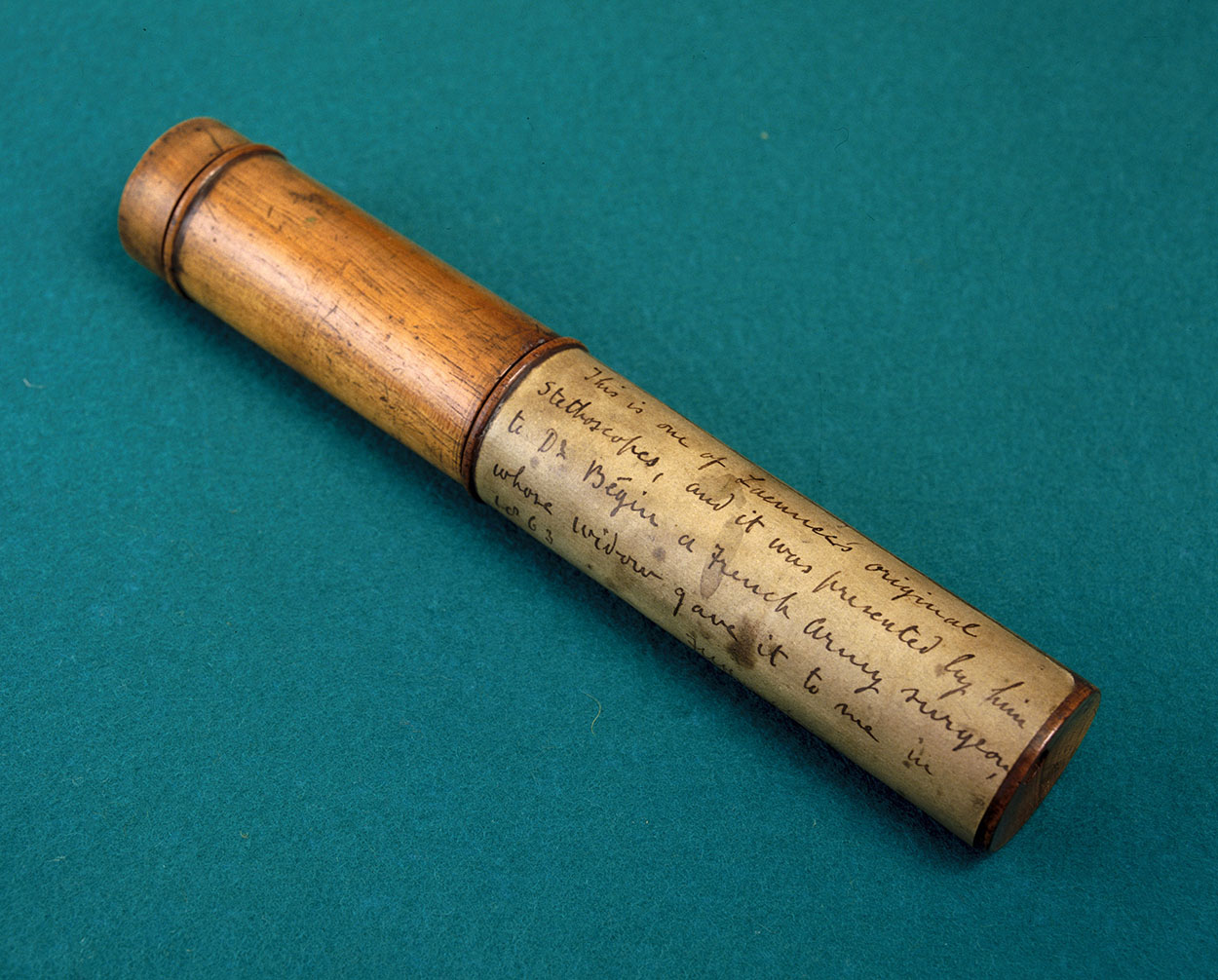
If a passage discusses the history of the stethoscope and its invention by René Laennec in 1816, a distractor answer choice might state: "Modern stethoscopes are frequently used to listen to bowel sounds." Is that factually true in the real world? Yes. Is it mentioned anywhere in a passage about the 1816 invention? No. Therefore, choosing it is a fatal error.
If we cannot use outside knowledge, how do we deduce what the author implies? We must rely on the internal physics of the text.
1. Utilizing Context Clues
A valid inference must be supported by context clues provided by the author. Authors leave a breadcrumb trail of descriptive words, pacing, and scenarios. Readers use context clues to determine the implied meanings of specific events in a passage. If a character "slammed the chart on the desk and rubbed her temples," the context clues allow you to infer the character is frustrated or exhausted, even if the word "frustrated" never appears.
2. Identifying Cause-and-Effect
Recognizing cause-and-effect relationships in a text helps readers draw logical conclusions about outcomes. If the text establishes that a specific medication lowers heart rate, and later mentions a patient was given a double dose of that medication, the logical conclusion regarding the outcome is a significant decrease in the patient's heart rate. Look for structural signals like because, consequently, as a result, and therefore.
3. Tuning into Tone and Purpose
Sometimes the facts are less important than how the facts are presented. Identifying the author's tone assists the reader in making valid inferences about unstated opinions. If an author describes a new hospital administration policy using words like "draconian," "rigid," and "stifling," you can safely infer that the author opposes the policy, even if they never explicitly state, "I hate this policy."
Furthermore, an author's primary purpose often dictates the types of logical inferences a reader can make. If the primary purpose is to persuade you to adopt a vegetarian diet, the inferences you draw will naturally align with the benefits of plant-based eating highlighted by the author's specific examples.
Just as a careful scientist avoids drawing massive conclusions from a single flawed experiment, a careful reader must avoid stretching the text beyond its breaking point.
Making a jump in logic involves creating a conclusion without sufficient passage evidence. When you do this, you cross the line from evidence-based deduction into the realm of the unsupported assumption—a guess that lacks direct evidence in the reading passage.
How do you know if you are making an unsupported jump?
The Rule of the Smallest Leap
When faced with two seemingly plausible inferences, test-takers must select the inference answer choice requiring the smallest leap in logic. Imagine standing on a rock in a stream. A valid inference is stepping to the very next rock. An unsupported jump is trying to leap all the way to the far bank. Always choose the answer that stays closest to the explicit text.
The Warning Sign of Extreme Language
You can often spot unsupported conclusions simply by looking at the vocabulary of the answer choices. Extreme words like 'always' or 'never' in answer choices frequently signal an unsupported conclusion.
Human biology, medicine, and life in general rarely operate in absolutes. If a passage states that "most patients respond well to physical therapy," an answer choice that concludes "physical therapy always cures joint pain" is an unsupported jump.
The Generalization Trap
Generalizations are broad statements that must be supported by specific examples in the text to form a valid conclusion. If the text mentions that one specific nurse was late to her shift, you cannot logically conclude the generalization that "the nursing staff at this hospital is habitually tardy."

Finally, the ultimate test of validity: An invalid inference contradicts the explicit facts provided in the reading passage. If your deduction requires you to ignore or twist an explicit fact the author provided, your deduction is mathematically wrong.
| Concept | The Scientific Reader (Valid) | The Sloppy Reader (Invalid) |
|---|---|---|
| Logic Leap | Takes the smallest possible step from the explicit text. | Makes an unsupported assumption spanning miles beyond the text. |
| Boundaries | Remains strictly inside the passage "bubble." | Imports outside knowledge and personal clinical bias. |
| Tone | Uses extreme words only if the author explicitly used them. | Falls for choices containing extreme words like "always" or "never." |
| Generalizing | Synthesizes multiple explicit facts to form a tight, specific conclusion. | Turns one localized example into a massive, sweeping generalization. |
To consistently conquer this module, you must immediately recognize what the test is asking you to do based on the phrasing of the question. The HESI A2 utilizes highly specific prompts.
- Question phrases like 'The passage suggests' indicate an inference question. You are looking for a logical implication, not an explicit quote.
- Question phrases like 'The author implies' signal the need to draw an inference. Focus heavily on the author's tone, context clues, and word choice.
- Question phrases like 'It can be reasonably concluded' ask the reader to synthesize passage evidence into a final judgment. You will need to take Fact A and Fact B from the text, combine them, and select the resulting outcome.
Reading comprehension is not a test of your imagination. It is a test of your discipline. Your future career in healthcare will demand that you look at patient data exactly as it is, recognizing what it implies without jumping to reckless, unsupported conclusions. Treat every passage on the exam exactly the same way. Respect the boundaries of the text, follow the specific evidence, take the smallest possible leaps in logic, and the correct conclusions will inevitably reveal themselves.