Author's Purpose and Tone
Not sure you’re ready?
Take the ~3-minute readiness diagnostic and see where you stand.
A clinical handover report and a pharmaceutical advertisement may both describe the exact same cardiac medication, yet they operate on entirely different fundamental frequencies. The handover report delivers pure data—dosages, half-lives, and vital signs—designed strictly to ensure patient safety. The advertisement, adorned with images of smiling seniors and vibrant colors, is engineered to generate revenue. To navigate the text of the HESI A2 exam, and soon the complex documentation of a clinical environment, a practitioner must be able to instantly recognize not just what a text says, but what it is attempting to achieve. Reading comprehension at an advanced level requires looking past the surface of the words to dismantle the mechanics of the author's intent and emotional posture.
Whenever you encounter a passage on the HESI A2, your first task is diagnostic. You must determine why the text exists. The author's purpose is the primary reason the author wrote the passage. Just as understanding a patient's underlying physiology helps you interpret their symptoms, understanding the author's purpose gives you the structural framework necessary to comprehend their writing. Identifying the target audience helps a reader determine the author's purpose. If the target audience is a group of hospital administrators, the purpose is likely different than if the target audience is a group of anxious parents.
Broadly, texts fall into three distinct categories of purpose.
1. To Inform
One main category of author's purpose is to inform the reader. When an author seeks to inform, they are acting as a neutral transmitter of data. An informative text provides objective facts about a specific topic and explains concepts without including the author's personal opinions.
Imagine a textbook chapter detailing the stages of cellular mitosis or a protocol manual outlining the proper steps for inserting an intravenous line. The author does not care how you feel about the IV line; they only care that you understand the mechanics of it.
Structural Clues for Informative Texts: Because clarity is the ultimate goal, informative texts frequently utilize headings to organize facts and frequently utilize bullet points to organize facts. The structure itself is designed for rapid, objective information retrieval.
2. To Persuade
One main category of author's purpose is to persuade the reader. In these texts, the author has an agenda. A persuasive text attempts to convince the reader to adopt a specific viewpoint (e.g., "Nurse-to-patient ratios are dangerously high") or attempts to convince the reader to take a specific action (e.g., "Vote yes on Proposition 4 to increase healthcare funding").
To achieve this, logic alone is rarely enough. Therefore, persuasive texts often use emotional appeals to influence the reader's opinion and often use subjective language to influence the reader's opinion.
Linguistic Clues for Persuasive Texts: Persuasion leaves linguistic fingerprints. Signal words like 'should' often indicate a persuasive purpose. Similarly, signal words like 'must' often indicate a persuasive purpose, as do value-driven signal words like 'best'. Whenever you see these imperative words in a HESI A2 passage, the author is stepping out of the role of a neutral observer and into the role of an advocate.
3. To Entertain
One main category of author's purpose is to entertain the reader. While you may not encounter purely fictional stories frequently in a medical context, the HESI A2 will test your ability to recognize this mode. An entertaining text primarily aims to engage the reader's emotions and primarily aims to engage the reader's imagination.
To captivate the audience, entertaining texts frequently utilize storytelling techniques—such as pacing, dialogue, and narrative arcs—and frequently utilize descriptive imagery to paint a vivid picture in the mind of the reader. A memoir by a pioneering transplant surgeon describing the chaotic, adrenaline-fueled environment of the operating room serves to entertain and captivate, rather than merely document a procedure.
Even when two authors write about the exact same event, their texts will rarely look identical. This is due to perspective. Author's perspective is the underlying viewpoint from which the author approaches the subject.
Think of perspective as the physical location from which you are observing a patient. A surgeon looking at a patient on the operating table has a very different perspective from the physical therapist helping that same patient walk down the hall three days later. An author's background shapes the author's perspective on a topic.
This background is critical because it acts as a filter. An author's perspective influences which facts are included in a text and, equally importantly, influences which facts are omitted from a text. A hospital administrator writing a report on a new electronic health record system might include facts about cost savings and data integration, but omit the fact that it requires nurses to spend an extra two hours per shift at a computer screen.
When perspective becomes extreme, it transforms into bias. Bias occurs when an author's perspective unfairly favors one side of an argument. Recognizing bias is a vital critical thinking skill; it allows you to weigh the validity of the text and recognize when an author is deliberately hiding counterarguments to manipulate your understanding.
If purpose is why the author wrote the text, tone is how they feel about it. The author's tone is the attitude the author expresses toward the subject matter and the attitude the author expresses toward the audience.
When a person speaks to you, you understand their tone through their voice inflection, facial expressions, and body language. A text does not have vocal cords or a face. Instead, an author's tone is revealed primarily through word choice and is revealed primarily through sentence structure.
Short, blunt sentences might convey urgency or anger, whereas long, flowing, complex sentences might convey reflection or academic rigor. However, the most powerful engine of tone is diction. Diction is the specific selection of words used by an author to convey a particular attitude.
Recognizing the author's tone helps the reader correctly interpret the passage's meaning. If you misread a sarcastic remark as a serious statement, your comprehension of the entire passage collapses.
The Spectrum of Tone
Tones can be categorized across several distinct spectrums. Mastering these will allow you to quickly identify the correct multiple-choice answer on your exam.
Objective vs. Subjective
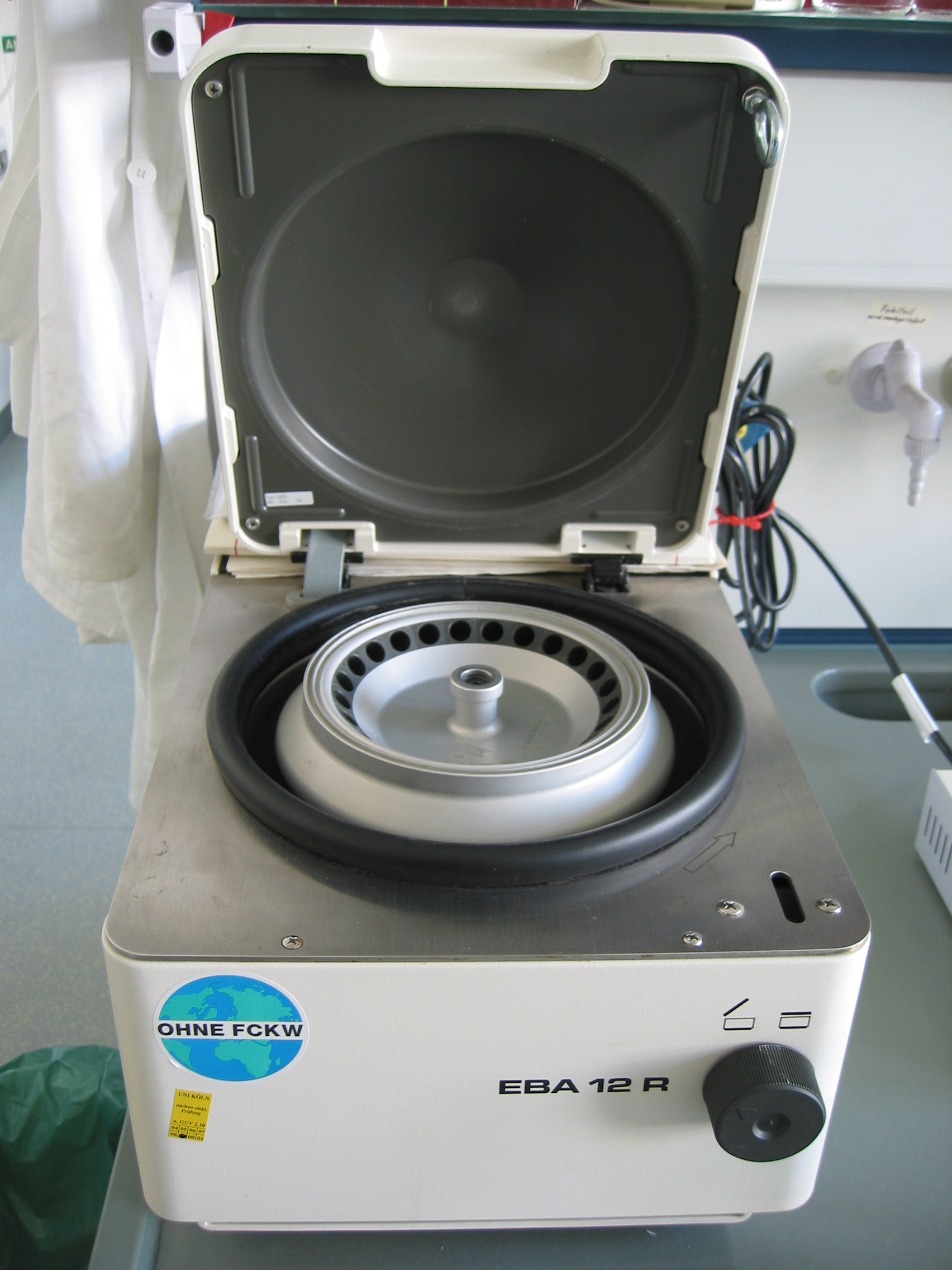
- Objective Tone: The clinical standard. An objective tone presents information neutrally and entirely lacks personal feelings. It is the voice of a laboratory centrifuge: pure, unfeeling data.
- Subjective Tone: The human element. A subjective tone incorporates the author's personal biases and incorporates the author's personal judgments. When trying to spot this on an exam, look closely at the modifiers. A text with a high frequency of adjectives often indicates a subjective tone. Words like "tragic," "brilliant," "reckless," or "unprecedented" are massive red flags that the text is subjective.
Formal vs. Informal
- Formal Tone: The academic standard. A formal tone uses complex vocabulary and adheres strictly to grammatical rules. It avoids contractions and maintains professional distance.
- Informal Tone: The conversational approach. An informal tone resembles conversational speech. Because it mimics how humans speak naturally, an informal tone often includes slang and often includes colloquialisms (regional expressions like "under the weather" or "bite the bullet").
Specific Attitudinal Tones
Beyond the broad categories, the HESI A2 will ask you to identify highly specific emotional postures:
- Optimistic: An optimistic tone expresses hopefulness about the future. (e.g., "The newly developed mRNA vaccines represent a dawn of unprecedented resilience against viral pathogens.")
- Pessimistic: A pessimistic tone focuses on the negative aspects of a situation. (e.g., "Despite the new initiatives, the systemic burnout in the allied health professions will inevitably lead to widespread staffing collapses.")
- Sarcastic: A sarcastic tone uses irony to mock a subject and uses irony to convey contempt for a subject. (e.g., "Oh, another mandatory wellness module to complete on my day off. That will certainly cure the hospital's systemic understaffing problem.")
To truly master tone and diction, you must understand the concept of connotation. While a word's denotation is its literal dictionary definition, connotation refers to the emotional weight associated with a word.
Two words can mean the exact same literal thing but carry vastly different emotional weights. Consider the difference between calling a patient "slender" versus calling them "gaunt." Both mean thin, but "slender" implies health and grace, while "gaunt" implies sickness and malnourishment.
- Positive Connotation: An author uses words with positive connotations to create a favorable tone. If a manager wants to praise a nurse, they will describe them as "meticulous" and "dedicated."
- Negative Connotation: An author uses words with negative connotations to create a critical tone. If a manager is displeased with that exact same behavior, they will describe the nurse as "pedantic" and "stubborn."
Connotation in Clinical Practice and Exams
| Subject Matter | Positive Connotation (Favorable Tone) | Neutral Denotation (Objective Tone) | Negative Connotation (Critical Tone) |
|---|---|---|---|
| Questioning a doctor's order | Advocating for the patient | Inquiring about the order | Challenging the physician |
| A new hospital policy | A streamlined approach | A modified procedure | A restrictive mandate |
| Dealing with details | Highly thorough | Detail-oriented | Excessively nitpicky |
When analyzing a reading passage on the HESI A2, pay close attention to these linguistic choices. An author who chooses the word "scheme" instead of "plan," or "demand" instead of "request," is showing you their hand. They are revealing their perspective, establishing their tone, and ultimately pointing you directly toward their central purpose. Understand the mechanics of these words, and you will understand the entirety of the text.