Parts of Speech
Not sure you’re ready?
Take the ~3-minute readiness diagnostic and see where you stand.
In clinical practice, the patient’s chart is the definitive record of their reality, and the accuracy of that record depends entirely on the mechanical precision of your language. Consider the difference between charting "the patient responds well" and "the patient is well." One describes the quality of a reflex; the other describes a state of total physiological health. Grammar in a medical setting is not a pedantic exercise in rule-following; it is the fundamental mechanism of patient safety. A misplaced modifier or an ambiguous pronoun antecedent can result in the wrong medication being administered to the wrong patient at the wrong time. Understanding the architecture of a sentence—how the pieces fit together, what forces they exert on each other, and what jobs they perform—is as critical to a healthcare professional as understanding the anatomy of the human body. Just as the cardiovascular system relies on the heart to pump and veins to transport, a sentence relies on verbs to drive action and prepositions to establish precise spatial relationships.
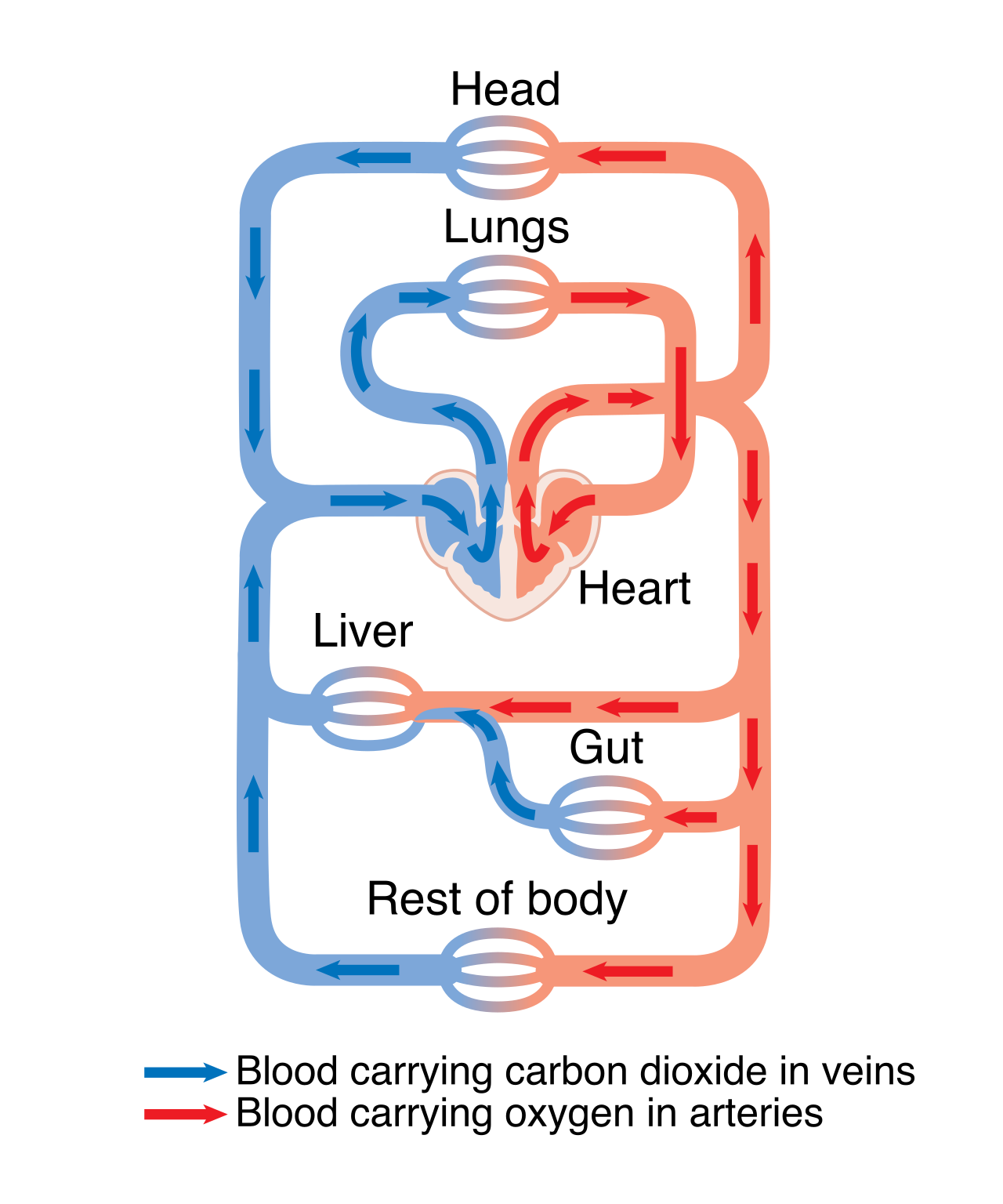
If we view a sentence as a living organism, the nouns are the physical structures—the organs, bones, and tissues.
A noun is a word that names a person, place, thing, or idea.
Nouns establish what we are talking about. To understand them fully, we must classify them based on their specificity and their physical reality.
Proper vs. Common Nouns
Precision is everything. When you refer to a medication, are you referring to the general class of drug or the specific brand name on the bottle? Language mirrors this distinction.
A common noun names a general person, place, thing, or idea. Think of words like hospital, nurse, or syringe. Because they are general classifications, common nouns are not capitalized unless the common noun appears at the beginning of a sentence.
A proper noun names a specific person, place, or thing. Think of Johns Hopkins Hospital, Florence Nightingale, or Tylenol. Because they point to a unique, singular entity, proper nouns are always capitalized.
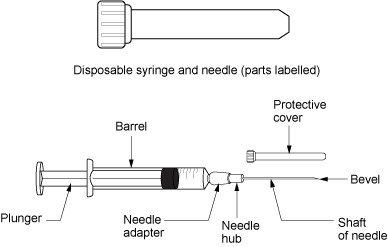
Abstract and Collective Nouns
Not all nouns are physical objects you can hold in your hand.
- An abstract noun names a concept, quality, or state rather than a tangible object. Words like pain, compassion, health, and ethics are abstract nouns. You cannot put "health" in a test tube, but it is still a noun—it is an idea or state.
- A collective noun represents a group of individuals as a single entity. Words like staff, team, cohort, and family. Even though a clinical team is made up of five different professionals, the word "team" is treated as a singular unit in the grammar of the sentence.
Imagine if, in a surgical report, you had to write the patient's full name every single time you referred to them. “Mr. Smith entered the room. Mr. Smith lay on the bed. The doctor examined Mr. Smith.” It is incredibly inefficient.
A pronoun is a word used in place of one or more nouns to avoid repetition.
The mechanics of a pronoun rely entirely on its anchor. The antecedent is the specific noun that a pronoun replaces. If the antecedent is unclear, your charting is dangerously ambiguous. If you write, "The nurse gave the patient her medication," does "her" refer to the nurse's own medication, or the patient's? The antecedent must always be crystal clear.
Pronouns come in several specialized forms:
- Personal pronouns refer to specific persons or things. (I, you, he, she, it, we, they).
- Possessive pronouns indicate ownership of a noun. (mine, yours, his, hers, its, ours, theirs). When charting that a patient brought their own medication, you are using a possessive pronoun.
- Demonstrative pronouns point out specific persons, places, things, or ideas. You are literally pointing with your words. Examples of demonstrative pronouns include the words this, that, these, and those.
- Indefinite pronouns refer to nonspecific persons, places, things, or ideas. You use these when the exact identity is unknown or unimportant. Examples of indefinite pronouns include the words anyone, someone, all, and both.
If nouns are the physical structures, verbs are the beating heart. A sentence without a verb is just a lifeless list of objects.

A verb is a word that expresses an action or a state of being.
Verbs do three distinctly different jobs in language:
- An action verb describes a physical or mental action performed by the sentence subject. (The patient breathed. / The doctor calculated the dosage.) Notice that calculating is mental, but it is still an action.
- A linking verb connects the sentence subject to a word that describes or renames the subject. It does not show action; it acts like an equals sign (=). If I say, "The patient is stable," patient = stable. Forms of the verb "to be" (am, is, are, was, were, be, being, been) frequently function as linking verbs. Words like seems, feels, or becomes can also act as linking verbs.
- A helping verb is paired with a main verb to clarify the tense or mood of the action. Action rarely happens in a vacuum—it happens in time. (The patient will walk. / The monitor is beeping.) Here, will and is help the main verbs (walk, beeping) establish exactly when the action occurs.
Here is where the HESI A2 exam separates the novices from the experts. Modifiers are words that change, clarify, or restrict other words. Understanding the strict laws of modification is non-negotiable.
Adjectives
An adjective is a word that modifies or describes a noun or a pronoun.
Adjectives add dimension to the physical world. An adjective typically answers the questions "what kind," "which one," or "how many."
- What kind? The lethargic patient.
- Which one? The left arm.
- How many? Three milligrams.
There is a special, very small sub-class of adjectives that act as simple markers. Articles are a specific category of adjectives used to introduce nouns. If you are ever asked to identify them, remember this absolute rule: The words "a", "an", and "the" are articles.
Adverbs
An adverb is a word that modifies a verb, an adjective, or another adverb.
If adjectives modify the physical things (nouns), adverbs modify the actions, qualities, or intensities of the sentence. An adverb typically answers the questions "how," "when," "where," or "to what extent."
- How? The patient breathed heavily.
- When? Administer the dose tomorrow.
- Where? Place the monitor here.
- To what extent? The vitals dropped dangerously low.
Many adverbs are formed by adding the suffix "-ly" to an adjective (e.g., rapid becomes rapidly). However, not all end in "-ly" (e.g., never, always, very).
The Ironclad Rules of Modification
You must memorize what these modifiers cannot do. The HESI will test you on these boundaries.
- An adjective cannot modify a verb. You cannot say, "The heart beats slow." (Slow is an adjective; beats is an action verb).
- An adjective cannot modify an adverb.
- Action verbs are modified by adverbs. You must say, "The heart beats slowly."
- Action verbs cannot be modified by adjectives.
- Adverbs cannot be used to describe the subject of a sentence. The subject is always a noun or pronoun, and adverbs do not touch nouns.
- Adjectives must follow linking verbs to describe the subject. If the verb is a linking verb (like an equals sign), the word that follows it describing the subject must be an adjective. "The patient feels feverish." (Feverish is an adjective modifying the noun patient).
The Ultimate HESI Trap: Good/Well and Bad/Badly
In conversational English, people butcher these pairs constantly. In academic and clinical English, you must master them.
Bad vs. Badly
- The word "bad" is an adjective used to describe nouns or pronouns. ("He has a bad cough.")
- The word "badly" is an adverb used to modify verbs. ("His arm is bleeding badly.")
Good vs. Well This is the most highly tested distinction in grammar.
- The word "good" is an adjective. It can only modify nouns or pronouns. ("That is a good stethoscope.")
- The word "well" functions as an adverb when describing how an action is performed. ("The surgeon performed the procedure well.") You would never say "She did the surgery good."
- The Clinical Exception: The word "well" functions as an adjective only when describing a person's physical health. If a patient recovers from the flu, you say, "The patient is well." In this specific instance, well is an adjective following a linking verb (is) to describe the subject (patient).
Anatomy is not just about identifying organs; it is about understanding where they sit in relation to one another. Grammar requires the same spatial mapping.
A preposition is a word that shows the spatial or temporal relationship between a noun or pronoun and another word in the sentence.
Words like in, on, under, through, before, after, and during. If you tell a colleague to inject a medication into the muscle rather than under the skin, you are relying entirely on the precision of your prepositions.
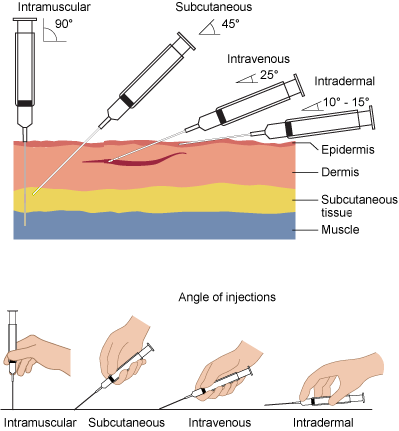
Prepositions never travel alone. A prepositional phrase begins with a preposition and ends with a noun or pronoun. In the phrase "under the skin," under is the preposition. The noun or pronoun at the end of a prepositional phrase is called the object of the preposition. In our example, skin is the object of the preposition.
If you want to build complex, sophisticated sentences, you need connective tissue to bind the clauses together.
A conjunction is a word that joins words, phrases, or clauses.
We categorize them by how they balance the weight of the sentence:
- A coordinating conjunction connects words, phrases, or clauses of equal grammatical rank. They balance the scale perfectly. The acronym FANBOYS stands for the coordinating conjunctions: for, and, nor, but, or, yet, and so.
- A subordinating conjunction introduces a dependent clause. It takes a perfectly good sentence and weakens it so it can no longer stand alone. (Words like because, although, if, since). Consequently, a subordinating conjunction connects a dependent clause to an independent clause. (Because the patient was fasting, we delayed the oral medication.)
- Correlative conjunctions are pairs of conjunctions that work together to join elements in a sentence. They are the tag-teams of grammar. Common correlative conjunctions include the pairings "either/or" and "neither/nor".
Finally, we have the human element—the involuntary reflexes of language.
An interjection is a word or phrase that expresses strong emotion or surprise.
Words like Ouch!, Wow, or Oh. Because they are essentially verbal reflexes, they exist outside the logical architecture of the sentence. An interjection has no grammatical connection to the rest of the sentence. You could remove the interjection entirely, and the grammatical integrity of the sentence remains completely intact.
Summary for the Scholar
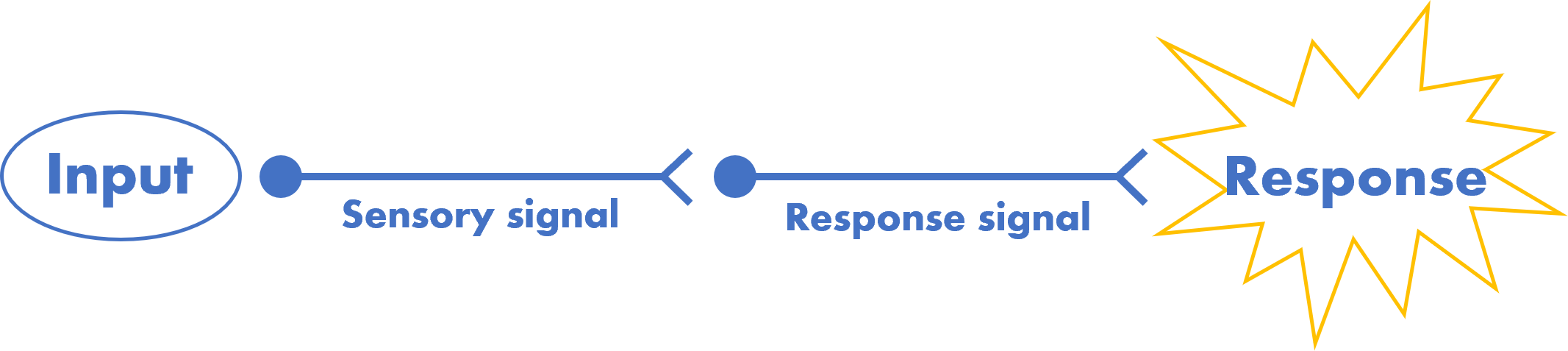
To master the HESI A2 grammar module, do not just memorize these terms in a vacuum. Look at every sentence as a biological system. Find the noun (the organ). Find the verb (the beating heart). Trace the adjectives and adverbs (the modifying signals) back to exactly what they are altering. Map the prepositions. Once you see the underlying physics of the language, the right answers will reveal themselves logically, reliably, and consistently.