Percentages
Not sure you’re ready?
Take the ~3-minute readiness diagnostic and see where you stand.
Imagine two patients under your care: a neonate who loses 2 pounds and an adult who loses 5 pounds. If we look only at the raw numbers, the adult lost more weight. But biologically, the neonate is in a physiological crisis, while the adult has merely shed a fraction of their body mass. To understand the true clinical significance of these numbers, we must normalize them to a common scale. By forcing every scenario into a standardized framework where the "whole" is always exactly one hundred, we strip away the distraction of absolute size and expose the true proportion. Mastering this concept is not merely a mathematical hoop to jump through for the HESI A2; for a healthcare professional, it is the lens through which we accurately interpret patient data, scale medication dosages, and communicate risk.
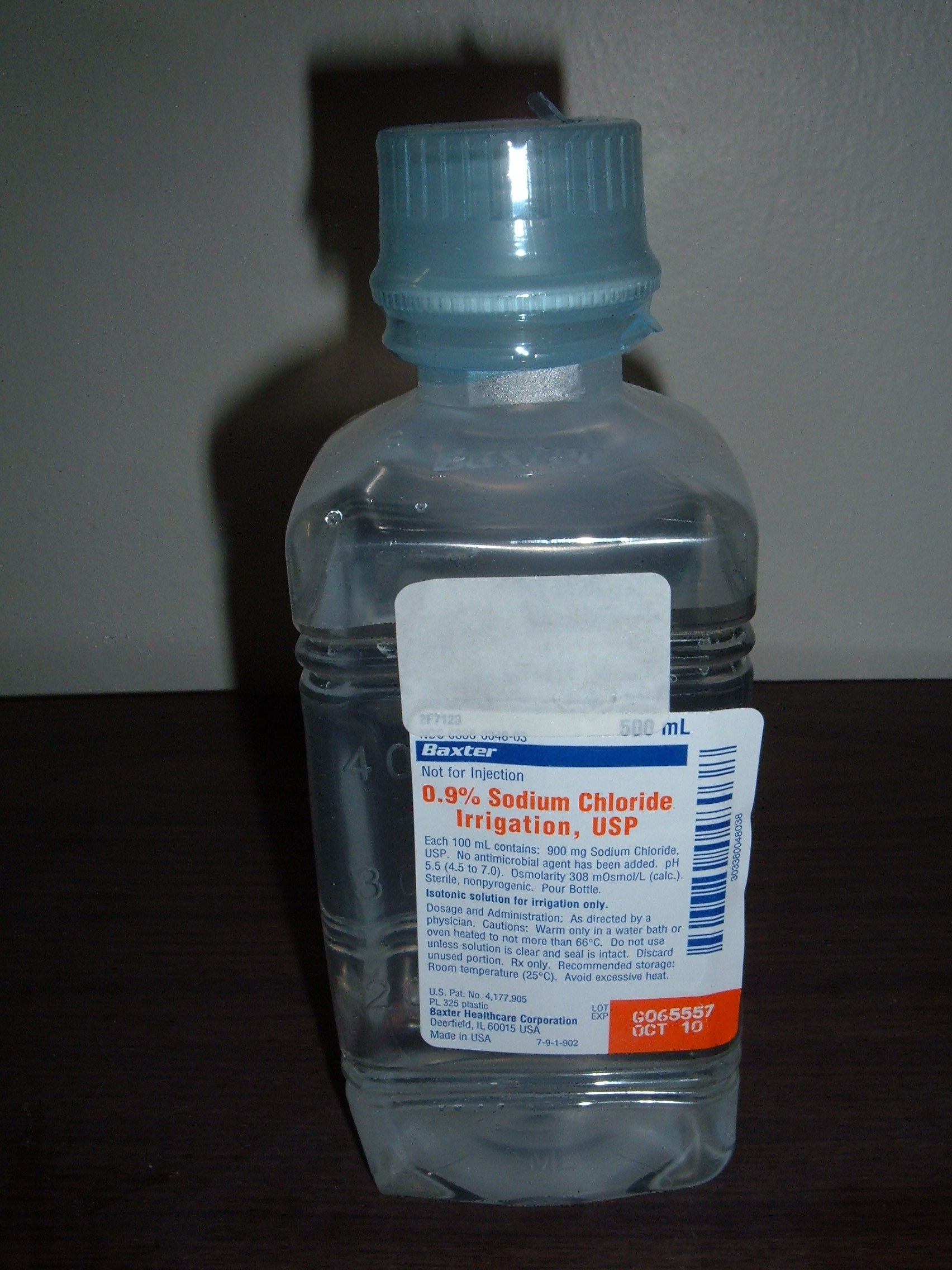
Let us begin with the vocabulary. The word percent translates mathematically to "per one hundred." When you see a percentage, you are looking at a standardized fraction. A percentage represents a part-to-whole ratio where the whole is always exactly one hundred. If a saline solution is 0.9% sodium chloride, it means there are 0.9 parts of salt for every 100 total parts of the solution.
To manipulate these concepts algebraically, we rely on a direct translation of English into mathematics. In mathematical word problems, the word "of" commonly indicates a multiplication operation, and the word "is" commonly indicates an equals sign.
Consider the foundational phrase: "A is P percent of B."
- The variable A represents the part.
- The variable B represents the whole.
Because of the rules of translation, the statement "A is P percent of B" literally means A=P%×B. From this, we derive the universal blueprint for solving basic percentage relationship problems.
The Universal Proportion Formula The formula part divided by whole equals percent divided by one hundred (WholePart=100Percent) solves basic percentage relationship problems.
This single equation is a machine. If you possess any two pieces of the puzzle (part, whole, or percent), you can effortlessly solve for the third.
Finding the Missing Pieces
Depending on the clinical or pharmaceutical scenario, you will need to find different missing variables. We can solve for any of them systematically:
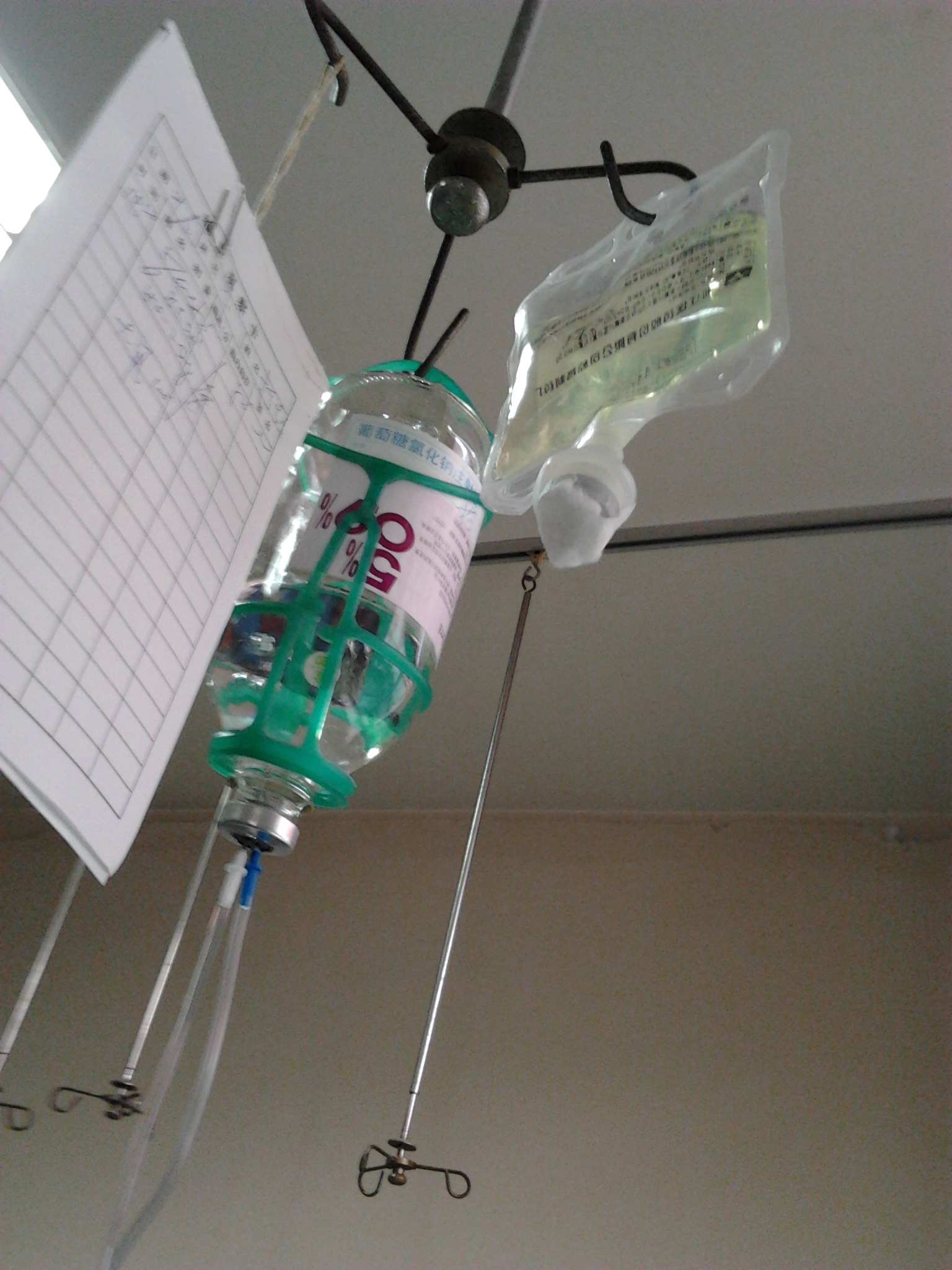
- Finding the Part: To find the percent of a given number, multiply the number by the decimal equivalent of the percent. For instance, if you need to administer 20% of a 500 mL IV bag, you convert 20% to 0.20 and multiply by 500 to get 100 mL.
- Finding the Whole: To find the missing whole when the part and percent are known, divide the part by the decimal equivalent of the percent. If a patient’s 40-gram protein intake is 25% (0.25) of their daily requirement, dividing 40 by 0.25 reveals their total requirement is 160 grams.
- Finding the Percentage: To find the percentage when the part and whole are known, divide the part by the whole to calculate a decimal. If 15 patients out of 60 recover overnight, dividing 15 by 60 gives 0.25 (which is 25%).
In clinical practice, you will encounter data in multiple formats: a physician might order a "half-strength" dose (fraction), a syringe might read "0.5 mL" (decimal), and a patient's chart might note a "50% reduction in pain" (percentage). You must move fluidly between these languages.
Decimals and Percentages
The gateway between decimals and percentages is the number 100.
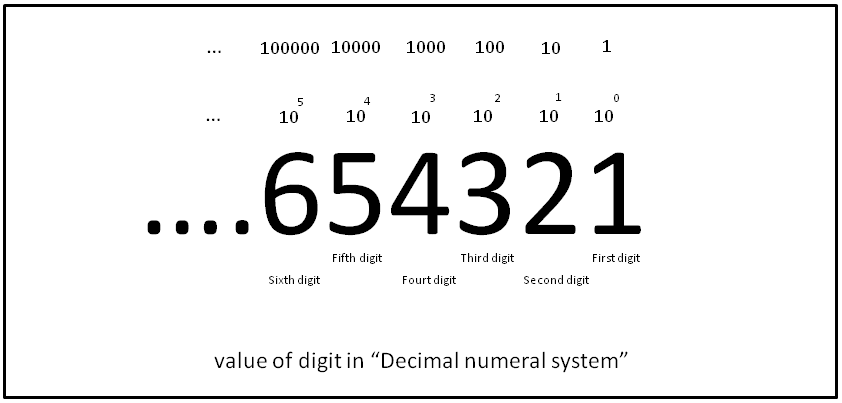
- To convert a decimal to a percentage, multiply the decimal by one hundred. Because our number system is base-10, multiplying a decimal by one hundred is equivalent to moving the decimal point exactly two places to the right. (e.g., 0.45×100=45%).
- To convert a percentage to a decimal, divide the percentage by one hundred. Dividing a percentage by one hundred is equivalent to moving the decimal point exactly two places to the left. (e.g., 8%÷100=0.08).
Fractions and Percentages
Fractions are simply division problems waiting to happen.
- To convert a fraction to a percentage, first divide the numerator by the denominator to obtain a decimal. After dividing a numerator by a denominator, multiply the resulting decimal by one hundred to obtain the final percentage. (e.g., 43→3÷4=0.75→75%).
- To convert a percentage to a fraction, place the percentage value over a denominator of one hundred. Crucially, a fraction representing a percentage over one hundred must be simplified to its lowest terms. (e.g., 60%→10060→53).
The Mandatory Memory Bank
For the HESI A2, efficiency is just as important as accuracy. You do not have time to manually calculate common equivalents. Memorize this table of fundamental relationships; recognize them instantly.
| Fraction | Decimal | Percentage |
|---|---|---|
| Halves & Quarters | ||
| 1/4 | 0.25 | The fraction 1/4 is equivalent to 25 percent. |
| 1/2 | 0.50 | The fraction 1/2 is equivalent to 50 percent. |
| 3/4 | 0.75 | The fraction 3/4 is equivalent to 75 percent. |
| Thirds | ||
| 1/3 | 0.333... | The fraction 1/3 is equivalent to 33.33 percent. |
| 2/3 | 0.666... | The fraction 2/3 is equivalent to 66.67 percent. |
| Fifths | ||
| 1/5 | 0.20 | The fraction 1/5 is equivalent to 20 percent. |
| 2/5 | 0.40 | The fraction 2/5 is equivalent to 40 percent. |
| 3/5 | 0.60 | The fraction 3/5 is equivalent to 60 percent. |
| 4/5 | 0.80 | The fraction 4/5 is equivalent to 80 percent. |
| Eighths | ||
| 1/8 | 0.125 | The fraction 1/8 is equivalent to 12.5 percent. |
| 3/8 | 0.375 | The fraction 3/8 is equivalent to 37.5 percent. |
| 5/8 | 0.625 | The fraction 5/8 is equivalent to 62.5 percent. |
| 7/8 | 0.875 | The fraction 7/8 is equivalent to 87.5 percent. |
| Tenths | ||
| 1/10 | 0.10 | The fraction 1/10 is equivalent to 10 percent. |
Biology is dynamic. Heart rates spike, blood pressure drops, and bacterial colonies multiply. To measure this, we use percent change. Percent change calculates the proportional difference between an initial value and a final value.
The cardinal rule of percent change—the rule that students forget and test-makers exploit—is this: The denominator in any percent change formula is always the original starting value. We always measure the journey relative to where we began, never where we ended up.
Percent Increase
Imagine a patient's white blood cell count rises from 8,000 to 10,000.
- The formula for percent increase requires subtracting the old value from the new value (10,000−8,000=2,000).
- After finding the difference in a percent increase calculation, divide that difference by the old value (8,0002,000=0.25).
- Multiply the decimal result of a percent increase division by one hundred to finalize the percent increase (0.25×100=25% increase).
Percent Decrease
Imagine a patient's resting heart rate falls from 120 bpm to 90 bpm after medication.
- The formula for percent decrease requires subtracting the new value from the old value (120−90=30).
- After finding the difference in a percent decrease calculation, divide that difference by the old value (12030=0.25).
- Multiply the decimal result of a percent decrease division by one hundred to finalize the percent decrease (0.25×100=25% decrease).
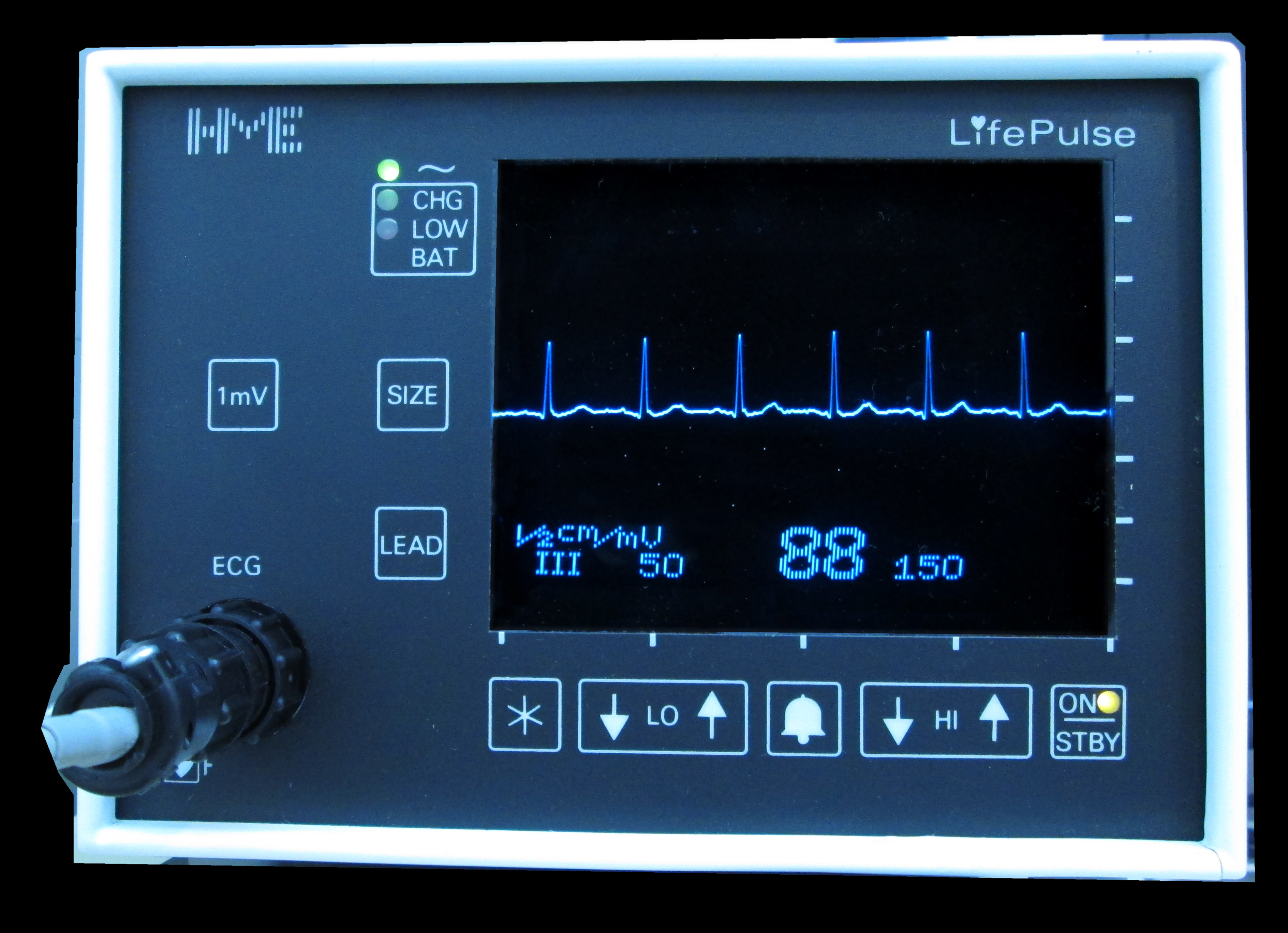
A whole is 100%. Therefore, a percentage value greater than 100 percent represents an amount larger than the original whole. If a pediatric clinic sees 150% of its normal patient volume during flu season, it is seeing its entire normal volume (100%) plus an additional half (50%).
This concept is heavily tested in applied mathematics, particularly in calculating retail prices, uniform costs, and medical supply taxes. There are always two ways to solve these problems: the two-step method (finding the parts and adding/subtracting) and the one-step method (scaling the percentage first).
Calculating Discounts
Suppose you are buying a pair of medical scrubs that originally costs $40, and you receive a 20% student discount.
- The Two-Step Method: To calculate a final price after a percentage discount, subtract the monetary discount amount from the original price. First, find 20% of $40 (0.20 \times \40 = $8).Then,subtractthatmonetarydiscountfromtheoriginalprice($40 - $8 = $32$).
- The One-Step Method: An alternative method to calculate a discounted price is to multiply the original price by the remaining non-discounted percentage. If 20% is removed, 80% remains. Simply multiply the original price by 80% (0.80 \times \40 = $32$).

Calculating Taxes
Now suppose that $32 pair of scrubs is subject to a 5% sales tax.
- The Two-Step Method: To calculate a total cost including a percentage tax, add the calculated monetary tax amount to the original price. First, find 5% of $32 (0.05 \times \32 = $1.60).Then,addthatmonetarytaxtotheoriginalprice($32 + $1.60 = $33.60$).
- The One-Step Method: An alternative method to calculate a total cost with tax is to multiply the original price by one hundred percent plus the tax percentage. The scrubs represent 100% of the cost, and the tax is an additional 5%, meaning you are paying 105% of the sticker price. Multiply the price by 1.05 (1.05 \times \32 = $33.60$).
By mastering these mechanics, you free your mind from rote arithmetic. You stop seeing arbitrary numbers and start seeing proportions, relationships, and scaling factors. That is the moment you stop just passing exams and start thinking like a scientist.