Decimals
Not sure you’re ready?
Take the ~3-minute readiness diagnostic and see where you stand.
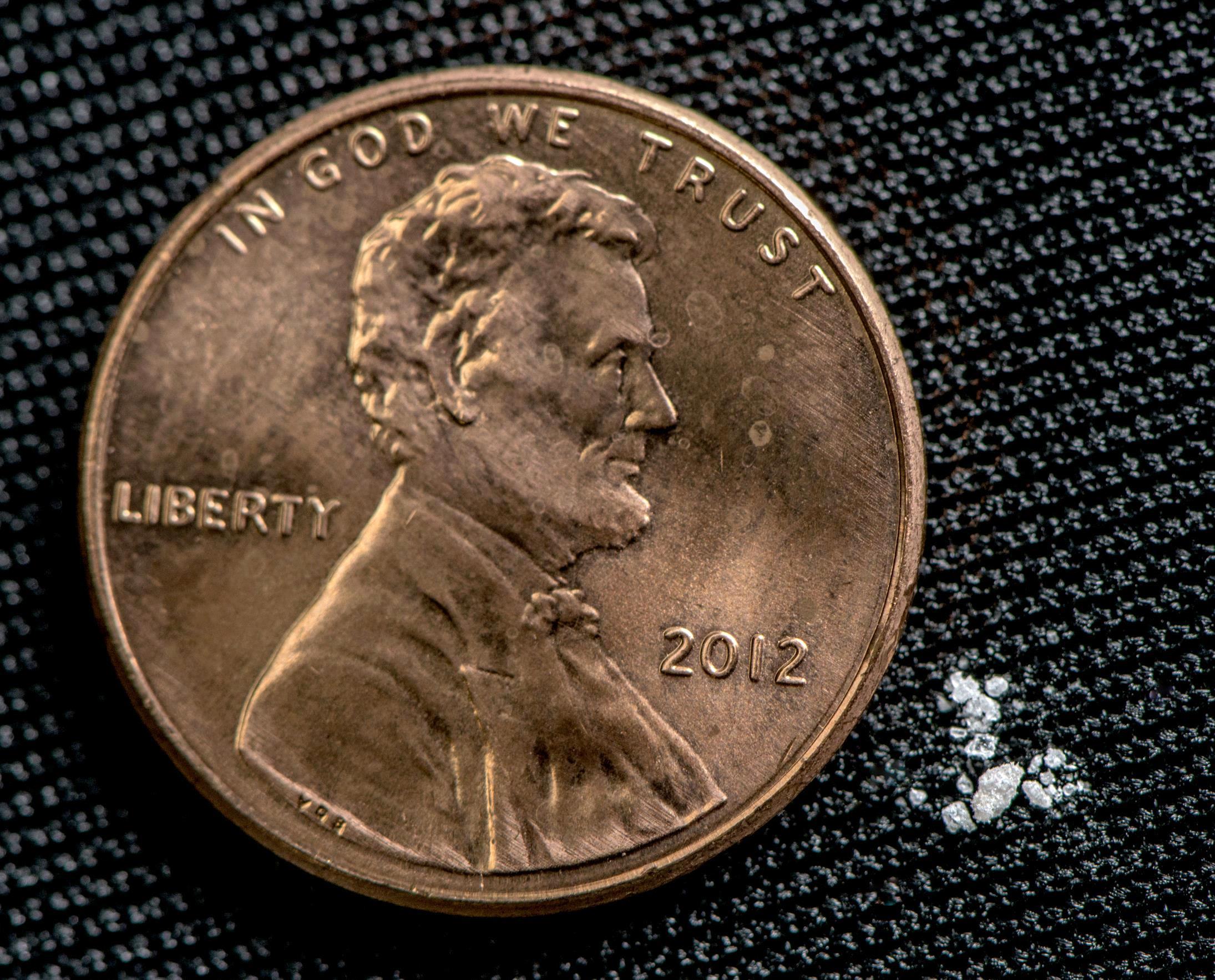
A single drop of medication measured in a 1-milliliter tuberculin syringe represents a life-altering difference in volume. When drawing up 0.125 mg of Digoxin for a cardiac patient, the decimal point is not merely a mathematical abstraction; it is the boundary between therapeutic intervention and lethal overdose. The architecture of the decimal system allows us to express precise fractional quantities with the same numerical mechanics we use for whole numbers. In nursing and allied health, mastering decimals ensures that weight-based dosages, fluid resuscitation rates, and laboratory values translate safely from the physician's order to the patient's bedside.
To understand decimals, we must look at how our number system is constructed. The position of a digit to the right of the decimal point determines its fractional value based on powers of ten. Every time you step to the right, the value of the place is divided by ten.
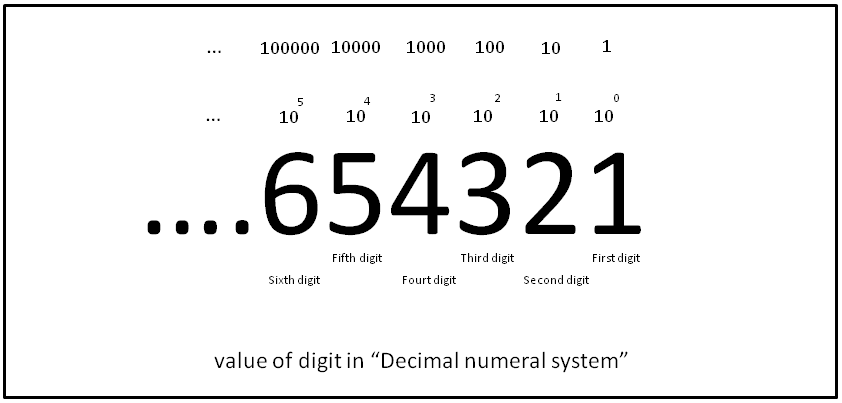
When you encounter a decimal number, any non-zero digits to the left of the decimal point represent a value greater than or equal to one (whole quantities, like whole milligrams or liters). But it is what happens to the right of the point that requires our clinical precision.
- The first place immediately to the right of the decimal point is the tenths place (101).
- The second place to the right of the decimal point is the hundredths place (1001).
- The third place to the right of the decimal point is the thousandths place (10001).
- The fourth place to the right of the decimal point is the ten-thousandths place (10,0001).
The Rule of the Leading Zero: In healthcare, an invisible decimal point is a deadly hazard. Therefore, the number 0 serves as a standard placeholder to the left of the decimal point for decimal values strictly less than one. We write
0.5 mg, never.5 mg, so the decimal point is never missed at a quick glance.
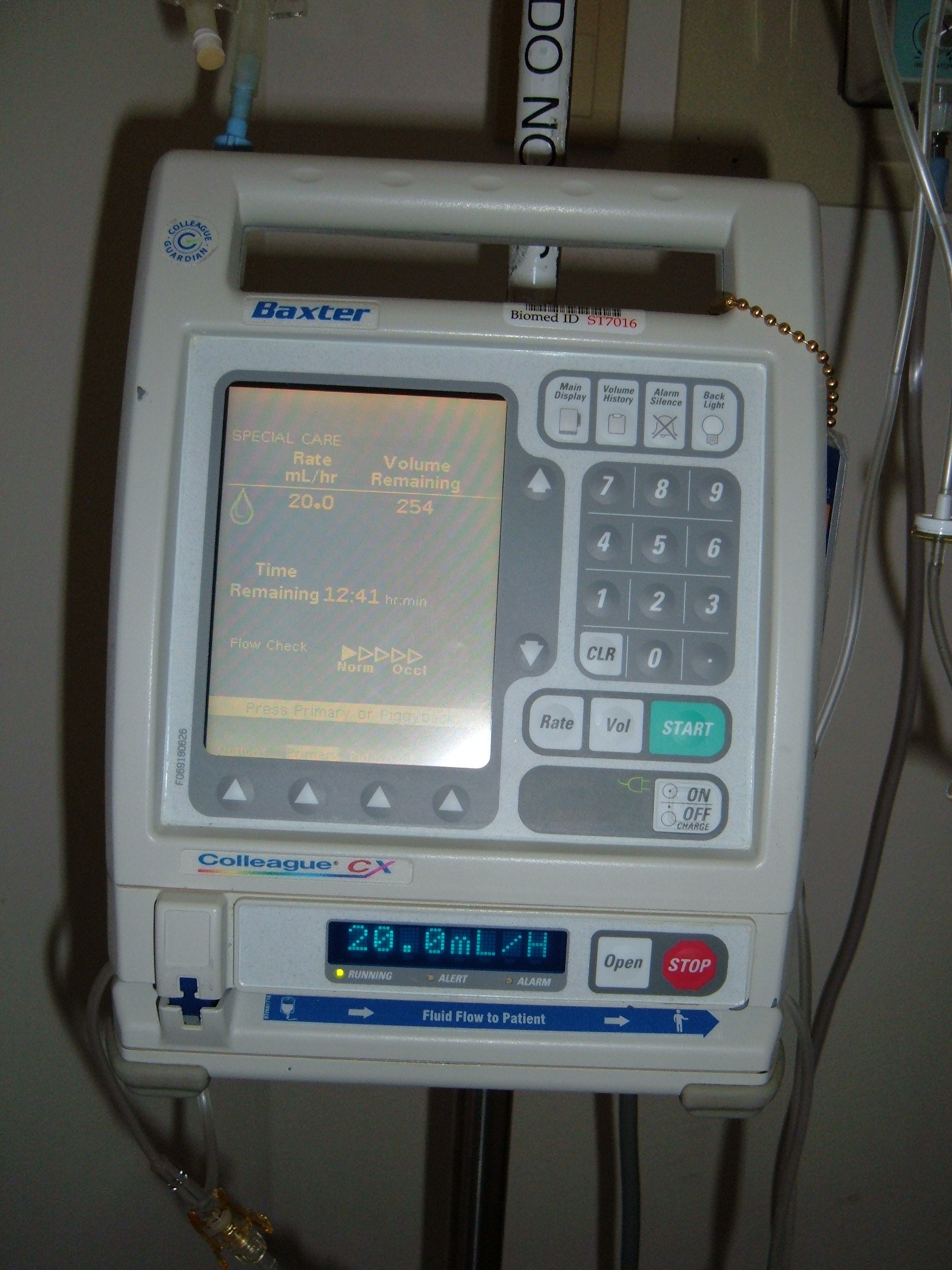
Often, human physiology demands calculations that yield long strings of decimals, but an IV pump can only be programmed to the nearest tenth or hundredth. Rounding a decimal requires identifying the target place value and evaluating the digit immediately to its right.
Imagine you must round 2.458 to the nearest hundredth:
- Identify the target: The hundredths place is the 5.
- Evaluate the right-door neighbor: Look at the digit immediately to its right (the 8).
- Apply the rule: When rounding decimals, increase the target digit by one if the digit to its immediate right is 5 or greater. (Our 5 becomes a 6). Conversely, when rounding decimals, leave the target digit unchanged if the digit to its immediate right is 4 or less.
- Drop the tail: After rounding a decimal to a specific place value, all digits to the right of the target place value must be dropped.
Our final rounded number is 2.46.
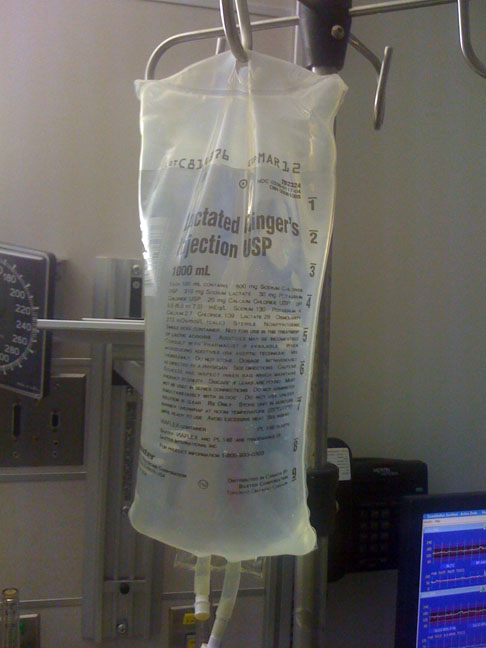
Imagine pouring a 0.5-liter bag of normal saline and a 1.25-liter bag of lactated Ringer's into the same basin. To find the total volume, you cannot simply mash the numbers together.
To add decimals, the decimal points of all numbers must be vertically aligned before performing the calculation. This ensures that you are adding tenths to tenths and hundredths to hundredths.
Likewise, to subtract decimals, the decimal points of the minuend (the starting amount) and the subtrahend (the amount being subtracted) must be vertically aligned before performing the calculation.
The Magic of Trailing Zeros
What happens when you need to subtract 0.75 from 1.5? They don't have the same number of digits. Fortunately, the decimal system has a built-in flexibility: placing zeros at the extreme right end of a decimal fraction does not change the mathematical value of the number.
Because 1.5 and 1.50 represent the exact same quantity, trailing zeros can be added to align numbers with different amounts of decimal places during addition or subtraction.
   1.50   <-- Trailing zero added to the minuend
 - 0.75   <-- Subtrahend
 ------
   0.75
When calculating a patient's medication dosage based on their body weight, you might need to multiply 2.5 mg/kg by 8.1 kg.
To multiply decimals, initially multiply the numbers as if they were whole numbers while ignoring the decimal points. In your mind, multiply 25×81, which gives you 2025.
Now, how do we restore the fractional reality? The fundamental rule is that the total number of decimal places in a multiplication product equals the sum of the decimal places in the original factors.
2.5has one decimal place.8.1has one decimal place.- 1+1=2 total decimal places.
Starting from the right of 2025, move the decimal point two places to the left: your answer is 20.25 mg.
Dividing by a decimal feels unnatural. If you need to calculate how many 0.5 mg doses are inside a 1.25 mg vial, dividing 1.25÷0.5 can look daunting. We solve this by temporarily transforming the numbers.
To divide by a decimal, move the decimal point in the divisor to the right until the divisor becomes a whole number. Our divisor, 0.5, becomes 5 (by moving the point one place to the right).
However, mathematical equations are like balanced scales; whatever you do to one side, you must do to the other. When moving the decimal point in a divisor, the decimal point in the dividend must be moved to the right by the exact same number of places. Therefore, our dividend, 1.25, shifts one place to the right to become 12.5.
Now, divide 12.5 by 5. In decimal division, the decimal point in the quotient is placed directly above the newly adjusted decimal point in the dividend.
      2.5   <-- Quotient (decimal directly above dividend's decimal)
   -------
 5 | 12.5
Fractions and decimals are two different languages expressing the exact same quantities. You must be completely fluent in translating between them.
Converting Decimals to Fractions
To convert a terminating decimal to a fraction, write the digits to the right of the decimal point as the numerator. Then, assign a denominator equal to the power of ten corresponding to the rightmost decimal place value.
For example, take 0.45:
- The digits to the right are
45. This is your numerator. - The rightmost digit (5) is in the hundredths place. Therefore,
100is your denominator. - This gives us 10045.
Finally, fractions obtained from converting decimals should be reduced to their simplest mathematical form. Dividing both top and bottom by 5, 10045 simplifies to 209.
Converting Fractions to Decimals
The fraction bar is quite literally a division symbol. To convert a fraction to a decimal, divide the fraction's numerator by its denominator. To convert 85, you simply execute 5÷8, which equals 0.625.
To convert a mixed number to a decimal, keep the whole number portion unchanged and convert the fractional part to a decimal. For 341, keep the 3. Convert 41 to 0.25. The result is 3.25.
The Phenomenon of Repeating Decimals
Sometimes, the division never perfectly concludes. A repeating decimal indicates that a specific digit or a sequence of digits repeats infinitely without terminating. In mathematical notation, a horizontal bar placed over a sequence of decimal digits indicates that the covered sequence repeats infinitely (e.g., 0.3).
Essential Conversions to Memorize for the HESI A2
In a clinical setting or during an exam, you won't always have time to do long division. You must commit these fundamental fraction-to-decimal equivalents to memory:
| Fraction | Decimal Form | Fraction | Decimal Form |
|---|---|---|---|
| 1/2 | The fraction 1/2 converts to the decimal 0.5. | 1/8 | The fraction 1/8 converts to the decimal 0.125. |
| 1/4 | The fraction 1/4 converts to the decimal 0.25. | 1/3 | The fraction 1/3 converts to the repeating decimal 0.333... |
| 3/4 | The fraction 3/4 converts to the decimal 0.75. | 2/3 | The fraction 2/3 converts to the repeating decimal 0.666... |
| 1/5 | The fraction 1/5 converts to the decimal 0.2. | 1/10 | The fraction 1/10 converts to the decimal 0.1. |
| 1/100 | The fraction 1/100 converts to the decimal 0.01. |
By understanding the underlying mechanics of powers of ten, the rules of alignment, and the fluid relationship between decimals and fractions, you are building the foundation required for exact, error-free clinical calculation.