Verb Tense and Consistency
Not sure you’re ready?
Take the ~3-minute readiness diagnostic and see where you stand.
A patient’s medical chart is fundamentally a map of time. When a healthcare provider reads, "The patient experienced a sudden drop in blood pressure, is currently receiving intravenous fluids, and will undergo an echocardiogram," the verbs act as the chronological coordinates. If those coordinates are scrambled—if the chart notes the patient "receives fluids yesterday" or "experienced hypotension tomorrow"—the map becomes clinically useless, and patient care is compromised. Mastering verb tense is not merely a matter of grammatical compliance; it is the fundamental mechanism by which professionals organize reality, communicate precise sequences of events, and ensure accurate clinical continuity.
For the HESI A2 exam, grammar is treated with the same precision as a calculation for medication dosage. You must know exactly when an action occurs, how it relates to other actions, and how to preserve the logical sequence of time across a paragraph.
At its core, verb tense indicates the time an action or state of being occurs. Verbs accomplish this through specific structural changes—using suffixes, helping verbs, or entire word transformations.
To manipulate time accurately in your writing, you must understand the building blocks of verbs. The foundation is the base verb (e.g., walk, eat). From there, verbs transform into participles to create more complex tenses.
- A present participle is a verb form ending in the letters -ing (e.g., walking, eating).
- A past participle is the form used with helping verbs like has, have, or had.
How a verb forms its past tense and past participle depends on its classification:
- Regular verbs form the simple past tense and the past participle predictably by adding the suffix -ed or -d to the base verb form (e.g., assess becomes assessed).
- Irregular verbs do not use standard suffix patterns to form the simple past tense or the past participle. They undergo internal vowel changes or transform completely (e.g., give becomes gave in the past and given as a past participle).
The simple tenses are your primary tools for isolating actions in the past, present, and future.
Simple Present
The simple present tense describes actions happening at the current moment. However, its utility extends beyond the immediate now; the simple present tense also describes habitual actions—things that happen routinely.
Clinical Application: Current Moment: "The patient reports severe abdominal pain." Habitual Action: "The unit manager rounds on patients every morning."
Simple Past
The simple past tense describes actions that were completed before the current moment. The event is entirely over.
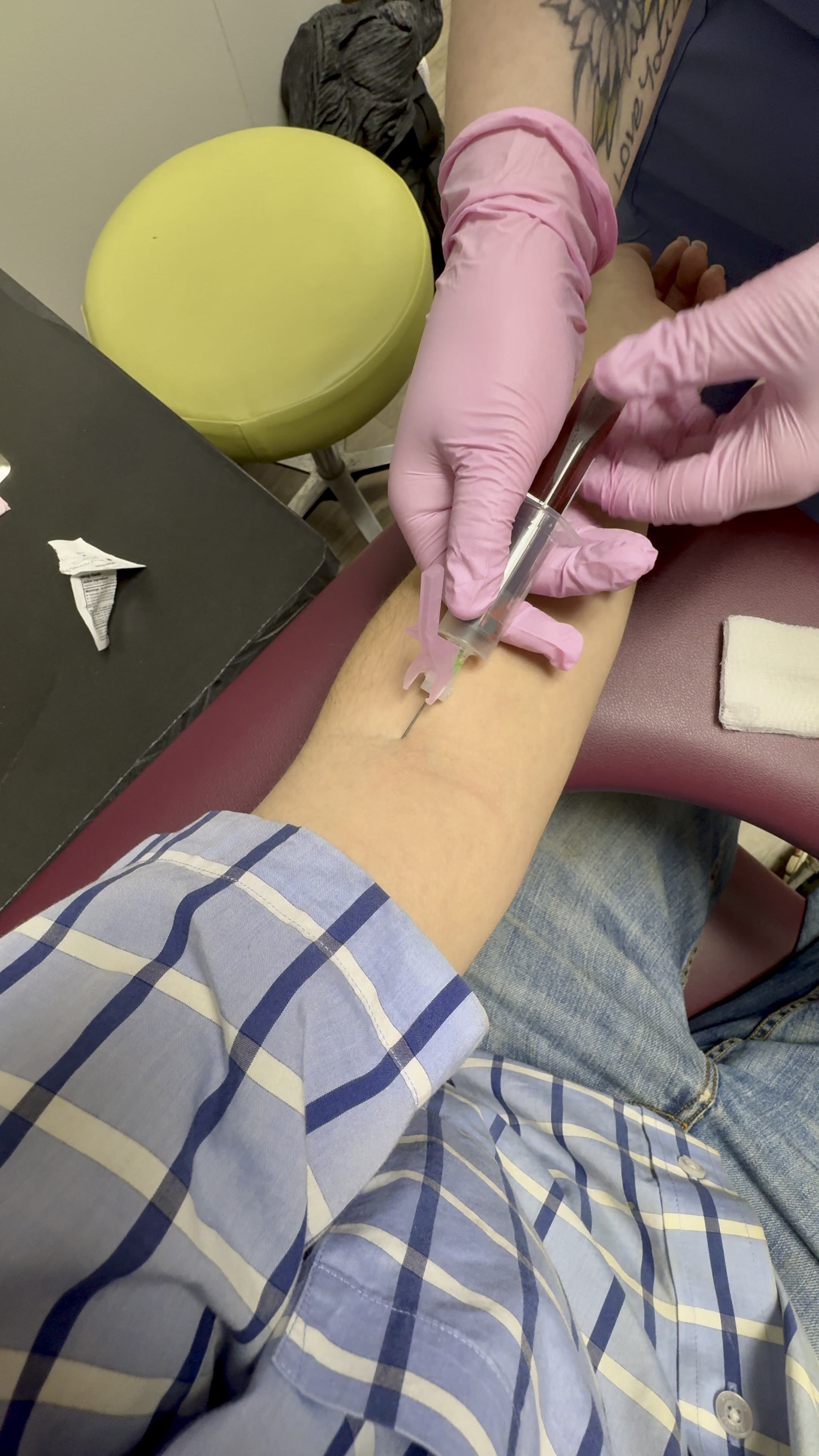
Clinical Application: "The phlebotomist drew the blood sample at 0800 hours." (Note the irregular verb: drew, not drawed).
Simple Future
The simple future tense describes actions that will happen at a later time. Structurally, the simple future tense is formed by adding the helping verb will or shall before the base verb.
Clinical Application: "The surgeon will operate on the fractured femur tomorrow."
While simple tenses isolate actions, perfect tenses establish relationships between different points in time. They act as bridges, demonstrating how a past event impacts the present or how two past events relate chronologically to one another.
| Tense | Function | Formation | Example |
|---|---|---|---|
| Present Perfect | Describes an action that began in the past and continues into the present, or occurred at an unspecified past time but has present relevance. | Formed using the helping verb has or have alongside the past participle of the main verb. | "The patient has fasted for twelve hours." (Began 12 hours ago, continues to now). |
| Past Perfect | Describes a past action that was completed before another past action occurred. This is crucial for establishing timelines in patient history. | Formed using the helping verb had alongside the past participle of the main verb. | "The patient had developed a rash before the nurse administered the antibiotic." |
| Future Perfect | Describes an action that will be completed before a specific time or event in the future. | Formed using the helping verbs will have alongside the past participle of the main verb. | "By the time the shift ends, I will have charted all the assessments." |
Notice the critical distinction in the past perfect tense. If a chart reads, "The patient developed a rash and the nurse administered the antibiotic," the chronological order is unclear. Did the medication cause the rash, or was the rash present prior? By using the past perfect ("The patient had developed a rash before..."), the sequence is unambiguous.
Sometimes, you need to emphasize the duration or continuous nature of an event. The progressive tense describes ongoing or continuous actions.
Structurally, progressive tenses are formed by combining a conjugated form of the verb to be with a present participle (an -ing verb).
- Present Progressive: "The monitor is beeping." (is + beeping)
- Past Progressive: "The patient was sleeping when the physician arrived."
- Future Progressive: "The lab will be analyzing the sample overnight."
The Perfect Progressive Tense
We can combine the relational logic of the perfect tenses with the continuous nature of the progressive tenses. The perfect progressive tense describes an action that was, is, or will be continuously ongoing up to a specific point in time.
To build this complex machinery, the perfect progressive tense requires a form of the verb to have, the word been, and a present participle.
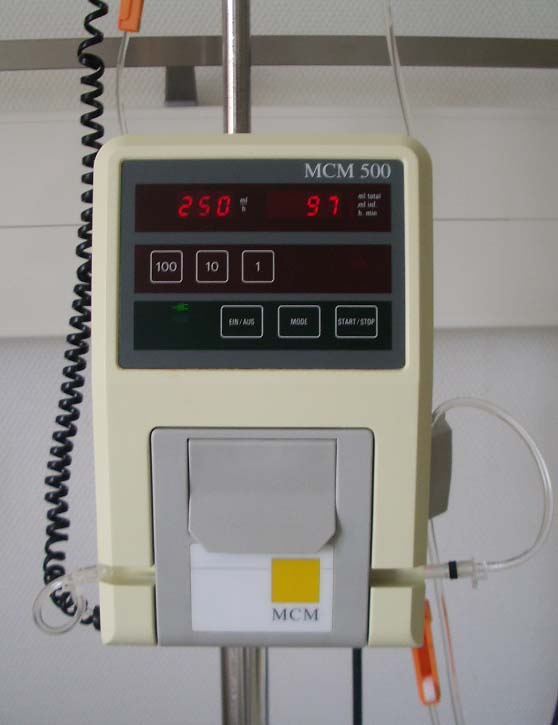
Clinical Application: "The IV pump has been alarming for ten minutes." (Present perfect progressive: It started alarming in the past and is continuously alarming right up to the current moment).
On the HESI A2 exam, you will frequently be tested on your ability to maintain chronological logic within a paragraph. Verb tense consistency requires maintaining the same timeframe throughout a sentence or paragraph.
A common error among novice writers is drifting aimlessly between past and present. Unnecessary shifts in verb tense confuse readers about the sequence of events. If you begin narrating a patient's history in the past tense, you must remain in the past tense unless the timeframe of the actual events shifts.
Rule 1: Simultaneous Actions Demand Identical Tenses
When two actions occur at the exact same moment, their grammatical tenses must mirror each other perfectly.
- Compound Predicates: In sentences with compound predicates occurring at the same time, all verbs must be in the identical tense.
- Independent and Dependent Clauses: When a dependent clause action occurs simultaneously with an independent clause action, both clauses must use the identical verb tense.
- Correct: While the surgeon sutured the wound, the anesthesiologist monitored the patient's heart rate. (Both actions are happening at the identical moment in the past).
Rule 2: Sequential Actions Demand Different Tenses
Consistency does not mean "use the exact same tense forever." It means "use tenses consistently to reflect reality." Therefore, writers must change verb tenses within a sentence to accurately describe actions happening at different times.
Specifically, a subordinate clause must use a different verb tense than the main clause to establish a chronological sequence of events.
The rules of tense consistency bow to a few specific, immutable exceptions. You must memorize these for the exam, as they frequently appear as trap questions.
General Truths and Scientific Facts
General truths and scientific facts must be expressed in the simple present tense. Gravity always pulls; water always boils at a specific temperature. Because these facts are universally true across all of time, they are permanently anchored in the simple present.
Crucially, the simple present tense is required for general truths regardless of the surrounding text verb tense.
- Incorrect: The instructor explained to the nursing students that the human adult skeleton consisted of 206 bones. (Using the past tense implies it no longer consists of 206 bones!)
- Correct: The instructor explained to the nursing students that the human adult skeleton consists of 206 bones.
The Literary Present Tense
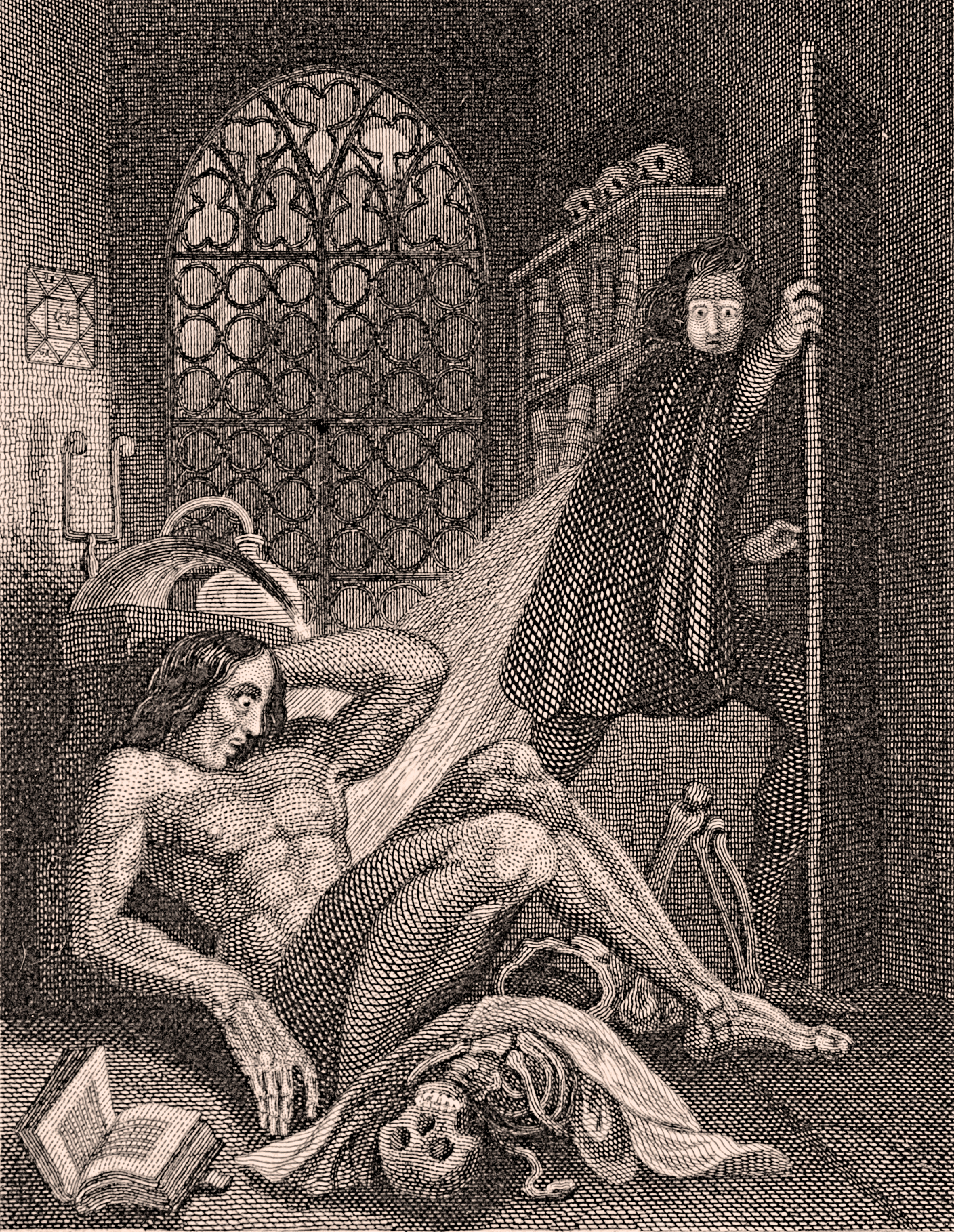
A specialized rule applies to the discussion of art and literature. The literary present tense rule dictates using the present tense to discuss events within a published work of literature or art. Even if a novel was written in 1850, the events inside the book are continually happening every time a reader opens it.
- Example: In Frankenstein, Mary Shelley explores the ethics of scientific discovery, and her protagonist abandons his creation.
Finally, the HESI A2 will test your ability to navigate verbs that describe things that might happen, or things that are entirely imaginary. This moves us from the realm of tense (time) into the realm of mood (reality).
The Conditional Mood
The conditional mood uses helping verbs like would or could to express actions dependent on specific circumstances. It sets up a cause-and-effect scenario that relies on a condition being met.
Clinical Application: "The patient would recover faster if he adhered to his physical therapy regimen." (The recovery is conditional upon the adherence).
The Subjunctive Mood (Contrary to Fact)
The subjunctive mood is used to explore hypothetical, imaginary scenarios. There is one highly specific rule you must master here: Sentences expressing hypothetical situations contrary to fact must use the past tense subjunctive verb were instead of was.
If you are describing something that is absolutely not true in reality, you never use "was" (even if the subject is singular, like I or he or the patient).
- Incorrect: If the patient was conscious, she could sign the consent form. (The patient is NOT conscious; this is contrary to fact).
- Correct: If the patient were conscious, she could sign the consent form.
- Correct: I would not administer that medication if I were you.
Understanding verb tense is understanding the architecture of a narrative. Whether you are reading a prompt on the HESI A2 or documenting the timeline of a critical incident report on an ICU floor, your command of these rules ensures that the sequence of events is conveyed with undeniable, mathematical clarity.