Sentence Structure
Not sure you’re ready?
Take the ~3-minute readiness diagnostic and see where you stand.
In medical charting, a missing grammatical subject or a disjointed string of observations is not merely a stylistic flaw; it is a clinical liability. The structure of a sentence mirrors the physiology of the human body. Just as an organism requires a functioning cardiovascular system to sustain life independently, written communication relies on distinct, complete grammatical units to convey unambiguous meaning. When a healthcare professional documents a patient’s vitals, updates a medical record, or communicates during a shift handoff, the boundaries of each thought must be absolute. The HESI A2 exam assesses mastery of these boundaries—specifically, the ability to map the anatomy of a sentence, diagnose structural anomalies like fragments and comma splices, and apply precise grammatical interventions to ensure clarity.

To understand how sentences break down, we must first look at the biological building blocks of language: the clause and the phrase.
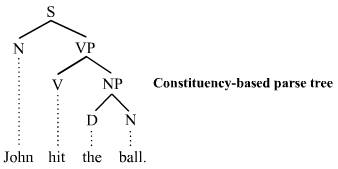
A clause is a grammatical unit containing a subject and a verb. If you look at a grouping of words and can identify both who or what is doing the action (the subject) and the action or state of being itself (the verb), you are looking at a clause.
Conversely, a phrase is a group of related words lacking a subject-verb pairing. Think of a phrase like connective tissue. It provides useful context—time, location, or description—but it has no internal engine. Examples include "in the sterile field" or "after the procedure." There is no subject performing an action in those word groupings, so they are merely phrases.
However, not all clauses are created equal. The English language divides them into two distinct categories based on their ability to survive on their own.
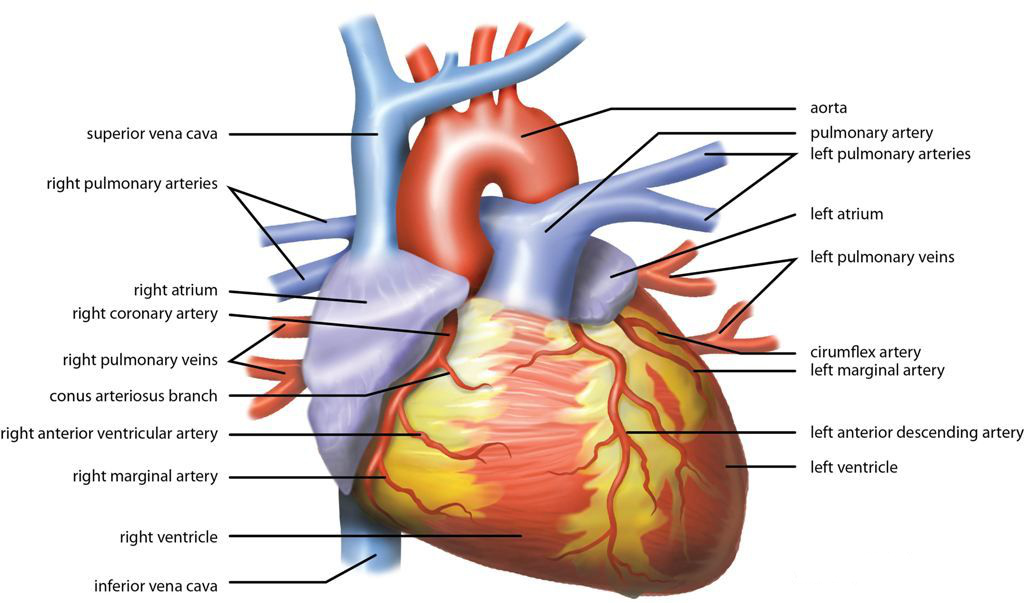
The Independent Clause: The Beating Heart
A sentence requires at least one independent clause to be grammatically correct.
An independent clause expresses a complete thought and can stand alone as a complete sentence. It is a self-sustaining organism. When you read an independent clause, you are not left waiting for the other shoe to drop; the information is fully resolved.
- The patient responded to the antibiotics. (Subject: patient | Verb: responded)
- The attending physician reviewed the chart. (Subject: physician | Verb: reviewed)
These clauses require no outside support. They are structurally perfect and logically complete.
The Dependent Clause: Attached but Incomplete
A dependent clause contains a subject and a verb, but it has a fatal flaw: a dependent clause does not express a complete thought. Because it leaves the reader hanging, a dependent clause cannot stand alone as a grammatically complete sentence.
What turns a perfectly good independent clause into a dependent one? The addition of specific trigger words that signal reliance on more information.
1. Subordinating Conjunctions
Subordinating conjunctions are words used to introduce a dependent clause. When you place one of these words at the front of a subject and a verb, you instantly create an expectation for a resolution that must come from an independent clause. Examples of subordinating conjunctions include "although," "because," "since," and "unless."
Let us look at a transformation:
- The heart rate stabilized. (Independent)
- Because the heart rate stabilized... (Dependent)
The moment we add "Because," the thought is no longer complete. What happened because the heart rate stabilized? The reader is waiting for the rest of the clinical picture.
2. Relative Pronouns
Similarly, relative pronouns are words used to introduce dependent relative clauses. These clauses act as modifiers, attaching themselves to nouns to provide necessary details. Examples of relative pronouns include "who," "whom," "whose," "which," and "that."
- ...who requires continuous monitoring. (Subject: who | Verb: requires)
Again, despite having a subject and a verb, this grouping of words cannot stand alone. It must be grafted onto an independent clause (e.g., The patient is a neonate who requires continuous monitoring.).
In the fast-paced environment of a hospital ward, incomplete sentences often slip into shorthand notes. In formal writing and on the HESI A2, however, these incomplete structures are strictly forbidden.
A sentence fragment is a group of words punctuated like a complete sentence that lacks a required grammatical component. It mimics a sentence by starting with a capital letter and ending with a period, but structurally, it is a phantom.
Fragments generally occur in one of three ways:
- A sentence fragment occurs when a group of words lacks a main subject.
- Fragment: Showed immediate signs of anaphylaxis. (Who or what showed signs? The subject is missing.)
- A sentence fragment occurs when a group of words lacks a main verb.
- Fragment: The newborn infant in the neonatal intensive care unit. (What about the infant? The verb is missing.)
- A dependent clause punctuated as a standalone sentence constitutes a sentence fragment.
- Fragment: Because the patient refused the medication. (Contains a subject and verb, but does not express a complete thought.)

Curing the Fragment
You cannot leave fragments bleeding on the page. You must intervene. There are two primary ways to fix them:
- Intervention A: A sentence fragment can be fixed by inserting the missing subject or missing verb.
- Fixing the missing subject: The patient showed immediate signs of anaphylaxis.
- Fixing the missing verb: The newborn infant in the neonatal intensive care unit is sleeping.
- Intervention B: A sentence fragment can be fixed by attaching the fragment to a nearby independent clause.
- Fixing the standalone dependent clause: Because the patient refused the medication**, the nurse documented the refusal in the chart.**
If a fragment is a failure to start the heart, a run-on sentence is a heart beating far too fast, with individual beats colliding into one another.
A run-on sentence consists of two or more independent clauses joined without proper punctuation or conjunctions. It is the grammatical equivalent of pouring two incompatible IV fluids through the same line without a buffer. The HESI A2 tests your ability to spot two specific sub-types of run-ons.
The Fused Sentence
A fused sentence is a specific run-on sentence where independent clauses are joined with no punctuation at all. The thoughts crash directly into one another.
- Fused: The surgeon requested a scalpel the nurse handed it to her immediately.
- Diagnosis: Two independent clauses ("The surgeon requested a scalpel" and "the nurse handed it to her immediately") with zero separation.
The Comma Splice
A comma alone is incredibly weak. It represents a brief pause, a slight intake of breath. It does not possess the structural integrity to hold two massive independent clauses together. Therefore, a comma splice is a structural error where two independent clauses are connected using only a comma.
- Comma Splice: The pharmacy is closed, we must use the emergency supply.
- Diagnosis: Two independent clauses separated by an insufficient barrier.
When confronted with a run-on or a comma splice on the HESI A2, you must select the correct grammatical intervention. You have five highly effective tools at your disposal to separate or properly join independent clauses.
1. The Period
The simplest, most definitive cure. A run-on sentence can be corrected by placing a period between the independent clauses to form separate sentences.
- Error: The patient was dehydrated he required intravenous fluids.
- Correction: The patient was dehydrated**.** He required intravenous fluids.
2. The Comma Plus a Coordinating Conjunction
If you want to keep the ideas in the same sentence, you must reinforce the comma with a dedicated joining word. Two independent clauses can be joined correctly using a comma followed by a coordinating conjunction.
The coordinating conjunctions in English are for, and, nor, but, or, yet, and so. To recall these instantly during your exam, remember that the acronym FANBOYS is a mnemonic device used to remember the coordinating conjunctions.
- Comma Splice: The alarms sounded, the nurse rushed into the room.
- Correction: The alarms sounded**, so** the nurse rushed into the room.
3. The Semicolon
A semicolon (;) acts as a hybrid between a period and a comma. It separates independent clauses but signals to the reader that the ideas are intimately linked. Two independent clauses can be joined correctly using a semicolon.
Crucially, semicolons are used to connect two independent clauses containing closely related ideas. Do not use them to connect wildly different thoughts. In terms of error correction, a comma splice can be corrected by replacing the comma with a semicolon.
- Comma Splice: The blood culture came back positive, a broad-spectrum antibiotic was ordered.
- Correction: The blood culture came back positive**;** a broad-spectrum antibiotic was ordered.
4. The Semicolon Plus a Conjunctive Adverb and a Comma
For highly formal, precise transitions between complete thoughts, we use a heavier grammatical apparatus. Two independent clauses can be joined correctly using a semicolon followed by a conjunctive adverb and a comma.
Conjunctive adverbs provide logical bridges (like cause-and-effect or contrast) between two independent clauses. Examples of conjunctive adverbs include "however," "therefore," "furthermore," and "moreover."
- Run-on: The shift was overstaffed the manager sent two technicians home.
- Correction: The shift was overstaffed**; therefore,** the manager sent two technicians home.
5. Adding a Subordinating Conjunction
Instead of separating the two independent clauses, you can strategically weaken one of them, forcing it to rely on the other. A run-on sentence can be corrected by adding a subordinating conjunction to one of the independent clauses.
Why does this work? Because adding a subordinating conjunction to an independent clause transforms that clause into a dependent clause. Once one of the clauses is dependent, the run-on ceases to exist; you now simply have a dependent clause correctly attached to an independent one.
- Fused Sentence: The patient was discharged the bed was immediately sanitized.
- Correction: After the patient was discharged**,** the bed was immediately sanitized.
Summary Checklist for HESI A2 Sentence Structure
When analyzing sentences on the exam, subject every option to a rigorous diagnostic process:
| Diagnostic Question | Grammatical Implication |
|---|---|
| Does the grouping of words have a subject and a verb? | If NO, it is merely a phrase. If YES, it is a clause. |
| Does the clause express a complete thought? | If NO (usually due to a subordinating conjunction or relative pronoun), it is a dependent clause. If YES, it is an independent clause. |
| Is the sentence lacking a main subject, a main verb, or is it just a standalone dependent clause? | The sentence is a fragment. Fix it by adding the missing component or attaching it to an independent clause. |
| Are two independent clauses colliding with no punctuation? | This is a fused sentence (a type of run-on). Apply one of the five cures. |
| Are two independent clauses held together only by a comma? | This is a comma splice. Reinforce the comma with a FANBOYS conjunction, upgrade to a semicolon, or use a period. |
Mastering the mechanics of sentence structure is not simply an exercise in passing an entrance exam. It is the foundation of clear, unambiguous documentation. By mastering independent and dependent clauses, eradicating fragments, and properly managing run-ons, you ensure that the complex clinical narratives you will write in your career are always precise, professional, and easily understood by your peers.